


Tissue Paper Converting Machines Market Outlook
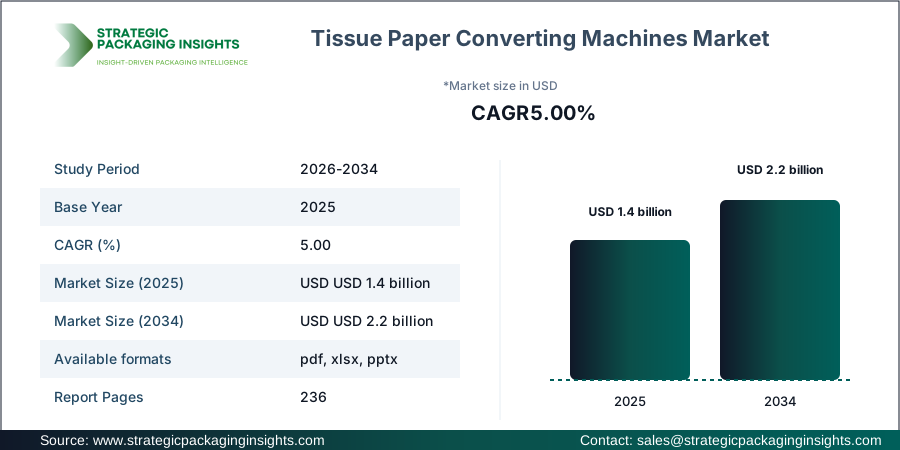
The Tissue Paper Converting Machines market size was valued at USD 1.4 billion in 2025 and is anticipated to reach USD 2.2 billion by 2034, growing at a CAGR of 5.00% during the forecast period according to Strategic Packaging Insights. This growth trajectory is driven by the increasing demand for tissue paper products across various sectors, including household and commercial applications. Companies like Fabio Perini and Futura are at the forefront, innovating in machine efficiency and automation to meet the rising demand. The market's expansion is further fueled by advancements in technology that enhance production speed and reduce operational costs, making tissue paper converting machines more accessible to a broader range of manufacturers.
One of the most impactful drivers of this market is the growing emphasis on hygiene and sanitation, which has been significantly heightened by global health concerns. According to government health agencies, the increased awareness and demand for hygiene products have led to a surge in the consumption of tissue paper products, thereby boosting the demand for converting machines. Fabio Perini and other key players are capitalizing on this trend by developing machines that offer higher efficiency and lower waste, aligning with the industry's sustainability goals. This focus on hygiene and sustainability is expected to continue driving market growth in the coming years.
Report Scope
| Attributes | Details |
| Report Title | Tissue Paper Converting Machines Market Size, Future Growth and Forecast 2034 |
| By Product Line | Toilet Roll Converting, Kitchen Towel Lines, Facial Tissue Lines, Napkin Machines, Interfold Towel Lines |
| By Process Unit | Unwinders & Embossers, Rewinders, Log Saws, Folders, Wrappers & Packers |
| By Speed | Below 400 m/min, 400-600 m/min, Above 600 m/min |
| By End Use | Integrated Tissue Mills, Independent Converters, Private Label Producers |
| By Region | North America (U.S., Canada, Mexico), Europe (Germany, UK, France, Italy, Spain, Rest of Europe), Asia Pacific (China, India, Japan, South Korea, Australia, Rest of Asia Pacific), Latin America (Brazil, Argentina, Rest of Latin America), Middle East & Africa (GCC Countries, South Africa, Rest of MEA) |
| Base Year | 2025 |
| Historic Period | 2018-2024 |
| Forecast Period | 2026-2034 |
| Number of Pages | 236 |
| Customization Available | Yes* |
Sustainability & Circular Economy Analysis
Sustainability initiatives are reshaping the tissue paper converting machines market, with a strong focus on eco-friendly material innovation and waste reduction strategies. Manufacturers are increasingly adopting recyclable materials and reusable packaging solutions to minimize environmental impact. This shift is driven by consumer preferences for sustainable products and stringent packaging regulations that mandate reduced carbon footprints. Companies like Fabio Perini are investing in R&D to develop machines that support these sustainable practices, enhancing their market competitiveness.
The circular economy model is gaining traction, influencing packaging design and manufacturing processes. By integrating extended producer responsibility (EPR) and ESG initiatives, companies are not only reducing waste but also optimizing resource use. This approach is leading to the development of lightweight packaging solutions that are both cost-effective and environmentally friendly. As a result, investment decisions are increasingly being guided by sustainability metrics, with a focus on long-term market viability and regulatory compliance.
These sustainability trends are also impacting supply chain strategies, as companies seek to enhance their resilience and efficiency. By localizing production and sourcing raw materials sustainably, manufacturers can reduce transportation costs and carbon emissions. This strategic shift is crucial for maintaining a competitive edge in the global market, as consumers and policymakers continue to prioritize sustainability. The integration of these practices is expected to drive innovation and growth in the tissue paper converting machines market.
Packaging Value Chain & Supply Chain Analysis
The packaging value chain for tissue paper converting machines is complex, involving multiple stakeholders from raw material suppliers to end-users. Raw material sourcing is a critical component, as the availability and cost of pulp directly impact production capabilities and pricing strategies. Packaging converters and manufacturers like Fabio Perini play a pivotal role in transforming raw materials into finished products, utilizing advanced machinery to enhance efficiency and reduce waste.
Logistics and distribution channels are integral to the supply chain, ensuring that products reach retailers and consumers efficiently. Strategic partnerships with logistics providers can enhance supply chain resilience, enabling companies to navigate disruptions and maintain a steady supply of products. Inventory management and procurement strategies are also crucial, as they influence production schedules and cost management. By optimizing these processes, companies can improve their market performance and competitiveness.
Recycling networks are becoming increasingly important in the packaging value chain, as sustainability becomes a key market driver. Companies are investing in recycling technologies and collaborating with partners to develop closed-loop systems that minimize waste and maximize resource efficiency. This focus on sustainability is not only enhancing brand reputation but also driving innovation in packaging design and manufacturing. As a result, the tissue paper converting machines market is poised for continued growth, driven by advancements in supply chain efficiency and sustainability practices.
Opportunities & Threats
The tissue paper converting machines market presents significant opportunities for growth, driven by technological advancements and increasing demand for hygiene products. The development of high-speed, automated machines is enabling manufacturers to enhance production efficiency and reduce operational costs. This technological innovation is particularly beneficial for companies like Fabio Perini, which are leading the market with cutting-edge solutions. Additionally, the growing emphasis on sustainability is creating opportunities for manufacturers to develop eco-friendly machines that align with consumer preferences and regulatory requirements.
Emerging markets in Asia Pacific and Latin America offer substantial growth potential, as rising disposable incomes and urbanization drive demand for tissue paper products. Companies that can effectively tap into these markets by localizing production and tailoring products to regional preferences are likely to gain a competitive advantage. Furthermore, the increasing adoption of private label products by retailers is creating opportunities for independent converters and private label producers to expand their market presence.
However, the market also faces threats from fluctuating raw material prices and stringent environmental regulations. The cost of pulp, a primary raw material, can significantly impact production costs and profit margins. Additionally, compliance with environmental regulations requires substantial investment in sustainable practices and technologies, which can be challenging for smaller manufacturers. Companies must navigate these challenges by adopting innovative solutions and strategic partnerships to maintain their market position.
Drivers & Challenges
The tissue paper converting machines market is driven by several key factors, including the increasing demand for hygiene products and advancements in machine technology. The heightened awareness of hygiene and sanitation, particularly in the wake of global health concerns, has led to a surge in demand for tissue paper products. This trend is driving manufacturers to invest in high-speed, efficient machines that can meet the growing demand. Companies like Fabio Perini are at the forefront of this technological innovation, developing machines that offer enhanced efficiency and reduced waste.
Another significant driver is the growing emphasis on sustainability, which is influencing packaging design and manufacturing processes. Consumers and policymakers are increasingly prioritizing eco-friendly products, prompting manufacturers to adopt sustainable practices and technologies. This shift is driving innovation in machine design, with a focus on reducing carbon footprints and optimizing resource use. As a result, companies that can effectively integrate sustainability into their operations are likely to gain a competitive advantage in the market.
Despite these drivers, the market faces challenges related to raw material availability and regulatory compliance. Fluctuating pulp prices can impact production costs and profit margins, posing a challenge for manufacturers. Additionally, compliance with stringent environmental regulations requires substantial investment in sustainable practices and technologies. Companies must navigate these challenges by adopting innovative solutions and strategic partnerships to maintain their market position and competitiveness.
Market Share Analysis
The tissue paper converting machines market is characterized by a competitive landscape with several key players vying for market share. Companies like Fabio Perini, Futura, and Gambini are leading the market with their innovative solutions and advanced technologies. These companies have established a strong presence in the market by focusing on product innovation, efficiency, and sustainability. Their ability to adapt to changing market dynamics and consumer preferences has enabled them to maintain a competitive edge.
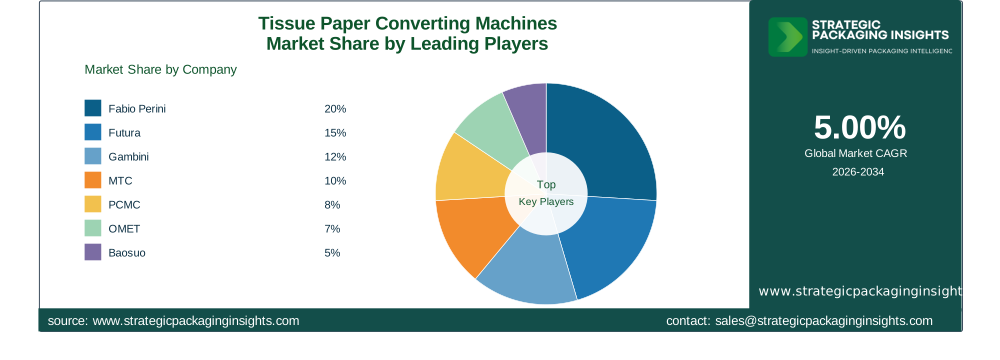
Fabio Perini, a subsidiary of Korber, is a prominent player in the market, known for its cutting-edge technology and high-speed machines. The company's focus on innovation and sustainability has positioned it as a leader in the industry. Futura, another key player, is recognized for its advanced converting solutions and commitment to customer satisfaction. The company's emphasis on R&D and product development has enabled it to capture a significant share of the market.
Gambini is also a major player in the market, offering a range of converting machines that cater to various end-use applications. The company's focus on quality and efficiency has earned it a strong reputation in the industry. Other notable players include MTC, PCMC (Barry-Wehmiller), and OMET, each of which has carved out a niche in the market through strategic partnerships and product innovation.
Baosuo and United Converting are emerging players in the market, leveraging their expertise and technological capabilities to expand their market presence. These companies are focusing on developing cost-effective and sustainable solutions to meet the evolving needs of consumers and manufacturers. As the market continues to grow, competition is expected to intensify, with companies striving to differentiate themselves through innovation and customer-centric strategies.
Key Highlights
- Market Size: USD 1.4 billion in 2025, projected to reach USD 2.2 billion by 2034.
- Growth Rate: Forecasted CAGR of 5.00% during the forecast period.
- Leading Companies: Fabio Perini, Futura, Gambini, and MTC are key players driving innovation.
- Technological Advancements: High-speed, automated machines are enhancing production efficiency.
- Sustainability Focus: Increasing emphasis on eco-friendly materials and waste reduction strategies.
- Regional Growth: Asia Pacific and Latin America offer significant growth potential.
- Market Drivers: Rising demand for hygiene products and advancements in machine technology.
Tissue Paper Converting Machines Market Segments Insights

By Product Line Analysis
The tissue paper converting machines market is segmented by product line, including toilet roll converting, kitchen towel lines, facial tissue lines, napkin machines, and interfold towel lines. Each segment caters to specific consumer needs and preferences, driving demand for specialized machines. Toilet roll converting machines are in high demand due to the widespread use of toilet paper in households and commercial establishments. Companies like Fabio Perini are leading this segment with innovative solutions that enhance production efficiency and reduce waste.
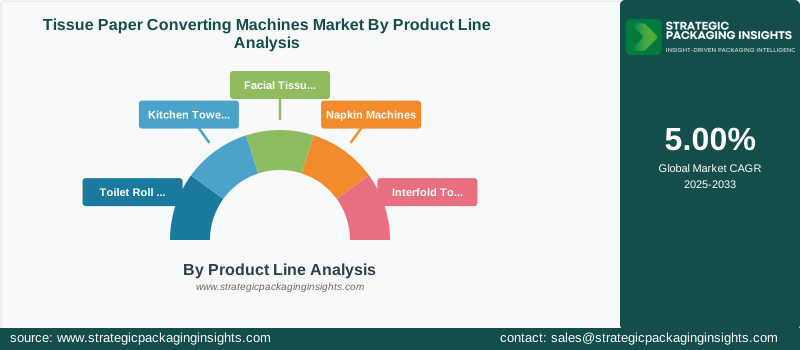
Kitchen towel lines and facial tissue lines are also experiencing significant growth, driven by the increasing demand for hygiene products. These segments require machines that can produce high-quality, soft, and absorbent tissues, meeting consumer expectations for comfort and performance. Napkin machines and interfold towel lines cater to both household and commercial applications, offering versatile solutions for various end-use scenarios. The growing emphasis on sustainability is influencing product design, with manufacturers focusing on eco-friendly materials and processes.
By Process Unit Analysis
The market is also segmented by process unit, including unwinders & embossers, rewinders, log saws, folders, and wrappers & packers. Each process unit plays a crucial role in the production of tissue paper products, impacting efficiency and quality. Unwinders & embossers are essential for preparing raw materials, while rewinders ensure precise winding of tissue rolls. Log saws are critical for cutting tissue logs into individual rolls, a process that requires precision and speed.
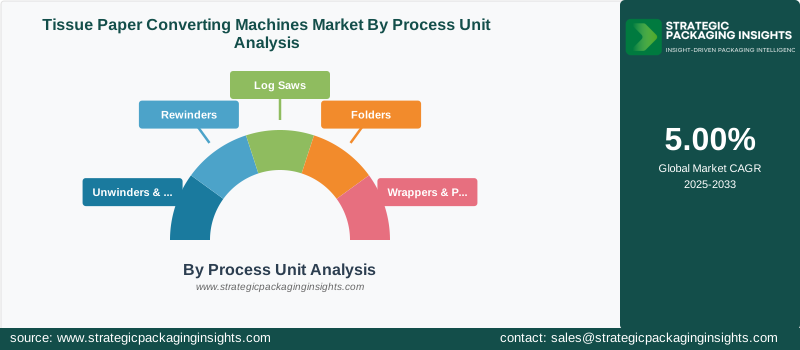
Folders and wrappers & packers are integral to the final stages of production, ensuring that finished products are neatly folded and packaged for distribution. Companies like Futura and Gambini are investing in advanced technologies to enhance the performance of these process units, improving production speed and reducing waste. The integration of automation and digital technologies is further enhancing efficiency, enabling manufacturers to meet the growing demand for tissue paper products.
By Speed Analysis
Speed is a critical factor in the tissue paper converting machines market, with segments categorized as below 400 m/min, 400-600 m/min, and above 600 m/min. High-speed machines are in demand due to their ability to produce large volumes of tissue products quickly and efficiently. Companies like Fabio Perini are leading the market with machines that offer speeds above 600 m/min, catering to the needs of large-scale manufacturers and integrated tissue mills.
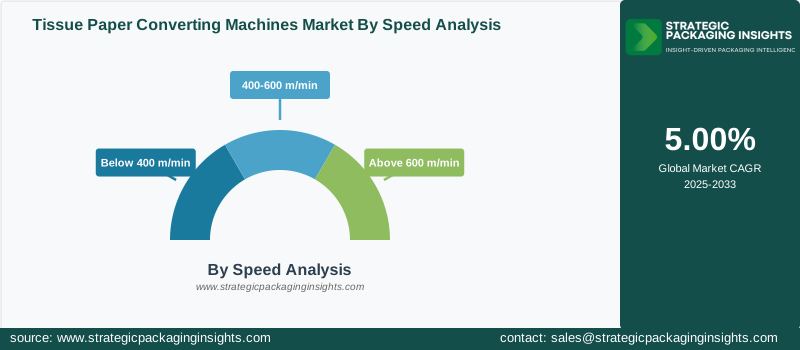
The 400-600 m/min segment is also experiencing growth, offering a balance between speed and cost-effectiveness. These machines are ideal for independent converters and private label producers looking to optimize production without incurring high operational costs. The below 400 m/min segment caters to smaller manufacturers and niche markets, providing cost-effective solutions for lower production volumes. As demand for tissue paper products continues to rise, manufacturers are investing in high-speed machines to enhance their production capabilities and meet market needs.
By End Use Analysis
The market is segmented by end use, including integrated tissue mills, independent converters, and private label producers. Integrated tissue mills are major players in the market, utilizing high-speed machines to produce large volumes of tissue products for both domestic and international markets. These mills benefit from economies of scale, enabling them to offer competitive pricing and meet the growing demand for tissue paper products.
Independent converters and private label producers are also significant contributors to the market, offering customized solutions for specific consumer needs. These companies often focus on niche markets, providing unique products that cater to regional preferences and consumer trends. The growing popularity of private label products is driving demand for converting machines that can produce high-quality, branded tissues at competitive prices. As the market continues to evolve, companies are focusing on innovation and customer-centric strategies to maintain their competitive edge.
Tissue Paper Converting Machines Market Segments
The Tissue Paper Converting Machines market has been segmented on the basis ofBy Product Line
- Toilet Roll Converting
- Kitchen Towel Lines
- Facial Tissue Lines
- Napkin Machines
- Interfold Towel Lines
By Process Unit
- Unwinders & Embossers
- Rewinders
- Log Saws
- Folders
- Wrappers & Packers
By Speed
- Below 400 m/min
- 400-600 m/min
- Above 600 m/min
By End Use
- Integrated Tissue Mills
- Independent Converters
- Private Label Producers
By Region
- North America (U.S., Canada, Mexico)
- Europe (Germany, UK, France, Italy, Spain, Rest of Europe)
- Asia Pacific (China, India, Japan, South Korea, Australia, Rest of Asia Pacific)
- Latin America (Brazil, Argentina, Rest of Latin America)
- Middle East & Africa (GCC Countries, South Africa, Rest of MEA)




