


Timber Wrap Films Market Outlook
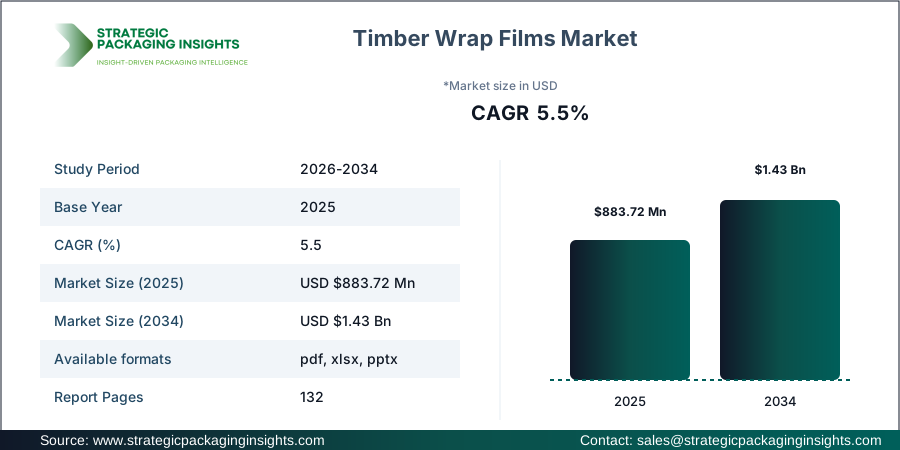
The Timber Wrap Films market size was valued at USD 883.72 million in 2025 and is anticipated to reach USD 1.43 billion by 2034, growing at a CAGR of 5.5% during the forecast period according to Strategic Packaging Insights. The market is witnessing significant growth due to the increasing demand for protective packaging solutions in the timber industry. Companies like Berry Global and RKW Group are leading the charge by innovating in film technology to enhance durability and environmental sustainability. The rising construction activities and the need for efficient timber storage solutions are further propelling the market forward, making timber wrap films an essential component in the logistics and industrial sectors.
One of the most impactful drivers of the Timber Wrap Films market is the growing emphasis on sustainable packaging solutions. Governments and environmental bodies are increasingly advocating for the use of recyclable and eco-friendly materials, which is pushing manufacturers to innovate. For instance, the European Union's stringent regulations on plastic usage are encouraging companies like Mondi and Coveris to develop films that are not only durable but also environmentally friendly. This shift towards sustainability is not just a regulatory requirement but also a consumer-driven demand, as more businesses and end-users prefer packaging solutions that minimize environmental impact.
Report Scope
| Attributes | Details |
| Report Title | Timber Wrap Films Market Size, Future Growth and Forecast 2034 |
| By Material Type | PE, PP, Woven Laminates, Recycled Films |
| By Film Type | Breathable Films, UV-Stabilized Films, Waterproof Films |
| By Application | Lumber Packaging, Timber Storage, Export Packaging |
| By End Use | Forestry, Construction, Logistics, Industrial |
| Region | Asia Pacific, North America, Latin America, Europe, Middle East & Africa |
| Base Year | 2025 |
| Historic Period | 2018-2024 |
| Forecast Period | 2026-2034 |
| Number of Pages | 132 |
| Customization Available | Yes* |
Sustainability & Circular Economy Analysis
Sustainability initiatives are reshaping the Timber Wrap Films market, with a strong focus on recyclable materials and eco-friendly innovations. Companies are increasingly adopting lightweight packaging solutions to reduce material usage and carbon footprint. For instance, the development of films using recycled materials is gaining traction, as it aligns with global efforts to minimize waste and promote circular economy practices. This trend is influencing packaging design, as manufacturers strive to create products that are both functional and environmentally responsible.
Extended Producer Responsibility (EPR) is another critical factor driving sustainability in the market. Under EPR, manufacturers are accountable for the entire lifecycle of their products, including disposal and recycling. This has led to increased investment in waste reduction strategies and the development of reusable packaging solutions. Companies like UFlex and Trioplast are at the forefront of these initiatives, focusing on reducing their carbon footprint and enhancing the recyclability of their products.
Consumer preferences are also shifting towards sustainable packaging, influencing investment decisions and supply chain strategies. As consumers become more environmentally conscious, there is a growing demand for packaging solutions that are not only effective but also sustainable. This has prompted companies to innovate and comply with packaging regulations, ensuring long-term market competitiveness. The integration of ESG (Environmental, Social, and Governance) initiatives is becoming a standard practice, further driving the market towards sustainable growth.
Packaging Value Chain & Supply Chain Analysis
The packaging value chain for Timber Wrap Films is complex, involving multiple stakeholders from raw material sourcing to end-user delivery. Raw material availability, particularly for PE and PP films, plays a crucial role in determining production capabilities and cost efficiency. Packaging converters and manufacturers like Sigma Plastics and Intertape Polymer Group are pivotal in transforming these raw materials into high-quality films that meet industry standards. Strategic partnerships with raw material suppliers ensure a steady supply chain, enhancing market performance and competitiveness.
Logistics and distribution channels are integral to the supply chain, ensuring that the films reach their intended markets efficiently. Companies are investing in advanced packaging machinery to streamline production processes and improve supply chain resilience. Localization strategies are being adopted to mitigate risks associated with global sourcing, particularly in light of recent disruptions in international trade. This approach not only enhances supply chain efficiency but also reduces transportation costs and environmental impact.
Recycling networks are becoming increasingly important in the packaging value chain, driven by the need for sustainable practices. Companies are collaborating with recycling firms to ensure that their products are part of a closed-loop system, reducing waste and promoting circular economy principles. Inventory management and procurement strategies are also evolving, with a focus on sustainability and cost-effectiveness. These efforts are crucial for maintaining a competitive edge in the market, as businesses strive to meet consumer demands for eco-friendly packaging solutions.
Opportunities & Threats
The Timber Wrap Films market presents numerous opportunities, particularly in the realm of sustainable packaging solutions. As environmental concerns continue to rise, there is a growing demand for films made from recycled and biodegradable materials. This trend offers significant growth potential for companies that can innovate and adapt to these changing consumer preferences. Additionally, the expansion of the construction and logistics sectors provides a fertile ground for the adoption of timber wrap films, as these industries require robust and reliable packaging solutions to protect their products during transportation and storage.
Another opportunity lies in the development of advanced film technologies that enhance the durability and functionality of timber wrap films. Companies that invest in research and development to create films with superior UV protection, moisture resistance, and breathability are likely to gain a competitive advantage. The increasing globalization of trade also presents opportunities for market expansion, as timber wrap films are essential for export packaging, ensuring that timber products reach international markets in optimal condition.
However, the market is not without its threats. Fluctuations in raw material prices, particularly for polyethylene and polypropylene, can impact production costs and profit margins. Additionally, stringent environmental regulations and compliance requirements pose challenges for manufacturers, necessitating continuous innovation and adaptation. The competitive landscape is also intensifying, with numerous players vying for market share, which could lead to price wars and reduced profitability.
Drivers & Challenges
One of the primary drivers of the Timber Wrap Films market is the increasing demand for protective packaging solutions in the timber industry. As construction activities surge globally, there is a heightened need for efficient timber storage and transportation solutions. Timber wrap films offer a cost-effective and reliable means of protecting timber products from environmental elements, making them indispensable in the construction and logistics sectors. Companies like Berry Global and RKW Group are capitalizing on this demand by developing innovative film technologies that enhance product durability and performance.
Another significant driver is the growing emphasis on sustainability and eco-friendly packaging solutions. Consumers and businesses alike are becoming more environmentally conscious, driving the demand for films made from recyclable and biodegradable materials. This shift towards sustainable packaging is not only a regulatory requirement but also a consumer-driven demand, as more businesses seek to minimize their environmental impact. Companies that can align their products with these sustainability trends are likely to experience increased market share and profitability.
Despite these drivers, the market faces several challenges. Fluctuations in raw material prices, particularly for polyethylene and polypropylene, can impact production costs and profit margins. Additionally, stringent environmental regulations and compliance requirements pose challenges for manufacturers, necessitating continuous innovation and adaptation. The competitive landscape is also intensifying, with numerous players vying for market share, which could lead to price wars and reduced profitability. Companies must navigate these challenges carefully to maintain their competitive edge and ensure long-term success.
Market Share Analysis
The competitive landscape of the Timber Wrap Films market is characterized by the presence of several key players who are driving innovation and growth. Companies like Berry Global, RKW Group, and Mondi hold significant market shares, leveraging their extensive product portfolios and global reach to maintain a competitive edge. These companies are investing heavily in research and development to create advanced film technologies that meet the evolving needs of the timber industry. Their focus on sustainability and eco-friendly solutions further strengthens their market position, as they align with consumer and regulatory demands for environmentally responsible packaging.
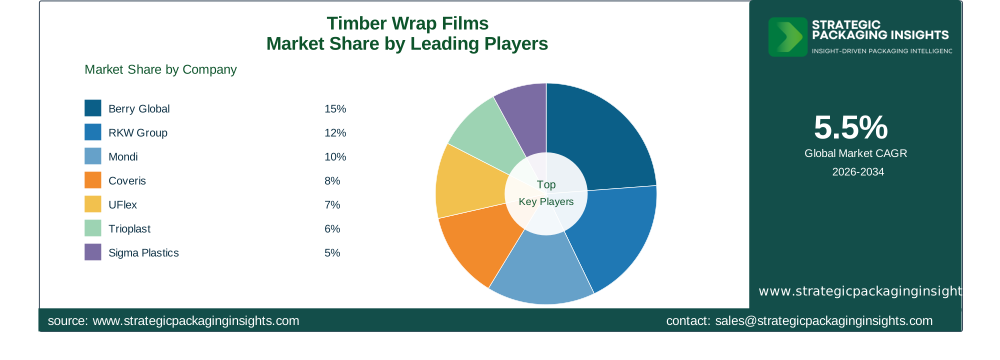
Berry Global, a leader in the packaging industry, is renowned for its innovative film solutions that cater to a wide range of applications. The company's commitment to sustainability is evident in its development of films made from recycled materials, which not only reduce environmental impact but also enhance product performance. RKW Group, another major player, is known for its high-quality films that offer superior protection and durability. The company's focus on customer-centric solutions and continuous innovation has enabled it to capture a significant share of the market.
Mondi, a global leader in packaging and paper, is at the forefront of sustainable packaging solutions. The company's extensive product portfolio includes films that are designed to meet the specific needs of the timber industry, offering enhanced protection and functionality. Coveris, UFlex, and Trioplast are also key players in the market, each bringing unique strengths and capabilities to the table. These companies are investing in advanced manufacturing technologies and strategic partnerships to expand their market presence and drive growth.
Intertape Polymer Group, Scientex, and Rani Plast are other notable players in the Timber Wrap Films market. Intertape Polymer Group is known for its innovative film solutions that cater to a diverse range of applications, while Scientex is recognized for its commitment to sustainability and eco-friendly packaging. Rani Plast, with its focus on high-quality films and customer satisfaction, has carved out a niche in the market. These companies, along with others, are shaping the competitive landscape of the Timber Wrap Films market, driving innovation and growth through their strategic initiatives and product offerings.
Key Highlights
- Market Size: The Timber Wrap Films market was valued at USD 883.72 million in 2025 and is projected to reach USD 1.43 billion by 2034.
- Growth Rate: The market is expected to grow at a CAGR of 5.5% during the forecast period.
- Leading Companies: Key players include Berry Global, RKW Group, Mondi, and Coveris.
- Sustainability Focus: Increasing demand for recyclable and eco-friendly films is driving market growth.
- Application Segments: Lumber Packaging, Timber Storage, and Export Packaging are major application areas.
- Regional Insights: Asia Pacific is expected to witness significant growth due to rising construction activities.
- Material Innovation: Development of films using recycled materials is gaining traction.
Timber Wrap Films Market Segments Insights

By Material Type Analysis
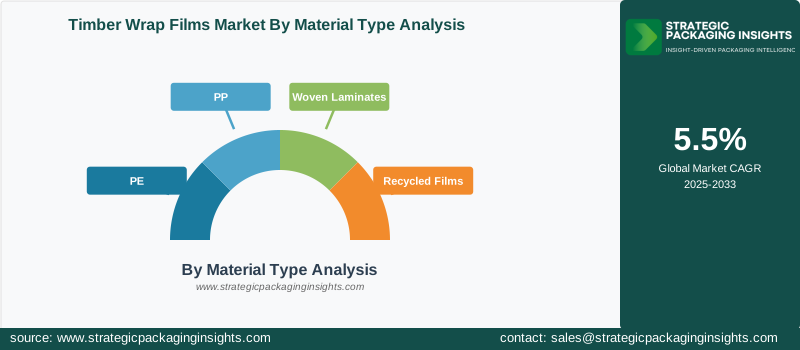
The Timber Wrap Films market is segmented by material type into PE, PP, Woven Laminates, and Recycled Films. Polyethylene (PE) films dominate the market due to their excellent durability and cost-effectiveness. They are widely used in timber packaging applications, providing robust protection against environmental elements. Polypropylene (PP) films are also gaining popularity, particularly in applications requiring higher strength and resistance to wear and tear. Woven laminates offer superior protection and are preferred for heavy-duty applications, while recycled films are gaining traction as sustainability becomes a key focus for manufacturers and consumers alike.
Recycled films are particularly noteworthy as they align with global sustainability goals and regulatory requirements. Companies are investing in advanced recycling technologies to produce high-quality films that meet industry standards. This trend is expected to drive significant growth in the recycled films segment, as more businesses seek to reduce their environmental impact. The development of innovative materials that combine durability with eco-friendliness is a key focus for manufacturers, as they strive to meet the evolving needs of the market.
By Film Type Analysis
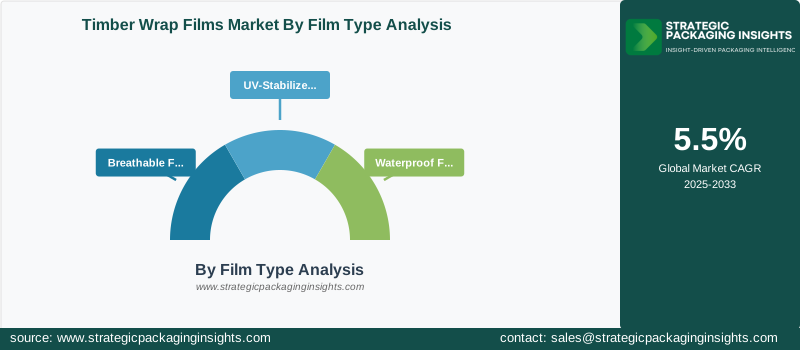
The market is further segmented by film type into Breathable Films, UV-Stabilized Films, and Waterproof Films. Breathable films are essential for applications where moisture control is critical, such as timber storage and export packaging. These films allow for air circulation while protecting the timber from external elements, ensuring optimal storage conditions. UV-stabilized films are designed to protect timber products from harmful UV rays, making them ideal for outdoor applications. Their ability to prevent degradation and discoloration extends the lifespan of timber products, making them a popular choice among manufacturers and end-users.
Waterproof films are crucial for protecting timber products from moisture and water damage, particularly during transportation and storage. These films provide a reliable barrier against water ingress, ensuring that timber products remain in pristine condition. The demand for waterproof films is expected to grow as the logistics and construction sectors expand, driving the need for robust and reliable packaging solutions. Manufacturers are focusing on developing films that offer enhanced protection and functionality, catering to the diverse needs of the market.
By Application Analysis
The Timber Wrap Films market is segmented by application into Lumber Packaging, Timber Storage, and Export Packaging. Lumber packaging is a major application area, driven by the need for protective solutions that ensure the safe transportation and storage of timber products. Timber storage applications require films that offer superior protection against environmental elements, ensuring that timber products remain in optimal condition. Export packaging is another critical application, as timber products are often shipped to international markets. Films used in export packaging must provide robust protection against moisture, UV rays, and other external factors, ensuring that timber products reach their destination in perfect condition.
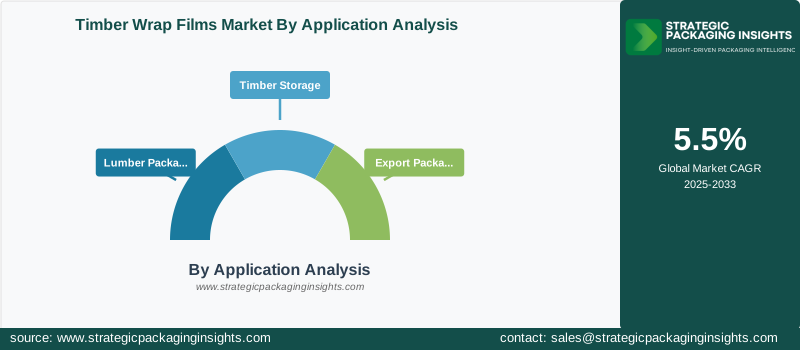
The demand for timber wrap films in these application areas is driven by the growth of the construction and logistics sectors. As these industries expand, there is an increasing need for reliable and efficient packaging solutions that protect timber products during transportation and storage. Manufacturers are focusing on developing films that offer enhanced protection and functionality, catering to the diverse needs of the market. The development of innovative film technologies that enhance durability and performance is a key focus for companies, as they strive to meet the evolving needs of the market.
By End Use Analysis
The market is segmented by end use into Forestry, Construction, Logistics, and Industrial sectors. The forestry sector is a major end-user of timber wrap films, as these films provide essential protection for timber products during storage and transportation. The construction sector is also a significant end-user, driven by the need for protective solutions that ensure the safe handling and storage of timber products on construction sites. The logistics sector requires films that offer superior protection during transportation, ensuring that timber products reach their destination in optimal condition.
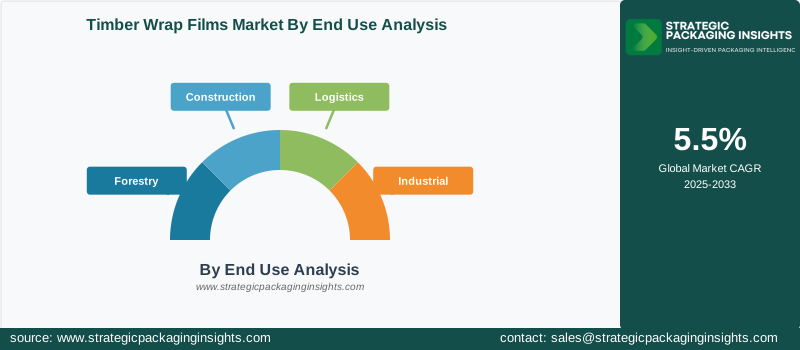
The industrial sector is another key end-user, as timber wrap films are used in a variety of applications, from packaging to storage. The demand for timber wrap films in these end-use sectors is driven by the growth of the construction and logistics industries, as well as the increasing emphasis on sustainability and eco-friendly packaging solutions. Manufacturers are focusing on developing films that offer enhanced protection and functionality, catering to the diverse needs of the market. The development of innovative film technologies that enhance durability and performance is a key focus for companies, as they strive to meet the evolving needs of the market.
Timber Wrap Films Market Segments
The Timber Wrap Films market has been segmented on the basis ofBy Material Type
- PE
- PP
- Woven Laminates
- Recycled Films
By Film Type
- Breathable Films
- UV-Stabilized Films
- Waterproof Films
By Application
- Lumber Packaging
- Timber Storage
- Export Packaging
By End Use
- Forestry
- Construction
- Logistics
- Industrial
Region
- Asia Pacific
- North America
- Latin America
- Europe
- Middle East & Africa




