


Thermal Abuse Indicator Color Additives for Food Packaging Market Outlook
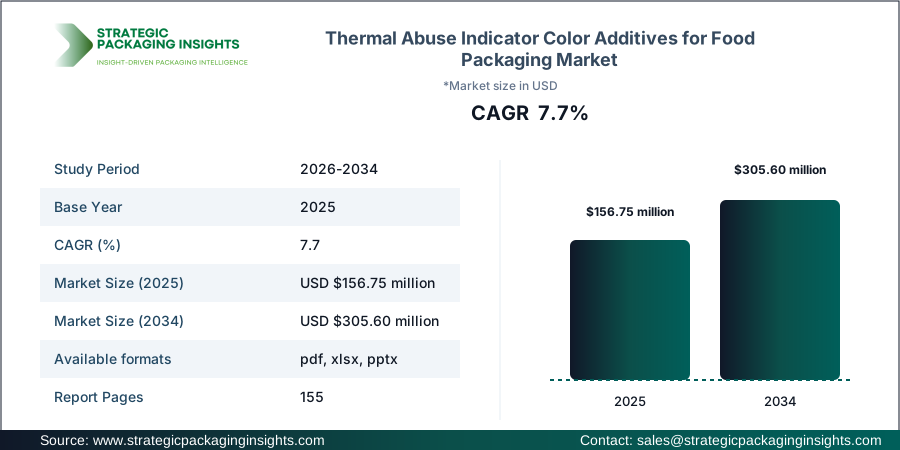
The Thermal Abuse Indicator Color Additives for Food Packaging market was valued at $156.75 million in 2025 and is projected to reach $305.60 million by 2034, growing at a CAGR of 7.7% during the forecast period 2026-2034. This market is witnessing significant growth due to the increasing demand for food safety and quality assurance in the food packaging industry. The rising consumer awareness regarding food safety, coupled with stringent regulations imposed by food safety authorities, is driving the adoption of thermal abuse indicator color additives. These additives play a crucial role in ensuring that food products are stored and transported under optimal conditions, thereby preventing spoilage and maintaining quality. The market is also benefiting from technological advancements in color additive formulations, which enhance the accuracy and reliability of temperature indicators.
Despite the promising growth prospects, the market faces certain challenges that could hinder its expansion. One of the primary restraints is the high cost associated with the development and implementation of advanced thermal abuse indicator color additives. Additionally, the market is subject to stringent regulatory requirements, which can pose barriers to entry for new players. However, the growing emphasis on sustainable packaging solutions presents significant growth potential for the market. Manufacturers are increasingly focusing on developing eco-friendly and biodegradable color additives to align with the global sustainability goals. This trend is expected to create lucrative opportunities for market players in the coming years.
Report Scope
| Attributes | Details |
| Report Title | Thermal Abuse Indicator Color Additives for Food Packaging Market Size, Future Growth and Forecast 2034 |
| Additive Type | Thermochromic Pigments, Irreversible Indicators, Color-Change Masterbatches |
| Application | Cold Chain Labels, Food Packs, Safety Indicators |
| Packaging Type | Films, Labels, Rigid Packs |
| End Use | Meat, Seafood, Dairy, Frozen Food |
| Region | Asia Pacific, North America, Latin America, Europe, Middle East & Africa |
| Base Year | 2025 |
| Historic Period | 2018-2024 |
| Forecast Period | 2026-2034 |
| Number of Pages | 155 |
| Customization Available | Yes* |
Opportunities & Threats
The Thermal Abuse Indicator Color Additives for Food Packaging market presents numerous opportunities for growth, primarily driven by the increasing demand for innovative packaging solutions. As consumers become more health-conscious, there is a growing need for packaging that ensures food safety and quality. This has led to the development of advanced thermal abuse indicators that provide real-time information about the temperature conditions of packaged food. Additionally, the rise of e-commerce and online food delivery services has further fueled the demand for reliable temperature-sensitive packaging solutions. Companies are investing in research and development to create more efficient and cost-effective color additives that cater to the evolving needs of the food packaging industry.
Another significant opportunity lies in the expansion of the market in emerging economies. Countries in Asia Pacific and Latin America are witnessing rapid urbanization and an increase in disposable incomes, leading to a surge in demand for packaged food products. This, in turn, is driving the need for advanced packaging solutions that ensure food safety and quality. Market players can capitalize on this trend by expanding their presence in these regions and offering innovative thermal abuse indicator color additives tailored to the specific needs of local consumers. Collaborations with local distributors and food manufacturers can further enhance market penetration and growth prospects.
However, the market also faces certain threats that could impact its growth trajectory. One of the primary challenges is the high cost of raw materials used in the production of thermal abuse indicator color additives. Fluctuations in raw material prices can significantly affect the profitability of manufacturers, leading to increased product prices. Additionally, the market is highly competitive, with numerous players vying for market share. This intense competition can result in price wars and margin pressures, posing a threat to the profitability of market participants. Companies need to focus on innovation and differentiation to maintain a competitive edge and sustain growth in this dynamic market.
Drivers & Challenges
The growth of the Thermal Abuse Indicator Color Additives for Food Packaging market is primarily driven by the increasing demand for food safety and quality assurance. Consumers are becoming more aware of the importance of maintaining optimal temperature conditions during the storage and transportation of food products. This has led to a surge in demand for thermal abuse indicator color additives that provide real-time information about temperature fluctuations. Additionally, stringent regulations imposed by food safety authorities are compelling food manufacturers to adopt advanced packaging solutions that ensure compliance with safety standards. The growing emphasis on reducing food waste and enhancing supply chain efficiency is further driving the adoption of these additives.
Technological advancements in color additive formulations are also playing a crucial role in driving market growth. Manufacturers are investing in research and development to create innovative and reliable thermal abuse indicators that offer enhanced accuracy and reliability. The integration of smart technologies, such as IoT and RFID, with thermal abuse indicators is further enhancing their functionality and appeal. These advancements are enabling real-time monitoring and data collection, providing valuable insights into temperature conditions and ensuring food safety. The increasing focus on sustainability and eco-friendly packaging solutions is also driving the demand for biodegradable and environmentally friendly color additives.
Despite the positive growth drivers, the market faces several challenges that could hinder its expansion. One of the primary challenges is the high cost associated with the development and implementation of advanced thermal abuse indicator color additives. The production of these additives requires specialized raw materials and complex manufacturing processes, leading to increased costs. Additionally, the market is subject to stringent regulatory requirements, which can pose barriers to entry for new players. Compliance with these regulations requires significant investments in research and development, further adding to the cost burden. Companies need to focus on cost optimization and innovation to overcome these challenges and sustain growth in the competitive market.
Market Share Analysis
The Thermal Abuse Indicator Color Additives for Food Packaging market is characterized by a highly competitive landscape, with several key players vying for market share. The market is dominated by a few major companies that have established a strong presence through extensive product portfolios and strategic partnerships. Chromatic Technologies, LCR Hallcrest, and OliKrom are among the leading players in the market, known for their innovative solutions and strong customer base. These companies have invested significantly in research and development to create advanced thermal abuse indicators that cater to the evolving needs of the food packaging industry.
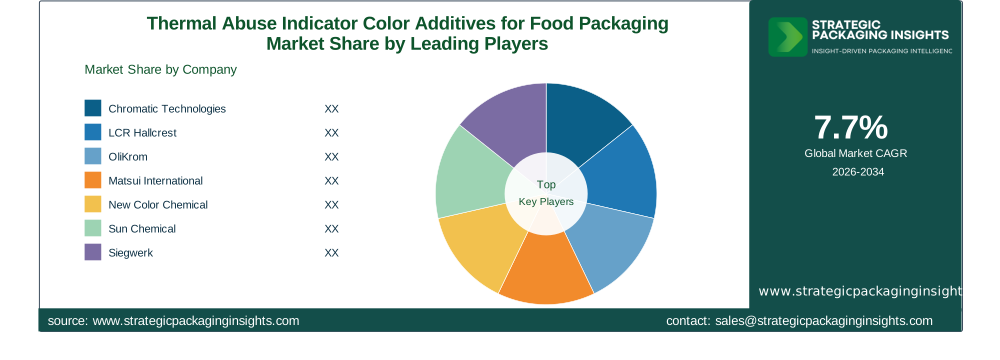
Chromatic Technologies is a prominent player in the market, known for its expertise in developing thermochromic pigments and color-change masterbatches. The company has a strong focus on innovation and sustainability, offering a wide range of eco-friendly color additives that align with global sustainability goals. LCR Hallcrest is another key player, renowned for its extensive product portfolio and strong distribution network. The company has established a strong presence in North America and Europe, catering to the growing demand for temperature-sensitive packaging solutions.
OliKrom is a leading player in the market, known for its expertise in developing irreversible indicators and smart color-change solutions. The company has a strong focus on research and development, continuously innovating to create advanced thermal abuse indicators that offer enhanced accuracy and reliability. Matsui International, New Color Chemical, and Sun Chemical are also prominent players in the market, known for their extensive product offerings and strong customer base. These companies have established a strong presence in the market through strategic partnerships and collaborations with key stakeholders in the food packaging industry.
Siegwerk, Toyo Ink, Sensient Technologies, and DIC Corporation are other notable players in the market, known for their innovative solutions and strong market presence. These companies have invested significantly in research and development to create advanced thermal abuse indicators that cater to the evolving needs of the food packaging industry. The competitive landscape of the market is characterized by intense competition, with companies focusing on innovation and differentiation to maintain a competitive edge. Strategic partnerships, mergers, and acquisitions are common strategies adopted by market players to enhance their market presence and expand their product offerings.
Key Highlights
- The market is projected to grow at a CAGR of 7.7% from 2026 to 2034, driven by increasing demand for food safety and quality assurance.
- Technological advancements in color additive formulations are enhancing the accuracy and reliability of thermal abuse indicators.
- The rise of e-commerce and online food delivery services is fueling the demand for temperature-sensitive packaging solutions.
- Emerging economies in Asia Pacific and Latin America present significant growth opportunities for market players.
- High raw material costs and intense competition pose challenges to market growth and profitability.
- Key players in the market include Chromatic Technologies, LCR Hallcrest, OliKrom, and Matsui International.
- Companies are focusing on innovation and sustainability to align with global sustainability goals and enhance market presence.
- Strategic partnerships, mergers, and acquisitions are common strategies adopted by market players to expand their product offerings.
- The market is subject to stringent regulatory requirements, posing barriers to entry for new players.
- Eco-friendly and biodegradable color additives are gaining traction in the market, driven by the growing emphasis on sustainability.
Top Countries Insights
In the Thermal Abuse Indicator Color Additives for Food Packaging market, the United States holds a significant share, driven by the stringent food safety regulations and the growing demand for innovative packaging solutions. The market in the U.S. is valued at approximately $65 million, with a CAGR of 6%. The presence of key market players and the increasing adoption of advanced packaging technologies are driving market growth. Additionally, the rise of e-commerce and online food delivery services is further fueling the demand for temperature-sensitive packaging solutions.
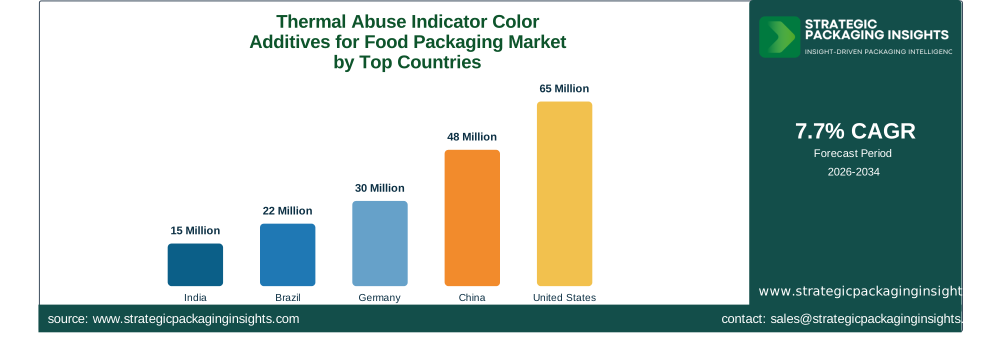
China is another key market for thermal abuse indicator color additives, with a market size of around $48 million and a CAGR of 8%. The rapid urbanization and increasing disposable incomes in China are driving the demand for packaged food products, leading to a surge in demand for advanced packaging solutions. The government's focus on food safety and quality assurance is also contributing to market growth. Companies are investing in research and development to create innovative solutions tailored to the specific needs of the Chinese market.
Germany is a prominent market in Europe, with a market size of approximately $30 million and a CAGR of 5%. The stringent food safety regulations and the growing emphasis on sustainability are driving the demand for eco-friendly and biodegradable color additives. The presence of key market players and the increasing adoption of smart packaging technologies are further contributing to market growth. Companies are focusing on innovation and differentiation to maintain a competitive edge in the German market.
Brazil is a key market in Latin America, with a market size of around $22 million and a CAGR of 7%. The increasing demand for packaged food products and the growing emphasis on food safety and quality assurance are driving market growth. The presence of key market players and the increasing adoption of advanced packaging technologies are further contributing to market growth. Companies are focusing on expanding their presence in the Brazilian market through strategic partnerships and collaborations with local distributors and food manufacturers.
India is an emerging market for thermal abuse indicator color additives, with a market size of approximately $15 million and a CAGR of 9%. The rapid urbanization and increasing disposable incomes in India are driving the demand for packaged food products, leading to a surge in demand for advanced packaging solutions. The government's focus on food safety and quality assurance is also contributing to market growth. Companies are investing in research and development to create innovative solutions tailored to the specific needs of the Indian market.
Thermal Abuse Indicator Color Additives for Food Packaging Market Segments Insights

Additive Type Analysis
The additive type segment in the Thermal Abuse Indicator Color Additives for Food Packaging market is categorized into thermochromic pigments, irreversible indicators, and color-change masterbatches. Thermochromic pigments are gaining significant traction due to their ability to provide real-time temperature information, making them ideal for applications in food packaging. These pigments change color in response to temperature fluctuations, offering a visual indication of temperature abuse. The demand for thermochromic pigments is driven by the increasing emphasis on food safety and quality assurance, as well as the growing adoption of smart packaging solutions.
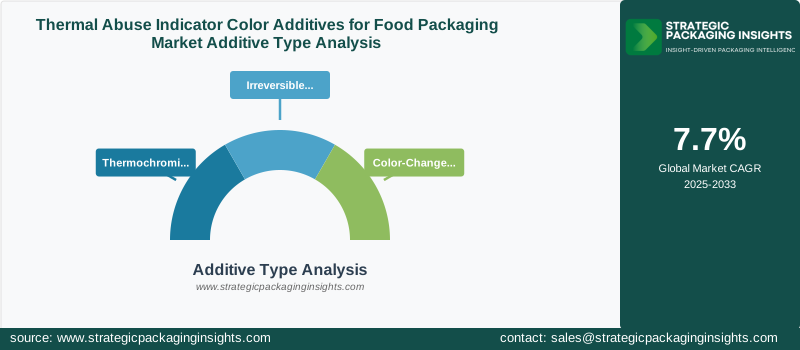
Irreversible indicators are another key sub-segment, known for their ability to provide permanent color changes in response to temperature abuse. These indicators are widely used in applications where a permanent record of temperature exposure is required, such as in cold chain logistics and food safety monitoring. The demand for irreversible indicators is driven by the stringent regulations imposed by food safety authorities and the growing need for reliable temperature-sensitive packaging solutions. Companies are investing in research and development to create advanced irreversible indicators that offer enhanced accuracy and reliability.
Color-change masterbatches are also gaining popularity in the market, driven by their versatility and ease of use. These masterbatches are used to create customized color-change effects in packaging materials, offering a wide range of design possibilities. The demand for color-change masterbatches is driven by the increasing focus on branding and differentiation in the food packaging industry. Companies are leveraging these masterbatches to create unique and visually appealing packaging solutions that enhance brand recognition and consumer engagement.
Application Analysis
The application segment in the Thermal Abuse Indicator Color Additives for Food Packaging market is categorized into cold chain labels, food packs, and safety indicators. Cold chain labels are gaining significant traction due to their ability to provide real-time temperature information, making them ideal for applications in cold chain logistics. These labels change color in response to temperature fluctuations, offering a visual indication of temperature abuse. The demand for cold chain labels is driven by the increasing emphasis on food safety and quality assurance, as well as the growing adoption of smart packaging solutions.
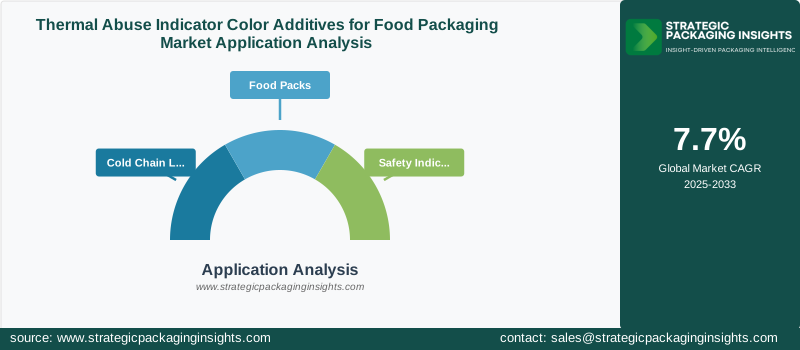
Food packs are another key sub-segment, known for their ability to provide reliable temperature-sensitive packaging solutions. These packs are widely used in applications where temperature control is critical, such as in the storage and transportation of perishable food products. The demand for food packs is driven by the stringent regulations imposed by food safety authorities and the growing need for reliable temperature-sensitive packaging solutions. Companies are investing in research and development to create advanced food packs that offer enhanced accuracy and reliability.
Safety indicators are also gaining popularity in the market, driven by their ability to provide real-time information about temperature conditions. These indicators are used to monitor temperature fluctuations and ensure food safety and quality. The demand for safety indicators is driven by the increasing focus on food safety and quality assurance, as well as the growing adoption of smart packaging solutions. Companies are leveraging these indicators to create innovative and reliable packaging solutions that enhance food safety and quality.
Packaging Type Analysis
The packaging type segment in the Thermal Abuse Indicator Color Additives for Food Packaging market is categorized into films, labels, and rigid packs. Films are gaining significant traction due to their versatility and ease of use, making them ideal for applications in food packaging. These films can be easily integrated with thermal abuse indicators, offering a wide range of design possibilities. The demand for films is driven by the increasing emphasis on food safety and quality assurance, as well as the growing adoption of smart packaging solutions.
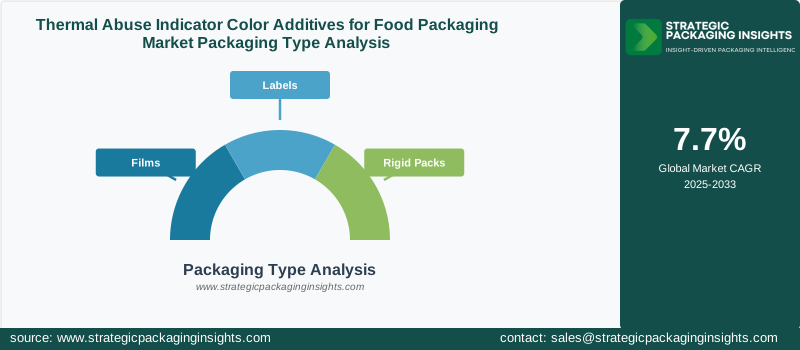
Labels are another key sub-segment, known for their ability to provide real-time temperature information. These labels change color in response to temperature fluctuations, offering a visual indication of temperature abuse. The demand for labels is driven by the stringent regulations imposed by food safety authorities and the growing need for reliable temperature-sensitive packaging solutions. Companies are investing in research and development to create advanced labels that offer enhanced accuracy and reliability.
Rigid packs are also gaining popularity in the market, driven by their ability to provide reliable temperature-sensitive packaging solutions. These packs are widely used in applications where temperature control is critical, such as in the storage and transportation of perishable food products. The demand for rigid packs is driven by the increasing focus on food safety and quality assurance, as well as the growing adoption of smart packaging solutions. Companies are leveraging these packs to create innovative and reliable packaging solutions that enhance food safety and quality.
End Use Analysis
The end use segment in the Thermal Abuse Indicator Color Additives for Food Packaging market is categorized into meat, seafood, dairy, and frozen food. Meat is a significant sub-segment, driven by the increasing demand for temperature-sensitive packaging solutions in the storage and transportation of meat products. The demand for thermal abuse indicators in meat packaging is driven by the stringent regulations imposed by food safety authorities and the growing need for reliable temperature-sensitive packaging solutions.
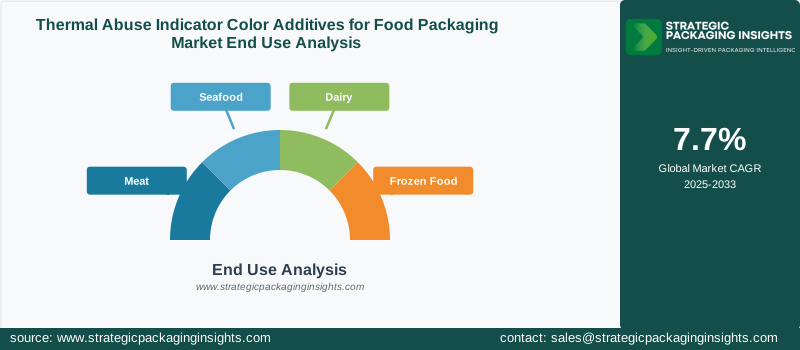
Seafood is another key sub-segment, known for its sensitivity to temperature fluctuations. The demand for thermal abuse indicators in seafood packaging is driven by the increasing emphasis on food safety and quality assurance, as well as the growing adoption of smart packaging solutions. Companies are investing in research and development to create advanced thermal abuse indicators that offer enhanced accuracy and reliability in seafood packaging.
Dairy and frozen food are also gaining popularity in the market, driven by their need for reliable temperature-sensitive packaging solutions. The demand for thermal abuse indicators in dairy and frozen food packaging is driven by the increasing focus on food safety and quality assurance, as well as the growing adoption of smart packaging solutions. Companies are leveraging these indicators to create innovative and reliable packaging solutions that enhance food safety and quality in dairy and frozen food packaging.
Thermal Abuse Indicator Color Additives for Food Packaging Market Segments
The Thermal Abuse Indicator Color Additives for Food Packaging market has been segmented on the basis ofAdditive Type
- Thermochromic Pigments
- Irreversible Indicators
- Color-Change Masterbatches
Application
- Cold Chain Labels
- Food Packs
- Safety Indicators
Packaging Type
- Films
- Labels
- Rigid Packs
End Use
- Meat
- Seafood
- Dairy
- Frozen Food
Region
- Asia Pacific
- North America
- Latin America
- Europe
- Middle East & Africa




