


Seafood Packaging Market Outlook
The seafood packaging market was valued at $21.13 billion in 2025 and is projected to reach $37.55 billion by 2034, growing at a CAGR of 6.6% during the forecast period 2026-2034. This growth is driven by increasing global demand for seafood, coupled with advancements in packaging technologies that enhance product shelf life and safety. The market is witnessing a surge in demand for sustainable and eco-friendly packaging solutions, as consumers become more environmentally conscious. Innovations in packaging materials and designs are also contributing to market expansion, as they offer improved functionality and convenience for both consumers and retailers.
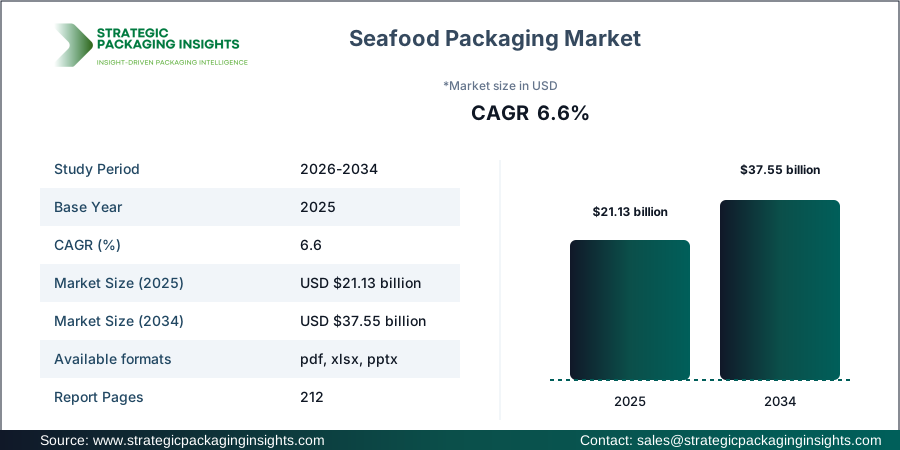
However, the market faces challenges such as stringent regulatory requirements and the high cost of advanced packaging solutions. Despite these hurdles, the seafood packaging market holds significant growth potential, driven by the rising consumption of seafood across the globe and the increasing popularity of ready-to-eat and processed seafood products. The market is also benefiting from the growing trend of online grocery shopping, which requires robust packaging solutions to ensure product integrity during transportation. As a result, companies in the seafood packaging industry are focusing on developing innovative and cost-effective packaging solutions to meet the evolving needs of consumers and retailers.
Report Scope
| Attributes | Details |
| Report Title | Seafood Packaging Market Size, Future Growth and Forecast 2034 |
| Packaging Type | Tray, Pouch, Vacuum Skin, MAP |
| Material | Plastic, Paperboard, Film |
| Application | Fresh, Frozen, Processed |
| End Use | Retail, Foodservice, Processing |
| Region | Asia Pacific, North America, Latin America, Europe, Middle East & Africa |
| Base Year | 2025 |
| Historic Period | 2018-2024 |
| Forecast Period | 2026-2034 |
| Number of Pages | 212 |
| Customization Available | Yes* |
Opportunities & Threats
The seafood packaging market presents numerous opportunities for growth, primarily driven by the increasing demand for sustainable packaging solutions. As consumers become more environmentally conscious, there is a growing preference for packaging materials that are biodegradable, recyclable, and made from renewable resources. This shift in consumer preferences is encouraging companies to invest in research and development to create innovative packaging solutions that meet these demands. Additionally, the rise in seafood consumption, particularly in emerging markets, is creating new opportunities for market expansion. As disposable incomes increase and dietary preferences shift towards healthier options, the demand for seafood and, consequently, seafood packaging is expected to rise significantly.
Another opportunity lies in the technological advancements in packaging materials and designs. Innovations such as vacuum skin packaging and modified atmosphere packaging (MAP) are gaining popularity due to their ability to extend the shelf life of seafood products and maintain their freshness. These advanced packaging solutions are particularly appealing to retailers and consumers who prioritize product quality and safety. Furthermore, the growing trend of online grocery shopping is driving the demand for robust and secure packaging solutions that can withstand the rigors of transportation and ensure product integrity upon delivery.
Despite the promising opportunities, the seafood packaging market faces several threats that could hinder its growth. One of the primary challenges is the stringent regulatory environment governing food packaging materials. Compliance with these regulations can be costly and time-consuming, particularly for small and medium-sized enterprises. Additionally, the high cost of advanced packaging solutions may deter some companies from adopting these technologies, especially in price-sensitive markets. The market is also vulnerable to fluctuations in raw material prices, which can impact the overall cost of packaging solutions and affect profit margins.
Drivers & Challenges
The seafood packaging market is driven by several key factors, including the increasing global demand for seafood and the growing emphasis on food safety and quality. As consumers become more health-conscious, there is a rising preference for seafood as a source of lean protein and essential nutrients. This trend is driving the demand for seafood packaging solutions that can preserve the freshness and quality of products while ensuring their safety for consumption. Additionally, the expansion of the global seafood trade is contributing to market growth, as it necessitates the use of effective packaging solutions to facilitate the transportation and distribution of seafood products across long distances.
Another significant driver of the seafood packaging market is the advancement in packaging technologies. Innovations such as vacuum skin packaging and modified atmosphere packaging (MAP) are gaining traction due to their ability to extend the shelf life of seafood products and maintain their freshness. These technologies are particularly appealing to retailers and consumers who prioritize product quality and safety. Furthermore, the increasing popularity of ready-to-eat and processed seafood products is driving the demand for convenient and functional packaging solutions that cater to the needs of busy consumers.
However, the market also faces several challenges that could impede its growth. One of the primary challenges is the stringent regulatory environment governing food packaging materials. Compliance with these regulations can be costly and time-consuming, particularly for small and medium-sized enterprises. Additionally, the high cost of advanced packaging solutions may deter some companies from adopting these technologies, especially in price-sensitive markets. The market is also vulnerable to fluctuations in raw material prices, which can impact the overall cost of packaging solutions and affect profit margins. Companies in the seafood packaging industry must navigate these challenges while continuing to innovate and meet the evolving needs of consumers and retailers.
Market Share Analysis
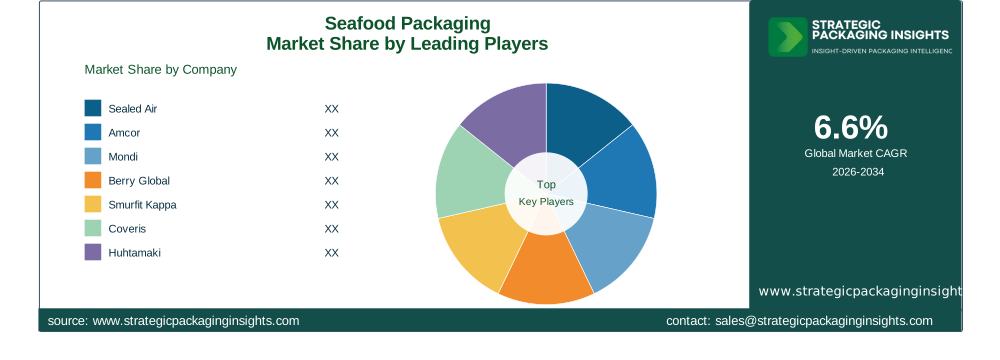
The seafood packaging market is characterized by a competitive landscape with several key players vying for market share. Companies such as Sealed Air, Amcor, Mondi, Berry Global, Smurfit Kappa, Coveris, Huhtamaki, WestRock, LINPAC, and Sonoco are some of the prominent players in the industry. These companies are focusing on expanding their product portfolios and investing in research and development to create innovative packaging solutions that cater to the evolving needs of consumers and retailers. The competitive landscape is further intensified by the presence of numerous regional and local players who offer cost-effective packaging solutions to cater to the specific needs of their markets.
Sealed Air is a leading player in the seafood packaging market, known for its innovative packaging solutions that enhance product safety and extend shelf life. The company has a strong presence in the global market and is continuously investing in research and development to create sustainable and eco-friendly packaging solutions. Amcor, another major player, is renowned for its extensive range of packaging solutions that cater to various industries, including seafood. The company is committed to sustainability and has set ambitious targets to reduce its environmental footprint.
Mondi is a global leader in packaging and paper, offering a wide range of packaging solutions for the seafood industry. The company is focused on innovation and sustainability, with a strong emphasis on creating packaging solutions that meet the needs of consumers and retailers. Berry Global is another key player in the market, known for its diverse portfolio of packaging solutions that cater to various industries, including seafood. The company is committed to sustainability and is continuously investing in research and development to create innovative and eco-friendly packaging solutions.
Smurfit Kappa, Coveris, Huhtamaki, WestRock, LINPAC, and Sonoco are also significant players in the seafood packaging market, each with its unique strengths and capabilities. These companies are focused on expanding their product offerings and enhancing their market presence through strategic partnerships and acquisitions. The competitive landscape of the seafood packaging market is dynamic, with companies continuously striving to innovate and meet the evolving needs of consumers and retailers.
Key Highlights
- The seafood packaging market is projected to grow from $21.13 billion in 2025 to $37.55 billion by 2034, at a CAGR of 6.6%.
- Increasing demand for sustainable and eco-friendly packaging solutions is driving market growth.
- Technological advancements in packaging materials and designs are enhancing product shelf life and safety.
- The rise in seafood consumption, particularly in emerging markets, is creating new opportunities for market expansion.
- Stringent regulatory requirements and high costs of advanced packaging solutions pose challenges to market growth.
- Key players in the market include Sealed Air, Amcor, Mondi, Berry Global, and Smurfit Kappa.
- The market is benefiting from the growing trend of online grocery shopping, which requires robust packaging solutions.
Top Countries Insights
In the seafood packaging market, the United States stands out as a key player, with a market size of approximately $5.2 billion and a CAGR of 5%. The country's growth is driven by the increasing demand for seafood and the rising popularity of sustainable packaging solutions. The U.S. market is also benefiting from advancements in packaging technologies that enhance product shelf life and safety. However, the market faces challenges such as stringent regulatory requirements and the high cost of advanced packaging solutions.
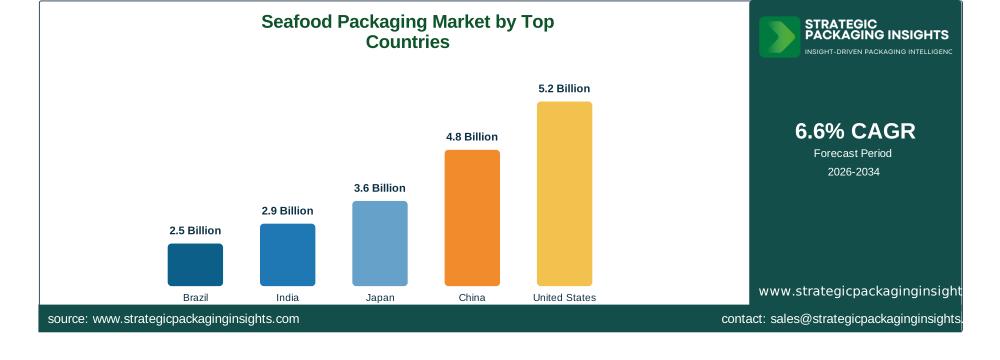
China is another significant market for seafood packaging, with a market size of around $4.8 billion and a CAGR of 7%. The country's growth is fueled by the rising consumption of seafood and the increasing demand for convenient and functional packaging solutions. China's market is also benefiting from the growing trend of online grocery shopping, which requires robust packaging solutions to ensure product integrity during transportation. However, the market faces challenges such as fluctuations in raw material prices and the need for compliance with stringent regulatory requirements.
Japan, with a market size of approximately $3.6 billion and a CAGR of 4%, is a key player in the seafood packaging market. The country's growth is driven by the increasing demand for seafood and the rising popularity of ready-to-eat and processed seafood products. Japan's market is also benefiting from advancements in packaging technologies that enhance product shelf life and safety. However, the market faces challenges such as the high cost of advanced packaging solutions and the need for compliance with stringent regulatory requirements.
India, with a market size of around $2.9 billion and a CAGR of 8%, is an emerging market for seafood packaging. The country's growth is fueled by the rising consumption of seafood and the increasing demand for sustainable and eco-friendly packaging solutions. India's market is also benefiting from the growing trend of online grocery shopping, which requires robust packaging solutions to ensure product integrity during transportation. However, the market faces challenges such as fluctuations in raw material prices and the need for compliance with stringent regulatory requirements.
Brazil, with a market size of approximately $2.5 billion and a CAGR of 6%, is a key player in the seafood packaging market. The country's growth is driven by the increasing demand for seafood and the rising popularity of sustainable packaging solutions. Brazil's market is also benefiting from advancements in packaging technologies that enhance product shelf life and safety. However, the market faces challenges such as the high cost of advanced packaging solutions and the need for compliance with stringent regulatory requirements.
Seafood Packaging Market Segments Insights

Packaging Type Analysis
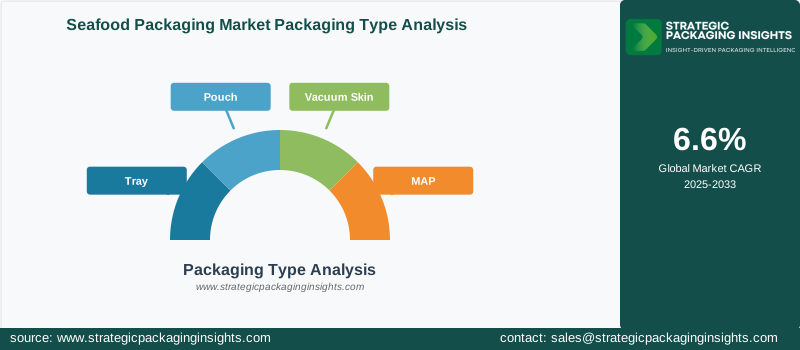
The seafood packaging market is segmented by packaging type into tray, pouch, vacuum skin, and modified atmosphere packaging (MAP). Tray packaging is widely used due to its ability to provide excellent protection and presentation for seafood products. It is particularly popular in retail settings, where product visibility and appeal are crucial. Pouch packaging, on the other hand, is gaining traction due to its convenience and flexibility. It is lightweight, easy to handle, and offers excellent barrier properties, making it ideal for both fresh and processed seafood products. Vacuum skin packaging is another innovative solution that is gaining popularity due to its ability to extend the shelf life of seafood products and maintain their freshness. This packaging type is particularly appealing to retailers and consumers who prioritize product quality and safety. Modified atmosphere packaging (MAP) is also gaining traction due to its ability to preserve the freshness and quality of seafood products by altering the atmospheric composition inside the packaging.
Material Analysis
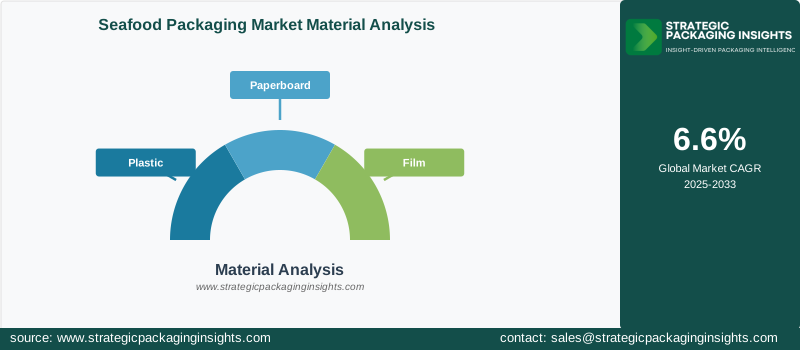
The seafood packaging market is segmented by material into plastic, paperboard, and film. Plastic is the most commonly used material in seafood packaging due to its versatility, durability, and cost-effectiveness. It offers excellent barrier properties, which help preserve the freshness and quality of seafood products. However, the growing environmental concerns associated with plastic waste are driving the demand for alternative materials. Paperboard is gaining popularity as a sustainable and eco-friendly packaging solution. It is biodegradable, recyclable, and made from renewable resources, making it an attractive option for environmentally conscious consumers. Film packaging is also widely used in the seafood industry due to its excellent barrier properties and flexibility. It is particularly popular for vacuum skin packaging and modified atmosphere packaging (MAP), where maintaining product freshness and quality is crucial.
Application Analysis
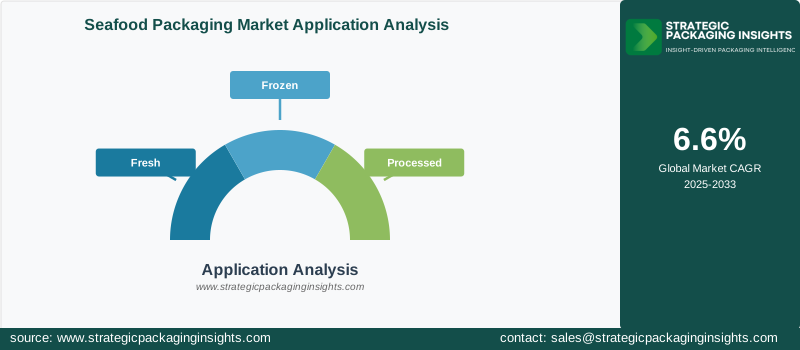
The seafood packaging market is segmented by application into fresh, frozen, and processed seafood products. Fresh seafood packaging is crucial for preserving the quality and safety of products, as it helps maintain their freshness and prevent spoilage. Vacuum skin packaging and modified atmosphere packaging (MAP) are popular choices for fresh seafood due to their ability to extend shelf life and maintain product quality. Frozen seafood packaging is also a significant segment, as it requires robust packaging solutions that can withstand low temperatures and prevent freezer burn. Pouch packaging and tray packaging are commonly used for frozen seafood due to their excellent barrier properties and durability. Processed seafood packaging is another important segment, as it caters to the growing demand for ready-to-eat and convenience foods. Packaging solutions for processed seafood must provide excellent protection and presentation, as well as convenience for consumers.
End Use Analysis
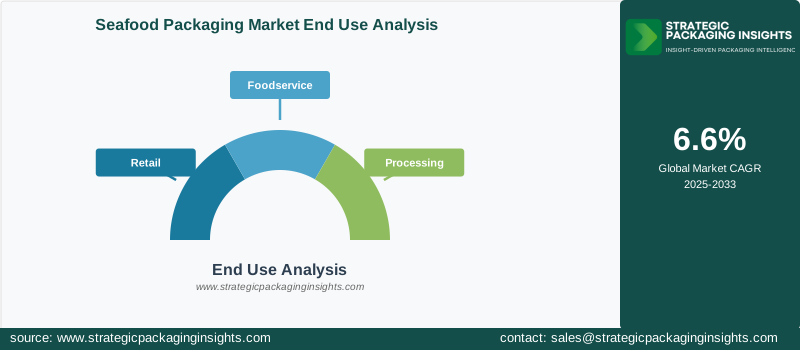
The seafood packaging market is segmented by end use into retail, foodservice, and processing. Retail is the largest end-use segment, as it requires packaging solutions that enhance product visibility and appeal to consumers. Tray packaging and pouch packaging are popular choices in the retail segment due to their excellent presentation and convenience. Foodservice is another significant end-use segment, as it requires packaging solutions that are easy to handle and provide excellent protection for seafood products. Vacuum skin packaging and modified atmosphere packaging (MAP) are popular choices in the foodservice segment due to their ability to extend shelf life and maintain product quality. The processing segment is also an important end-use segment, as it requires packaging solutions that can withstand the rigors of processing and transportation. Film packaging and plastic packaging are commonly used in the processing segment due to their durability and cost-effectiveness.
Seafood Packaging Market Segments
The Seafood Packaging market has been segmented on the basis ofPackaging Type
- Tray
- Pouch
- Vacuum Skin
- MAP
Material
- Plastic
- Paperboard
- Film
Application
- Fresh
- Frozen
- Processed
End Use
- Retail
- Foodservice
- Processing
Region
- Asia Pacific
- North America
- Latin America
- Europe
- Middle East & Africa




