


Temperature and Freshness Sensors Market Outlook
The Temperature and Freshness Sensors market was valued at $6.20 billion in 2025 and is projected to reach $14.26 billion by 2034, growing at a CAGR of 9.7% during the forecast period 2026-2034. This market is experiencing significant growth due to the increasing demand for food safety and quality assurance across the globe. The rising consumer awareness regarding foodborne illnesses and the need for maintaining the freshness of perishable goods are driving the adoption of these sensors. Additionally, the pharmaceutical industry is increasingly utilizing these sensors to ensure the integrity of temperature-sensitive drugs and vaccines, further propelling market growth. The integration of advanced technologies such as IoT and AI in sensor systems is enhancing their efficiency and accuracy, making them indispensable in various industries.
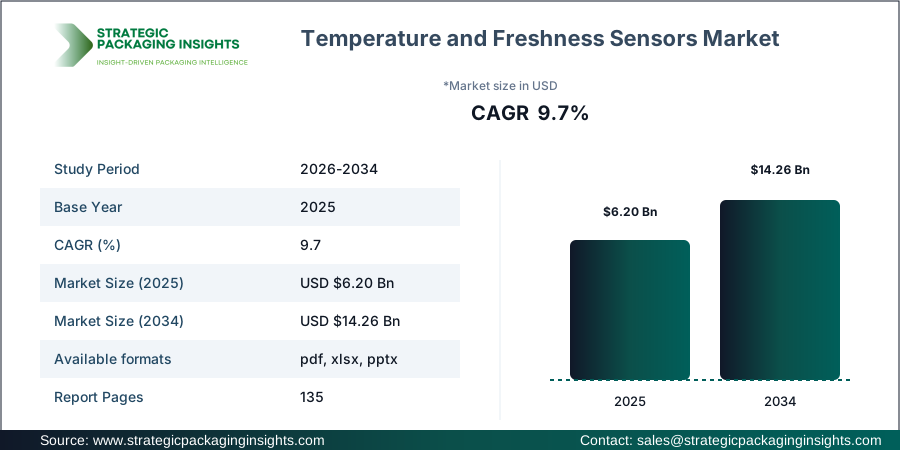
However, the market faces challenges such as high initial costs and the complexity of sensor integration in existing systems. Regulatory standards and compliance requirements also pose significant barriers to market entry for new players. Despite these challenges, the market holds immense potential for growth, driven by technological advancements and the increasing adoption of smart packaging solutions. The development of cost-effective and easy-to-use sensors is expected to open new avenues for market expansion. Furthermore, the growing trend of online grocery shopping and the need for efficient cold chain logistics are anticipated to create lucrative opportunities for market players in the coming years.
Report Scope
| Attributes | Details |
| Report Title | Temperature and Freshness Sensors Market Size, Future Growth and Forecast 2034 |
| Sensor Type | Time-Temp, Freshness, RFID |
| Technology | Wireless, Wired |
| End Use | Food, Pharma |
| Form | Labels, Tags |
| Region | Asia Pacific, North America, Latin America, Europe, Middle East & Africa |
| Base Year | 2025 |
| Historic Period | 2018-2024 |
| Forecast Period | 2026-2034 |
| Number of Pages | 135 |
| Customization Available | Yes* |
Opportunities & Threats
The Temperature and Freshness Sensors market presents numerous opportunities, particularly in the food and beverage industry. With the increasing demand for fresh and safe food products, there is a growing need for effective monitoring solutions to ensure product quality throughout the supply chain. The adoption of temperature and freshness sensors in smart packaging solutions is gaining traction, providing real-time data on product conditions and enabling timely interventions to prevent spoilage. This trend is expected to drive market growth, as manufacturers and retailers seek to enhance consumer trust and reduce food waste. Additionally, the integration of IoT and AI technologies in sensor systems is creating new opportunities for innovation, allowing for more accurate and efficient monitoring of product conditions.
Another significant opportunity lies in the pharmaceutical industry, where the demand for temperature-sensitive drugs and vaccines is on the rise. The COVID-19 pandemic has highlighted the importance of maintaining the integrity of pharmaceutical products during transportation and storage. Temperature and freshness sensors play a crucial role in ensuring compliance with regulatory standards and preventing product degradation. As the pharmaceutical industry continues to expand, the demand for these sensors is expected to grow, providing lucrative opportunities for market players. Furthermore, the increasing focus on sustainability and reducing carbon footprints is driving the adoption of eco-friendly sensor solutions, opening new avenues for market growth.
Despite the promising opportunities, the market faces several threats that could hinder its growth. One of the primary challenges is the high cost of sensor systems, which can be a significant barrier for small and medium-sized enterprises. Additionally, the complexity of integrating sensors into existing supply chain systems can pose challenges for companies looking to adopt these technologies. Regulatory compliance and the need to adhere to stringent standards can also be a deterrent for new entrants in the market. Moreover, the rapid pace of technological advancements can lead to obsolescence of existing sensor systems, requiring continuous investment in research and development to stay competitive.
Drivers & Challenges
The Temperature and Freshness Sensors market is primarily driven by the increasing demand for food safety and quality assurance. Consumers are becoming more aware of the health risks associated with foodborne illnesses, leading to a growing demand for effective monitoring solutions. Temperature and freshness sensors provide real-time data on product conditions, enabling timely interventions to prevent spoilage and ensure product quality. This trend is further supported by the rising adoption of smart packaging solutions, which integrate sensors to provide enhanced visibility and control over the supply chain. Additionally, the growing trend of online grocery shopping is driving the need for efficient cold chain logistics, further boosting the demand for these sensors.
Another key driver of market growth is the increasing adoption of temperature and freshness sensors in the pharmaceutical industry. The need to maintain the integrity of temperature-sensitive drugs and vaccines is becoming increasingly important, particularly in light of the COVID-19 pandemic. These sensors play a crucial role in ensuring compliance with regulatory standards and preventing product degradation. The integration of advanced technologies such as IoT and AI in sensor systems is enhancing their efficiency and accuracy, making them indispensable in various industries. Furthermore, the growing focus on sustainability and reducing carbon footprints is driving the adoption of eco-friendly sensor solutions, providing additional impetus for market growth.
Despite the positive drivers, the market faces several challenges that could hinder its growth. One of the primary challenges is the high cost of sensor systems, which can be a significant barrier for small and medium-sized enterprises. Additionally, the complexity of integrating sensors into existing supply chain systems can pose challenges for companies looking to adopt these technologies. Regulatory compliance and the need to adhere to stringent standards can also be a deterrent for new entrants in the market. Moreover, the rapid pace of technological advancements can lead to obsolescence of existing sensor systems, requiring continuous investment in research and development to stay competitive. Addressing these challenges will be crucial for market players to capitalize on the growth opportunities in this dynamic market.
Market Share Analysis
The competitive landscape of the Temperature and Freshness Sensors market is characterized by the presence of several key players who are actively engaged in research and development to enhance their product offerings. Companies such as 3M, Avery Dennison, Honeywell, Carrier Global, Emerson Electric, Sensitech, Berlinger & Co., Testo, Vaisala, and Zebra Technologies are leading the market with their innovative sensor solutions. These companies are focusing on strategic partnerships, mergers, and acquisitions to expand their market presence and strengthen their product portfolios. The market is highly competitive, with players vying for market share through continuous innovation and technological advancements.
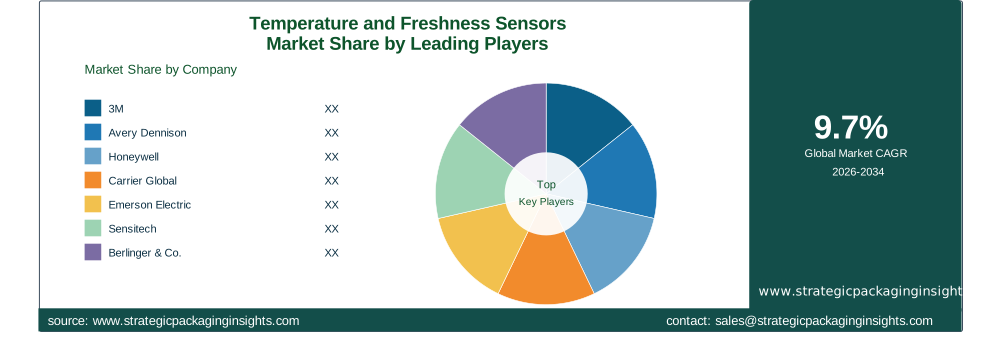
3M is a prominent player in the market, known for its advanced sensor technologies and strong focus on research and development. The company offers a wide range of temperature and freshness sensors that cater to various industries, including food and pharmaceuticals. Avery Dennison is another key player, renowned for its innovative smart packaging solutions that integrate temperature and freshness sensors to enhance product quality and safety. Honeywell, with its extensive experience in sensor technologies, provides a comprehensive range of solutions that address the needs of the food and pharmaceutical industries.
Carrier Global is a leading provider of temperature and freshness sensors, offering solutions that ensure the integrity of temperature-sensitive products throughout the supply chain. Emerson Electric is known for its cutting-edge sensor technologies that provide real-time data on product conditions, enabling timely interventions to prevent spoilage. Sensitech, a subsidiary of Carrier Global, specializes in cold chain monitoring solutions that integrate temperature and freshness sensors to ensure product quality and safety. Berlinger & Co. is a key player in the market, offering innovative sensor solutions that cater to the needs of the pharmaceutical industry.
Testo, Vaisala, and Zebra Technologies are also significant players in the market, known for their advanced sensor solutions that provide accurate and reliable data on product conditions. These companies are focusing on expanding their product portfolios and enhancing their technological capabilities to stay competitive in the market. The market is witnessing a growing trend of strategic collaborations and partnerships among key players to leverage each other's strengths and expand their market presence. As the demand for temperature and freshness sensors continues to grow, these companies are well-positioned to capitalize on the emerging opportunities and drive market growth.
Key Highlights
- The Temperature and Freshness Sensors market is projected to grow at a CAGR of 9.7% from 2026 to 2034.
- Increasing demand for food safety and quality assurance is driving market growth.
- The pharmaceutical industry is a significant end-user of temperature and freshness sensors.
- Integration of IoT and AI technologies is enhancing sensor efficiency and accuracy.
- High initial costs and regulatory compliance are major challenges for market players.
- Smart packaging solutions are gaining traction, providing real-time data on product conditions.
- Strategic partnerships and collaborations are key strategies for market expansion.
Top Countries Insights
In the Temperature and Freshness Sensors market, the United States holds a significant share, driven by the strong presence of key market players and the increasing demand for food safety and quality assurance. The market in the U.S. is valued at approximately $2.5 billion, with a CAGR of 8%. The country's robust regulatory framework and the growing trend of online grocery shopping are key drivers of market growth. However, the high cost of sensor systems and the complexity of integration pose challenges for market players.
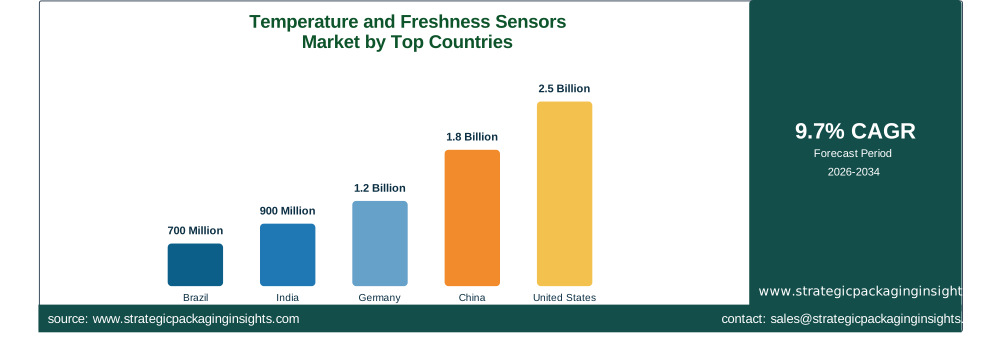
China is another major market for temperature and freshness sensors, with a market size of around $1.8 billion and a CAGR of 12%. The country's rapidly growing food and pharmaceutical industries are driving the demand for these sensors. The Chinese government's focus on food safety and quality assurance is further boosting market growth. However, the market faces challenges such as regulatory compliance and the need for continuous technological advancements.
Germany is a key market in Europe, with a market size of approximately $1.2 billion and a CAGR of 9%. The country's strong focus on sustainability and reducing carbon footprints is driving the adoption of eco-friendly sensor solutions. The growing trend of smart packaging solutions is also contributing to market growth. However, the high cost of sensor systems and regulatory compliance are significant challenges for market players.
India is an emerging market for temperature and freshness sensors, with a market size of around $900 million and a CAGR of 14%. The country's rapidly growing food and pharmaceutical industries are driving the demand for these sensors. The Indian government's focus on food safety and quality assurance is further boosting market growth. However, the market faces challenges such as regulatory compliance and the need for continuous technological advancements.
Brazil is a significant market in Latin America, with a market size of approximately $700 million and a CAGR of 10%. The country's growing food and beverage industry is driving the demand for temperature and freshness sensors. The Brazilian government's focus on food safety and quality assurance is further boosting market growth. However, the market faces challenges such as regulatory compliance and the need for continuous technological advancements.
Temperature and Freshness Sensors Market Segments Insights

Sensor Type Analysis
The Temperature and Freshness Sensors market is segmented by sensor type into Time-Temp, Freshness, and RFID sensors. Time-Temp sensors are widely used in the food and pharmaceutical industries to monitor temperature variations and ensure product quality. These sensors provide real-time data on temperature conditions, enabling timely interventions to prevent spoilage. The growing demand for food safety and quality assurance is driving the adoption of Time-Temp sensors, making them a significant segment in the market. Freshness sensors, on the other hand, are gaining traction due to their ability to detect spoilage and ensure product freshness. These sensors are increasingly being integrated into smart packaging solutions, providing enhanced visibility and control over the supply chain.
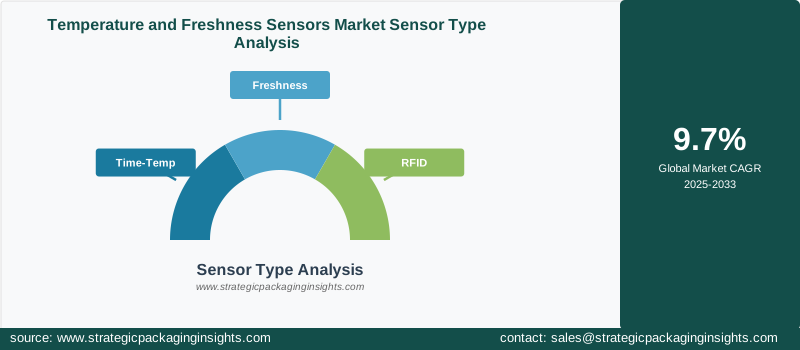
RFID sensors are also a key segment in the market, offering advanced tracking and monitoring capabilities. These sensors are widely used in the logistics and supply chain industries to ensure the integrity of temperature-sensitive products. The integration of RFID sensors with IoT and AI technologies is enhancing their efficiency and accuracy, making them indispensable in various industries. The growing trend of online grocery shopping and the need for efficient cold chain logistics are further boosting the demand for RFID sensors. As the market continues to evolve, the development of cost-effective and easy-to-use sensor solutions is expected to drive the growth of these segments.
Technology Analysis
The Temperature and Freshness Sensors market is segmented by technology into Wireless and Wired sensors. Wireless sensors are gaining popularity due to their ease of installation and ability to provide real-time data on product conditions. These sensors are widely used in the food and pharmaceutical industries to monitor temperature variations and ensure product quality. The integration of wireless sensors with IoT and AI technologies is enhancing their efficiency and accuracy, making them a preferred choice for many industries. The growing trend of smart packaging solutions is further driving the adoption of wireless sensors, providing enhanced visibility and control over the supply chain.
Wired sensors, on the other hand, are known for their reliability and accuracy in monitoring temperature conditions. These sensors are widely used in industries where real-time data is critical for ensuring product quality and safety. The growing demand for food safety and quality assurance is driving the adoption of wired sensors, making them a significant segment in the market. However, the high cost of installation and maintenance can be a barrier for some companies. Despite this, the market for wired sensors is expected to grow, driven by the increasing need for accurate and reliable monitoring solutions.
End Use Analysis
The Temperature and Freshness Sensors market is segmented by end use into Food and Pharma industries. The food industry is a major end-user of temperature and freshness sensors, driven by the increasing demand for food safety and quality assurance. These sensors provide real-time data on product conditions, enabling timely interventions to prevent spoilage and ensure product quality. The growing trend of online grocery shopping and the need for efficient cold chain logistics are further boosting the demand for these sensors in the food industry. The integration of sensors into smart packaging solutions is also contributing to market growth, providing enhanced visibility and control over the supply chain.
The pharmaceutical industry is another significant end-user of temperature and freshness sensors, driven by the need to maintain the integrity of temperature-sensitive drugs and vaccines. These sensors play a crucial role in ensuring compliance with regulatory standards and preventing product degradation. The COVID-19 pandemic has highlighted the importance of maintaining the integrity of pharmaceutical products during transportation and storage, further boosting the demand for these sensors. As the pharmaceutical industry continues to expand, the demand for temperature and freshness sensors is expected to grow, providing lucrative opportunities for market players.
Form Analysis
The Temperature and Freshness Sensors market is segmented by form into Labels and Tags. Labels are widely used in the food and pharmaceutical industries to provide real-time data on product conditions. These sensors are integrated into smart packaging solutions, providing enhanced visibility and control over the supply chain. The growing demand for food safety and quality assurance is driving the adoption of labels, making them a significant segment in the market. The integration of labels with IoT and AI technologies is enhancing their efficiency and accuracy, making them indispensable in various industries.
Tags, on the other hand, are known for their advanced tracking and monitoring capabilities. These sensors are widely used in the logistics and supply chain industries to ensure the integrity of temperature-sensitive products. The growing trend of online grocery shopping and the need for efficient cold chain logistics are further boosting the demand for tags. As the market continues to evolve, the development of cost-effective and easy-to-use sensor solutions is expected to drive the growth of these segments. The increasing focus on sustainability and reducing carbon footprints is also driving the adoption of eco-friendly sensor solutions, providing additional impetus for market growth.
Temperature and Freshness Sensors Market Segments
The Temperature and Freshness Sensors market has been segmented on the basis ofSensor Type
- Time-Temp
- Freshness
- RFID
Technology
- Wireless
- Wired
End Use
- Food
- Pharma
Form
- Labels
- Tags
Region
- Asia Pacific
- North America
- Latin America
- Europe
- Middle East & Africa




