


Tape Stretching Line Market Outlook
The Tape Stretching Line market size was valued at USD 949.26 million in 2025 and is anticipated to reach USD 1.49 billion by 2034, growing at a CAGR of 5.1% during the forecast period according to Strategic Packaging Insights. The market is witnessing significant growth due to the increasing demand for efficient and high-speed production lines in the packaging industry. Companies like Starlinger and Windmöller & Hölscher are leading the charge by innovating new technologies that enhance the efficiency and output of tape stretching lines. The demand for lightweight and durable packaging solutions is driving the adoption of advanced tape stretching lines, which are crucial for producing high-quality tapes used in various applications.
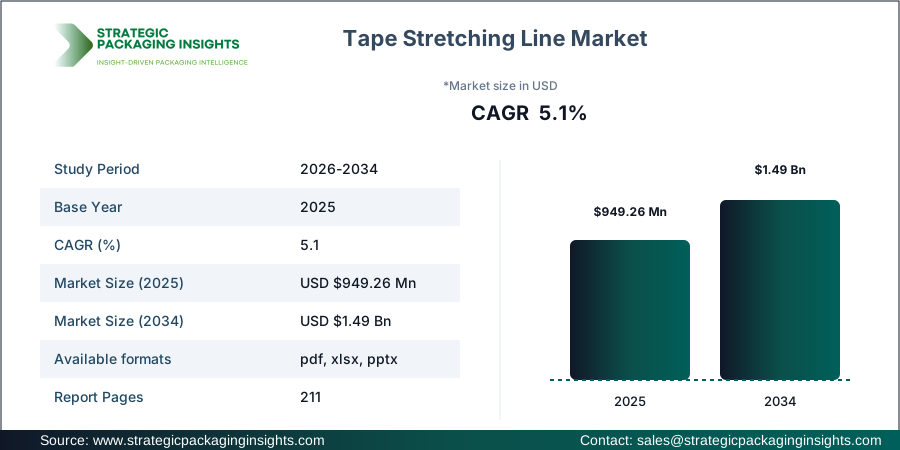
One of the most impactful drivers of the Tape Stretching Line market is the growing emphasis on sustainable and eco-friendly packaging solutions. Governments worldwide are implementing stringent regulations to reduce plastic waste, which is pushing manufacturers to adopt more sustainable production methods. This trend is supported by the increasing consumer preference for environmentally friendly products, which is encouraging companies like SML Maschinengesellschaft and Reifenhäuser to develop tape stretching lines that minimize waste and energy consumption. The focus on sustainability is not only driving innovation but also opening new opportunities for growth in the market.
Report Scope
| Attributes | Details |
| Report Title | Tape Stretching Line Market Size, Future Growth and Forecast 2034 |
| By Machine Type | PP Tape Stretching Lines, PET Tape Stretching Lines, High-Speed Stretching Lines |
| By Application | Strapping Tapes, Raffia Tapes, Packaging Tapes, Industrial Tapes |
| By End Use | Packaging, Woven Sacks, Industrial Materials |
| By Automation Level | Semi-Automatic, Automatic |
| Region | Asia Pacific, North America, Latin America, Europe, Middle East & Africa |
| Base Year | 2025 |
| Historic Period | 2018-2024 |
| Forecast Period | 2026-2034 |
| Number of Pages | 211 |
| Customization Available | Yes* |
Opportunities & Threats
The Tape Stretching Line market presents numerous opportunities, particularly in the realm of technological advancements. The integration of automation and digital technologies in tape stretching lines is a significant opportunity for manufacturers. Automation not only enhances production efficiency but also reduces labor costs and minimizes human error. Companies like Lohia Corp and JP Extrusiontech are investing heavily in R&D to develop fully automated tape stretching lines that offer superior performance and reliability. This trend is expected to drive market growth as more manufacturers seek to optimize their production processes.
Another opportunity lies in the expanding applications of tape stretching lines across various industries. The increasing use of tapes in industrial applications, such as strapping and bundling, is creating a demand for high-performance tape stretching lines. The versatility of these lines in producing different types of tapes, including strapping tapes and industrial tapes, is a key factor driving their adoption. As industries continue to seek efficient and cost-effective packaging solutions, the demand for advanced tape stretching lines is expected to rise, providing significant growth opportunities for market players.
However, the market also faces certain threats, primarily related to the high initial investment required for setting up tape stretching lines. The cost of advanced machinery and technology can be prohibitive for small and medium-sized enterprises, limiting their ability to compete with larger players. Additionally, fluctuations in raw material prices and the availability of cheaper alternatives can pose challenges to market growth. Companies need to focus on cost-effective solutions and strategic partnerships to mitigate these threats and maintain their competitive edge.
Drivers & Challenges
The primary driver of the Tape Stretching Line market is the increasing demand for efficient and high-speed production lines in the packaging industry. As consumer preferences shift towards lightweight and durable packaging solutions, manufacturers are investing in advanced tape stretching lines to meet these demands. Companies like Starlinger and Windmöller & Hölscher are leading the way by developing innovative technologies that enhance the efficiency and output of tape stretching lines. The growing emphasis on sustainability and eco-friendly packaging solutions is also driving market growth, as manufacturers seek to reduce waste and energy consumption.
Another significant driver is the expanding applications of tape stretching lines across various industries. The versatility of these lines in producing different types of tapes, including strapping tapes and industrial tapes, is a key factor driving their adoption. As industries continue to seek efficient and cost-effective packaging solutions, the demand for advanced tape stretching lines is expected to rise. The integration of automation and digital technologies in tape stretching lines is also a major driver, as it enhances production efficiency and reduces labor costs.
Despite the positive growth drivers, the Tape Stretching Line market faces several challenges. One of the main challenges is the high initial investment required for setting up tape stretching lines. The cost of advanced machinery and technology can be prohibitive for small and medium-sized enterprises, limiting their ability to compete with larger players. Additionally, fluctuations in raw material prices and the availability of cheaper alternatives can pose challenges to market growth. Companies need to focus on cost-effective solutions and strategic partnerships to overcome these challenges and maintain their competitive edge.
Market Growth Factors
- The EU Packaging and Packaging Waste Regulation (PPWR) entered into force on February 11, 2025 and will generally apply from August 12, 2026, tightening recyclability and packaging-circularity requirements across the EU. This supports investment in tape stretching lines that can produce mono-material woven packaging and run recycled PP or PET feedstocks more consistently. [European Commission ]
- India’s Plastic Waste Management (Amendment) Rules, 2026 set mandatory recycled-plastic-content targets for packaging from 2025-26 onward, including 30% for Category I, 10% for Category II, and 5% for Category III plastic packaging. These compliance requirements encourage converters to upgrade tape extrusion and stretching lines for blend control, filtration, and stable processing of recycled polymers.
- India’s National Technical Textiles Mission continues through 2025-26 with a stated objective of promoting indigenous production, innovation, skill development, and application-based research in areas including geo-textiles and agro-textiles. Because these end uses consume PP and PET tape fabrics, the program supports downstream demand for tape stretching capacity.
- BIS issued implementation guidelines on April 27, 2026 for Amendment No. 2 to IS 18482:2023 covering sandwich extrusion laminated PP woven sacks for packaging bulk commodities, with implementation required by July 4, 2026. The amendment updates product specifications and conformity requirements, which pushes sack producers toward tighter tape-quality, lamination, and process-control capabilities.
- Starlinger’s February 2026 PET tape-fabric production configuration broadens the usable raw-material base to virgin PET, rPET pellets, and bottle flakes, and also includes a food-grade material pathway with SSP. This widens the addressable application set for tape stretching equipment into big bags, geotextiles, and food-grade or hot-fill packaging structures.
- Commercialization of higher-performance line architectures is improving the business case for equipment replacement. Lohia’s current extrusion portfolio highlights Duotec two-stage stretching for higher speed and stability and CoEx three-layer PP tape production for targeted properties, filler use, and reprocessed-granule integration, supporting broader adoption of advanced tape stretching lines.
- The shift toward mono-material, adhesive-free woven packaging is creating pull for high-consistency tape production. Starlinger’s 2026 PP*STAR technology uses welded pinch-bottom bags made from polypropylene tape fabric, aligning with recyclability requirements and increasing the need for tape lines that can deliver uniform tape properties for premium converted packaging. [Starlinger ]
- Waste-minimization and internal recycling economics are becoming a stronger purchase driver for line modernization. Starlinger’s compSTAR 2.0 shows how inline tape-scrap compaction can reduce handling costs, lower contamination risk, and improve feeding of recycling lines, which strengthens the ROI case for upgrading tape stretching operations.
Recent Developments
- In April 2025, Starlinger published compSTAR 2.0, an integrated tape-compacting system for woven-packaging plants that removes and compacts broken tapes and tape scrap from starEX lines without interrupting suction; the company states the unit can serve up to two starEX tape extrusion lines and reduces tape volume by up to 90%, improving in-house recycling logistics.
- In August 2025, Starlinger published the starEX 1200 FIBC tape extrusion line for polypropylene tapes used in FIBC applications. The line is positioned for higher FIBC tape line speeds, includes the eQoSTRETCH stretching system, and offers the optional eqoCLEAN melt-filter setup for processing post-consumer recycled PP.
- In February 2026, Starlinger published its starEX 1600 PF production technology for PET tape fabric, covering tape extrusion from virgin PET, rPET pellets, and bottle flakes. The configuration includes a stretching unit and optional viscoSTAR SSP for food-grade material pathways, extending commercialization of recycled-PET tape fabric for big bags, geotextiles, and other technical applications. [Starlinger ]
- In April 2026, Starlinger announced its newly developed PP*STAR technology and the pp*starKON X pinch-bottom bag conversion system, which welds rather than glues the pinch bottom of polypropylene tape-fabric bags. The company states the change eliminates adhesive use and creates a mono-material packaging solution that is easier to recycle. [Starlinger ]
Market Share Analysis
The Tape Stretching Line market is characterized by a competitive landscape with several key players vying for market share. Companies like Starlinger, Windmöller & Hölscher, and SML Maschinengesellschaft are at the forefront of the market, leveraging their technological expertise and extensive product portfolios to maintain a competitive edge. These companies are focusing on innovation and R&D to develop advanced tape stretching lines that meet the evolving needs of the packaging industry. The market is also witnessing the entry of new players, which is intensifying competition and driving further innovation.
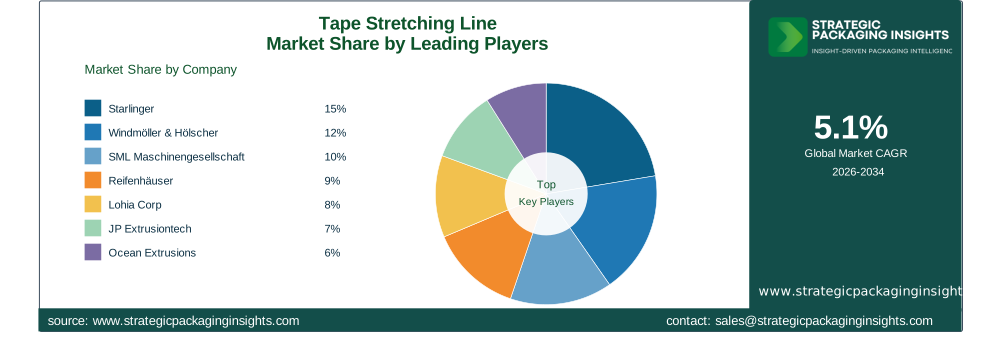
Starlinger is a leading player in the Tape Stretching Line market, known for its high-quality machinery and innovative solutions. The company has a strong global presence and is committed to sustainability, offering eco-friendly tape stretching lines that minimize waste and energy consumption. Windmöller & Hölscher is another major player, renowned for its cutting-edge technology and comprehensive product range. The company is focused on enhancing production efficiency and reducing operational costs, making it a preferred choice for manufacturers worldwide.
SML Maschinengesellschaft is a key player in the market, offering a wide range of tape stretching lines that cater to various applications. The company is known for its commitment to quality and innovation, continuously developing new technologies to meet the demands of the packaging industry. Reifenhäuser is another prominent player, with a strong focus on R&D and customer satisfaction. The company offers customized solutions that are tailored to the specific needs of its clients, ensuring optimal performance and reliability.
Other notable players in the market include Lohia Corp, JP Extrusiontech, and Ocean Extrusions. These companies are investing in advanced technologies and strategic partnerships to expand their market presence and enhance their product offerings. The competitive landscape of the Tape Stretching Line market is dynamic, with companies continuously striving to innovate and differentiate themselves from their competitors. This competitive environment is expected to drive further growth and development in the market.
Key Highlights
- The Tape Stretching Line market is projected to grow at a CAGR of 5.1% from 2025 to 2034.
- Starlinger and Windmöller & Hölscher are leading players in the market, known for their innovative solutions.
- The market is driven by the increasing demand for efficient and high-speed production lines in the packaging industry.
- Sustainability and eco-friendly packaging solutions are key drivers of market growth.
- The integration of automation and digital technologies is a significant opportunity for manufacturers.
- High initial investment costs pose a challenge for small and medium-sized enterprises.
- The market is witnessing the entry of new players, intensifying competition and driving innovation.
Tape Stretching Line Market Segments Insights

By Machine Type Analysis
The Tape Stretching Line market is segmented by machine type into PP Tape Stretching Lines, PET Tape Stretching Lines, and High-Speed Stretching Lines. PP Tape Stretching Lines are widely used due to their cost-effectiveness and versatility in producing various types of tapes. These lines are particularly popular in the packaging industry, where they are used to produce strapping tapes and packaging tapes. PET Tape Stretching Lines, on the other hand, are known for their superior strength and durability, making them ideal for industrial applications. High-Speed Stretching Lines are gaining traction due to their ability to enhance production efficiency and output, catering to the growing demand for high-performance tapes.
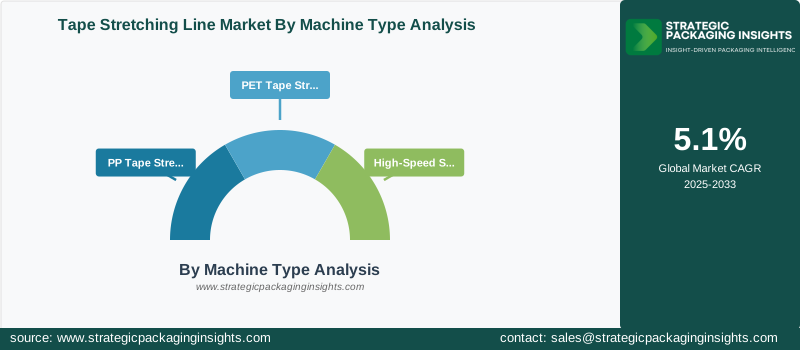
Companies like Starlinger and Windmöller & Hölscher are leading the market by offering advanced tape stretching lines that cater to the specific needs of different industries. The demand for high-speed and efficient production lines is driving the adoption of these machines, as manufacturers seek to optimize their production processes and reduce operational costs. The focus on sustainability and eco-friendly solutions is also influencing the development of new technologies in this segment, as companies strive to minimize waste and energy consumption.
By Application Analysis
The Tape Stretching Line market is segmented by application into Strapping Tapes, Raffia Tapes, Packaging Tapes, and Industrial Tapes. Strapping Tapes are widely used in the packaging industry for bundling and securing products, making them a key driver of market growth. Raffia Tapes are popular in the agricultural sector, where they are used for tying and securing crops. Packaging Tapes are essential for sealing and securing packages, while Industrial Tapes are used in various industrial applications, such as strapping and bundling.
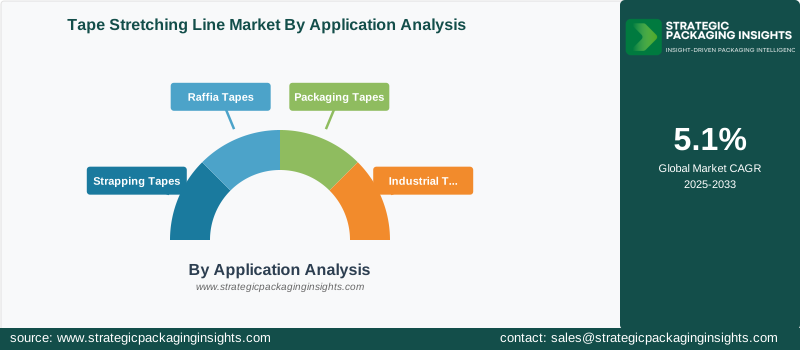
The versatility of tape stretching lines in producing different types of tapes is a key factor driving their adoption across various industries. Companies like SML Maschinengesellschaft and Reifenhäuser are focusing on developing advanced tape stretching lines that cater to the specific needs of different applications. The growing demand for efficient and cost-effective packaging solutions is expected to drive further growth in this segment, as manufacturers seek to optimize their production processes and enhance their product offerings.
By End Use Analysis
The Tape Stretching Line market is segmented by end use into Packaging, Woven Sacks, and Industrial Materials. The packaging industry is the largest end-user of tape stretching lines, driven by the increasing demand for efficient and high-speed production lines. Woven Sacks are widely used in the agricultural and industrial sectors, where they are used for storing and transporting goods. Industrial Materials, such as strapping tapes and industrial tapes, are used in various industrial applications, making them a key driver of market growth.
Companies like Lohia Corp and JP Extrusiontech are focusing on developing advanced tape stretching lines that cater to the specific needs of different end-use industries. The growing emphasis on sustainability and eco-friendly solutions is also influencing the development of new technologies in this segment, as companies strive to minimize waste and energy consumption. The demand for high-performance tapes is expected to drive further growth in this segment, as manufacturers seek to optimize their production processes and enhance their product offerings.
By Automation Level Analysis
The Tape Stretching Line market is segmented by automation level into Semi-Automatic and Automatic. Automatic tape stretching lines are gaining popularity due to their ability to enhance production efficiency and reduce labor costs. These lines are equipped with advanced technologies that minimize human error and optimize production processes, making them a preferred choice for manufacturers. Semi-Automatic tape stretching lines, on the other hand, are suitable for small and medium-sized enterprises that require cost-effective solutions.
Companies like Ocean Extrusions and Zhejiang Bangtai are investing in R&D to develop advanced tape stretching lines that offer superior performance and reliability. The integration of automation and digital technologies is a significant opportunity for manufacturers, as it enhances production efficiency and reduces operational costs. The focus on sustainability and eco-friendly solutions is also influencing the development of new technologies in this segment, as companies strive to minimize waste and energy consumption.
Tape Stretching Line Market Segments
The Tape Stretching Line market has been segmented on the basis ofBy Machine Type
- PP Tape Stretching Lines
- PET Tape Stretching Lines
- High-Speed Stretching Lines
By Application
- Strapping Tapes
- Raffia Tapes
- Packaging Tapes
- Industrial Tapes
By End Use
- Packaging
- Woven Sacks
- Industrial Materials
By Automation Level
- Semi-Automatic
- Automatic
Region
- Asia Pacific
- North America
- Latin America
- Europe
- Middle East & Africa




