


Tamper Evident Label Market Outlook
The Tamper Evident Label market was valued at $22.82 billion in 2025 and is projected to reach $40.03 billion by 2034, growing at a CAGR of 6.4% during the forecast period 2026-2034. This market is driven by the increasing demand for secure packaging solutions across various industries such as pharmaceuticals, electronics, and food. The need for enhanced security measures to prevent tampering and counterfeiting is a significant factor propelling the market growth. Additionally, the rise in regulatory requirements for packaging integrity and safety is further boosting the adoption of tamper evident labels. The market is also witnessing innovations in label materials and technologies, which are expected to offer lucrative opportunities for market players.
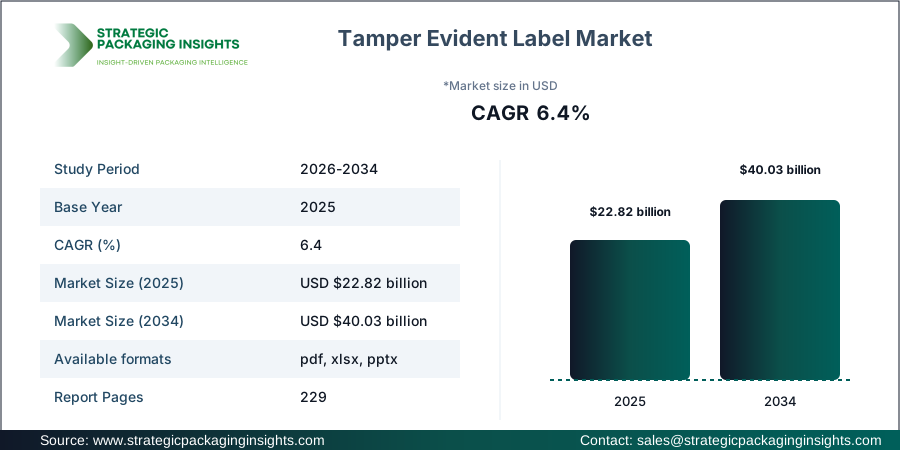
Report Scope
| Attributes | Details |
| Report Title | Tamper Evident Label Market Size, Future Growth and Forecast 2034 |
| Product Type | Void Labels, Destructible Labels, Security Seals |
| Material Type | Polyester, Vinyl, Paper, Polypropylene |
| Application | Pharma, Electronics, Food, Logistics |
| End Use | Brand Owners, Healthcare, Manufacturers, Retailers |
| Region | Asia Pacific, North America, Latin America, Europe, Middle East & Africa |
| Base Year | 2025 |
| Historic Period | 2018-2024 |
| Forecast Period | 2026-2034 |
| Number of Pages | 229 |
| Customization Available | Yes* |
Opportunities & Threats
The Tamper Evident Label market presents numerous opportunities, particularly with the growing emphasis on product safety and authenticity. As consumers become more aware of product integrity, the demand for tamper evident solutions is expected to rise. This trend is particularly prominent in the pharmaceutical and food industries, where safety and compliance are paramount. The increasing adoption of e-commerce and online retailing also presents a significant opportunity, as these platforms require secure packaging to ensure product integrity during transit. Furthermore, advancements in smart labeling technologies, such as RFID and QR codes, are opening new avenues for market growth by providing enhanced tracking and authentication capabilities.
Another opportunity lies in the expansion of the market in emerging economies. As these regions experience economic growth and urbanization, the demand for packaged goods is increasing, thereby driving the need for tamper evident labels. The growing middle-class population and rising disposable incomes in countries like India and China are expected to fuel market growth. Additionally, government initiatives to improve packaging standards and regulations in these regions are likely to boost the adoption of tamper evident labels.
However, the market faces certain threats, including the high cost of advanced tamper evident technologies, which may hinder adoption among small and medium-sized enterprises. The complexity of integrating these technologies into existing packaging lines can also pose challenges. Moreover, the market is subject to stringent regulatory requirements, which can vary significantly across different regions, potentially complicating market entry and expansion strategies for companies.
Drivers & Challenges
One of the primary drivers of the Tamper Evident Label market is the increasing focus on consumer safety and product authenticity. With the rise in counterfeit products, especially in the pharmaceutical and food sectors, there is a growing need for secure packaging solutions that can provide evidence of tampering. This has led to increased adoption of tamper evident labels, which offer a reliable means of ensuring product integrity. Additionally, the implementation of stringent regulations by government bodies to enhance packaging safety is further driving market growth. These regulations mandate the use of tamper evident features in packaging, thereby boosting demand.
Technological advancements in label materials and printing technologies are also driving the market. Innovations such as holographic labels, color-changing inks, and smart labels with embedded sensors are gaining traction, offering enhanced security features. These advancements not only improve the effectiveness of tamper evident labels but also provide opportunities for customization and branding, which are attractive to manufacturers and brand owners. The integration of digital technologies, such as QR codes and NFC tags, is further enhancing the functionality of tamper evident labels, enabling real-time tracking and authentication.
Despite these drivers, the market faces challenges such as the high cost of implementing advanced tamper evident solutions. Small and medium-sized enterprises may find it difficult to invest in these technologies due to budget constraints. Additionally, the complexity of integrating tamper evident features into existing packaging lines can pose operational challenges. The market is also subject to varying regulatory requirements across different regions, which can complicate compliance and increase operational costs for companies looking to expand their global footprint.
Market Share Analysis
The Tamper Evident Label market is characterized by a competitive landscape with several key players vying for market share. Companies such as Avery Dennison, CCL Industries, and 3M are leading the market with their extensive product portfolios and strong distribution networks. Avery Dennison, for instance, holds a significant market share due to its innovative labeling solutions and focus on sustainability. CCL Industries is another major player, known for its diverse range of security labels and strong presence in the global market. 3M, with its advanced adhesive technologies and robust R&D capabilities, is also a prominent player in the market.
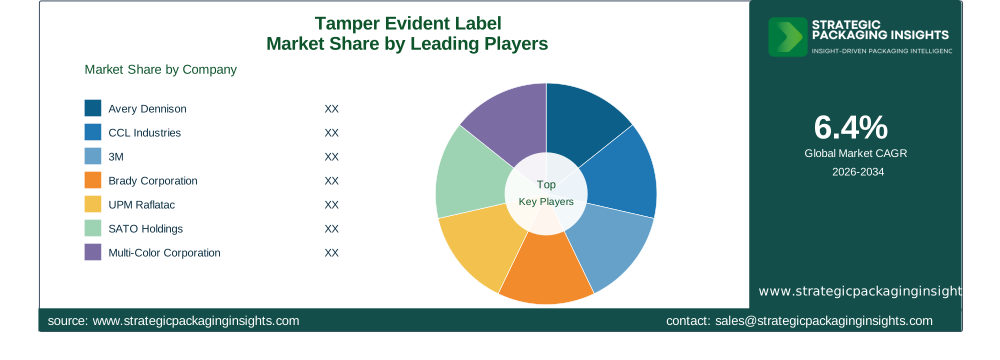
Brady Corporation and UPM Raflatac are other notable companies in the market. Brady Corporation is recognized for its high-performance labels and commitment to quality, while UPM Raflatac is known for its sustainable labeling solutions and focus on environmental responsibility. SATO Holdings and Multi-Color Corporation are also key players, offering a wide range of tamper evident labels and solutions tailored to various industries. Resource Label Group and Schreiner Group are known for their innovative approaches to labeling and strong customer focus.
Tesa, a leading manufacturer of adhesive solutions, is also a significant player in the tamper evident label market. The company is known for its high-quality products and strong emphasis on innovation. With a focus on expanding its product offerings and enhancing its technological capabilities, Tesa is well-positioned to capitalize on the growing demand for tamper evident labels. Overall, the market is highly competitive, with companies continuously investing in R&D and strategic partnerships to strengthen their market positions.
Key Highlights
- The Tamper Evident Label market is projected to grow at a CAGR of 6.4% from 2026 to 2034.
- Increasing demand for secure packaging solutions is driving market growth.
- Technological advancements in label materials and printing technologies are enhancing market potential.
- Stringent regulatory requirements are boosting the adoption of tamper evident labels.
- Emerging economies present significant growth opportunities for market players.
- High cost of advanced technologies poses a challenge for small and medium-sized enterprises.
- Key players include Avery Dennison, CCL Industries, and 3M, among others.
Top Countries Insights
In the Tamper Evident Label market, the United States holds a significant share, driven by the stringent regulatory environment and high demand for secure packaging solutions in the pharmaceutical and food industries. The market in the U.S. is expected to grow at a CAGR of 5%, with innovations in smart labeling technologies further propelling growth. Germany is another key market, with a strong focus on sustainability and advanced manufacturing capabilities. The German market is projected to grow at a CAGR of 4%, supported by government initiatives to enhance packaging standards.
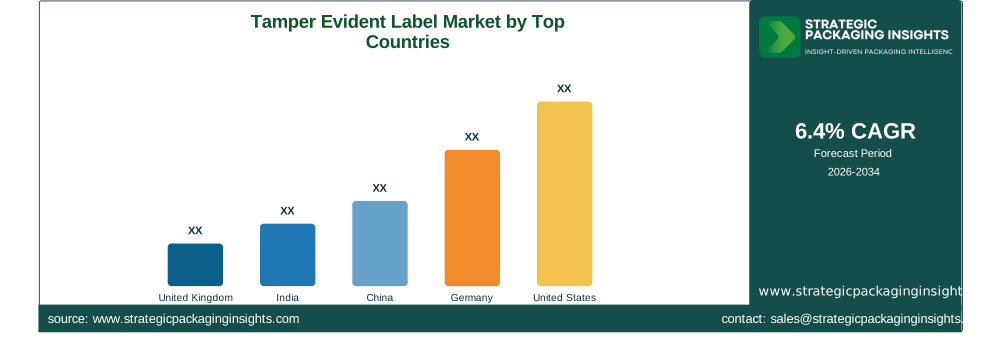
China is emerging as a major player in the Tamper Evident Label market, driven by rapid industrialization and increasing demand for packaged goods. The market in China is expected to grow at a CAGR of 8%, with government policies supporting the adoption of secure packaging solutions. India is also witnessing significant growth, with a CAGR of 7%, fueled by rising consumer awareness and increasing regulatory requirements. The Indian market is characterized by a growing middle-class population and rising disposable incomes, which are driving demand for packaged goods.
In the United Kingdom, the Tamper Evident Label market is experiencing steady growth, with a CAGR of 3%. The market is driven by the increasing focus on product safety and authenticity, particularly in the food and beverage sector. The UK market is also benefiting from advancements in labeling technologies and a strong emphasis on sustainability. Overall, these countries are expected to play a crucial role in the growth of the Tamper Evident Label market, with each offering unique opportunities and challenges for market players.
Tamper Evident Label Market Segments Insights

Product Type Analysis
The Tamper Evident Label market is segmented by product type into void labels, destructible labels, and security seals. Void labels are widely used due to their ability to provide clear evidence of tampering, making them a popular choice in the pharmaceutical and electronics industries. These labels leave a visible mark or message when removed, ensuring product integrity. Destructible labels, on the other hand, are designed to break apart when tampered with, offering an additional layer of security. They are commonly used in high-value products and sensitive applications where tamper evidence is critical.
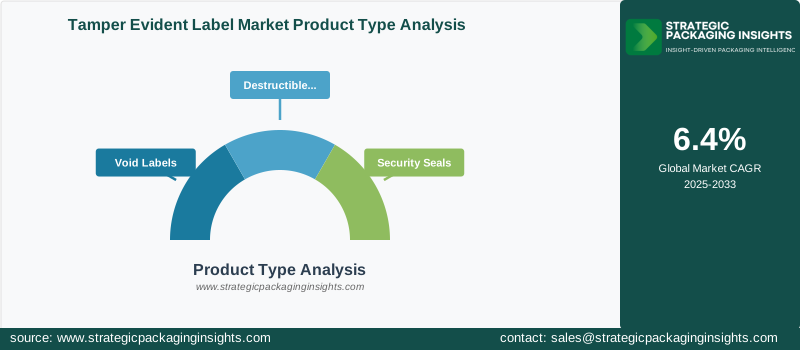
Security seals are another important segment, offering a versatile solution for various packaging needs. These seals are used across multiple industries, including logistics and food, to ensure that products remain intact during transit. The demand for security seals is driven by the increasing need for secure supply chains and the growing emphasis on product safety. Overall, the product type segment is characterized by a diverse range of solutions, each catering to specific industry requirements and security needs.
Material Type Analysis
The material type segment of the Tamper Evident Label market includes polyester, vinyl, paper, and polypropylene. Polyester is a preferred material due to its durability and resistance to environmental factors, making it suitable for harsh conditions. Vinyl is another popular choice, known for its flexibility and ability to adhere to various surfaces. Paper labels are widely used for their cost-effectiveness and ease of printing, making them ideal for applications where budget constraints are a concern.
Polypropylene is gaining traction due to its excellent chemical resistance and versatility. It is commonly used in applications where exposure to moisture and chemicals is a concern. The choice of material is often dictated by the specific requirements of the application, with factors such as durability, cost, and environmental impact playing a crucial role. As the market continues to evolve, innovations in material technologies are expected to drive further growth and diversification in this segment.
Application Analysis
The application segment of the Tamper Evident Label market is diverse, encompassing industries such as pharmaceuticals, electronics, food, and logistics. In the pharmaceutical industry, tamper evident labels are essential for ensuring the safety and integrity of medications, with regulatory requirements mandating their use. The electronics industry also relies on these labels to protect high-value products from tampering and counterfeiting.
In the food industry, tamper evident labels play a crucial role in maintaining product safety and compliance with food safety standards. The logistics sector uses these labels to secure shipments and prevent unauthorized access during transit. Each application presents unique challenges and opportunities, with the demand for tamper evident labels driven by the need for enhanced security and compliance across various industries.
End Use Analysis
The end use segment of the Tamper Evident Label market includes brand owners, healthcare, manufacturers, and retailers. Brand owners are increasingly adopting tamper evident labels to protect their products and enhance brand reputation. These labels provide a visible deterrent to tampering and counterfeiting, ensuring consumer trust and loyalty. In the healthcare sector, tamper evident labels are critical for maintaining the safety and integrity of medical products, with regulatory requirements driving their adoption.
Manufacturers use tamper evident labels to secure their products during production and distribution, ensuring that they reach consumers in their intended condition. Retailers also benefit from these labels, as they help prevent theft and tampering in-store. The end use segment is characterized by a diverse range of stakeholders, each with specific requirements and expectations for tamper evident solutions. As the market continues to grow, the demand for customized and innovative labeling solutions is expected to increase, offering new opportunities for market players.
Tamper Evident Label Market Segments
The Tamper Evident Label market has been segmented on the basis ofProduct Type
- Void Labels
- Destructible Labels
- Security Seals
Material Type
- Polyester
- Vinyl
- Paper
- Polypropylene
Application
- Pharma
- Electronics
- Food
- Logistics
End Use
- Brand Owners
- Healthcare
- Manufacturers
- Retailers
Region
- Asia Pacific
- North America
- Latin America
- Europe
- Middle East & Africa




