


Surgical Tape Market Outlook
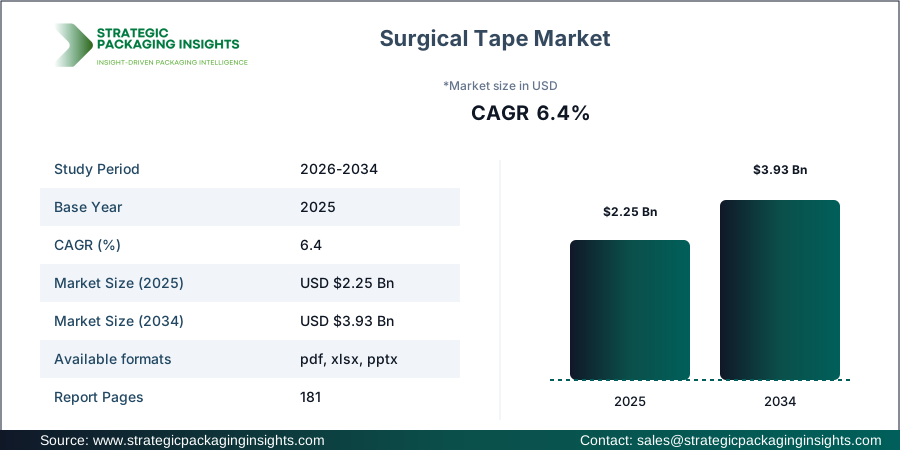
The Surgical Tape market size was valued at USD 2.25 billion in 2025 and is anticipated to reach USD 3.93 billion by 2034, growing at a CAGR of 6.4% during the forecast period according to Strategic Packaging Insights. The market is witnessing significant growth due to the increasing demand for surgical tapes in various medical applications such as wound dressing, device fixation, and surgical procedures. Companies like 3M and Johnson & Johnson are at the forefront, driving innovation and expanding their product portfolios to cater to the growing needs of healthcare providers. The rising prevalence of chronic diseases and the increasing number of surgical procedures globally are further propelling the demand for surgical tapes.
One of the most impactful drivers of the Surgical Tape market is the growing emphasis on infection control and patient safety in healthcare settings. According to the World Health Organization, healthcare-associated infections are a major concern, affecting millions of patients worldwide. This has led to a heightened focus on using high-quality surgical tapes that ensure secure adhesion and minimize the risk of infections. Companies like Medtronic and Smith & Nephew are investing in research and development to create advanced surgical tapes with antimicrobial properties, further boosting market growth. Additionally, the increasing adoption of minimally invasive surgeries, which require precise and reliable adhesive solutions, is contributing to the market's expansion.
Report Scope
| Attributes | Details |
| Report Title | Surgical Tape Market Size, Future Growth and Forecast 2034 |
| By Product Type | Paper Tape, Cloth Tape, Silicone Tape, Transparent Tape |
| By Application | Wound Dressing, Device Fixation, Surgical Procedures, Catheter Securement |
| By End Use | Hospitals, Clinics, Ambulatory Centers, Homecare |
| By Adhesive Type | Acrylic, Silicone, Rubber-Based |
| Region | Asia Pacific, North America, Latin America, Europe, Middle East & Africa |
| Base Year | 2025 |
| Historic Period | 2018-2024 |
| Forecast Period | 2026-2034 |
| Number of Pages | 181 |
| Customization Available | Yes* |
Sustainability & Circular Economy Analysis
Sustainability initiatives and circular economy practices are increasingly influencing the packaging market, including the surgical tape segment. The shift towards eco-friendly materials and recyclable packaging solutions is becoming a priority for manufacturers. Companies are exploring the use of biodegradable adhesives and sustainable raw materials to reduce the environmental impact of surgical tapes. This trend is driven by growing consumer awareness and regulatory pressures to minimize waste and carbon footprints. As a result, manufacturers are investing in research and development to create innovative products that align with sustainability goals.
The adoption of lightweight packaging and reusable solutions is also gaining traction in the surgical tape market. By reducing the weight of packaging materials, companies can lower transportation costs and decrease carbon emissions. This approach not only benefits the environment but also enhances the overall efficiency of the supply chain. Furthermore, extended producer responsibility (EPR) regulations are encouraging manufacturers to take responsibility for the entire lifecycle of their products, from production to disposal. This has led to the development of take-back programs and recycling initiatives, further promoting a circular economy in the packaging industry.
Consumer preferences for sustainable products are influencing packaging design and investment decisions. Companies are prioritizing eco-friendly innovations to meet the demands of environmentally conscious consumers. This shift is evident in the increasing use of recyclable and biodegradable materials in surgical tape packaging. Additionally, regulatory compliance with environmental standards is becoming a key factor in maintaining long-term market competitiveness. As sustainability becomes a central focus, companies that embrace these trends are likely to gain a competitive edge in the market.
Packaging Value Chain & Supply Chain Analysis
The packaging value chain for surgical tapes involves several key components, including raw material sourcing, manufacturing, and distribution. Raw materials such as adhesives and backing materials are sourced from suppliers, and packaging converters play a crucial role in transforming these materials into finished products. Manufacturers like 3M and Cardinal Health are responsible for producing high-quality surgical tapes that meet stringent medical standards. The efficiency of the supply chain is critical to ensuring timely delivery and maintaining product quality.
Logistics and distribution channels are vital components of the surgical tape supply chain. Efficient transportation and inventory management strategies are essential to meet the demands of healthcare providers and ensure product availability. Companies are increasingly focusing on supply chain resilience and localization to mitigate risks associated with global sourcing. Strategic partnerships with logistics providers and distributors help streamline operations and enhance market reach. Additionally, advancements in packaging machinery and automation are improving production capabilities and reducing lead times.
Recycling networks and waste management strategies are becoming integral parts of the packaging value chain. As sustainability becomes a priority, companies are implementing recycling programs to minimize waste and promote a circular economy. Procurement strategies are also evolving to prioritize sustainable sourcing and reduce environmental impact. By adopting these practices, companies can enhance their brand reputation and meet the growing demand for eco-friendly products. Overall, the packaging value chain and supply chain dynamics play a crucial role in determining the competitiveness and success of companies in the surgical tape market.
Opportunities & Threats
The surgical tape market presents several opportunities for growth and innovation. One significant opportunity lies in the development of advanced adhesive technologies that enhance the performance and safety of surgical tapes. Companies can invest in research and development to create tapes with improved adhesion, flexibility, and antimicrobial properties. This innovation can cater to the increasing demand for high-quality medical products and expand market reach. Additionally, the growing trend of home healthcare and self-care practices presents an opportunity for companies to develop user-friendly surgical tapes that cater to the needs of patients outside traditional healthcare settings.
Another opportunity in the surgical tape market is the expansion into emerging markets. Regions such as Asia Pacific and Latin America are experiencing rapid growth in healthcare infrastructure and an increasing number of surgical procedures. Companies can capitalize on this trend by establishing a strong presence in these regions and offering cost-effective solutions tailored to local needs. Collaborations with local distributors and healthcare providers can further enhance market penetration and drive revenue growth. Moreover, the rising awareness of infection control and patient safety in these regions presents an opportunity for companies to promote their advanced surgical tape products.
Despite the opportunities, the surgical tape market faces certain threats that could impact its growth. One significant threat is the stringent regulatory environment governing medical products. Compliance with regulatory standards and obtaining necessary certifications can be time-consuming and costly for companies. Additionally, the presence of counterfeit products in the market poses a threat to brand reputation and consumer trust. Companies must invest in robust quality control measures and anti-counterfeiting technologies to protect their products and maintain customer confidence. Furthermore, fluctuations in raw material prices and supply chain disruptions can pose challenges to market stability and profitability.
Drivers & Challenges
The surgical tape market is driven by several key factors that contribute to its growth and expansion. One of the primary drivers is the increasing number of surgical procedures worldwide. As the global population ages and the prevalence of chronic diseases rises, the demand for surgical interventions continues to grow. This, in turn, drives the need for reliable and high-performance surgical tapes that ensure secure adhesion and patient safety. Companies like Johnson & Johnson and Medline Industries are capitalizing on this trend by offering a wide range of surgical tapes designed for various medical applications.
Another significant driver of the surgical tape market is the growing emphasis on infection control and patient safety in healthcare settings. Healthcare-associated infections are a major concern, and surgical tapes play a crucial role in preventing infections by securely adhering medical devices and dressings. The development of advanced adhesive technologies with antimicrobial properties is further boosting market growth. Additionally, the increasing adoption of minimally invasive surgeries, which require precise and reliable adhesive solutions, is contributing to the market's expansion. Companies are investing in research and development to create innovative products that meet the evolving needs of healthcare providers.
Despite the positive drivers, the surgical tape market faces certain challenges that could hinder its growth. One of the primary challenges is the intense competition among key players in the market. Companies are constantly striving to differentiate their products and gain a competitive edge, leading to price wars and margin pressures. Additionally, the presence of counterfeit products in the market poses a threat to brand reputation and consumer trust. Companies must invest in robust quality control measures and anti-counterfeiting technologies to protect their products and maintain customer confidence. Furthermore, fluctuations in raw material prices and supply chain disruptions can pose challenges to market stability and profitability.
Market Share Analysis
The competitive landscape of the surgical tape market is characterized by the presence of several key players, each striving to capture a significant share of the market. Companies like 3M, Medtronic, and Smith & Nephew are leading the market with their extensive product portfolios and strong distribution networks. These companies have established themselves as trusted brands in the healthcare industry, offering high-quality surgical tapes that meet the stringent requirements of medical professionals. Their focus on innovation and product development has enabled them to maintain a competitive edge in the market.

3M is a prominent player in the surgical tape market, known for its innovative adhesive technologies and commitment to quality. The company's extensive range of surgical tapes caters to various medical applications, ensuring secure adhesion and patient safety. Medtronic, another key player, is recognized for its advanced medical solutions and strong presence in the healthcare industry. The company's surgical tapes are designed to meet the evolving needs of healthcare providers, offering reliable performance and ease of use.
Smith & Nephew is a leading manufacturer of surgical tapes, known for its focus on research and development and commitment to delivering high-quality products. The company's surgical tapes are widely used in hospitals and clinics worldwide, providing secure adhesion and minimizing the risk of infections. Johnson & Johnson, a global leader in healthcare, offers a comprehensive range of surgical tapes that cater to various medical applications. The company's strong brand reputation and extensive distribution network have contributed to its success in the market.
Other notable players in the surgical tape market include Cardinal Health, Medline Industries, Nitto Denko, Paul Hartmann, Essity, and Lohmann & Rauscher. These companies are actively investing in research and development to create innovative products that meet the evolving needs of healthcare providers. Their focus on quality and customer satisfaction has enabled them to maintain a strong presence in the market. Overall, the competitive landscape of the surgical tape market is characterized by intense competition and a focus on innovation and product development.
Key Highlights
- The Surgical Tape market size was valued at USD 2.25 billion in 2025
- Forecasted to reach USD 3.93 billion by 2034
- Growing at a CAGR of 6.4% during the forecast period
- Key players include 3M, Medtronic, Smith & Nephew, and Johnson & Johnson
- Increasing demand for surgical tapes in wound dressing and device fixation applications
- Rising emphasis on infection control and patient safety in healthcare settings
- Expansion opportunities in emerging markets such as Asia Pacific and Latin America
Surgical Tape Market Segments Insights

Product Type Analysis
The surgical tape market is segmented by product type into paper tape, cloth tape, silicone tape, and transparent tape. Each type offers unique benefits and caters to specific medical applications. Paper tapes are widely used due to their breathability and gentle adhesion, making them ideal for sensitive skin and frequent dressing changes. Cloth tapes, on the other hand, provide strong adhesion and durability, suitable for securing heavy dressings and medical devices. Silicone tapes are gaining popularity for their gentle adhesion and ability to conform to body contours, reducing the risk of skin irritation. Transparent tapes offer visibility and are commonly used in situations where monitoring of the wound site is necessary.
The demand for silicone tapes is expected to grow significantly during the forecast period, driven by their superior properties and increasing adoption in advanced wound care applications. Companies are investing in research and development to enhance the performance of silicone tapes, focusing on improving adhesion and reducing skin trauma. The growing trend of minimally invasive surgeries and the need for reliable adhesive solutions are further boosting the demand for silicone tapes. Additionally, the rising awareness of infection control and patient safety is driving the adoption of transparent tapes, as they allow healthcare providers to monitor wound sites without removing the tape.
Application Analysis
The surgical tape market is segmented by application into wound dressing, device fixation, surgical procedures, and catheter securement. Wound dressing is one of the largest application segments, driven by the increasing prevalence of chronic wounds and the growing demand for advanced wound care products. Surgical tapes play a crucial role in securing dressings and ensuring optimal healing conditions. Device fixation is another significant application, as surgical tapes are used to secure medical devices such as catheters, tubes, and sensors. The demand for reliable and durable adhesive solutions in device fixation is driving the growth of this segment.
Surgical procedures and catheter securement are also important application segments in the surgical tape market. The increasing number of surgical interventions and the need for secure adhesion during procedures are driving the demand for surgical tapes in this segment. Catheter securement is gaining importance due to the rising use of catheters in various medical settings. Surgical tapes provide secure fixation, reducing the risk of dislodgement and ensuring patient safety. Companies are focusing on developing specialized tapes for catheter securement, offering features such as antimicrobial properties and easy application.
End Use Analysis
The surgical tape market is segmented by end use into hospitals, clinics, ambulatory centers, and homecare. Hospitals are the largest end-use segment, accounting for a significant share of the market. The high volume of surgical procedures and the need for reliable adhesive solutions in hospitals drive the demand for surgical tapes. Clinics and ambulatory centers are also important end-use segments, as they perform a wide range of medical procedures that require secure adhesion. The growing trend of outpatient surgeries and the increasing number of ambulatory centers are contributing to the growth of this segment.
Homecare is an emerging end-use segment in the surgical tape market, driven by the increasing preference for home healthcare and self-care practices. Surgical tapes are used in homecare settings for wound dressing, device fixation, and catheter securement. The demand for user-friendly and easy-to-apply surgical tapes is rising, as patients and caregivers seek convenient solutions for home healthcare. Companies are focusing on developing products that cater to the specific needs of homecare settings, offering features such as gentle adhesion and easy removal.
Adhesive Type Analysis
The surgical tape market is segmented by adhesive type into acrylic, silicone, and rubber-based adhesives. Acrylic adhesives are widely used due to their strong adhesion and versatility, making them suitable for a wide range of medical applications. Silicone adhesives are gaining popularity for their gentle adhesion and ability to conform to body contours, reducing the risk of skin irritation. Rubber-based adhesives offer strong adhesion and durability, making them ideal for securing heavy dressings and medical devices.
The demand for silicone adhesives is expected to grow significantly during the forecast period, driven by their superior properties and increasing adoption in advanced wound care applications. Companies are investing in research and development to enhance the performance of silicone adhesives, focusing on improving adhesion and reducing skin trauma. The growing trend of minimally invasive surgeries and the need for reliable adhesive solutions are further boosting the demand for silicone adhesives. Additionally, the rising awareness of infection control and patient safety is driving the adoption of acrylic adhesives, as they offer strong adhesion and are suitable for a wide range of medical applications.
Surgical Tape Market Segments
The Surgical Tape market has been segmented on the basis ofBy Product Type
- Paper Tape
- Cloth Tape
- Silicone Tape
- Transparent Tape
By Application
- Wound Dressing
- Device Fixation
- Surgical Procedures
- Catheter Securement
By End Use
- Hospitals
- Clinics
- Ambulatory Centers
- Homecare
By Adhesive Type
- Acrylic
- Silicone
- Rubber-Based
Region
- Asia Pacific
- North America
- Latin America
- Europe
- Middle East & Africa




