


Stone Paper Market Outlook
The Stone Paper market size was valued at USD 1.29 billion in 2025 and is anticipated to reach USD 2.33 billion by 2034, growing at a CAGR of 6.8% during the forecast period according to Strategic Packaging Insights. Stone paper, known for its eco-friendly properties, is gaining traction across various industries due to its durability and sustainability. Companies like Taiwan Lung Meng and Stone Paper Global are leading the charge in innovation and production, driving the market forward. The demand for stone paper is primarily fueled by its application in packaging and printing, where its water-resistant and tear-resistant properties offer significant advantages over traditional paper products.
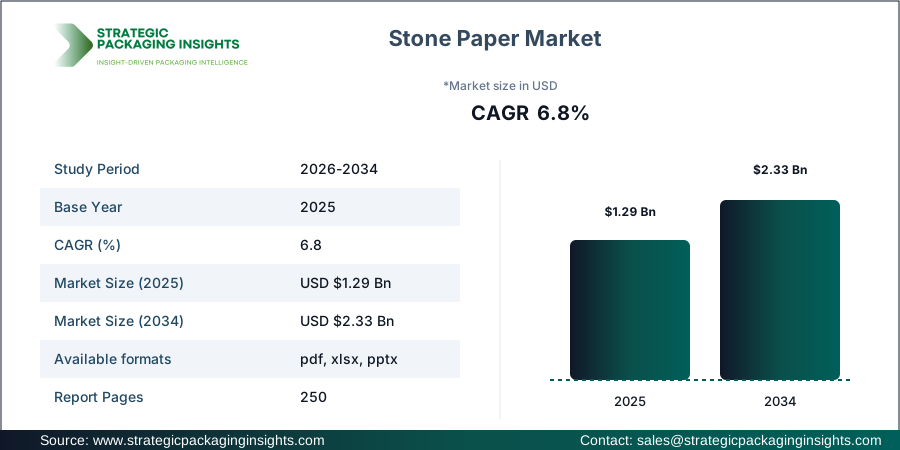
One of the most impactful drivers of the stone paper market is the increasing global emphasis on sustainability and environmental conservation. Governments and organizations worldwide are pushing for reduced deforestation and lower carbon footprints, which stone paper supports by eliminating the need for wood pulp. This shift is supported by various environmental policies and consumer preferences for sustainable products. As a result, companies like Shenzhen Stone Paper and AM Packaging are investing heavily in research and development to enhance the quality and applications of stone paper, further propelling market growth.
Report Scope
| Attributes | Details |
| Report Title | Stone Paper Market Size, Future Growth and Forecast 2034 |
| By Product Type | Sheets, Rolls, Labels, Bags |
| By Material Type | Calcium Carbonate, HDPE Binder, Recycled Mineral Blend |
| By Application | Packaging, Printing, Labels, Stationery |
| By End Use | Retail, Food Packaging, Printing, Consumer Goods |
| Region | Asia Pacific, North America, Latin America, Europe, Middle East & Africa |
| Base Year | 2025 |
| Historic Period | 2018-2024 |
| Forecast Period | 2026-2034 |
| Number of Pages | 250 |
| Customization Available | Yes* |
Sustainability & Circular Economy Analysis
Sustainability initiatives are significantly shaping the stone paper market, as the industry aligns with circular economy principles to reduce environmental impact. Stone paper, made from calcium carbonate and HDPE, eliminates the need for wood pulp, thus conserving forests and reducing water usage. This innovation supports waste reduction strategies by utilizing industrial waste materials, aligning with extended producer responsibility (EPR) frameworks. Companies are increasingly adopting recyclable materials and lightweight packaging solutions to meet consumer sustainability preferences and regulatory requirements.
The influence of sustainability trends extends to packaging design and manufacturing processes, where eco-friendly material innovation is prioritized. Investment decisions are increasingly driven by the need to comply with environmental, social, and governance (ESG) criteria, with companies like KapStone Paper and Pishgaman Sanat Sabz leading the way. These trends are reshaping supply chain strategies, encouraging the adoption of carbon footprint reduction measures and enhancing long-term market competitiveness.
Regulatory compliance is a critical factor in the stone paper market, as governments implement stringent packaging regulations to promote sustainability. This regulatory landscape is driving companies to innovate and invest in sustainable practices, ensuring their products meet evolving standards. As a result, the stone paper market is poised for growth, with increased demand from environmentally conscious consumers and businesses seeking to enhance their sustainability credentials.
Packaging Value Chain & Supply Chain Analysis
The stone paper market's value chain begins with raw material sourcing, where calcium carbonate and HDPE are key components. Efficient procurement strategies are essential to ensure a steady supply of these materials, impacting production capabilities and overall market performance. Packaging converters and manufacturers play a crucial role in transforming raw materials into finished products, with companies like TBM Co. and Changzhou Ji Li Paper leading the charge. These manufacturers are investing in advanced packaging machinery to enhance production efficiency and meet growing demand.
Logistics and distribution channels are vital components of the stone paper supply chain, ensuring products reach brand owners and retailers efficiently. Supply chain resilience is a priority, with companies adopting localization strategies to mitigate risks associated with global sourcing. Inventory management practices are evolving to accommodate fluctuating demand and ensure timely delivery, enhancing business competitiveness in the market.
Recycling networks are becoming increasingly important in the stone paper value chain, as companies strive to close the loop and promote circular economy practices. Strategic partnerships with recycling firms are being established to enhance waste management and support sustainability goals. As a result, the stone paper market is witnessing increased collaboration between stakeholders, driving innovation and ensuring long-term growth in a competitive landscape.
Opportunities & Threats
The stone paper market presents numerous opportunities for growth, driven by increasing consumer demand for sustainable and eco-friendly products. As awareness of environmental issues rises, consumers are seeking alternatives to traditional paper products, creating a significant market for stone paper. Companies like Gaia-Concept are capitalizing on this trend by expanding their product offerings and exploring new applications for stone paper. Additionally, advancements in technology are enabling the development of high-quality stone paper products, further enhancing their appeal to environmentally conscious consumers.
Another opportunity lies in the expanding applications of stone paper across various industries. The packaging sector, in particular, is witnessing increased adoption of stone paper due to its durability and water-resistant properties. This trend is supported by the growing e-commerce industry, which demands robust packaging solutions to ensure product safety during transit. As a result, companies are investing in research and development to explore new applications and enhance the performance of stone paper products, driving market growth.
Despite the opportunities, the stone paper market faces several threats that could hinder its growth. One of the primary challenges is the high production cost associated with stone paper, which can limit its adoption in price-sensitive markets. Additionally, the availability of raw materials, such as calcium carbonate and HDPE, can impact production capabilities and supply chain efficiency. Companies must navigate these challenges by optimizing their procurement strategies and investing in cost-effective production technologies to remain competitive in the market.
Drivers & Challenges
The stone paper market is driven by several key factors, including the increasing demand for sustainable and eco-friendly products. As consumers become more environmentally conscious, there is a growing preference for products that minimize environmental impact, such as stone paper. This trend is supported by government initiatives and regulations aimed at reducing deforestation and promoting sustainable practices. Companies like Sphera International are leveraging these drivers to expand their market presence and enhance their product offerings.
Technological advancements are also playing a crucial role in driving the stone paper market. Innovations in production processes and material composition are enabling the development of high-quality stone paper products with enhanced properties. These advancements are attracting investment from companies seeking to capitalize on the growing demand for sustainable packaging solutions. As a result, the stone paper market is witnessing increased competition and innovation, driving further growth and development.
However, the stone paper market faces several challenges that could impact its growth. One of the primary challenges is the high production cost associated with stone paper, which can limit its adoption in price-sensitive markets. Additionally, the availability of raw materials, such as calcium carbonate and HDPE, can impact production capabilities and supply chain efficiency. Companies must navigate these challenges by optimizing their procurement strategies and investing in cost-effective production technologies to remain competitive in the market.
Market Share Analysis
The stone paper market is characterized by a competitive landscape, with several key players vying for market share. Companies like Taiwan Lung Meng and Stone Paper Global are leading the market, leveraging their extensive experience and innovative product offerings to maintain a strong presence. These companies are investing in research and development to enhance the quality and applications of stone paper, driving market growth and competitiveness.
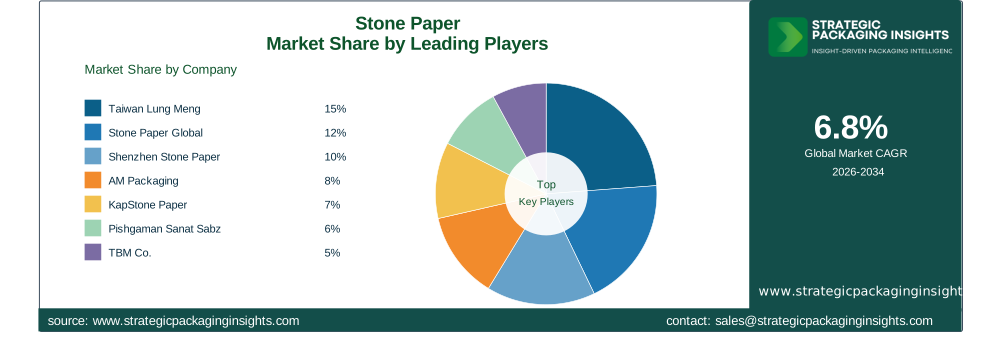
Shenzhen Stone Paper and AM Packaging are also prominent players in the stone paper market, focusing on expanding their product portfolios and exploring new applications for stone paper. These companies are capitalizing on the growing demand for sustainable packaging solutions, leveraging their expertise and technological capabilities to meet evolving consumer preferences. As a result, they are gaining a competitive edge in the market and contributing to its overall growth.
Other notable companies in the stone paper market include KapStone Paper, Pishgaman Sanat Sabz, and TBM Co., which are actively investing in advanced production technologies and sustainable practices. These companies are focused on enhancing their production capabilities and supply chain efficiency to meet the increasing demand for stone paper products. By adopting innovative strategies and forming strategic partnerships, they are strengthening their market position and driving industry growth.
Changzhou Ji Li Paper, Sphera International, and Gaia-Concept are also key players in the stone paper market, contributing to its competitive landscape. These companies are leveraging their expertise and resources to develop high-quality stone paper products and expand their market presence. By focusing on sustainability and innovation, they are positioning themselves as leaders in the industry and driving the market forward.
Key Highlights
- Market Size: The stone paper market was valued at USD 1.29 billion in 2025 and is projected to reach USD 2.33 billion by 2034.
- Growth Rate: The market is expected to grow at a CAGR of 6.8% during the forecast period.
- Leading Companies: Key players include Taiwan Lung Meng, Stone Paper Global, and Shenzhen Stone Paper.
- Product Segments: Major segments include sheets, rolls, labels, and bags.
- Material Innovation: Calcium carbonate and HDPE binder are crucial materials driving market growth.
- Application Expansion: Stone paper is increasingly used in packaging, printing, and stationery.
- Regional Insights: Asia Pacific is a leading region, with significant growth potential in North America and Europe.
Stone Paper Market Segments Insights

By Product Type Analysis
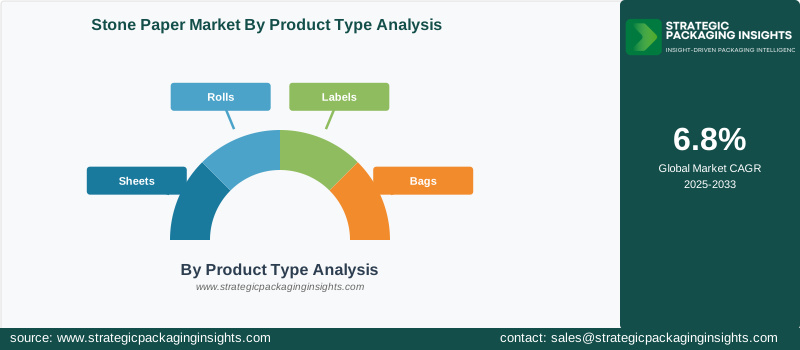
The stone paper market is segmented by product type into sheets, rolls, labels, and bags, each catering to different industry needs. Sheets and rolls are predominantly used in printing and packaging applications, where their durability and water-resistant properties offer significant advantages. Companies like Taiwan Lung Meng and Stone Paper Global are focusing on enhancing the quality and performance of these products to meet the growing demand. Labels and bags, on the other hand, are gaining traction in the retail and consumer goods sectors, where sustainability and eco-friendliness are key considerations.
The demand for stone paper sheets and rolls is driven by the increasing need for sustainable packaging solutions in the e-commerce and logistics industries. As online shopping continues to grow, there is a rising demand for robust and eco-friendly packaging materials that can withstand the rigors of transportation. Stone paper sheets and rolls offer an ideal solution, providing durability and protection while minimizing environmental impact. This trend is expected to drive significant growth in the stone paper market, with companies investing in research and development to enhance product performance and expand their applications.
By Material Type Analysis
The stone paper market is also segmented by material type, with calcium carbonate, HDPE binder, and recycled mineral blend being the primary materials used in production. Calcium carbonate is a key component, providing the necessary strength and durability to stone paper products. Companies like KapStone Paper and Pishgaman Sanat Sabz are focusing on optimizing the use of calcium carbonate to enhance product quality and performance. HDPE binder, on the other hand, is used to bind the materials together, ensuring the structural integrity of stone paper products.
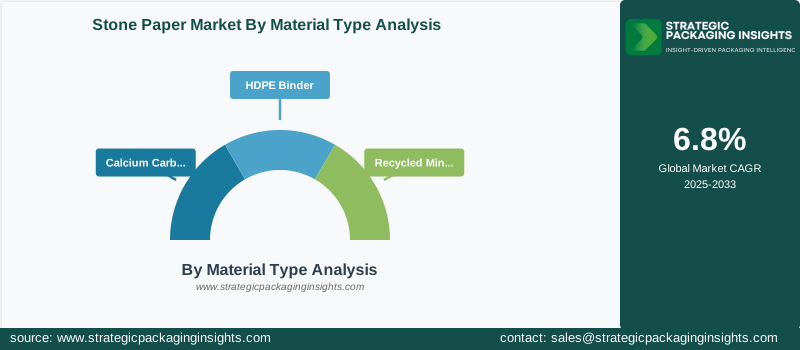
Recycled mineral blend is gaining popularity as a sustainable alternative, aligning with circular economy principles and supporting waste reduction strategies. This material type is particularly appealing to environmentally conscious consumers and businesses seeking to enhance their sustainability credentials. As a result, companies are investing in research and development to explore new material compositions and enhance the performance of stone paper products. This trend is expected to drive significant growth in the stone paper market, with increased demand for sustainable and eco-friendly materials.
By Application Analysis
The stone paper market is segmented by application into packaging, printing, labels, and stationery, each offering unique opportunities for growth. Packaging is the largest application segment, driven by the increasing demand for sustainable and eco-friendly packaging solutions. Companies like TBM Co. and Changzhou Ji Li Paper are focusing on developing high-quality stone paper packaging products to meet the evolving needs of consumers and businesses. Printing is another significant application, where stone paper's durability and water-resistant properties offer significant advantages over traditional paper products.
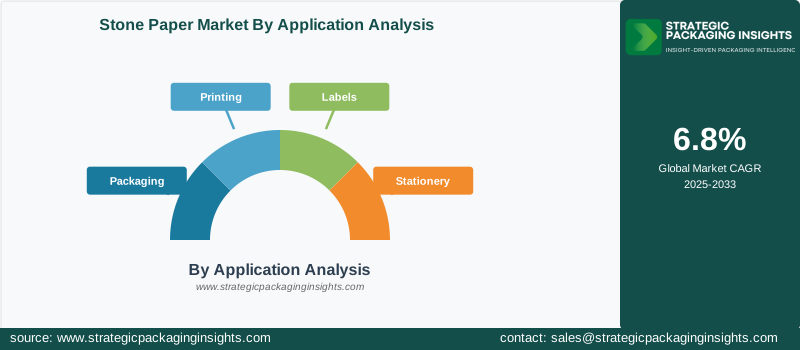
Labels and stationery are also important application segments, with growing demand from the retail and consumer goods sectors. As consumers become more environmentally conscious, there is a rising preference for sustainable and eco-friendly products, driving demand for stone paper labels and stationery. Companies are investing in research and development to enhance the quality and performance of these products, exploring new applications and expanding their market presence. This trend is expected to drive significant growth in the stone paper market, with increased demand for sustainable and eco-friendly products.
By End Use Analysis
The stone paper market is segmented by end use into retail, food packaging, printing, and consumer goods, each offering unique opportunities for growth. Retail is a significant end-use segment, driven by the increasing demand for sustainable and eco-friendly products. Companies like Sphera International and Gaia-Concept are focusing on developing high-quality stone paper products to meet the evolving needs of consumers and businesses. Food packaging is another important end-use segment, where stone paper's durability and water-resistant properties offer significant advantages over traditional paper products.
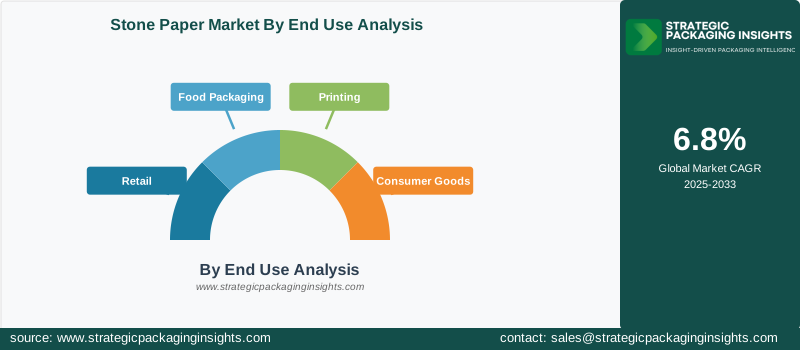
Printing and consumer goods are also important end-use segments, with growing demand from environmentally conscious consumers and businesses. As consumers become more aware of environmental issues, there is a rising preference for sustainable and eco-friendly products, driving demand for stone paper products in these segments. Companies are investing in research and development to enhance the quality and performance of stone paper products, exploring new applications and expanding their market presence. This trend is expected to drive significant growth in the stone paper market, with increased demand for sustainable and eco-friendly products.
Stone Paper Market Segments
The Stone Paper market has been segmented on the basis ofBy Product Type
- Sheets
- Rolls
- Labels
- Bags
By Material Type
- Calcium Carbonate
- HDPE Binder
- Recycled Mineral Blend
By Application
- Packaging
- Printing
- Labels
- Stationery
By End Use
- Retail
- Food Packaging
- Printing
- Consumer Goods
Region
- Asia Pacific
- North America
- Latin America
- Europe
- Middle East & Africa




