


Solvent-Cleaned rHDPE Feedstock for Multilayer Packaging Applications Market Outlook
The Solvent-Cleaned rHDPE Feedstock for Multilayer Packaging Applications market was valued at $18.46 billion in 2025 and is projected to reach $40.75 billion by 2034, growing at a CAGR of 9.2% during the forecast period 2026-2034. This market is driven by the increasing demand for sustainable packaging solutions, as industries worldwide are shifting towards eco-friendly materials to reduce their carbon footprint. The rise in consumer awareness regarding environmental issues and stringent government regulations on plastic waste management are further propelling the market growth. The adoption of solvent-cleaned rHDPE feedstock in multilayer packaging applications is gaining traction due to its superior properties such as high durability, recyclability, and cost-effectiveness, making it a preferred choice among manufacturers.
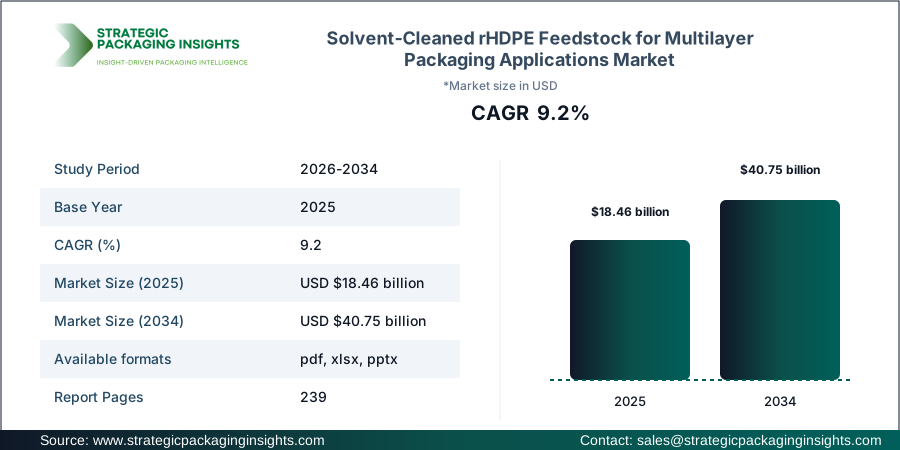
However, the market faces certain restraints, including the high initial investment required for setting up recycling facilities and the complex process involved in solvent cleaning of rHDPE feedstock. Despite these challenges, the market holds significant growth potential, driven by technological advancements in recycling processes and the increasing collaboration between packaging companies and recycling firms. The development of innovative recycling technologies that enhance the quality and efficiency of rHDPE feedstock production is expected to create lucrative opportunities for market players. Additionally, the growing trend of circular economy and the emphasis on reducing plastic waste are likely to boost the demand for solvent-cleaned rHDPE feedstock in the coming years.
Report Scope
| Attributes | Details |
| Report Title | Solvent-Cleaned rHDPE Feedstock for Multilayer Packaging Applications Market Size, Future Growth and Forecast 2034 |
| Feedstock Type | Natural rHDPE, Colored rHDPE, Multilayer HDPE Waste |
| Process Type | Solvent Cleaning, Deodorization, Filtration, Pelletizing |
| Application | Multilayer Bottles, Caps, Flexible Packs, Barrier Containers |
| End Use | FMCG, Food Packaging, Household Care |
| Region | Asia Pacific, North America, Latin America, Europe, Middle East & Africa |
| Base Year | 2025 |
| Historic Period | 2018-2024 |
| Forecast Period | 2026-2034 |
| Number of Pages | 239 |
| Customization Available | Yes* |
Opportunities & Threats
The Solvent-Cleaned rHDPE Feedstock market presents numerous opportunities, primarily driven by the increasing demand for sustainable and eco-friendly packaging solutions. As consumers become more environmentally conscious, there is a growing preference for products that utilize recycled materials. This shift in consumer behavior is encouraging manufacturers to adopt solvent-cleaned rHDPE feedstock for multilayer packaging applications, thereby opening new avenues for market growth. Furthermore, advancements in recycling technologies are enhancing the quality and efficiency of rHDPE production, making it a viable alternative to virgin plastics. The integration of artificial intelligence and machine learning in recycling processes is also expected to optimize operations and reduce costs, further boosting market expansion.
Another significant opportunity lies in the collaboration between packaging companies and recycling firms. By forming strategic partnerships, companies can leverage each other's expertise and resources to develop innovative packaging solutions that meet the evolving needs of consumers. Additionally, government initiatives and policies aimed at promoting sustainable practices and reducing plastic waste are likely to create a favorable environment for the growth of the solvent-cleaned rHDPE feedstock market. The increasing focus on circular economy principles, which emphasize the reuse and recycling of materials, is expected to drive the demand for rHDPE feedstock in the coming years.
Despite the promising opportunities, the market faces certain threats that could hinder its growth. One of the primary challenges is the high cost associated with the solvent cleaning process, which requires significant investment in advanced equipment and technology. This can be a barrier for small and medium-sized enterprises looking to enter the market. Additionally, the availability of high-quality rHDPE feedstock is dependent on the efficiency of waste collection and sorting systems, which can vary significantly across regions. The lack of standardized regulations and guidelines for recycling processes can also pose a threat to market growth, as it may lead to inconsistencies in the quality of rHDPE feedstock produced.
Drivers & Challenges
The primary drivers of the Solvent-Cleaned rHDPE Feedstock market include the increasing demand for sustainable packaging solutions and the growing awareness of environmental issues among consumers. As industries across the globe strive to reduce their carbon footprint, there is a significant shift towards the use of recycled materials in packaging applications. Solvent-cleaned rHDPE feedstock offers a viable solution, as it is not only eco-friendly but also cost-effective and durable. The stringent government regulations on plastic waste management and the emphasis on reducing plastic pollution are further propelling the market growth. Additionally, the rise in consumer preference for products with minimal environmental impact is encouraging manufacturers to adopt rHDPE feedstock in their packaging solutions.
Technological advancements in recycling processes are also driving the market, as they enhance the quality and efficiency of rHDPE production. The development of innovative recycling technologies, such as advanced sorting and cleaning systems, is enabling manufacturers to produce high-quality rHDPE feedstock that meets the stringent requirements of multilayer packaging applications. Furthermore, the increasing collaboration between packaging companies and recycling firms is fostering the development of new and improved packaging solutions, thereby driving market growth.
However, the market faces several challenges that could impede its growth. One of the major challenges is the high initial investment required for setting up recycling facilities and the complex process involved in solvent cleaning of rHDPE feedstock. This can be a barrier for small and medium-sized enterprises looking to enter the market. Additionally, the availability of high-quality rHDPE feedstock is dependent on the efficiency of waste collection and sorting systems, which can vary significantly across regions. The lack of standardized regulations and guidelines for recycling processes can also pose a challenge to market growth, as it may lead to inconsistencies in the quality of rHDPE feedstock produced.
Market Share Analysis
The competitive landscape of the Solvent-Cleaned rHDPE Feedstock market is characterized by the presence of several key players who are actively engaged in the development and production of high-quality rHDPE feedstock for multilayer packaging applications. These companies are focusing on strategic initiatives such as mergers and acquisitions, partnerships, and collaborations to strengthen their market position and expand their product offerings. The market is highly competitive, with players striving to gain a competitive edge by investing in research and development activities to enhance the quality and efficiency of their recycling processes.
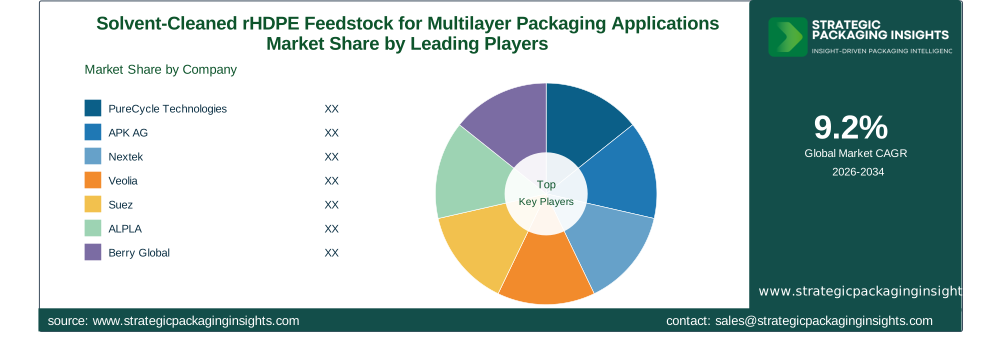
PureCycle Technologies is one of the leading companies in the market, known for its innovative recycling technologies that produce high-quality rHDPE feedstock. The company has a significant market share and is continuously expanding its production capacity to meet the growing demand for sustainable packaging solutions. APK AG is another prominent player, recognized for its advanced solvent cleaning processes that ensure the production of high-purity rHDPE feedstock. The company is actively involved in research and development activities to improve its recycling technologies and expand its product portfolio.
Nextek is a key player in the market, offering a wide range of recycling solutions for the production of rHDPE feedstock. The company is focused on developing innovative technologies that enhance the quality and efficiency of its recycling processes. Veolia and Suez are also major players in the market, known for their extensive experience in waste management and recycling. These companies are leveraging their expertise to develop high-quality rHDPE feedstock for multilayer packaging applications, thereby strengthening their market position.
Other notable companies in the market include ALPLA, Berry Global, Plastipak, Coperion, and EREMA. These companies are actively engaged in the development and production of rHDPE feedstock, focusing on enhancing the quality and efficiency of their recycling processes. They are also investing in research and development activities to develop innovative packaging solutions that meet the evolving needs of consumers. The competitive landscape of the market is expected to remain dynamic, with companies continuously striving to gain a competitive edge through strategic initiatives and technological advancements.
Key Highlights
- The market is projected to grow from $18.46 billion in 2025 to $40.75 billion by 2034, at a CAGR of 9.2%.
- Increasing demand for sustainable packaging solutions is driving market growth.
- Technological advancements in recycling processes are enhancing the quality of rHDPE feedstock.
- Government regulations on plastic waste management are propelling market expansion.
- Collaboration between packaging companies and recycling firms is fostering innovation.
- High initial investment and complex processes are major market restraints.
- Key players include PureCycle Technologies, APK AG, Nextek, Veolia, and Suez.
- Focus on circular economy principles is boosting demand for rHDPE feedstock.
- Asia Pacific is expected to witness significant growth due to rising consumer awareness.
Top Countries Insights
In the Solvent-Cleaned rHDPE Feedstock for Multilayer Packaging Applications market, the United States is a leading player, with a market size of approximately $5.2 billion and a CAGR of 8%. The country's strong focus on sustainability and stringent regulations on plastic waste management are key growth drivers. The presence of major recycling companies and advanced recycling technologies further bolster the market. However, challenges such as high operational costs and the need for efficient waste collection systems persist.
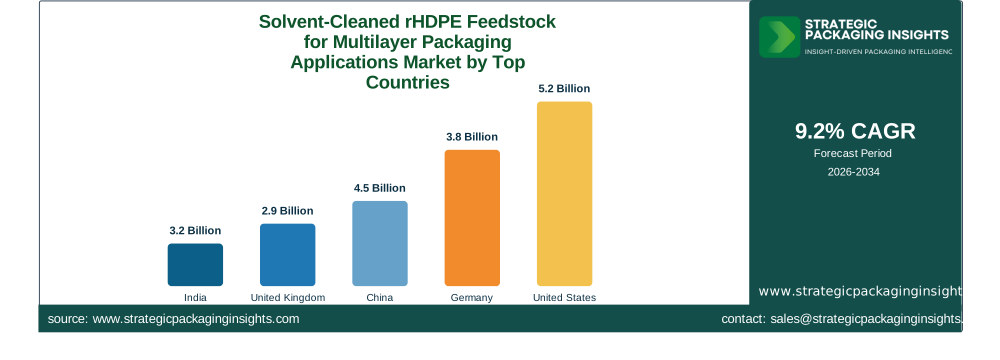
Germany is another significant market, valued at around $3.8 billion with a CAGR of 7%. The country's robust recycling infrastructure and government initiatives promoting sustainable practices are driving market growth. Germany's emphasis on innovation and technological advancements in recycling processes is also contributing to the expansion of the solvent-cleaned rHDPE feedstock market. However, the market faces challenges related to the availability of high-quality feedstock and the complexity of recycling processes.
China, with a market size of approximately $4.5 billion and a CAGR of 10%, is witnessing rapid growth in the solvent-cleaned rHDPE feedstock market. The country's increasing focus on environmental sustainability and government policies aimed at reducing plastic waste are key growth drivers. China's large consumer base and the presence of numerous packaging manufacturers further support market expansion. However, the market faces challenges related to regulatory compliance and the need for advanced recycling technologies.
In the United Kingdom, the market is valued at around $2.9 billion with a CAGR of 6%. The country's strong emphasis on reducing plastic waste and promoting sustainable packaging solutions is driving market growth. The presence of leading recycling companies and government initiatives supporting the circular economy are further propelling the market. However, challenges such as high operational costs and the need for efficient waste management systems remain.
India, with a market size of approximately $3.2 billion and a CAGR of 12%, is emerging as a key player in the solvent-cleaned rHDPE feedstock market. The country's growing awareness of environmental issues and government initiatives promoting recycling and sustainable practices are driving market growth. India's large population and increasing demand for eco-friendly packaging solutions further support market expansion. However, the market faces challenges related to infrastructure development and the availability of high-quality feedstock.
Solvent-Cleaned rHDPE Feedstock for Multilayer Packaging Applications Market Segments Insights

Feedstock Type Analysis
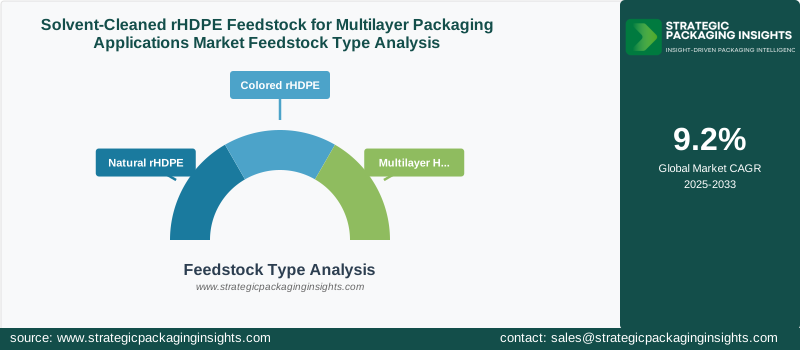
The Feedstock Type segment in the Solvent-Cleaned rHDPE Feedstock market is categorized into natural rHDPE, colored rHDPE, and multilayer HDPE waste. Natural rHDPE is gaining popularity due to its superior quality and recyclability, making it a preferred choice for manufacturers. The demand for colored rHDPE is also on the rise, driven by its aesthetic appeal and versatility in packaging applications. Multilayer HDPE waste is being increasingly utilized as a feedstock, as it offers a cost-effective solution for producing high-quality rHDPE. The growing emphasis on sustainability and the need to reduce plastic waste are key drivers for this segment.
Technological advancements in recycling processes are enhancing the quality and efficiency of rHDPE production, further boosting the demand for different feedstock types. The development of innovative sorting and cleaning technologies is enabling manufacturers to produce high-purity rHDPE feedstock that meets the stringent requirements of multilayer packaging applications. Additionally, the increasing collaboration between packaging companies and recycling firms is fostering the development of new and improved feedstock solutions, thereby driving market growth.
Process Type Analysis
The Process Type segment in the Solvent-Cleaned rHDPE Feedstock market includes solvent cleaning, deodorization, filtration, and pelletizing. Solvent cleaning is a critical process that ensures the removal of impurities and contaminants from rHDPE feedstock, enhancing its quality and recyclability. Deodorization is another important process, as it eliminates odors and improves the overall quality of the feedstock. Filtration and pelletizing are essential steps in the production of rHDPE, as they ensure the uniformity and consistency of the final product.
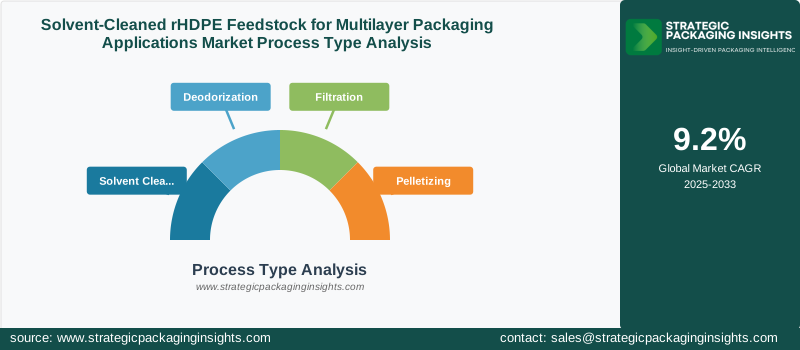
Advancements in process technologies are driving the growth of this segment, as they enhance the efficiency and quality of rHDPE production. The integration of artificial intelligence and machine learning in recycling processes is optimizing operations and reducing costs, further boosting market expansion. The increasing focus on sustainability and the need to reduce plastic waste are also driving the demand for advanced process technologies in the production of rHDPE feedstock.
Application Analysis
The Application segment in the Solvent-Cleaned rHDPE Feedstock market includes multilayer bottles, caps, flexible packs, and barrier containers. Multilayer bottles are a major application, as they offer superior durability and recyclability, making them a preferred choice for manufacturers. Caps and flexible packs are also gaining popularity, driven by their versatility and cost-effectiveness in packaging applications. Barrier containers are being increasingly utilized, as they provide excellent protection against moisture and oxygen, ensuring the quality and freshness of packaged products.
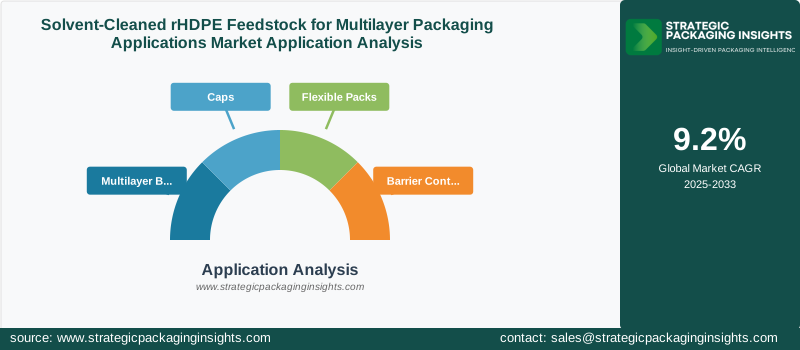
The growing demand for sustainable packaging solutions is driving the growth of this segment, as manufacturers are increasingly adopting rHDPE feedstock in their packaging solutions. Technological advancements in recycling processes are enhancing the quality and efficiency of rHDPE production, further boosting the demand for different applications. The increasing collaboration between packaging companies and recycling firms is fostering the development of new and improved packaging solutions, thereby driving market growth.
End Use Analysis
The End Use segment in the Solvent-Cleaned rHDPE Feedstock market includes FMCG, food packaging, and household care. The FMCG sector is a major end-user, as it requires high-quality and durable packaging solutions to ensure the safety and freshness of products. Food packaging is another significant end-use, driven by the increasing demand for eco-friendly and sustainable packaging solutions. Household care products are also utilizing rHDPE feedstock, as it offers superior durability and recyclability, making it a preferred choice for manufacturers.
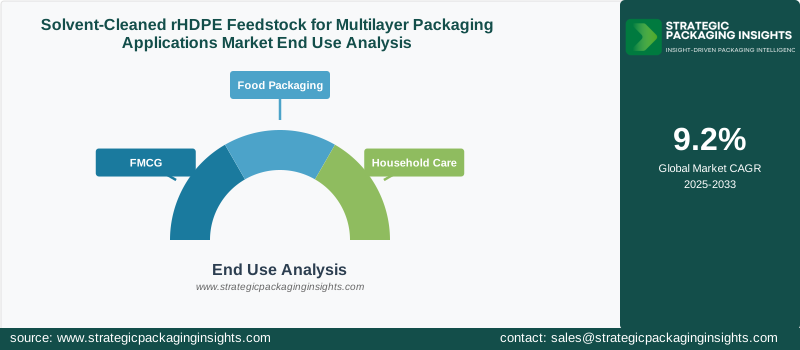
The growing emphasis on sustainability and the need to reduce plastic waste are key drivers for this segment. Technological advancements in recycling processes are enhancing the quality and efficiency of rHDPE production, further boosting the demand for different end-use applications. The increasing collaboration between packaging companies and recycling firms is fostering the development of new and improved packaging solutions, thereby driving market growth.
Solvent-Cleaned rHDPE Feedstock for Multilayer Packaging Applications Market Segments
The Solvent-Cleaned rHDPE Feedstock for Multilayer Packaging Applications market has been segmented on the basis ofFeedstock Type
- Natural rHDPE
- Colored rHDPE
- Multilayer HDPE Waste
Process Type
- Solvent Cleaning
- Deodorization
- Filtration
- Pelletizing
Application
- Multilayer Bottles
- Caps
- Flexible Packs
- Barrier Containers
End Use
- FMCG
- Food Packaging
- Household Care
Region
- Asia Pacific
- North America
- Latin America
- Europe
- Middle East & Africa




