


Solid Board Market Outlook
The solid board market was valued at $11.22 billion in 2025 and is projected to reach $15.97 billion by 2034, growing at a CAGR of 4.0% during the forecast period 2026-2034. This growth is driven by increasing demand for sustainable and eco-friendly packaging solutions across various industries. Solid boards are gaining popularity due to their durability, recyclability, and versatility in applications ranging from food packaging to luxury goods. The market is also benefiting from advancements in manufacturing technologies that enhance the quality and performance of solid boards, making them a preferred choice for packaging solutions worldwide.
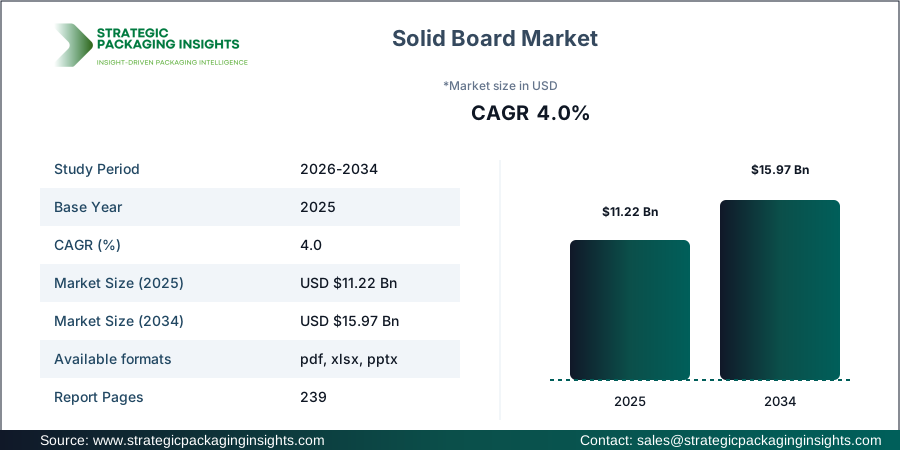
Despite the promising growth prospects, the solid board market faces certain challenges that could hinder its expansion. Regulatory restrictions on deforestation and the use of virgin materials are pushing manufacturers to adopt recycled materials, which can sometimes compromise the quality of the end product. Additionally, the high cost of raw materials and energy-intensive production processes are significant restraints. However, the market holds potential for growth through innovations in product design and the development of cost-effective production techniques. The increasing focus on reducing carbon footprints and the adoption of circular economy principles are expected to create new opportunities for market players.
Report Scope
| Attributes | Details |
| Report Title | Solid Board Market Size, Future Growth and Forecast 2034 |
| By Product Type | Solid Bleached Board, Solid Unbleached Board, Recycled Solid Board |
| By Application | Folding Cartons, Luxury Packaging, Food Packaging, Pharma Cartons |
| By End Use | Converters, Retailers, FMCG, Healthcare |
| By Coating Type | Coated, Uncoated |
| Region | Asia Pacific, North America, Latin America, Europe, Middle East & Africa |
| Base Year | 2025 |
| Historic Period | 2018-2024 |
| Forecast Period | 2026-2034 |
| Number of Pages | 239 |
| Customization Available | Yes* |
Opportunities & Threats
The solid board market presents numerous opportunities, particularly in the realm of sustainable packaging. As consumers and businesses alike become more environmentally conscious, the demand for recyclable and biodegradable packaging materials is on the rise. Solid boards, known for their eco-friendly properties, are well-positioned to capitalize on this trend. Additionally, the growing e-commerce sector is driving the need for robust packaging solutions that can withstand the rigors of shipping and handling. This presents a significant opportunity for solid board manufacturers to expand their market presence by catering to the packaging needs of online retailers and logistics companies.
Another opportunity lies in the development of innovative solid board products that offer enhanced functionality and aesthetics. With advancements in printing and coating technologies, manufacturers can produce solid boards with superior print quality and visual appeal, making them ideal for luxury packaging applications. The ability to customize solid boards to meet specific customer requirements also opens up new avenues for growth in niche markets such as pharmaceuticals and cosmetics. By focusing on product differentiation and value-added features, companies can gain a competitive edge and capture a larger share of the market.
However, the solid board market is not without its threats. One of the primary challenges is the volatility in raw material prices, which can significantly impact production costs and profit margins. Additionally, the market faces competition from alternative packaging materials such as plastics and corrugated boards, which are often perceived as more cost-effective options. To mitigate these threats, solid board manufacturers must focus on optimizing their supply chains and exploring cost-reduction strategies. Furthermore, the industry must address concerns related to the environmental impact of solid board production, particularly in terms of energy consumption and waste generation.
Drivers & Challenges
The solid board market is driven by several key factors, including the increasing demand for sustainable packaging solutions and the growth of the e-commerce sector. As consumers become more environmentally conscious, there is a growing preference for packaging materials that are recyclable and biodegradable. Solid boards, with their eco-friendly properties, are well-suited to meet this demand. Additionally, the rise of e-commerce has created a need for durable packaging solutions that can protect products during transit. Solid boards offer the strength and rigidity required for shipping, making them an ideal choice for online retailers and logistics companies.
Another significant driver of the solid board market is the advancement in manufacturing technologies. Innovations in production processes have led to the development of high-quality solid boards with improved performance characteristics. These advancements have enabled manufacturers to produce solid boards that are not only durable but also visually appealing, making them suitable for a wide range of applications, from food packaging to luxury goods. The ability to customize solid boards to meet specific customer requirements further enhances their appeal, driving demand across various industries.
Despite these drivers, the solid board market faces several challenges that could impede its growth. One of the primary challenges is the high cost of raw materials, which can significantly impact production costs and profit margins. Additionally, the market is subject to regulatory restrictions on deforestation and the use of virgin materials, which can limit the availability of raw materials. To overcome these challenges, manufacturers must focus on optimizing their supply chains and exploring cost-reduction strategies. Furthermore, the industry must address concerns related to the environmental impact of solid board production, particularly in terms of energy consumption and waste generation.
Market Share Analysis
The competitive landscape of the solid board market is characterized by the presence of several key players who dominate the industry. These companies are engaged in strategic initiatives such as mergers and acquisitions, partnerships, and product innovations to strengthen their market position. Stora Enso, Metsä Board, and WestRock are among the leading players in the market, known for their extensive product portfolios and strong distribution networks. These companies have a significant market share, driven by their focus on sustainability and innovation in product offerings.
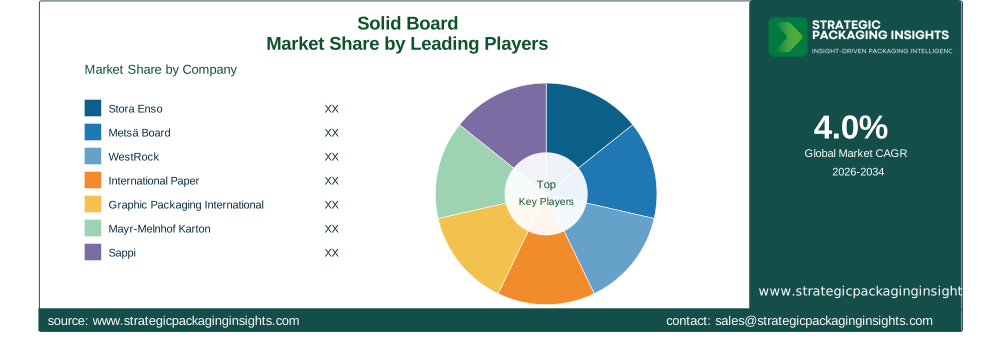
International Paper and Graphic Packaging International are also prominent players in the solid board market, leveraging their expertise in packaging solutions to cater to a diverse range of industries. These companies are investing in research and development to enhance the quality and performance of their solid board products, thereby gaining a competitive edge in the market. Mayr-Melnhof Karton and Sappi are other notable players, known for their commitment to sustainability and eco-friendly packaging solutions.
Billerud, Mondi, and Oji Holdings are also key players in the solid board market, with a strong presence in both domestic and international markets. These companies are focused on expanding their product offerings and enhancing their production capabilities to meet the growing demand for solid boards. By adopting innovative manufacturing techniques and exploring new market opportunities, these players are well-positioned to capitalize on the growth potential of the solid board market.
Overall, the solid board market is highly competitive, with companies vying for market share through strategic initiatives and product innovations. The focus on sustainability and eco-friendly packaging solutions is a key differentiator for market players, as consumers and businesses increasingly prioritize environmentally responsible products. By leveraging their strengths in product development and distribution, leading companies in the solid board market are well-equipped to navigate the challenges and capitalize on the opportunities presented by the evolving packaging industry.
Key Highlights
- The solid board market is projected to grow from $11.22 billion in 2025 to $15.97 billion by 2034, at a CAGR of 4.0%.
- Increasing demand for sustainable and eco-friendly packaging solutions is a major driver of market growth.
- Advancements in manufacturing technologies are enhancing the quality and performance of solid boards.
- The rise of e-commerce is driving the need for durable packaging solutions, benefiting the solid board market.
- Regulatory restrictions on deforestation and virgin materials pose challenges to market growth.
- Key players in the market include Stora Enso, Metsä Board, WestRock, and International Paper.
- Product innovations and strategic partnerships are key strategies adopted by market players.
- The market faces competition from alternative packaging materials such as plastics and corrugated boards.
- Focus on sustainability and eco-friendly packaging solutions is a key differentiator for market players.
Top Countries Insights
In the solid board market, the United States stands out as a key player, with a market size of approximately $3.5 billion and a CAGR of 3%. The country's robust e-commerce sector and increasing demand for sustainable packaging solutions are major growth drivers. Government policies promoting recycling and waste reduction further support the market's expansion. However, challenges such as fluctuating raw material prices and competition from alternative packaging materials persist.
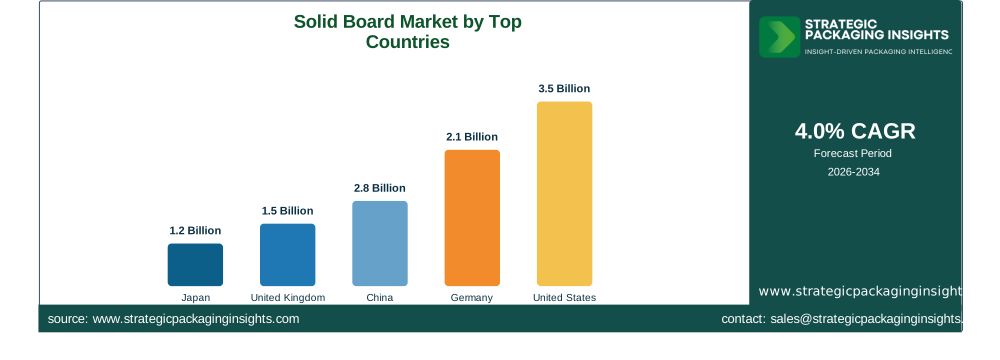
Germany is another significant market for solid boards, with a market size of around $2.1 billion and a CAGR of 4%. The country's strong manufacturing base and emphasis on sustainability drive demand for solid boards. Innovations in product design and the adoption of eco-friendly packaging solutions are key growth drivers. However, regulatory restrictions on deforestation and the use of virgin materials pose challenges to market growth.
China, with a market size of approximately $2.8 billion and a CAGR of 5%, is a rapidly growing market for solid boards. The country's expanding e-commerce sector and increasing focus on sustainable packaging solutions are major growth drivers. Government initiatives promoting recycling and waste reduction further support market growth. However, challenges such as environmental concerns related to solid board production and competition from alternative packaging materials persist.
In the United Kingdom, the solid board market is valued at around $1.5 billion, with a CAGR of 3%. The country's strong retail sector and increasing demand for eco-friendly packaging solutions drive market growth. Innovations in product design and the adoption of sustainable packaging solutions are key growth drivers. However, challenges such as regulatory restrictions on deforestation and the use of virgin materials pose challenges to market growth.
Japan, with a market size of approximately $1.2 billion and a CAGR of 2%, is a mature market for solid boards. The country's emphasis on sustainability and eco-friendly packaging solutions drives demand for solid boards. Innovations in product design and the adoption of sustainable packaging solutions are key growth drivers. However, challenges such as fluctuating raw material prices and competition from alternative packaging materials persist.
Solid Board Market Segments Insights

Product Type Analysis
The solid board market is segmented by product type into solid bleached board, solid unbleached board, and recycled solid board. Solid bleached boards are highly favored for their superior printability and aesthetic appeal, making them ideal for luxury packaging and high-end consumer goods. The demand for solid bleached boards is driven by the increasing focus on product differentiation and branding, particularly in the cosmetics and personal care industries. Solid unbleached boards, on the other hand, are preferred for their strength and durability, making them suitable for applications such as food packaging and industrial uses. The growing emphasis on sustainability and the use of recycled materials is boosting the demand for recycled solid boards, which are gaining traction in the market due to their eco-friendly properties.
Solid bleached boards are witnessing significant demand in the luxury packaging segment, where aesthetics and print quality are paramount. The ability to produce vibrant colors and intricate designs on solid bleached boards makes them a preferred choice for premium brands looking to enhance their product presentation. Solid unbleached boards, known for their robustness, are extensively used in food packaging applications where strength and protection are critical. The increasing focus on reducing environmental impact is driving the adoption of recycled solid boards, which offer a sustainable alternative to traditional packaging materials. As consumers and businesses prioritize eco-friendly solutions, the demand for recycled solid boards is expected to grow, providing opportunities for manufacturers to expand their product offerings.
Application Analysis
The application segment of the solid board market includes folding cartons, luxury packaging, food packaging, and pharma cartons. Folding cartons are widely used across various industries due to their versatility and cost-effectiveness. The demand for folding cartons is driven by the growth of the e-commerce sector, which requires durable and lightweight packaging solutions for shipping and handling. Luxury packaging, on the other hand, is experiencing growth due to the increasing demand for premium products and the emphasis on brand differentiation. Solid boards are favored in luxury packaging applications for their superior print quality and ability to create visually appealing designs.
Food packaging is a significant application area for solid boards, driven by the need for safe and hygienic packaging solutions. Solid boards offer excellent barrier properties and protection against moisture and contaminants, making them ideal for food packaging applications. The growing focus on sustainability and the use of recyclable materials is further boosting the demand for solid boards in the food packaging segment. Pharma cartons, used for packaging pharmaceutical products, require high-quality materials that ensure product safety and integrity. Solid boards are preferred in this segment for their strength and ability to withstand various environmental conditions, ensuring the safe delivery of pharmaceutical products.
End Use Analysis
The solid board market is segmented by end use into converters, retailers, FMCG, and healthcare. Converters play a crucial role in the solid board market, as they transform raw materials into finished products that meet specific customer requirements. The demand for solid boards among converters is driven by the need for high-quality materials that offer excellent printability and durability. Retailers, on the other hand, are increasingly adopting solid boards for packaging solutions that enhance product presentation and appeal to consumers. The focus on sustainability and eco-friendly packaging solutions is a key driver for retailers, who are looking to reduce their environmental impact.
The FMCG sector is a significant end-user of solid boards, driven by the need for packaging solutions that offer protection and convenience. Solid boards are favored in the FMCG sector for their strength and ability to withstand various environmental conditions, ensuring the safe delivery of products to consumers. The healthcare sector is another important end-user of solid boards, as they require packaging solutions that ensure product safety and integrity. Solid boards are preferred in the healthcare sector for their strength and ability to withstand various environmental conditions, ensuring the safe delivery of pharmaceutical products.
Coating Type Analysis
The solid board market is segmented by coating type into coated and uncoated boards. Coated solid boards are highly favored for their enhanced printability and visual appeal, making them ideal for applications where aesthetics are paramount. The demand for coated solid boards is driven by the increasing focus on product differentiation and branding, particularly in the luxury packaging and consumer goods industries. Coated boards offer a smooth surface that allows for high-quality printing and vibrant colors, enhancing the overall presentation of packaged products.
Uncoated solid boards, on the other hand, are preferred for their natural appearance and eco-friendly properties. The demand for uncoated boards is driven by the growing emphasis on sustainability and the use of recyclable materials. Uncoated boards are gaining traction in the market due to their ability to convey a natural and organic image, appealing to environmentally conscious consumers. As businesses and consumers prioritize eco-friendly solutions, the demand for uncoated solid boards is expected to grow, providing opportunities for manufacturers to expand their product offerings.
Solid Board Market Segments
The Solid Board market has been segmented on the basis ofBy Product Type
- Solid Bleached Board
- Solid Unbleached Board
- Recycled Solid Board
By Application
- Folding Cartons
- Luxury Packaging
- Food Packaging
- Pharma Cartons
By End Use
- Converters
- Retailers
- FMCG
- Healthcare
By Coating Type
- Coated
- Uncoated
Region
- Asia Pacific
- North America
- Latin America
- Europe
- Middle East & Africa




