


Snap-on Closures Market Outlook
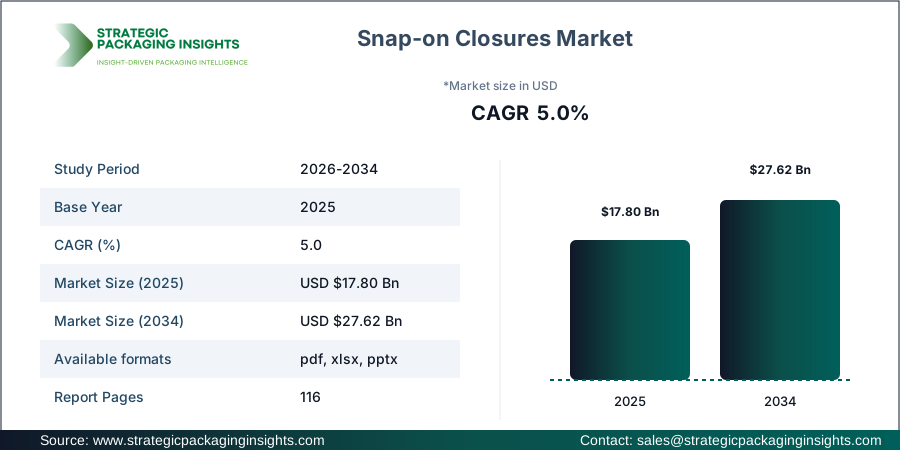
The Snap-on Closures market size was valued at USD 17.80 billion in 2025 and is anticipated to reach USD 27.62 billion by 2034, growing at a CAGR of 5.0% during the forecast period according to Strategic Packaging Insights. This growth trajectory is driven by the increasing demand for convenient and user-friendly packaging solutions across various industries. Companies like AptarGroup and Berry Global are at the forefront, innovating in closure designs that enhance product safety and consumer convenience. The market's expansion is further fueled by the rising consumption of packaged goods, particularly in emerging economies where urbanization and lifestyle changes are prominent.
One of the most impactful drivers of the Snap-on Closures market is the growing emphasis on sustainability and eco-friendly packaging solutions. Governments worldwide are implementing stringent regulations to reduce plastic waste, which is pushing manufacturers to innovate in recyclable and biodegradable materials. For instance, the European Union's directive on single-use plastics is a significant regulatory measure influencing market dynamics. Companies like Silgan Holdings and Bericap are investing in research and development to create closures that meet these regulatory standards while maintaining functionality and consumer appeal.
Report Scope
| Attributes | Details |
| Report Title | Snap-on Closures Market Size, Future Growth and Forecast 2034 |
| By Material Type | PP, HDPE, LDPE, Metal |
| By Closure Type | Snap Caps, Flip-Top Closures, Tamper-Evident Closures |
| By Application | Food, Personal Care, Homecare, Pharmaceuticals |
| By End Use | FMCG, Food & Beverage, Healthcare, Retail |
| Region | Asia Pacific, North America, Latin America, Europe, Middle East & Africa |
| Base Year | 2025 |
| Historic Period | 2018-2024 |
| Forecast Period | 2026-2034 |
| Number of Pages | 116 |
| Customization Available | Yes* |
Sustainability & Circular Economy Analysis
Sustainability initiatives are reshaping the Snap-on Closures market, with a strong focus on reducing environmental impact through innovative packaging solutions. The integration of recyclable materials and the development of reusable packaging systems are becoming standard practices. Companies are increasingly adopting lightweight packaging designs to minimize material usage and reduce carbon footprints. This shift is driven by consumer preferences for eco-friendly products and regulatory pressures to comply with environmental standards. As a result, manufacturers are investing in eco-friendly material innovations that not only meet sustainability goals but also enhance product appeal.
The circular economy model is gaining traction in the packaging industry, influencing the design and manufacturing processes of snap-on closures. Extended Producer Responsibility (EPR) policies are encouraging companies to take accountability for the entire lifecycle of their products, from production to disposal. This has led to the adoption of waste reduction strategies and the development of closures that are easier to recycle. ESG initiatives are also playing a crucial role, as companies strive to align their operations with sustainable practices to attract environmentally conscious investors and consumers.
These sustainability trends are impacting investment decisions and supply chain strategies within the Snap-on Closures market. Companies are prioritizing partnerships with suppliers who adhere to sustainable practices and are investing in technologies that enhance the recyclability of their products. Regulatory compliance is becoming a key factor in maintaining market competitiveness, as non-compliance can lead to significant financial and reputational risks. Overall, the focus on sustainability is driving innovation and shaping the future of the packaging industry, with long-term benefits for manufacturers, brand owners, and consumers alike.
Packaging Value Chain & Supply Chain Analysis
The packaging value chain for snap-on closures involves a complex ecosystem of raw material suppliers, packaging converters, manufacturers, and logistics providers. Raw material sourcing is a critical component, with companies like Berry Global and Silgan Holdings relying on a steady supply of high-quality polymers such as PP, HDPE, and LDPE. These materials are then transformed by packaging converters into closures that meet specific industry requirements. The efficiency of this process is crucial for maintaining competitive pricing and ensuring timely delivery to brand owners and retailers.
Supply chain efficiency is a key determinant of market performance in the Snap-on Closures industry. Manufacturers are focusing on optimizing their production capabilities and logistics operations to reduce lead times and enhance service levels. Strategic partnerships with logistics providers and distributors are essential for ensuring seamless transportation and distribution of closures to various end-use sectors. Companies are also adopting advanced inventory management systems to improve supply chain resilience and mitigate risks associated with raw material shortages or transportation disruptions.
Global sourcing and localization strategies are influencing the competitive landscape of the Snap-on Closures market. While some companies are expanding their global footprint to tap into emerging markets, others are focusing on localizing their operations to reduce costs and improve responsiveness to regional demand. Recycling networks are also becoming an integral part of the supply chain, as companies strive to close the loop and enhance the sustainability of their products. Overall, the packaging value chain is evolving to meet the demands of a dynamic market environment, with a focus on efficiency, sustainability, and innovation.
Opportunities & Threats
The Snap-on Closures market presents numerous opportunities for growth, driven by the increasing demand for convenient and user-friendly packaging solutions. The rise of e-commerce and online retailing is creating new avenues for market expansion, as consumers seek packaging that ensures product safety and integrity during transit. Additionally, the growing focus on sustainability is opening up opportunities for companies to develop eco-friendly closures that align with consumer preferences and regulatory requirements. Innovations in material science and closure design are also providing opportunities for differentiation and competitive advantage in the market.
Emerging markets in Asia Pacific and Latin America offer significant growth potential for the Snap-on Closures market. Rapid urbanization, rising disposable incomes, and changing consumer lifestyles are driving the demand for packaged goods in these regions. Companies that can effectively tap into these markets by offering cost-effective and innovative closure solutions are likely to gain a competitive edge. Furthermore, the increasing adoption of smart packaging technologies, such as closures with integrated sensors or RFID tags, presents opportunities for enhancing product functionality and consumer engagement.
Despite the growth opportunities, the Snap-on Closures market faces several threats that could impact its trajectory. One of the primary challenges is the volatility in raw material prices, which can affect production costs and profit margins. Additionally, stringent regulatory requirements related to environmental sustainability and product safety can pose compliance challenges for manufacturers. The competitive landscape is also intensifying, with new entrants and existing players vying for market share. Companies must navigate these threats by adopting agile strategies, investing in innovation, and maintaining strong relationships with suppliers and customers.
Drivers & Challenges
The Snap-on Closures market is driven by several key factors, including the increasing demand for convenient and secure packaging solutions. Consumers are seeking closures that offer ease of use, tamper-evidence, and product protection, driving manufacturers to innovate in closure designs. The growing emphasis on sustainability is another significant driver, as companies strive to develop eco-friendly closures that meet regulatory standards and consumer expectations. The rise of e-commerce and online retailing is also contributing to market growth, as closures play a crucial role in ensuring product safety and integrity during transit.
Technological advancements in material science and manufacturing processes are further driving the Snap-on Closures market. Innovations in polymer materials and closure designs are enabling manufacturers to create closures that are lightweight, durable, and recyclable. The adoption of smart packaging technologies, such as closures with integrated sensors or RFID tags, is enhancing product functionality and consumer engagement. Additionally, the increasing focus on product differentiation and branding is driving demand for closures that offer unique features and aesthetic appeal.
Despite the positive drivers, the Snap-on Closures market faces several challenges that could impact its growth. One of the primary challenges is the volatility in raw material prices, which can affect production costs and profit margins. Additionally, stringent regulatory requirements related to environmental sustainability and product safety can pose compliance challenges for manufacturers. The competitive landscape is also intensifying, with new entrants and existing players vying for market share. Companies must navigate these challenges by adopting agile strategies, investing in innovation, and maintaining strong relationships with suppliers and customers.
Market Share Analysis
The Snap-on Closures market is characterized by a competitive landscape with several key players vying for market share. Companies like AptarGroup, Berry Global, and Silgan Holdings are leading the market with their extensive product portfolios and strong distribution networks. These companies are focusing on innovation and sustainability to maintain their competitive edge. AptarGroup, for instance, is known for its advanced closure designs that enhance product safety and consumer convenience. Berry Global is leveraging its expertise in material science to develop eco-friendly closures that meet regulatory standards.
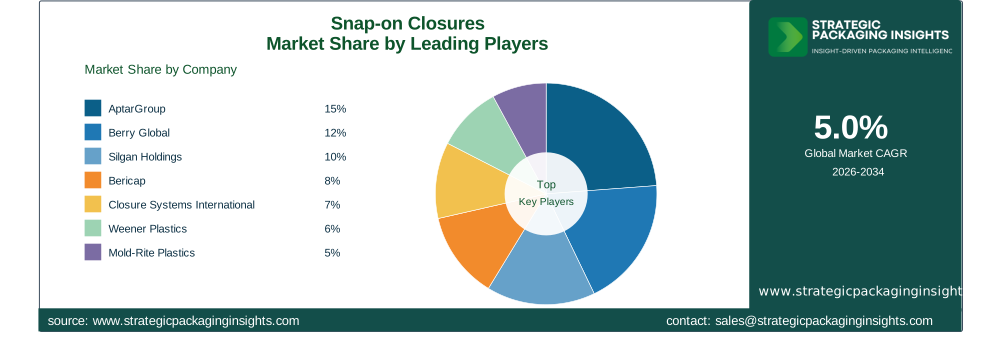
Silgan Holdings is another major player in the Snap-on Closures market, offering a wide range of closure solutions for various applications. The company is investing in research and development to create closures that are not only functional but also environmentally sustainable. Bericap and Closure Systems International are also prominent players, known for their innovative closure designs and strong customer relationships. These companies are focusing on expanding their global footprint and enhancing their product offerings to capture a larger share of the market.
Weener Plastics and Mold-Rite Plastics are also significant contributors to the Snap-on Closures market, with a focus on providing customized closure solutions to meet specific customer needs. Albea and United Caps are leveraging their expertise in packaging design and manufacturing to offer closures that enhance product appeal and functionality. Guala Closures is known for its advanced closure technologies that provide tamper-evidence and product protection. These companies are investing in sustainability initiatives and technological advancements to stay competitive in the market.
The competitive landscape of the Snap-on Closures market is dynamic, with companies continuously striving to innovate and differentiate their products. Strategic partnerships, mergers, and acquisitions are common strategies employed by market players to strengthen their market position and expand their product offerings. The focus on sustainability and eco-friendly packaging solutions is driving companies to invest in research and development and adopt sustainable practices across their operations. Overall, the market is poised for growth, with opportunities for companies to capitalize on emerging trends and consumer preferences.
Key Highlights
- Market Size: The Snap-on Closures market was valued at USD 17.80 billion in 2025 and is projected to reach USD 27.62 billion by 2034.
- Growth Rate: The market is expected to grow at a CAGR of 5.0% during the forecast period.
- Material Innovation: Companies are focusing on developing closures using recyclable and eco-friendly materials.
- Regional Growth: Asia Pacific is anticipated to witness significant growth due to rising demand for packaged goods.
- Technological Advancements: The adoption of smart packaging technologies is enhancing product functionality.
- Sustainability Focus: Increasing emphasis on sustainability is driving innovation in closure designs.
- Competitive Landscape: Key players like AptarGroup and Berry Global are leading the market with innovative solutions.
Snap-on Closures Market Segments Insights

By Material Type Analysis
The Snap-on Closures market is segmented by material type into PP, HDPE, LDPE, and Metal. Polypropylene (PP) is the most widely used material due to its excellent chemical resistance, durability, and cost-effectiveness. It is favored for its versatility and ability to be molded into various closure designs, making it ideal for applications in food, personal care, and pharmaceuticals. High-Density Polyethylene (HDPE) is also popular for its strength and recyclability, aligning with the growing demand for sustainable packaging solutions. Low-Density Polyethylene (LDPE) offers flexibility and is often used in closures that require a softer touch, such as those in personal care products.
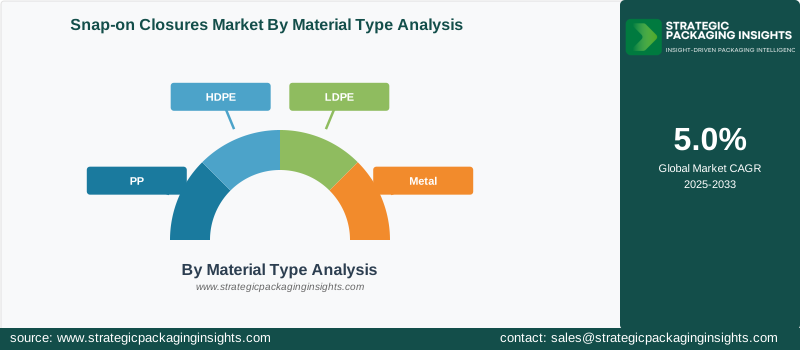
Metal closures, while less common, are used in applications where a premium look and feel are desired, such as in luxury personal care products. The choice of material is influenced by factors such as product compatibility, regulatory requirements, and consumer preferences. Companies are investing in research and development to create closures that not only meet functional requirements but also align with sustainability goals. The trend towards eco-friendly materials is driving innovation in material science, with manufacturers exploring biodegradable and compostable options to reduce environmental impact.
By Closure Type Analysis
The Snap-on Closures market is categorized by closure type into Snap Caps, Flip-Top Closures, and Tamper-Evident Closures. Snap Caps are widely used due to their simplicity and ease of use, making them ideal for applications in food and beverage packaging. Flip-Top Closures offer convenience and controlled dispensing, which is particularly beneficial in personal care and homecare products. These closures are designed to enhance user experience by providing easy access and resealability, which helps in maintaining product freshness and preventing spillage.
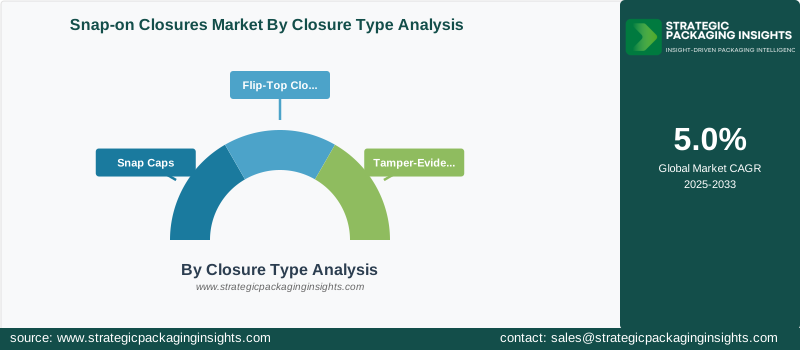
Tamper-Evident Closures are gaining popularity due to the increasing focus on product safety and integrity. These closures provide a visual indication of tampering, ensuring consumer confidence in the product's safety. The demand for tamper-evident solutions is particularly high in the pharmaceutical and food industries, where product safety is paramount. Manufacturers are innovating in closure designs to offer enhanced security features while maintaining ease of use. The choice of closure type is influenced by factors such as product application, consumer preferences, and regulatory requirements.
By Application Analysis
The Snap-on Closures market is segmented by application into Food, Personal Care, Homecare, and Pharmaceuticals. The food segment is the largest application area, driven by the increasing demand for packaged and processed foods. Snap-on closures provide convenience and product protection, making them ideal for food packaging. In the personal care segment, closures are used in products such as shampoos, lotions, and creams, where ease of use and product integrity are important. The homecare segment includes products like detergents and cleaning agents, where closures help in controlled dispensing and spill prevention.
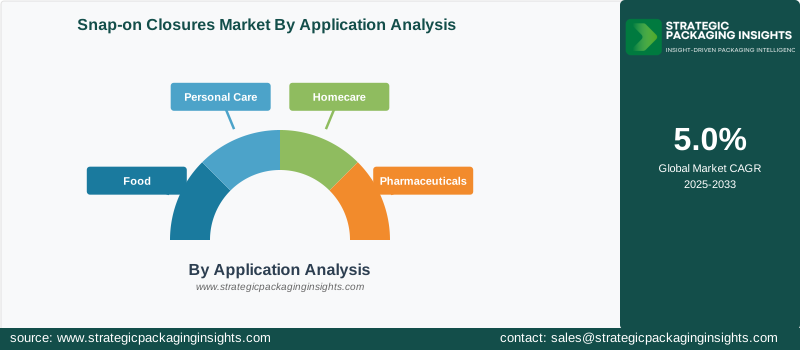
The pharmaceutical segment is witnessing significant growth due to the rising demand for safe and secure packaging solutions. Snap-on closures are used in pharmaceutical packaging to ensure product safety and compliance with regulatory standards. The choice of application is influenced by factors such as product type, consumer preferences, and industry regulations. Manufacturers are focusing on developing closures that meet the specific needs of each application area, with an emphasis on functionality, safety, and sustainability.
By End Use Analysis
The Snap-on Closures market is segmented by end use into FMCG, Food & Beverage, Healthcare, and Retail. The FMCG sector is a major end-user of snap-on closures, driven by the demand for convenient and user-friendly packaging solutions. In the food and beverage industry, closures play a crucial role in maintaining product freshness and preventing contamination. The healthcare sector is also a significant end-user, with closures used in pharmaceutical packaging to ensure product safety and compliance with regulatory standards.
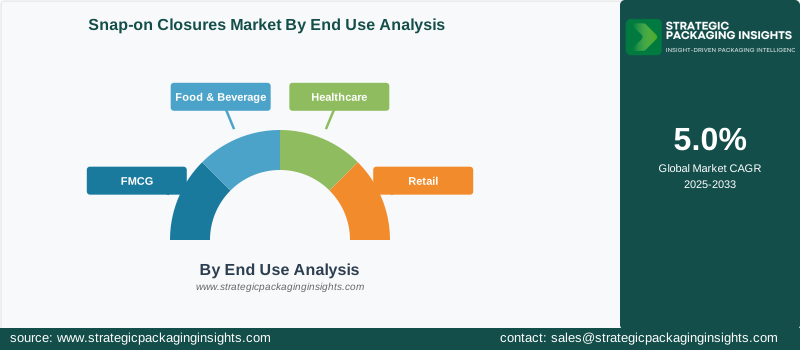
The retail sector is witnessing growth due to the increasing popularity of e-commerce and online retailing. Snap-on closures provide the necessary protection and convenience for products sold through these channels. The choice of end use is influenced by factors such as product type, consumer preferences, and industry regulations. Manufacturers are focusing on developing closures that meet the specific needs of each end-use sector, with an emphasis on functionality, safety, and sustainability.
Snap-on Closures Market Segments
The Snap-on Closures market has been segmented on the basis ofBy Material Type
- PP
- HDPE
- LDPE
- Metal
By Closure Type
- Snap Caps
- Flip-Top Closures
- Tamper-Evident Closures
By Application
- Food
- Personal Care
- Homecare
- Pharmaceuticals
By End Use
- FMCG
- Food & Beverage
- Healthcare
- Retail
Region
- Asia Pacific
- North America
- Latin America
- Europe
- Middle East & Africa




