


Sliding Injection Molding Machines Market Outlook
The Sliding Injection Molding Machines market was valued at $13.18 billion in 2025 and is projected to reach $21.52 billion by 2034, growing at a CAGR of 5.6% during the forecast period 2026-2034. This market is driven by the increasing demand for precision and efficiency in manufacturing processes across various industries. The adoption of advanced technologies in injection molding machines is enhancing production capabilities, reducing cycle times, and improving product quality, which in turn is fueling market growth. The rising demand for lightweight and durable components in the automotive and consumer goods sectors is also contributing to the expansion of this market. Furthermore, the growing emphasis on sustainability and energy efficiency is prompting manufacturers to invest in hybrid and electric sliding injection molding machines, which offer significant energy savings and reduced environmental impact.
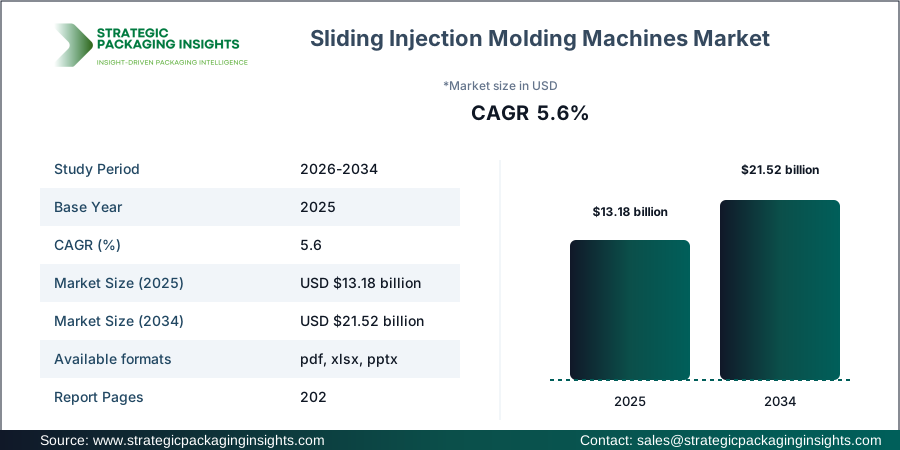
However, the market faces certain restraints, including high initial investment costs and the complexity of integrating advanced technologies into existing production lines. Regulatory challenges related to environmental standards and safety regulations can also pose hurdles for market players. Despite these challenges, the market holds significant growth potential, particularly in emerging economies where industrialization and urbanization are driving demand for consumer goods and automotive components. The increasing focus on automation and Industry 4.0 is expected to create new opportunities for market players, as manufacturers seek to enhance productivity and reduce operational costs through the adoption of smart manufacturing solutions.
Report Scope
| Attributes | Details |
| Report Title | Sliding Injection Molding Machines Market Size, Future Growth and Forecast 2034 |
| Machine Type | Horizontal Sliding Machines, Vertical Sliding Machines, Hybrid Machines |
| Clamping Force | Low, Medium, High |
| Application | Closures, Containers, Medical Parts, Packaging Components |
| End Use | Packaging, Automotive, Healthcare, Consumer Goods |
| Region | Asia Pacific, North America, Latin America, Europe, Middle East & Africa |
| Base Year | 2025 |
| Historic Period | 2018-2024 |
| Forecast Period | 2026-2034 |
| Number of Pages | 202 |
| Customization Available | Yes* |
Opportunities & Threats
The Sliding Injection Molding Machines market presents numerous opportunities for growth, particularly in the realm of technological advancements. The integration of IoT and AI in injection molding processes is enabling real-time monitoring and predictive maintenance, which can significantly enhance operational efficiency and reduce downtime. This technological evolution is opening new avenues for market players to offer innovative solutions that cater to the evolving needs of end-users. Additionally, the increasing demand for customized and complex molded products in industries such as healthcare and automotive is driving the need for advanced sliding injection molding machines that can deliver high precision and flexibility.
Another significant opportunity lies in the expansion of the packaging industry, which is witnessing robust growth due to the rising demand for packaged goods and e-commerce. Sliding injection molding machines are essential in the production of packaging components, and the growing emphasis on sustainable packaging solutions is further boosting demand for energy-efficient and environmentally friendly machines. Market players can capitalize on this trend by developing machines that offer enhanced energy efficiency and reduced carbon footprint, thereby aligning with the sustainability goals of end-users.
On the flip side, the market faces threats from the volatility of raw material prices, which can impact the overall cost structure and profitability of manufacturers. Additionally, the intense competition among market players can lead to price wars, affecting profit margins. The rapid pace of technological advancements also poses a threat, as companies need to continuously innovate and upgrade their offerings to stay competitive. Failure to do so can result in obsolescence and loss of market share.
Drivers & Challenges
The primary drivers of the Sliding Injection Molding Machines market include the increasing demand for high-quality and precision-engineered components across various industries. The automotive sector, in particular, is a major driver, as manufacturers seek to produce lightweight and durable components to meet stringent fuel efficiency and emission standards. The consumer goods industry is also contributing to market growth, with the rising demand for aesthetically appealing and functional products driving the need for advanced injection molding solutions. Furthermore, the growing trend of miniaturization in electronics and medical devices is fueling demand for machines capable of producing small and intricate parts with high precision.
Another key driver is the shift towards automation and smart manufacturing, which is transforming the landscape of the injection molding industry. The adoption of Industry 4.0 technologies, such as IoT, AI, and robotics, is enabling manufacturers to optimize production processes, enhance product quality, and reduce operational costs. This trend is encouraging market players to invest in the development of intelligent sliding injection molding machines that offer real-time monitoring, predictive maintenance, and remote control capabilities.
Despite these drivers, the market faces several challenges, including the high cost of advanced machines and the complexity of integrating new technologies into existing production lines. The need for skilled labor to operate and maintain sophisticated machines is another challenge, as the shortage of skilled workers can hinder the adoption of advanced technologies. Additionally, the market is subject to regulatory challenges, with stringent environmental and safety standards requiring manufacturers to invest in compliance and certification processes. These challenges can increase operational costs and impact the overall profitability of market players.
Market Share Analysis
The competitive landscape of the Sliding Injection Molding Machines market is characterized by the presence of several key players who are actively engaged in product innovation and strategic collaborations to strengthen their market position. Haitian International is a leading player in the market, known for its extensive range of injection molding machines that cater to various industrial applications. The company holds a significant market share due to its strong global presence and focus on technological advancements.
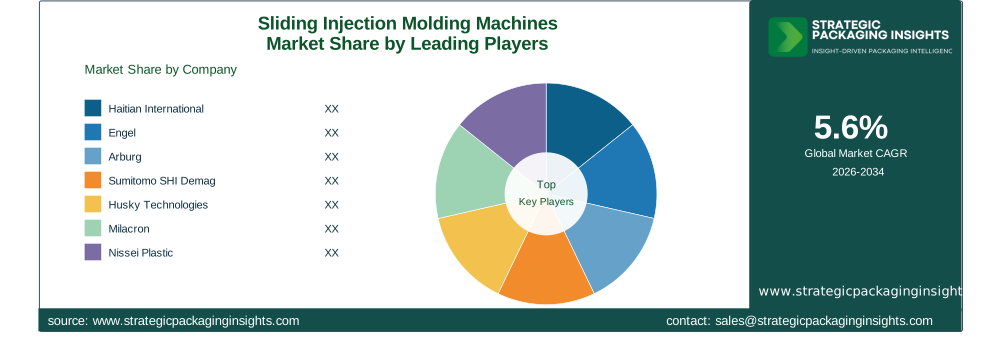
Engel is another major player in the market, renowned for its innovative solutions and commitment to sustainability. The company's focus on energy-efficient machines and smart manufacturing solutions has helped it capture a substantial share of the market. Arburg, with its emphasis on precision and quality, is also a prominent player, offering a wide range of machines that cater to diverse industry needs.
Sumitomo SHI Demag and Husky Technologies are key players known for their advanced injection molding solutions that offer high performance and reliability. These companies have a strong presence in the market, driven by their focus on customer-centric solutions and continuous innovation. Milacron and Nissei Plastic are also notable players, with a strong emphasis on research and development to deliver cutting-edge technologies that meet the evolving needs of end-users.
KraussMaffei, JSW, and Chen Hsong are other significant players in the market, each with a unique value proposition that caters to specific industry requirements. These companies are focused on expanding their product portfolios and enhancing their global footprint through strategic partnerships and acquisitions. The competitive landscape is dynamic, with companies continuously striving to differentiate themselves through innovation, quality, and customer service.
Key Highlights
- The Sliding Injection Molding Machines market is projected to grow from $13.18 billion in 2025 to $21.52 billion by 2034, at a CAGR of 5.6%.
- Technological advancements, such as IoT and AI integration, are driving market growth by enhancing operational efficiency and reducing downtime.
- The packaging industry is a major growth driver, with increasing demand for sustainable and energy-efficient machines.
- High initial investment costs and regulatory challenges are key restraints for market players.
- Haitian International, Engel, and Arburg are leading players in the market, known for their innovative solutions and strong global presence.
- The automotive and consumer goods sectors are significant contributors to market demand, driven by the need for lightweight and durable components.
- Automation and Industry 4.0 are transforming the injection molding industry, creating new opportunities for market players.
Top Countries Insights
In the Sliding Injection Molding Machines market, China stands out as a leading country, with a market size of approximately $4.5 billion and a CAGR of 7%. The country's robust manufacturing sector and government initiatives to promote industrial automation are key growth drivers. Additionally, the increasing demand for consumer goods and automotive components is fueling market expansion. However, challenges such as environmental regulations and the need for skilled labor persist.
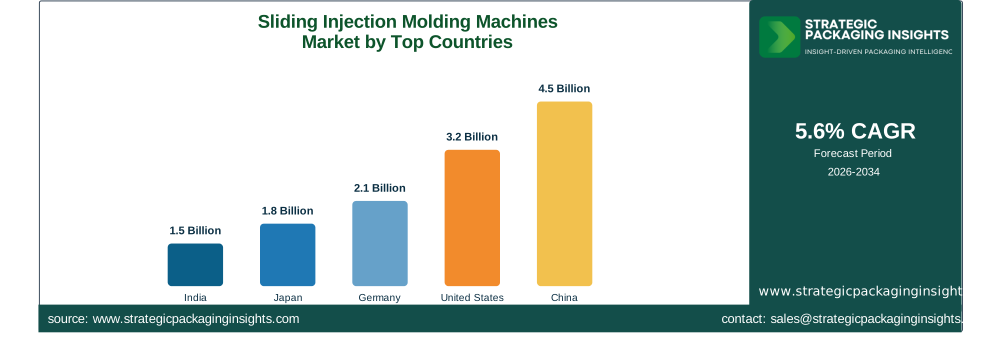
The United States is another significant market, with a size of around $3.2 billion and a CAGR of 5%. The country's focus on technological innovation and sustainability is driving demand for advanced injection molding machines. The automotive and healthcare industries are major contributors to market growth, with an emphasis on precision and quality. Regulatory challenges and high operational costs are potential hurdles for market players.
Germany, with a market size of $2.1 billion and a CAGR of 4%, is a key player in the European market. The country's strong engineering capabilities and focus on Industry 4.0 are driving demand for smart manufacturing solutions. The automotive sector is a major growth driver, with a focus on lightweight and energy-efficient components. However, the market faces challenges related to regulatory compliance and environmental standards.
Japan, with a market size of $1.8 billion and a CAGR of 3%, is known for its advanced manufacturing technologies and emphasis on quality. The country's focus on innovation and automation is driving demand for high-performance injection molding machines. The electronics and automotive industries are significant contributors to market growth, with a focus on miniaturization and precision.
India, with a market size of $1.5 billion and a CAGR of 6%, is an emerging market with significant growth potential. The country's expanding manufacturing sector and government initiatives to promote industrialization are key growth drivers. The packaging and consumer goods industries are major contributors to market demand, with a focus on cost-effective and sustainable solutions. However, challenges such as infrastructure and regulatory hurdles persist.
Sliding Injection Molding Machines Market Segments Insights

Machine Type Analysis
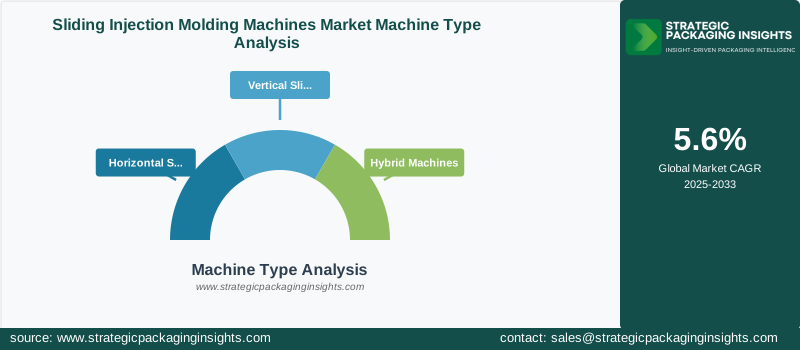
The Sliding Injection Molding Machines market is segmented by machine type into horizontal sliding machines, vertical sliding machines, and hybrid machines. Horizontal sliding machines dominate the market due to their widespread application in various industries, including automotive and consumer goods. These machines offer high precision and efficiency, making them ideal for mass production. The demand for horizontal machines is driven by their ability to produce complex and large components with consistent quality. Vertical sliding machines, on the other hand, are gaining traction in niche applications where space constraints and specific production requirements are critical. These machines are favored in industries such as electronics and medical devices, where precision and compact design are essential. Hybrid machines, which combine the benefits of both horizontal and vertical machines, are emerging as a popular choice for manufacturers seeking flexibility and energy efficiency. The growing emphasis on sustainability and energy savings is driving demand for hybrid machines, which offer reduced energy consumption and lower operational costs.
Clamping Force Analysis
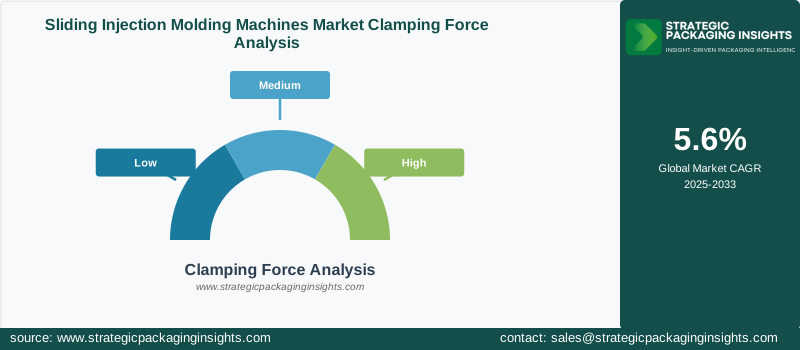
The market is further segmented by clamping force into low, medium, and high categories. Low clamping force machines are primarily used in applications requiring delicate handling and precision, such as medical parts and small consumer goods. These machines are favored for their ability to produce intricate components with minimal material wastage. Medium clamping force machines are widely used in the production of packaging components and automotive parts, where a balance between precision and strength is required. The demand for medium clamping force machines is driven by their versatility and ability to handle a wide range of materials and product sizes. High clamping force machines are essential in heavy-duty applications, such as large automotive components and industrial containers, where strength and durability are paramount. The increasing demand for lightweight and high-performance materials in the automotive and aerospace industries is driving the adoption of high clamping force machines, which offer superior strength and reliability.
Application Analysis
By application, the market is segmented into closures, containers, medical parts, and packaging components. The packaging components segment holds a significant share of the market, driven by the growing demand for packaged goods and the expansion of the e-commerce industry. Sliding injection molding machines are essential in the production of high-quality and durable packaging components, which are critical for product protection and shelf appeal. The medical parts segment is also witnessing robust growth, fueled by the increasing demand for precision-engineered components in medical devices and equipment. The need for high-quality and reliable medical parts is driving demand for advanced injection molding machines that offer superior precision and consistency. The closures and containers segments are experiencing steady growth, driven by the demand for innovative and functional packaging solutions in the food and beverage and consumer goods industries.

End Use Analysis
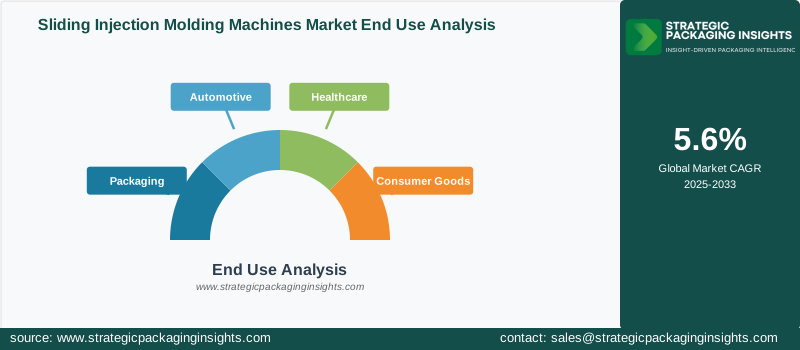
The market is segmented by end use into packaging, automotive, healthcare, and consumer goods. The packaging industry is a major driver of market growth, with the increasing demand for sustainable and energy-efficient solutions driving the adoption of advanced sliding injection molding machines. The automotive industry is another significant contributor, with the need for lightweight and durable components driving demand for high-performance machines. The healthcare industry is witnessing growing demand for precision-engineered components, driven by the increasing focus on quality and reliability in medical devices and equipment. The consumer goods industry is also contributing to market growth, with the demand for aesthetically appealing and functional products driving the need for advanced injection molding solutions.
Sliding Injection Molding Machines Market Segments
The Sliding Injection Molding Machines market has been segmented on the basis ofMachine Type
- Horizontal Sliding Machines
- Vertical Sliding Machines
- Hybrid Machines
Clamping Force
- Low
- Medium
- High
Application
- Closures
- Containers
- Medical Parts
- Packaging Components
End Use
- Packaging
- Automotive
- Healthcare
- Consumer Goods
Region
- Asia Pacific
- North America
- Latin America
- Europe
- Middle East & Africa




