


Shrink Sleeve Labeling Machine Market Outlook
The Shrink Sleeve Labeling Machine market was valued at $455.90 million in 2025 and is projected to reach $655.85 million by 2034, growing at a CAGR of 4.1% during the forecast period 2026-2034. This market is witnessing significant growth due to the increasing demand for innovative packaging solutions that enhance product appeal and provide 360-degree branding opportunities. Shrink sleeve labeling machines are gaining traction across various industries, including food and beverage, personal care, and pharmaceuticals, due to their ability to conform to complex container shapes and provide tamper-evident seals. The market is also driven by advancements in machine technology, such as the development of hybrid machines that offer flexibility and efficiency in labeling operations.
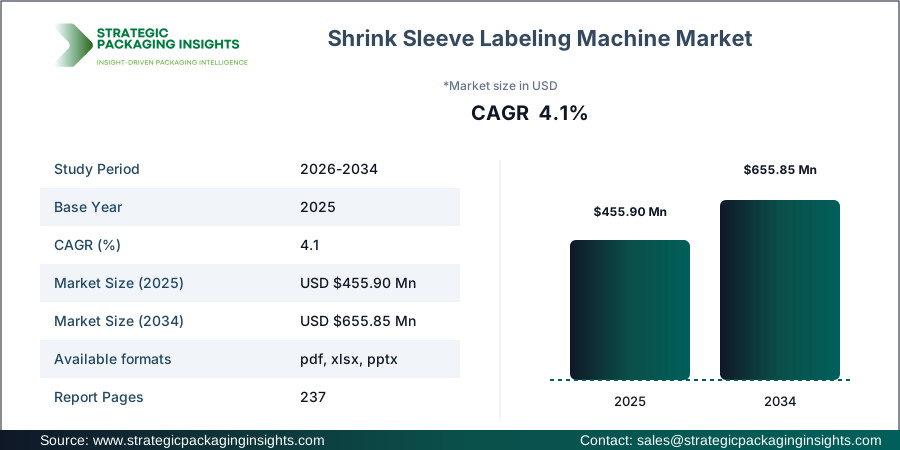
Despite the promising growth prospects, the Shrink Sleeve Labeling Machine market faces certain challenges. The high initial investment required for purchasing advanced labeling machines can be a barrier for small and medium-sized enterprises. Additionally, the complexity of the shrink sleeve application process requires skilled operators, which can increase operational costs. However, the market holds significant potential for growth, driven by the increasing adoption of automation in packaging lines and the rising demand for sustainable and eco-friendly labeling solutions. Regulatory standards related to packaging and labeling are also expected to influence market dynamics, as manufacturers strive to comply with stringent guidelines while maintaining cost-effectiveness.
Report Scope
| Attributes | Details |
| Report Title | Shrink Sleeve Labeling Machine Market Size, Future Growth and Forecast 2034 |
| By Machine Type | Steam, Electric, Hybrid |
| By Automation | Semi-Automatic, Automatic |
| By Application | Beverage, Food, Personal Care |
| By End Use | Bottling Lines, Packaging Lines |
| Region | Asia Pacific, North America, Latin America, Europe, Middle East & Africa |
| Base Year | 2025 |
| Historic Period | 2018-2024 |
| Forecast Period | 2026-2034 |
| Number of Pages | 237 |
| Customization Available | Yes* |
Opportunities & Threats
The Shrink Sleeve Labeling Machine market presents numerous opportunities for growth, particularly in emerging economies where the packaging industry is rapidly expanding. The increasing consumer preference for aesthetically appealing and informative packaging is driving the demand for shrink sleeve labels, which offer vibrant graphics and full-body coverage. This trend is particularly evident in the beverage industry, where brands are leveraging shrink sleeve labels to differentiate their products on crowded retail shelves. Additionally, the growing focus on sustainability is creating opportunities for manufacturers to develop eco-friendly shrink sleeve materials and recycling solutions, which can enhance brand reputation and appeal to environmentally conscious consumers.
Another significant opportunity lies in the technological advancements in shrink sleeve labeling machines. The development of hybrid machines that combine the benefits of steam and electric systems is enabling manufacturers to achieve higher efficiency and flexibility in their labeling operations. These machines are capable of handling a wide range of container shapes and sizes, making them ideal for diverse applications across various industries. Furthermore, the integration of automation and digital technologies in labeling machines is enhancing precision and reducing downtime, thereby improving overall productivity and profitability for manufacturers.
However, the market also faces certain threats that could hinder its growth. One of the primary challenges is the high cost associated with shrink sleeve labeling machines, which can be a deterrent for small and medium-sized enterprises. Additionally, the complexity of the shrink sleeve application process requires skilled operators, which can increase labor costs and impact profitability. The market is also susceptible to fluctuations in raw material prices, which can affect the cost of shrink sleeve labels and, consequently, the overall cost of packaging. Moreover, stringent regulatory standards related to packaging and labeling can pose compliance challenges for manufacturers, particularly in regions with varying regulations.
Drivers & Challenges
The Shrink Sleeve Labeling Machine market is primarily driven by the increasing demand for innovative and visually appealing packaging solutions. Shrink sleeve labels offer 360-degree coverage and vibrant graphics, making them an attractive option for brands looking to enhance product visibility and consumer engagement. This trend is particularly prominent in the beverage and personal care industries, where packaging plays a crucial role in influencing consumer purchasing decisions. Additionally, the growing focus on product differentiation and brand identity is driving the adoption of shrink sleeve labeling machines, as they enable manufacturers to create unique and customized packaging designs.
Another key driver of the market is the rising adoption of automation in packaging lines. Automated shrink sleeve labeling machines offer several advantages, including increased efficiency, reduced labor costs, and improved accuracy in label application. These machines are equipped with advanced features such as digital controls and sensors, which enhance precision and minimize errors in the labeling process. The integration of automation is also enabling manufacturers to achieve higher production speeds and meet the growing demand for packaged goods. Furthermore, the development of hybrid machines that combine steam and electric systems is providing manufacturers with greater flexibility and efficiency in their labeling operations.
Despite the positive growth drivers, the Shrink Sleeve Labeling Machine market faces certain challenges that could impact its expansion. One of the primary challenges is the high initial investment required for purchasing advanced labeling machines, which can be a barrier for small and medium-sized enterprises. Additionally, the complexity of the shrink sleeve application process requires skilled operators, which can increase operational costs and impact profitability. The market is also susceptible to fluctuations in raw material prices, which can affect the cost of shrink sleeve labels and, consequently, the overall cost of packaging. Moreover, stringent regulatory standards related to packaging and labeling can pose compliance challenges for manufacturers, particularly in regions with varying regulations.
Market Share Analysis
The Shrink Sleeve Labeling Machine market is characterized by a competitive landscape with several key players vying for market share. Companies such as PDC International, Krones, Shrink Sleeve Systems, Fuji Seal, Axon, Herma, P.E. Labellers, CTM, Accraply, and Sleevit are prominent players in this market. These companies are focusing on product innovation, strategic partnerships, and mergers and acquisitions to strengthen their market position and expand their product offerings. The competitive landscape is further intensified by the presence of regional players who are leveraging their local expertise and customer relationships to gain a foothold in the market.
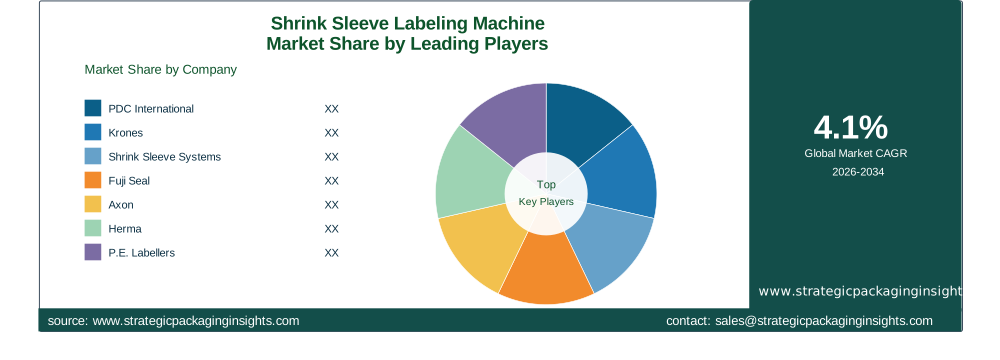
PDC International is a leading player in the Shrink Sleeve Labeling Machine market, known for its innovative and high-performance labeling solutions. The company offers a wide range of machines that cater to various industries, including food and beverage, personal care, and pharmaceuticals. Krones, another major player, is renowned for its comprehensive portfolio of packaging and labeling solutions. The company focuses on developing advanced technologies that enhance efficiency and sustainability in packaging operations. Shrink Sleeve Systems is also a key player, offering a diverse range of shrink sleeve labeling machines that are designed to meet the specific needs of different industries.
Fuji Seal is a prominent player in the market, known for its expertise in shrink sleeve labeling and packaging solutions. The company offers a wide range of machines that are designed to deliver high precision and efficiency in labeling operations. Axon, a division of ProMach, is another key player, offering a comprehensive range of shrink sleeve labeling machines that cater to various industries. The company focuses on developing innovative solutions that enhance productivity and reduce operational costs. Herma is also a significant player in the market, known for its advanced labeling technologies and commitment to sustainability.
P.E. Labellers is a leading player in the Shrink Sleeve Labeling Machine market, offering a wide range of machines that are designed to deliver high performance and reliability. The company focuses on developing innovative solutions that meet the evolving needs of the packaging industry. CTM is another key player, known for its expertise in labeling and packaging solutions. The company offers a comprehensive range of machines that cater to various industries, including food and beverage, personal care, and pharmaceuticals. Accraply, a division of Barry-Wehmiller, is also a prominent player, offering a diverse range of shrink sleeve labeling machines that are designed to deliver high precision and efficiency in labeling operations.
Key Highlights
- The Shrink Sleeve Labeling Machine market is projected to grow at a CAGR of 4.1% from 2026 to 2034.
- Increasing demand for innovative and visually appealing packaging solutions is driving market growth.
- Technological advancements in labeling machines are enhancing efficiency and flexibility in operations.
- The beverage industry is a major application segment for shrink sleeve labeling machines.
- High initial investment and operational costs are key challenges for market growth.
- Regulatory standards related to packaging and labeling are influencing market dynamics.
- Key players are focusing on product innovation and strategic partnerships to strengthen their market position.
Top Countries Insights
In the Shrink Sleeve Labeling Machine market, the United States is a leading country, with a market size of approximately $150 million and a CAGR of 5%. The growth in this region is driven by the strong presence of key players and the high demand for innovative packaging solutions in the food and beverage industry. The adoption of automation in packaging lines is also a significant growth driver, as manufacturers seek to enhance efficiency and reduce operational costs. However, the market faces challenges related to regulatory compliance and the high cost of advanced labeling machines.
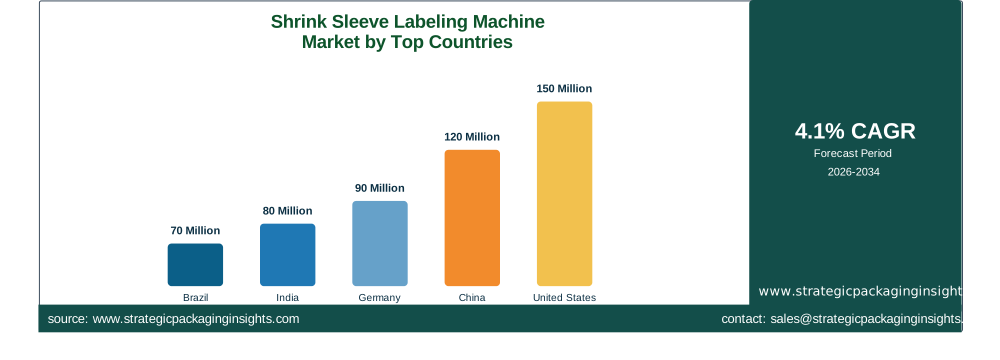
China is another major market for shrink sleeve labeling machines, with a market size of around $120 million and a CAGR of 6%. The rapid expansion of the packaging industry in China, driven by the growing consumer demand for packaged goods, is a key growth driver. The increasing focus on sustainability and eco-friendly packaging solutions is also influencing market dynamics, as manufacturers strive to meet consumer expectations and regulatory standards. However, the market faces challenges related to the availability of skilled operators and the high cost of raw materials.
Germany is a significant market for shrink sleeve labeling machines, with a market size of approximately $90 million and a CAGR of 4%. The strong presence of key players and the high demand for innovative packaging solutions in the food and beverage industry are driving market growth. The adoption of automation and digital technologies in packaging lines is also a significant growth driver, as manufacturers seek to enhance efficiency and reduce operational costs. However, the market faces challenges related to regulatory compliance and the high cost of advanced labeling machines.
India is an emerging market for shrink sleeve labeling machines, with a market size of around $80 million and a CAGR of 7%. The rapid expansion of the packaging industry in India, driven by the growing consumer demand for packaged goods, is a key growth driver. The increasing focus on sustainability and eco-friendly packaging solutions is also influencing market dynamics, as manufacturers strive to meet consumer expectations and regulatory standards. However, the market faces challenges related to the availability of skilled operators and the high cost of raw materials.
Brazil is a growing market for shrink sleeve labeling machines, with a market size of approximately $70 million and a CAGR of 5%. The strong presence of key players and the high demand for innovative packaging solutions in the food and beverage industry are driving market growth. The adoption of automation and digital technologies in packaging lines is also a significant growth driver, as manufacturers seek to enhance efficiency and reduce operational costs. However, the market faces challenges related to regulatory compliance and the high cost of advanced labeling machines.
Shrink Sleeve Labeling Machine Market Segments Insights

Machine Type Analysis
The Shrink Sleeve Labeling Machine market is segmented by machine type into steam, electric, and hybrid machines. Steam machines are widely used due to their ability to provide consistent heat distribution, which is essential for achieving high-quality shrink sleeve application. These machines are particularly popular in the beverage industry, where they are used for labeling bottles and cans. Electric machines, on the other hand, offer greater energy efficiency and are preferred in regions with high electricity costs. Hybrid machines, which combine the benefits of steam and electric systems, are gaining traction due to their flexibility and efficiency in handling a wide range of container shapes and sizes.
The demand for hybrid machines is driven by the need for versatile labeling solutions that can accommodate diverse packaging requirements. These machines are equipped with advanced features such as digital controls and sensors, which enhance precision and reduce downtime. The growing focus on automation in packaging lines is also contributing to the adoption of hybrid machines, as they offer increased efficiency and reduced labor costs. However, the high initial investment required for purchasing hybrid machines can be a barrier for small and medium-sized enterprises, which may opt for more cost-effective alternatives.
Automation Analysis
The Shrink Sleeve Labeling Machine market is segmented by automation into semi-automatic and automatic machines. Automatic machines are gaining popularity due to their ability to enhance efficiency and reduce labor costs in packaging operations. These machines are equipped with advanced features such as digital controls and sensors, which enable precise label application and minimize errors. The integration of automation in packaging lines is also enabling manufacturers to achieve higher production speeds and meet the growing demand for packaged goods.
Semi-automatic machines, while less expensive than their automatic counterparts, require manual intervention for certain tasks, which can increase labor costs and impact productivity. However, they are preferred by small and medium-sized enterprises that may not have the resources to invest in fully automated systems. The demand for semi-automatic machines is driven by the need for cost-effective labeling solutions that can accommodate smaller production volumes. Despite the challenges associated with manual intervention, semi-automatic machines offer flexibility and ease of use, making them a viable option for businesses with limited budgets.
Application Analysis
The Shrink Sleeve Labeling Machine market is segmented by application into beverage, food, and personal care industries. The beverage industry is a major application segment for shrink sleeve labeling machines, driven by the need for innovative and visually appealing packaging solutions. Shrink sleeve labels offer 360-degree coverage and vibrant graphics, making them an attractive option for beverage brands looking to enhance product visibility and consumer engagement. The growing demand for packaged beverages, particularly in emerging economies, is also contributing to the growth of this segment.
The food industry is another significant application segment, where shrink sleeve labels are used to provide tamper-evident seals and enhance product appeal. The increasing focus on product differentiation and brand identity is driving the adoption of shrink sleeve labeling machines in this industry. The personal care industry is also witnessing growth in the use of shrink sleeve labels, as brands seek to create unique and customized packaging designs that resonate with consumers. The demand for eco-friendly and sustainable packaging solutions is further influencing market dynamics, as manufacturers strive to meet consumer expectations and regulatory standards.
End Use Analysis
The Shrink Sleeve Labeling Machine market is segmented by end use into bottling lines and packaging lines. Bottling lines are a major end-use segment, driven by the high demand for shrink sleeve labels in the beverage industry. These labels offer full-body coverage and vibrant graphics, making them an attractive option for beverage brands looking to enhance product visibility and consumer engagement. The growing demand for packaged beverages, particularly in emerging economies, is also contributing to the growth of this segment.
Packaging lines, on the other hand, are witnessing growth due to the increasing adoption of automation in packaging operations. Automated shrink sleeve labeling machines offer several advantages, including increased efficiency, reduced labor costs, and improved accuracy in label application. The integration of automation is enabling manufacturers to achieve higher production speeds and meet the growing demand for packaged goods. The demand for eco-friendly and sustainable packaging solutions is further influencing market dynamics, as manufacturers strive to meet consumer expectations and regulatory standards.
Shrink Sleeve Labeling Machine Market Segments
The Shrink Sleeve Labeling Machine market has been segmented on the basis ofBy Machine Type
- Steam
- Electric
- Hybrid
By Automation
- Semi-Automatic
- Automatic
By Application
- Beverage
- Food
- Personal Care
By End Use
- Bottling Lines
- Packaging Lines
Region
- Asia Pacific
- North America
- Latin America
- Europe
- Middle East & Africa




