


Seaweed Packaging Market Outlook
The Seaweed Packaging market was valued at $621.86 million in 2025 and is projected to reach $2.05 billion by 2034, growing at a CAGR of 14.2% during the forecast period 2026-2034. This market is gaining traction due to the increasing demand for sustainable and eco-friendly packaging solutions. Seaweed, being a renewable resource, offers a biodegradable alternative to traditional plastic packaging, which is driving its adoption across various industries. The market is further fueled by the growing awareness among consumers and businesses about the environmental impact of plastic waste, leading to a shift towards more sustainable packaging options. Additionally, advancements in seaweed processing technologies are enhancing the quality and functionality of seaweed-based packaging, making it a viable option for a wide range of applications.
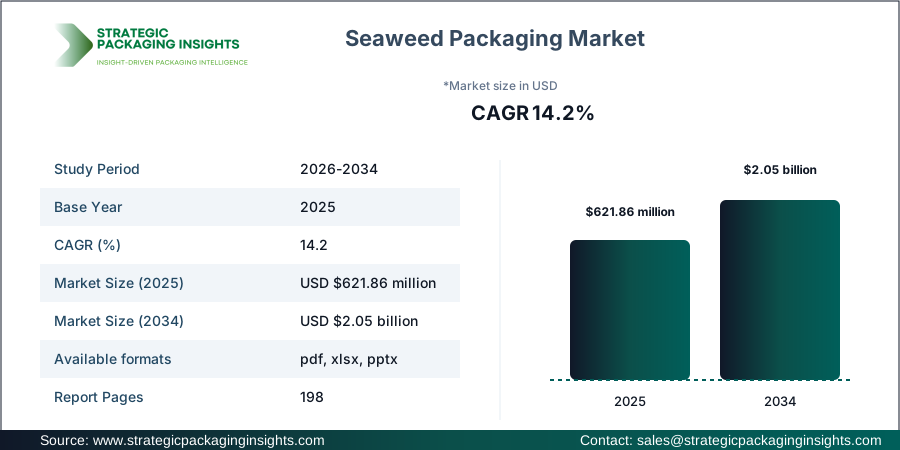
Despite the promising growth prospects, the Seaweed Packaging market faces certain challenges. The high cost of production and limited availability of raw materials are some of the key restraints hindering market growth. Moreover, the regulatory landscape for biodegradable packaging is still evolving, which could pose compliance challenges for manufacturers. However, the market holds significant growth potential, driven by the increasing investments in research and development to improve the cost-effectiveness and scalability of seaweed-based packaging solutions. Furthermore, the rising demand for sustainable packaging from the food and beverage industry, coupled with supportive government policies promoting eco-friendly packaging, is expected to create lucrative opportunities for market players in the coming years.
Report Scope
| Attributes | Details |
| Report Title | Seaweed Packaging Market Size, Future Growth and Forecast 2034 |
| By Material Type | Seaweed Films, Seaweed Coatings, Seaweed-Based Bioplastic |
| By Packaging Type | Pouches, Sachets, Films, Coatings |
| By Application | Food Packaging, Beverage Pods, Personal Care, Retail Packaging |
| By End Use | Food & Beverage, FMCG, Sustainable Packaging Brands |
| Region | Asia Pacific, North America, Latin America, Europe, Middle East & Africa |
| Base Year | 2025 |
| Historic Period | 2018-2024 |
| Forecast Period | 2026-2034 |
| Number of Pages | 198 |
| Customization Available | Yes* |
Opportunities & Threats
The Seaweed Packaging market presents numerous opportunities for growth, primarily driven by the increasing consumer preference for sustainable and eco-friendly packaging solutions. As environmental concerns continue to rise, consumers are becoming more conscious of their purchasing decisions, favoring products that align with their values of sustainability. This shift in consumer behavior is encouraging businesses to adopt seaweed-based packaging as a means to enhance their brand image and appeal to environmentally conscious consumers. Additionally, the food and beverage industry, which is one of the largest contributors to plastic waste, is increasingly adopting seaweed packaging to reduce its environmental footprint, thereby creating significant growth opportunities for market players.
Another opportunity lies in the technological advancements in seaweed processing and packaging. Innovations in extraction and processing techniques are improving the quality, durability, and functionality of seaweed-based packaging, making it a more attractive option for a wider range of applications. These advancements are also helping to reduce production costs, making seaweed packaging more competitive with traditional plastic packaging. Furthermore, the growing trend of circular economy and zero-waste initiatives is expected to drive the demand for seaweed packaging, as it aligns with the principles of reducing waste and promoting resource efficiency.
However, the Seaweed Packaging market also faces certain threats that could hinder its growth. One of the major challenges is the high cost of production, which makes seaweed packaging more expensive compared to conventional plastic packaging. This cost disparity could limit its adoption, especially among price-sensitive consumers and businesses. Additionally, the limited availability of raw materials and the seasonal nature of seaweed harvesting could pose supply chain challenges, affecting the consistent production and availability of seaweed packaging. Moreover, the regulatory landscape for biodegradable packaging is still evolving, and any changes in regulations could impact the market dynamics, posing compliance challenges for manufacturers.
Drivers & Challenges
The Seaweed Packaging market is primarily driven by the increasing demand for sustainable packaging solutions. As consumers become more environmentally conscious, there is a growing preference for packaging materials that are biodegradable and have a minimal environmental impact. Seaweed, being a renewable and biodegradable resource, fits this demand perfectly, making it an attractive option for both consumers and businesses. Additionally, the food and beverage industry, which is a major contributor to plastic waste, is increasingly adopting seaweed packaging to reduce its environmental footprint, further driving market growth. The rising awareness about the harmful effects of plastic pollution and the need for sustainable alternatives is also contributing to the growing demand for seaweed packaging.
Another key driver of the Seaweed Packaging market is the supportive government policies and initiatives promoting the use of eco-friendly packaging materials. Governments across the globe are implementing regulations and providing incentives to encourage the adoption of sustainable packaging solutions. These policies are aimed at reducing plastic waste and promoting the use of biodegradable materials, thereby creating a favorable environment for the growth of the seaweed packaging market. Additionally, the increasing investments in research and development to improve the cost-effectiveness and scalability of seaweed-based packaging solutions are expected to drive market growth in the coming years.
Despite the promising growth prospects, the Seaweed Packaging market faces several challenges. One of the major challenges is the high cost of production, which makes seaweed packaging more expensive compared to traditional plastic packaging. This cost disparity could limit its adoption, especially among price-sensitive consumers and businesses. Additionally, the limited availability of raw materials and the seasonal nature of seaweed harvesting could pose supply chain challenges, affecting the consistent production and availability of seaweed packaging. Moreover, the regulatory landscape for biodegradable packaging is still evolving, and any changes in regulations could impact the market dynamics, posing compliance challenges for manufacturers.
Market Share Analysis
The Seaweed Packaging market is characterized by a competitive landscape with several key players striving to gain a significant market share. Companies such as Notpla, Sway, Evoware, Loliware, Oceanium, FlexSea, Kelpi, B'ZEOS, Zerocircle, and Skipping Rocks Lab are at the forefront of the market, leveraging their expertise and innovative capabilities to develop advanced seaweed-based packaging solutions. These companies are focusing on expanding their product portfolios, enhancing their production capabilities, and strengthening their distribution networks to cater to the growing demand for seaweed packaging.
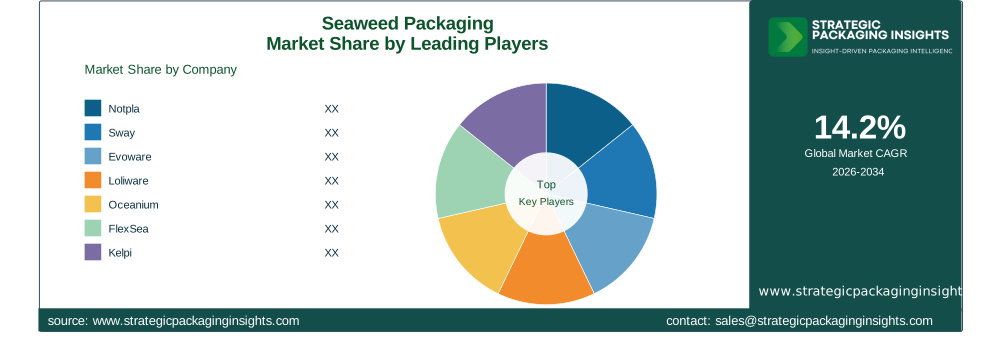
Notpla, a leading player in the Seaweed Packaging market, is known for its innovative seaweed-based packaging solutions that are biodegradable and compostable. The company has gained significant recognition for its sustainable packaging products, which are used by various industries, including food and beverage, personal care, and retail. Sway, another prominent player, is focused on developing seaweed-based bioplastics that offer a sustainable alternative to traditional plastics. The company's products are designed to be durable, flexible, and environmentally friendly, making them suitable for a wide range of applications.
Evoware, a key player in the market, specializes in producing seaweed-based packaging solutions that are not only biodegradable but also edible. The company's innovative products are gaining popularity in the food and beverage industry, where they are used as an alternative to single-use plastic packaging. Loliware, known for its edible seaweed-based straws and cups, is also making significant strides in the market. The company's products are designed to reduce plastic waste and promote sustainability, aligning with the growing consumer demand for eco-friendly packaging solutions.
Oceanium, FlexSea, Kelpi, B'ZEOS, Zerocircle, and Skipping Rocks Lab are also key players in the Seaweed Packaging market, each contributing to the market's growth through their unique product offerings and innovative approaches. These companies are investing in research and development to enhance the quality and functionality of their seaweed-based packaging solutions, making them more competitive with traditional plastic packaging. As the market continues to evolve, these companies are expected to play a crucial role in driving the adoption of seaweed packaging and shaping the future of sustainable packaging solutions.
Key Highlights
- The Seaweed Packaging market is projected to grow at a CAGR of 14.2% from 2026 to 2034.
- Increasing consumer preference for sustainable and eco-friendly packaging solutions is driving market growth.
- Technological advancements in seaweed processing are enhancing the quality and functionality of seaweed-based packaging.
- The food and beverage industry is a major contributor to the demand for seaweed packaging.
- Supportive government policies and initiatives are promoting the adoption of eco-friendly packaging materials.
- High production costs and limited availability of raw materials are key challenges for the market.
- Key players in the market include Notpla, Sway, Evoware, Loliware, and Oceanium.
- Innovations in seaweed-based bioplastics are creating new growth opportunities for market players.
- The regulatory landscape for biodegradable packaging is still evolving, posing compliance challenges for manufacturers.
Top Countries Insights
In the Seaweed Packaging market, the United States is a key player, with a market size of approximately $300 million and a CAGR of 12%. The country's strong focus on sustainability and environmental conservation is driving the demand for seaweed-based packaging solutions. The U.S. government has implemented several policies to reduce plastic waste and promote the use of biodegradable materials, creating a favorable environment for the growth of the seaweed packaging market. Additionally, the presence of key market players and the increasing consumer awareness about the environmental impact of plastic waste are contributing to the market's growth.
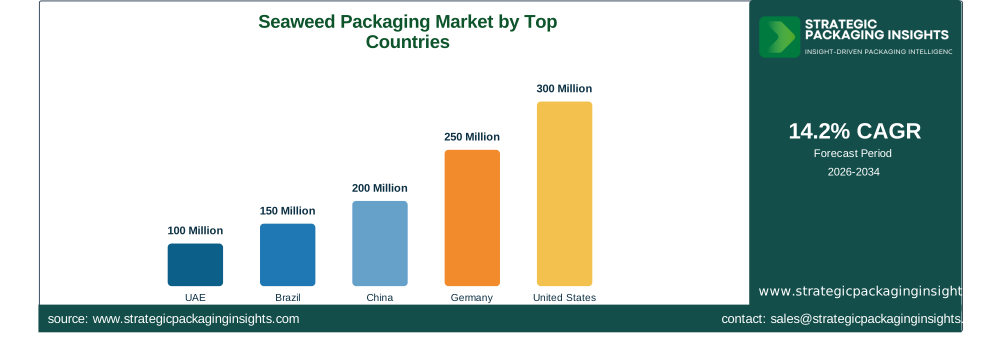
In Europe, the Seaweed Packaging market is experiencing significant growth, with a market size of around $250 million and a CAGR of 9%. The region's stringent regulations on plastic usage and waste management are driving the adoption of sustainable packaging solutions. Countries like Germany, France, and the UK are leading the way in promoting eco-friendly packaging materials, creating opportunities for market players to expand their presence in the region. The growing trend of circular economy and zero-waste initiatives is also contributing to the market's growth in Europe.
China, with a market size of approximately $200 million and a CAGR of 15%, is a major player in the Seaweed Packaging market in the Asia Pacific region. The country's large population and growing consumer awareness about environmental issues are driving the demand for sustainable packaging solutions. The Chinese government is actively promoting the use of biodegradable materials to reduce plastic waste, creating a conducive environment for the growth of the seaweed packaging market. Additionally, the increasing investments in research and development to improve the cost-effectiveness and scalability of seaweed-based packaging solutions are expected to drive market growth in China.
In Latin America, Brazil is a key market for seaweed packaging, with a market size of around $150 million and a CAGR of 7%. The country's growing focus on sustainability and environmental conservation is driving the demand for eco-friendly packaging solutions. The Brazilian government has implemented several initiatives to reduce plastic waste and promote the use of biodegradable materials, creating opportunities for market players to expand their presence in the region. Additionally, the increasing consumer awareness about the environmental impact of plastic waste is contributing to the market's growth in Brazil.
In the Middle East & Africa, the Seaweed Packaging market is gaining traction, with a market size of approximately $100 million and a CAGR of 5%. The region's growing focus on sustainability and environmental conservation is driving the demand for seaweed-based packaging solutions. Countries like the UAE and South Africa are leading the way in promoting eco-friendly packaging materials, creating opportunities for market players to expand their presence in the region. The increasing consumer awareness about the environmental impact of plastic waste and the need for sustainable alternatives is also contributing to the market's growth in the Middle East & Africa.
Seaweed Packaging Market Segments Insights

Material Type Analysis
The Seaweed Packaging market is segmented by material type into seaweed films, seaweed coatings, and seaweed-based bioplastic. Seaweed films are gaining popularity due to their excellent barrier properties and biodegradability, making them an ideal choice for food packaging applications. The demand for seaweed coatings is also on the rise, driven by their ability to extend the shelf life of perishable products and reduce food waste. Seaweed-based bioplastics are emerging as a sustainable alternative to traditional plastics, offering similar functionality with the added benefit of being biodegradable. The growing consumer preference for eco-friendly packaging solutions is driving the demand for these materials, creating opportunities for market players to expand their product offerings.
Seaweed films are particularly popular in the food packaging industry, where they are used to package a wide range of products, including snacks, fresh produce, and ready-to-eat meals. The excellent barrier properties of seaweed films help to preserve the freshness and quality of food products, making them an attractive option for manufacturers looking to enhance the shelf life of their products. Seaweed coatings, on the other hand, are used to coat fresh produce and other perishable items, helping to reduce spoilage and extend shelf life. The growing demand for fresh and minimally processed foods is driving the adoption of seaweed coatings, creating opportunities for market players to expand their presence in this segment.
Packaging Type Analysis
The Seaweed Packaging market is segmented by packaging type into pouches, sachets, films, and coatings. Pouches and sachets are gaining popularity due to their convenience and versatility, making them an ideal choice for a wide range of applications, including food packaging, personal care, and retail packaging. Seaweed films are also in high demand, driven by their excellent barrier properties and biodegradability, making them an attractive option for manufacturers looking to reduce their environmental footprint. Seaweed coatings are used to coat fresh produce and other perishable items, helping to reduce spoilage and extend shelf life. The growing demand for sustainable packaging solutions is driving the adoption of these packaging types, creating opportunities for market players to expand their product offerings.
Pouches and sachets are particularly popular in the food and beverage industry, where they are used to package a wide range of products, including snacks, beverages, and ready-to-eat meals. The convenience and versatility of these packaging types make them an attractive option for manufacturers looking to enhance the consumer experience and reduce their environmental impact. Seaweed films, on the other hand, are used to package a wide range of products, including fresh produce, snacks, and ready-to-eat meals. The excellent barrier properties of seaweed films help to preserve the freshness and quality of food products, making them an attractive option for manufacturers looking to enhance the shelf life of their products.
Application Analysis
The Seaweed Packaging market is segmented by application into food packaging, beverage pods, personal care, and retail packaging. Food packaging is the largest application segment, driven by the growing demand for sustainable packaging solutions in the food and beverage industry. Seaweed packaging is gaining popularity in this segment due to its excellent barrier properties and biodegradability, making it an attractive option for manufacturers looking to reduce their environmental footprint. Beverage pods are also gaining traction, driven by the growing demand for convenient and eco-friendly packaging solutions in the beverage industry. Personal care and retail packaging are emerging as key application segments, driven by the growing consumer preference for sustainable and eco-friendly packaging solutions.
Food packaging is the largest application segment in the Seaweed Packaging market, driven by the growing demand for sustainable packaging solutions in the food and beverage industry. Seaweed packaging is gaining popularity in this segment due to its excellent barrier properties and biodegradability, making it an attractive option for manufacturers looking to reduce their environmental footprint. Beverage pods are also gaining traction, driven by the growing demand for convenient and eco-friendly packaging solutions in the beverage industry. Personal care and retail packaging are emerging as key application segments, driven by the growing consumer preference for sustainable and eco-friendly packaging solutions.
End Use Analysis
The Seaweed Packaging market is segmented by end use into food & beverage, FMCG, and sustainable packaging brands. The food & beverage industry is the largest end-use segment, driven by the growing demand for sustainable packaging solutions in this industry. Seaweed packaging is gaining popularity in this segment due to its excellent barrier properties and biodegradability, making it an attractive option for manufacturers looking to reduce their environmental footprint. FMCG and sustainable packaging brands are emerging as key end-use segments, driven by the growing consumer preference for sustainable and eco-friendly packaging solutions.
The food & beverage industry is the largest end-use segment in the Seaweed Packaging market, driven by the growing demand for sustainable packaging solutions in this industry. Seaweed packaging is gaining popularity in this segment due to its excellent barrier properties and biodegradability, making it an attractive option for manufacturers looking to reduce their environmental footprint. FMCG and sustainable packaging brands are emerging as key end-use segments, driven by the growing consumer preference for sustainable and eco-friendly packaging solutions.
Seaweed Packaging Market Segments
The Seaweed Packaging market has been segmented on the basis ofBy Material Type
- Seaweed Films
- Seaweed Coatings
- Seaweed-Based Bioplastic
By Packaging Type
- Pouches
- Sachets
- Films
- Coatings
By Application
- Food Packaging
- Beverage Pods
- Personal Care
- Retail Packaging
By End Use
- Food & Beverage
- FMCG
- Sustainable Packaging Brands
Region
- Asia Pacific
- North America
- Latin America
- Europe
- Middle East & Africa




