


Roll Fed Wraparound Label Substrates Market Outlook
The Roll Fed Wraparound Label Substrates market size was valued at USD 1.1 billion in 2025 and is anticipated to reach USD 1.6 billion by 2034, growing at a CAGR of 4.50% during the forecast period according to Strategic Packaging Insights. This market is driven by the increasing demand for efficient and cost-effective labeling solutions across various industries, including beverages, food, and home care. The versatility and durability of roll-fed wraparound labels make them a preferred choice for manufacturers looking to enhance product appeal and shelf presence. Companies like Taghleef and Jindal Films are at the forefront, leveraging advanced materials and technologies to meet evolving consumer preferences and regulatory standards.
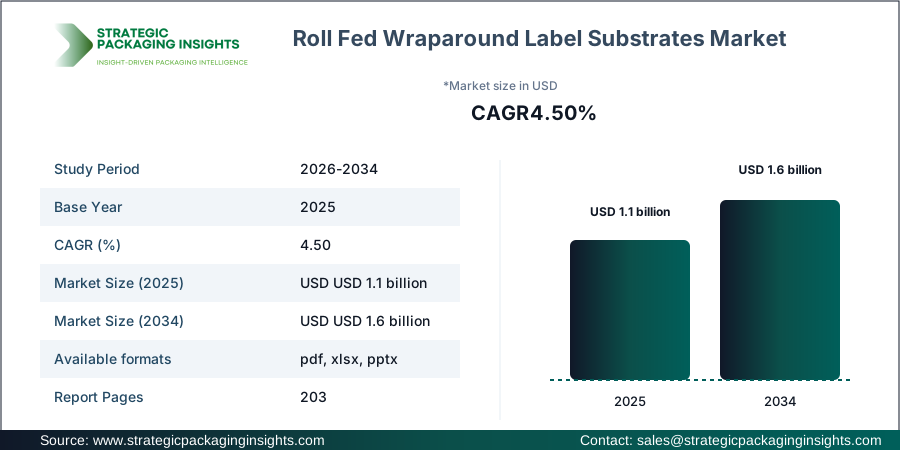
One of the most impactful drivers of the Roll Fed Wraparound Label Substrates market is the growing emphasis on sustainability and eco-friendly packaging solutions. As consumers become more environmentally conscious, there is a significant shift towards recyclable and biodegradable materials. This trend is supported by government regulations and initiatives aimed at reducing plastic waste and promoting sustainable practices. Companies such as Cosmo Films and Innovia are investing in research and development to create innovative substrates that align with these sustainability goals, thereby enhancing their market position and competitiveness.
Report Scope
| Attributes | Details |
| Report Title | Roll Fed Wraparound Label Substrates Market Size, Future Growth and Forecast 2034 |
| By Material | BOPP Films, OPS Films, PET Films, Paper (Wet-Glue Roll Fed), PE Films |
| By Finish | Clear, White / Cavitated, Metallized |
| By Thickness | Below 30 Micron, 30-40 Micron, Above 40 Micron |
| By End Use | Carbonated Soft Drinks & Water Bottles, Juice & Dairy Bottles, Food Jars & Cans, Home Care Bottles |
| By Region | North America (U.S., Canada, Mexico), Europe (Germany, UK, France, Italy, Spain, Rest of Europe), Asia Pacific (China, India, Japan, South Korea, Australia, Rest of Asia Pacific), Latin America (Brazil, Argentina, Rest of Latin America), Middle East & Africa (GCC Countries, South Africa, Rest of MEA) |
| Base Year | 2025 |
| Historic Period | 2018-2024 |
| Forecast Period | 2026-2034 |
| Number of Pages | 203 |
| Customization Available | Yes* |
Sustainability & Circular Economy Analysis
Sustainability initiatives and circular economy practices are reshaping the packaging market, with a strong focus on reducing environmental impact. The use of recyclable materials in roll-fed wraparound labels is gaining traction, as manufacturers aim to minimize waste and enhance product lifecycle management. Reusable packaging and lightweight designs are becoming increasingly popular, driven by consumer demand for eco-friendly solutions. Companies are investing in eco-friendly material innovation to meet these demands, which not only helps in reducing the carbon footprint but also aligns with extended producer responsibility (EPR) regulations.
These sustainability trends are influencing packaging design and manufacturing processes, prompting companies to adopt waste reduction strategies and ESG initiatives. The shift towards eco-friendly materials is also impacting investment decisions, as businesses seek to align with consumer sustainability preferences and regulatory compliance. This focus on sustainability is crucial for long-term market competitiveness, as it enhances brand reputation and meets the growing demand for environmentally responsible products.
Moreover, the integration of sustainability into supply chain strategies is becoming a key differentiator for packaging manufacturers. By adopting sustainable practices, companies can improve supply chain efficiency and resilience, ensuring a steady supply of raw materials and reducing transportation costs. This approach not only supports regulatory compliance but also enhances overall market performance, making sustainability a strategic priority for industry players.
Packaging Value Chain & Supply Chain Analysis
The packaging value chain for roll-fed wraparound label substrates involves a complex ecosystem of raw material sourcing, packaging converters, manufacturers, and logistics providers. Efficient raw material sourcing is critical, as it directly impacts production capabilities and cost-effectiveness. Packaging converters play a vital role in transforming raw materials into finished products, while manufacturers focus on optimizing production processes to meet quality standards and customer demands. Companies like Toray and Treofan legacy are leveraging strategic partnerships to enhance their supply chain resilience and ensure a steady supply of high-quality substrates.
Logistics and distribution channels are essential components of the supply chain, facilitating the timely delivery of products to brand owners and retailers. Effective inventory management and procurement strategies are crucial for maintaining supply chain efficiency and minimizing disruptions. Companies are increasingly adopting localization strategies to reduce transportation costs and enhance supply chain resilience, ensuring a competitive edge in the global market.
Recycling networks are also becoming an integral part of the packaging value chain, as companies strive to meet sustainability goals and regulatory requirements. By integrating recycling initiatives into their supply chain strategies, businesses can reduce waste and enhance their environmental credentials. This approach not only supports regulatory compliance but also aligns with consumer preferences for sustainable packaging solutions, driving long-term market growth and competitiveness.
Opportunities & Threats
The Roll Fed Wraparound Label Substrates market presents several opportunities for growth, driven by the increasing demand for sustainable and innovative packaging solutions. The shift towards eco-friendly materials and recyclable substrates offers significant potential for companies to differentiate themselves in the market. By investing in research and development, businesses can create innovative products that meet evolving consumer preferences and regulatory standards. Additionally, the growing popularity of lightweight and reusable packaging designs presents opportunities for companies to enhance their product offerings and expand their market reach.
Another opportunity lies in the expansion of the beverage and food industries, which are major end-users of roll-fed wraparound labels. As these industries continue to grow, there is a rising demand for efficient and cost-effective labeling solutions that enhance product appeal and shelf presence. Companies can capitalize on this trend by developing substrates that offer superior print quality and durability, meeting the needs of brand owners and retailers. Furthermore, the increasing adoption of digital printing technologies presents opportunities for businesses to offer customized and high-quality labeling solutions, catering to the diverse needs of their clients.
However, the market also faces certain threats, including the volatility of raw material prices and the stringent regulatory landscape. Fluctuations in the prices of raw materials such as BOPP and PET films can impact production costs and profit margins, posing a challenge for manufacturers. Additionally, the stringent regulations governing packaging materials and waste management require companies to invest in compliance measures, which can increase operational costs. To mitigate these threats, businesses need to adopt strategic sourcing and procurement strategies, ensuring a steady supply of raw materials and minimizing cost fluctuations.
Drivers & Challenges
One of the primary drivers of the Roll Fed Wraparound Label Substrates market is the increasing demand for efficient and cost-effective labeling solutions across various industries. The versatility and durability of roll-fed wraparound labels make them a preferred choice for manufacturers looking to enhance product appeal and shelf presence. Companies like Taghleef and Jindal Films are at the forefront, leveraging advanced materials and technologies to meet evolving consumer preferences and regulatory standards. The growing emphasis on sustainability and eco-friendly packaging solutions is also driving market growth, as consumers become more environmentally conscious and demand recyclable and biodegradable materials.
Another significant driver is the expansion of the beverage and food industries, which are major end-users of roll-fed wraparound labels. As these industries continue to grow, there is a rising demand for efficient and cost-effective labeling solutions that enhance product appeal and shelf presence. Companies can capitalize on this trend by developing substrates that offer superior print quality and durability, meeting the needs of brand owners and retailers. Furthermore, the increasing adoption of digital printing technologies presents opportunities for businesses to offer customized and high-quality labeling solutions, catering to the diverse needs of their clients.
Despite these drivers, the market faces several challenges, including the volatility of raw material prices and the stringent regulatory landscape. Fluctuations in the prices of raw materials such as BOPP and PET films can impact production costs and profit margins, posing a challenge for manufacturers. Additionally, the stringent regulations governing packaging materials and waste management require companies to invest in compliance measures, which can increase operational costs. To overcome these challenges, businesses need to adopt strategic sourcing and procurement strategies, ensuring a steady supply of raw materials and minimizing cost fluctuations.
Market Share Analysis
The Roll Fed Wraparound Label Substrates market is characterized by a competitive landscape, with several key players vying for market share. Companies like Taghleef, Jindal Films, and Cosmo Films are leading the market, leveraging their extensive product portfolios and advanced technologies to meet the diverse needs of their clients. These companies are investing in research and development to create innovative substrates that align with sustainability goals and regulatory standards, enhancing their market position and competitiveness.
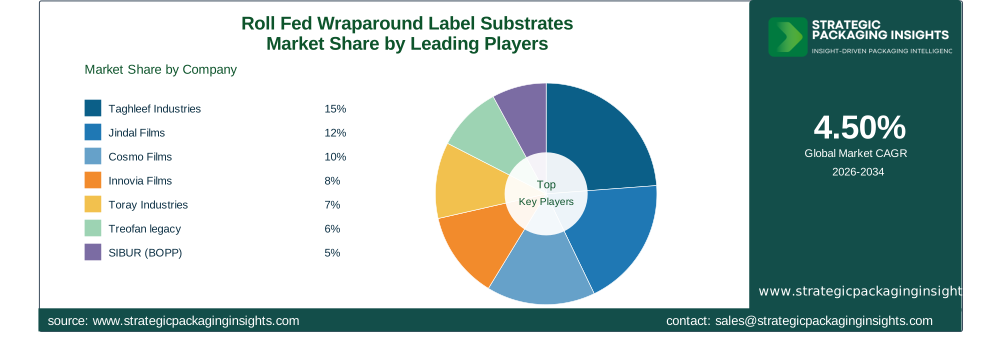
Taghleef is a prominent player in the market, known for its high-quality BOPP films and innovative labeling solutions. The company focuses on sustainability and eco-friendly practices, offering a range of recyclable and biodegradable substrates. Jindal Films is another key player, renowned for its advanced materials and technologies that cater to the evolving needs of the packaging industry. The company's commitment to sustainability and innovation has helped it maintain a strong market presence and expand its global footprint.
Cosmo Films is a leading manufacturer of BOPP films, offering a wide range of products for various applications, including roll-fed wraparound labels. The company's focus on research and development has enabled it to create innovative substrates that meet the demands of brand owners and retailers. Innovia is also a significant player in the market, known for its high-quality films and commitment to sustainability. The company's investment in eco-friendly materials and technologies has helped it maintain a competitive edge in the market.
Other notable players in the market include Toray, Treofan legacy, SIBUR (BOPP), Vibac, and Polinas. These companies are leveraging strategic partnerships and collaborations to enhance their product offerings and expand their market reach. By focusing on sustainability and innovation, these players are well-positioned to capitalize on the growing demand for eco-friendly and efficient labeling solutions, ensuring long-term market growth and competitiveness.
Key Highlights
- Market Size: USD 1.1 billion in 2025, projected to reach USD 1.6 billion by 2034.
- Growth Rate: Forecasted CAGR of 4.50% during the forecast period.
- Leading Companies: Taghleef, Jindal Films, Cosmo Films, Innovia, Toray.
- Material Segment: BOPP Films dominate the market due to their versatility and durability.
- Regional Growth: Asia Pacific is expected to witness the highest growth rate.
- Sustainability Focus: Increasing demand for recyclable and biodegradable substrates.
- Technological Advancements: Adoption of digital printing technologies for customized labeling solutions.
Roll Fed Wraparound Label Substrates Market Segments Insights

By Material Analysis
The Roll Fed Wraparound Label Substrates market is segmented by material, with BOPP Films, OPS Films, PET Films, Paper (Wet-Glue Roll Fed), and PE Films being the primary categories. BOPP Films are the most widely used material due to their excellent clarity, printability, and durability, making them ideal for various labeling applications. The demand for BOPP Films is driven by their versatility and cost-effectiveness, as well as their ability to enhance product appeal and shelf presence. Companies like Taghleef and Jindal Films are leading the market, offering a wide range of BOPP Films that cater to the diverse needs of brand owners and retailers.
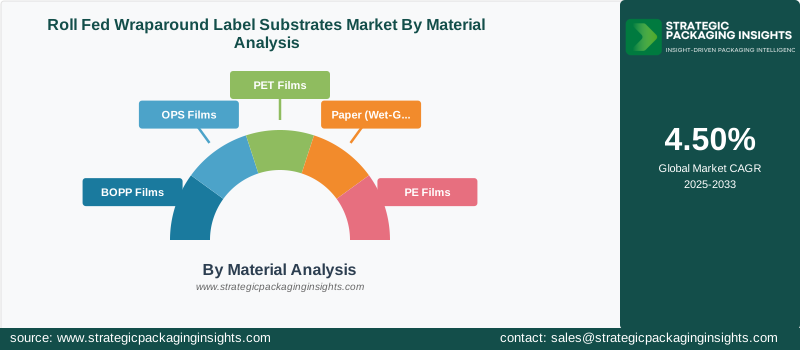
OPS Films and PET Films are also gaining traction in the market, driven by their superior performance characteristics and environmental benefits. OPS Films offer excellent shrinkage properties, making them suitable for complex container shapes, while PET Films are known for their recyclability and sustainability. The growing emphasis on eco-friendly packaging solutions is driving the demand for these materials, as companies seek to align with consumer preferences and regulatory standards. Paper (Wet-Glue Roll Fed) and PE Films are also important segments, offering unique benefits for specific applications and end-use industries.
By Finish Analysis
The market is also segmented by finish, with Clear, White / Cavitated, and Metallized finishes being the primary categories. Clear finishes are the most popular choice, offering excellent transparency and printability, which enhances product visibility and appeal. The demand for clear finishes is driven by the need for high-quality labeling solutions that showcase product features and branding elements. Companies like Cosmo Films and Innovia are leading the market, offering a wide range of clear finishes that cater to the diverse needs of brand owners and retailers.
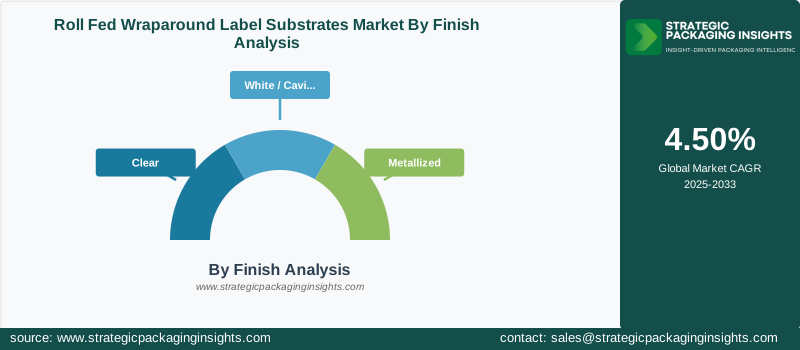
White / Cavitated finishes are also gaining popularity, offering a unique aesthetic appeal and excellent printability. These finishes are ideal for applications where opacity and brightness are important, such as in food and beverage labeling. Metallized finishes, on the other hand, offer a premium look and feel, making them suitable for high-end products and luxury brands. The demand for metallized finishes is driven by the need for differentiation and enhanced shelf presence, as companies seek to create a strong brand identity and attract consumer attention.
By Thickness Analysis
The Roll Fed Wraparound Label Substrates market is segmented by thickness, with Below 30 Micron, 30-40 Micron, and Above 40 Micron being the primary categories. The choice of thickness depends on the specific application and end-use requirements, with each category offering unique benefits and performance characteristics. Below 30 Micron films are popular for their lightweight and cost-effective nature, making them suitable for high-volume applications where cost efficiency is a priority.
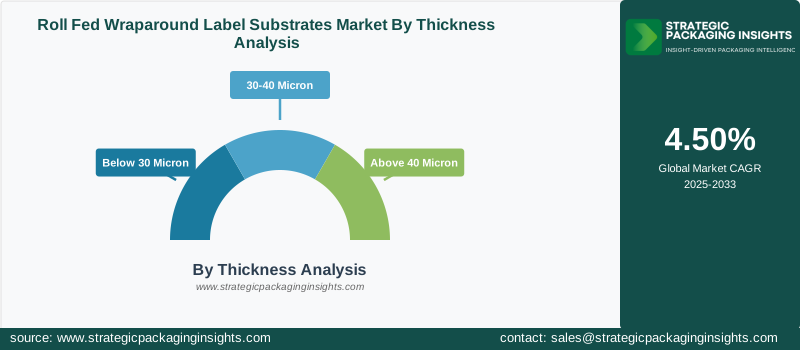
30-40 Micron films offer a balance between durability and cost, making them ideal for a wide range of applications, including food and beverage labeling. These films provide excellent printability and performance, ensuring high-quality labeling solutions that meet the needs of brand owners and retailers. Above 40 Micron films are known for their superior durability and strength, making them suitable for demanding applications where performance and longevity are critical. The demand for these films is driven by the need for high-quality labeling solutions that withstand harsh conditions and maintain product integrity.
By End Use Analysis
The market is segmented by end use, with Carbonated Soft Drinks & Water Bottles, Juice & Dairy Bottles, Food Jars & Cans, and Home Care Bottles being the primary categories. The beverage industry is the largest end-user of roll-fed wraparound labels, driven by the need for efficient and cost-effective labeling solutions that enhance product appeal and shelf presence. Companies like Taghleef and Jindal Films are leading the market, offering a wide range of substrates that cater to the diverse needs of beverage manufacturers.
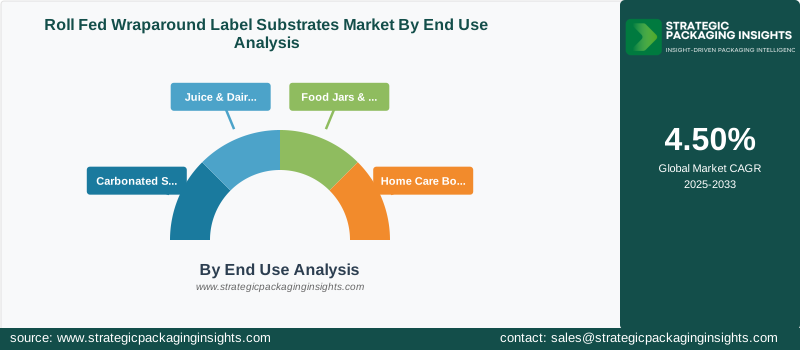
The food industry is also a significant end-user, with roll-fed wraparound labels being used for food jars and cans. The demand for these labels is driven by the need for high-quality labeling solutions that ensure product safety and compliance with regulatory standards. Home care bottles are another important segment, with roll-fed wraparound labels being used for a wide range of products, including cleaning agents and personal care items. The demand for these labels is driven by the need for differentiation and enhanced shelf presence, as companies seek to create a strong brand identity and attract consumer attention.
Roll Fed Wraparound Label Substrates Market Segments
The Roll Fed Wraparound Label Substrates market has been segmented on the basis ofBy Material
- BOPP Films
- OPS Films
- PET Films
- Paper (Wet-Glue Roll Fed)
- PE Films
By Finish
- Clear
- White / Cavitated
- Metallized
By Thickness
- Below 30 Micron
- 30-40 Micron
- Above 40 Micron
By End Use
- Carbonated Soft Drinks & Water Bottles
- Juice & Dairy Bottles
- Food Jars & Cans
- Home Care Bottles
By Region
- North America (U.S., Canada, Mexico)
- Europe (Germany, UK, France, Italy, Spain, Rest of Europe)
- Asia Pacific (China, India, Japan, South Korea, Australia, Rest of Asia Pacific)
- Latin America (Brazil, Argentina, Rest of Latin America)
- Middle East & Africa (GCC Countries, South Africa, Rest of MEA)




