


Reverse Logistics Platforms for Reusable Takeaway Food Packaging Market Outlook
The Reverse Logistics Platforms for Reusable Takeaway Food Packaging market was valued at $645.75 million in 2025 and is projected to reach $1.61 billion by 2034, growing at a CAGR of 10.7% during the forecast period 2026-2034. This market is driven by the increasing demand for sustainable packaging solutions as environmental concerns rise globally. The shift towards a circular economy is encouraging businesses to adopt reusable packaging, which is further supported by government regulations aimed at reducing single-use plastics. The market is also benefiting from technological advancements in tracking and deposit-return systems, which enhance the efficiency and appeal of reusable packaging solutions.
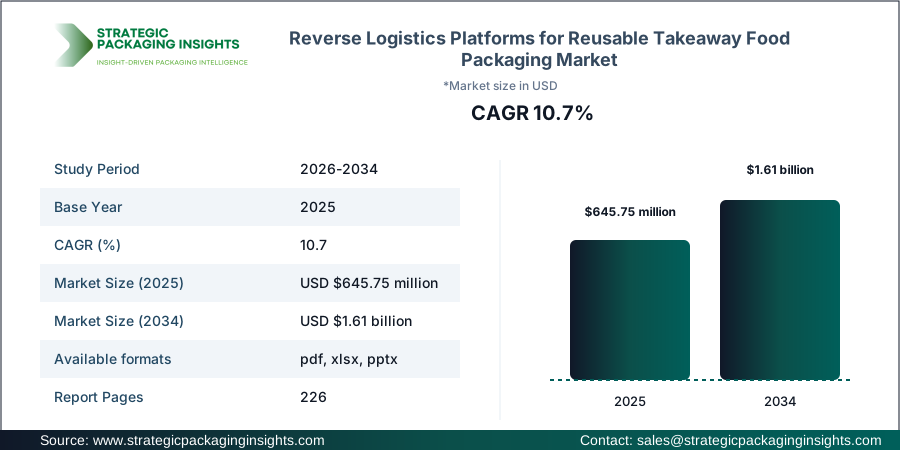
Despite the promising growth, the market faces challenges such as the high initial investment required for setting up reverse logistics systems and the need for consumer behavior change towards returning packaging. Regulatory hurdles and the complexity of managing logistics for reusable packaging also pose significant barriers. However, the potential for cost savings in the long term and the increasing consumer preference for eco-friendly products present substantial growth opportunities. Companies are investing in innovative solutions to overcome these challenges, such as integrating IoT for better tracking and management of reusable packaging.
Report Scope
| Attributes | Details |
| Report Title | Reverse Logistics Platforms for Reusable Takeaway Food Packaging Market Size, Future Growth and Forecast 2034 |
| Platform Type | Tracking Software, Deposit-Return Platforms, Washing-Network Platforms |
| Packaging Type | Reusable Bowls, Cups, Containers, Crates |
| End Use | Restaurants, QSR, Food Delivery, Campuses |
| Deployment | Cloud-Based, App-Based, Integrated POS |
| Region | Asia Pacific, North America, Latin America, Europe, Middle East & Africa |
| Base Year | 2025 |
| Historic Period | 2018-2024 |
| Forecast Period | 2026-2034 |
| Number of Pages | 226 |
| Customization Available | Yes* |
Opportunities & Threats
The Reverse Logistics Platforms for Reusable Takeaway Food Packaging market presents numerous opportunities, primarily driven by the growing consumer awareness and demand for sustainable packaging solutions. As environmental concerns become more pronounced, consumers are increasingly opting for brands that offer eco-friendly packaging options. This shift in consumer preference is encouraging businesses to adopt reusable packaging solutions, thereby driving market growth. Additionally, technological advancements in tracking and deposit-return systems are enhancing the efficiency and appeal of reusable packaging, providing further opportunities for market expansion.
Another significant opportunity lies in the regulatory landscape, as governments worldwide implement stricter regulations to reduce single-use plastics. These regulations are compelling businesses to explore sustainable alternatives, such as reusable packaging, to comply with environmental standards. Furthermore, the potential for cost savings in the long term is encouraging businesses to invest in reverse logistics platforms. By reducing the need for constant production of new packaging, companies can significantly cut down on material costs, thereby improving their bottom line.
However, the market also faces threats, particularly from the high initial investment required for setting up reverse logistics systems. The complexity of managing logistics for reusable packaging, coupled with the need for consumer behavior change towards returning packaging, poses significant challenges. Additionally, regulatory hurdles and the lack of standardized systems for reusable packaging can hinder market growth. Companies need to address these challenges by investing in innovative solutions and collaborating with stakeholders to develop standardized systems that facilitate the adoption of reusable packaging.
Drivers & Challenges
The primary drivers of the Reverse Logistics Platforms for Reusable Takeaway Food Packaging market include the increasing demand for sustainable packaging solutions and the shift towards a circular economy. As environmental concerns rise, businesses are under pressure to adopt eco-friendly practices, including the use of reusable packaging. This trend is further supported by government regulations aimed at reducing single-use plastics, which are compelling businesses to explore sustainable alternatives. Additionally, technological advancements in tracking and deposit-return systems are enhancing the efficiency and appeal of reusable packaging, driving market growth.
Another significant driver is the potential for cost savings in the long term. By reducing the need for constant production of new packaging, companies can significantly cut down on material costs, thereby improving their bottom line. The increasing consumer preference for eco-friendly products is also encouraging businesses to adopt reusable packaging solutions, further driving market growth. Companies are investing in innovative solutions to overcome challenges and capitalize on these drivers, such as integrating IoT for better tracking and management of reusable packaging.
Despite these drivers, the market faces challenges such as the high initial investment required for setting up reverse logistics systems and the complexity of managing logistics for reusable packaging. The need for consumer behavior change towards returning packaging also poses a significant challenge. Additionally, regulatory hurdles and the lack of standardized systems for reusable packaging can hinder market growth. Companies need to address these challenges by investing in innovative solutions and collaborating with stakeholders to develop standardized systems that facilitate the adoption of reusable packaging.
Market Share Analysis
The competitive landscape of the Reverse Logistics Platforms for Reusable Takeaway Food Packaging market is characterized by the presence of several key players, each striving to gain a significant share of the market. Companies such as Loop, Reusables.com, Vytal, Again, CupClub, DeliverZero, Ozarka, Muuse, Re:Dish, and RePack are leading the charge in this market. These companies are focusing on developing innovative solutions to enhance the efficiency and appeal of reusable packaging, thereby gaining a competitive edge.
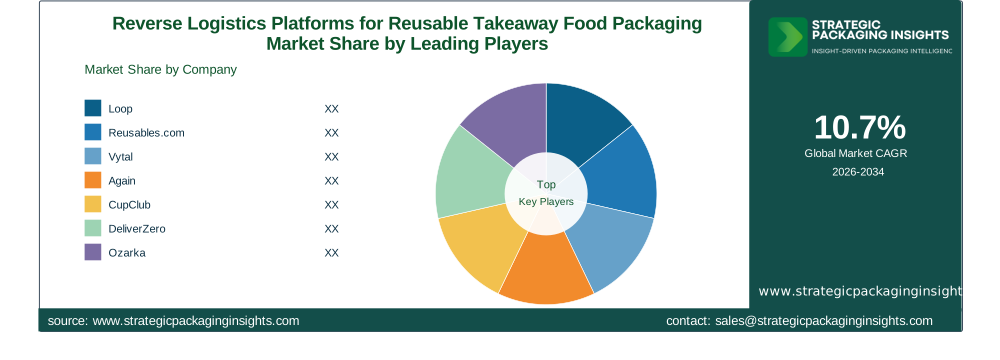
Loop, a prominent player in the market, is known for its innovative deposit-return platform that allows consumers to return packaging for reuse. The company's focus on sustainability and its partnerships with major brands have helped it secure a significant market share. Similarly, Reusables.com is leveraging technology to offer efficient tracking and management of reusable packaging, further strengthening its position in the market.
Vytal, another key player, is focusing on expanding its presence in the market by offering a wide range of reusable packaging solutions. The company's emphasis on customer convenience and its commitment to sustainability have helped it gain a competitive edge. Again, a company known for its innovative solutions, is also making significant strides in the market by offering a comprehensive range of reusable packaging options.
CupClub, DeliverZero, Ozarka, Muuse, Re:Dish, and RePack are also key players in the market, each offering unique solutions to address the challenges of reusable packaging. These companies are investing in research and development to enhance their product offerings and expand their market presence. By focusing on innovation and sustainability, these companies are well-positioned to capitalize on the growing demand for reusable packaging solutions.
Key Highlights
- The market is projected to grow at a CAGR of 10.7% from 2026 to 2034.
- Technological advancements in tracking and deposit-return systems are driving market growth.
- Government regulations aimed at reducing single-use plastics are encouraging the adoption of reusable packaging.
- The potential for cost savings in the long term is a significant driver for businesses to invest in reverse logistics platforms.
- Key players in the market include Loop, Reusables.com, Vytal, Again, CupClub, DeliverZero, Ozarka, Muuse, Re:Dish, and RePack.
- The market faces challenges such as high initial investment and the need for consumer behavior change.
- Companies are investing in innovative solutions to overcome challenges and capitalize on growth opportunities.
Top Countries Insights
In the Reverse Logistics Platforms for Reusable Takeaway Food Packaging market, the United States is a leading player, with a market size of approximately $300 million and a CAGR of 12%. The country's strong regulatory framework aimed at reducing single-use plastics, coupled with a high level of consumer awareness, is driving market growth. Additionally, the presence of key players such as Loop and Reusables.com is further strengthening the market in the United States.
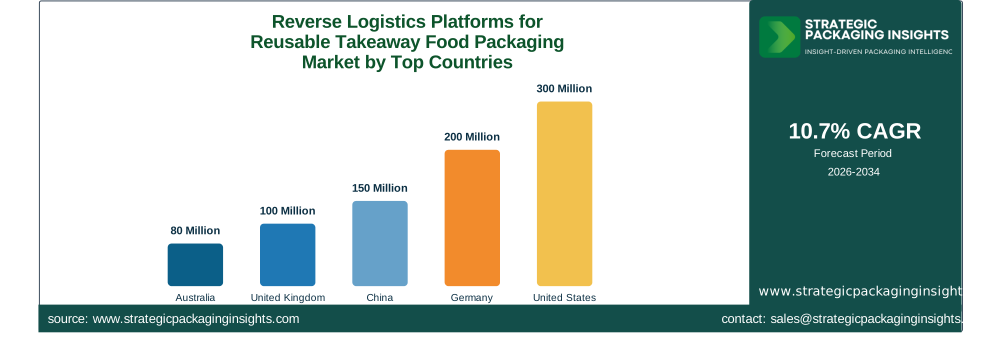
Germany is another significant market, with a market size of around $200 million and a CAGR of 10%. The country's commitment to sustainability and its robust recycling infrastructure are key drivers of market growth. The German government's initiatives to promote reusable packaging and reduce plastic waste are also contributing to the market's expansion.
China, with a market size of approximately $150 million and a CAGR of 15%, is experiencing rapid growth in the Reverse Logistics Platforms for Reusable Takeaway Food Packaging market. The country's large population and increasing consumer awareness of environmental issues are driving demand for sustainable packaging solutions. Additionally, government policies aimed at reducing plastic waste are encouraging businesses to adopt reusable packaging.
The United Kingdom, with a market size of about $100 million and a CAGR of 9%, is also a key player in the market. The country's strong regulatory framework and consumer demand for sustainable packaging solutions are driving market growth. The presence of key players such as CupClub and DeliverZero is further strengthening the market in the United Kingdom.
Australia, with a market size of approximately $80 million and a CAGR of 8%, is experiencing steady growth in the market. The country's commitment to sustainability and its robust recycling infrastructure are key drivers of market growth. Government initiatives to promote reusable packaging and reduce plastic waste are also contributing to the market's expansion.
Reverse Logistics Platforms for Reusable Takeaway Food Packaging Market Segments Insights

Platform Type Analysis
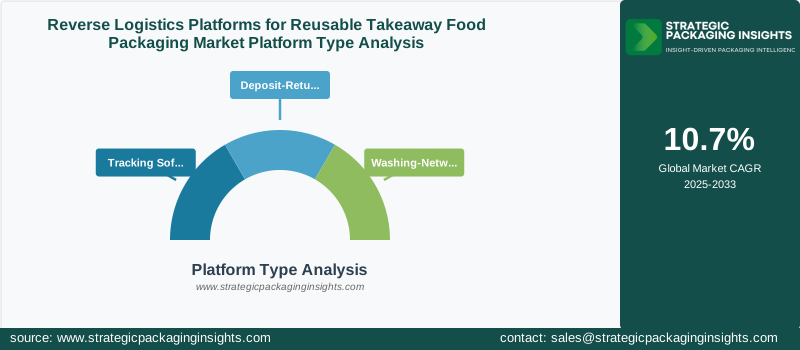
The Platform Type segment in the Reverse Logistics Platforms for Reusable Takeaway Food Packaging market is crucial, as it encompasses various technologies that facilitate the efficient management of reusable packaging. Tracking software is a significant sub-segment, providing real-time data on the location and status of packaging, which is essential for optimizing logistics and reducing losses. Deposit-return platforms are gaining traction as they incentivize consumers to return packaging, thereby enhancing the sustainability of the system. Washing-network platforms are also vital, ensuring that returned packaging is cleaned and sanitized before reuse, maintaining hygiene standards.
Technological advancements in these platforms are driving market growth, as they enhance the efficiency and appeal of reusable packaging solutions. Companies are investing in research and development to improve the functionality and user-friendliness of these platforms, thereby gaining a competitive edge. The increasing demand for sustainable packaging solutions and the shift towards a circular economy are further driving the growth of this segment. However, the high initial investment required for setting up these platforms and the complexity of managing logistics for reusable packaging pose significant challenges.
Packaging Type Analysis
The Packaging Type segment in the Reverse Logistics Platforms for Reusable Takeaway Food Packaging market includes reusable bowls, cups, containers, and crates. These packaging types are essential for various end-use applications, such as restaurants, QSR, food delivery, and campuses. Reusable bowls and cups are particularly popular in the food and beverage industry, as they offer a sustainable alternative to single-use plastics. Containers and crates are widely used in logistics and transportation, providing a durable and eco-friendly solution for packaging needs.
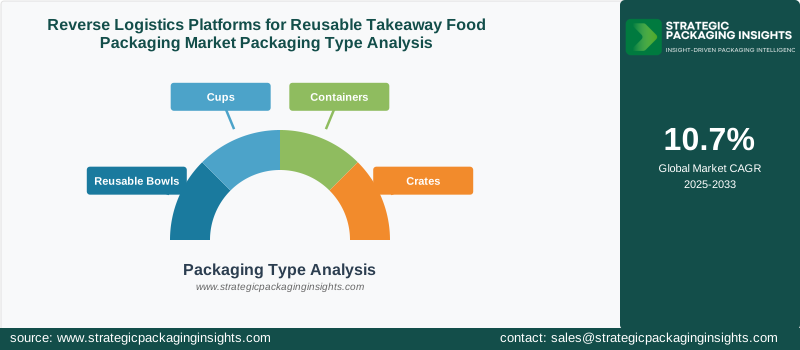
The increasing consumer preference for eco-friendly products and the growing demand for sustainable packaging solutions are driving the growth of this segment. Companies are focusing on developing innovative packaging solutions that are not only sustainable but also convenient for consumers. The potential for cost savings in the long term is also encouraging businesses to invest in reusable packaging. However, the need for consumer behavior change towards returning packaging and the lack of standardized systems for reusable packaging pose significant challenges.
End Use Analysis
The End Use segment in the Reverse Logistics Platforms for Reusable Takeaway Food Packaging market includes restaurants, QSR, food delivery, and campuses. These end-use applications are significant drivers of market growth, as they represent a large portion of the demand for reusable packaging solutions. Restaurants and QSR are increasingly adopting reusable packaging to meet consumer demand for sustainable options and comply with regulatory requirements. Food delivery services are also exploring reusable packaging as a way to reduce waste and enhance their sustainability credentials.
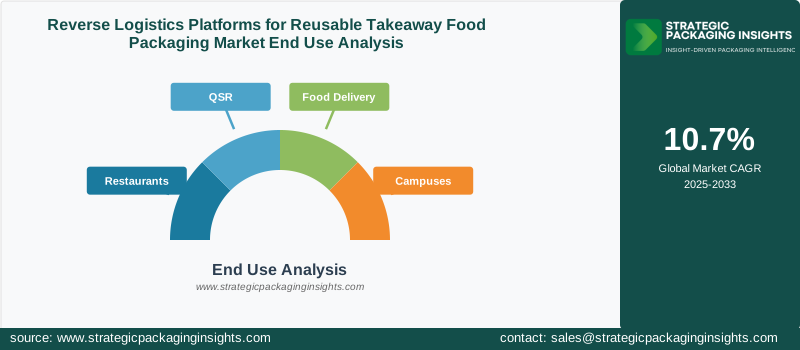
Campuses, including universities and corporate offices, are adopting reusable packaging as part of their sustainability initiatives. The increasing consumer awareness of environmental issues and the growing demand for eco-friendly products are driving the growth of this segment. However, the need for consumer behavior change towards returning packaging and the complexity of managing logistics for reusable packaging pose significant challenges. Companies are investing in innovative solutions to overcome these challenges and capitalize on the growth opportunities in this segment.
Deployment Analysis
The Deployment segment in the Reverse Logistics Platforms for Reusable Takeaway Food Packaging market includes cloud-based, app-based, and integrated POS solutions. These deployment models are essential for the efficient management of reusable packaging, providing businesses with the tools they need to track and manage their packaging assets. Cloud-based solutions offer scalability and flexibility, allowing businesses to manage their packaging operations from anywhere. App-based solutions provide consumers with a convenient way to track and return packaging, enhancing the appeal of reusable packaging solutions.
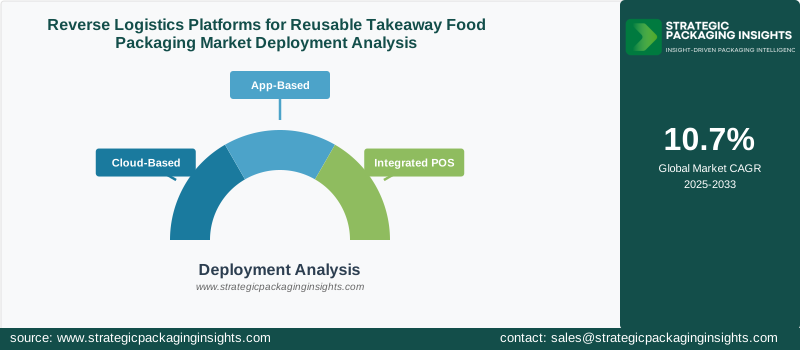
Integrated POS solutions are gaining traction as they provide businesses with a seamless way to manage their packaging operations, from tracking to payment processing. The increasing demand for sustainable packaging solutions and the shift towards a circular economy are driving the growth of this segment. However, the high initial investment required for setting up these solutions and the complexity of managing logistics for reusable packaging pose significant challenges. Companies are investing in research and development to improve the functionality and user-friendliness of these solutions, thereby gaining a competitive edge.
Reverse Logistics Platforms for Reusable Takeaway Food Packaging Market Segments
The Reverse Logistics Platforms for Reusable Takeaway Food Packaging market has been segmented on the basis ofPlatform Type
- Tracking Software
- Deposit-Return Platforms
- Washing-Network Platforms
Packaging Type
- Reusable Bowls
- Cups
- Containers
- Crates
End Use
- Restaurants
- QSR
- Food Delivery
- Campuses
Deployment
- Cloud-Based
- App-Based
- Integrated POS
Region
- Asia Pacific
- North America
- Latin America
- Europe
- Middle East & Africa




