


Reusable Grocery Tote Market Outlook
The reusable grocery tote market was valued at $1.65 billion in 2025 and is projected to reach $2.80 billion by 2034, growing at a CAGR of 6.0% during the forecast period 2026-2034. This market is witnessing significant growth due to increasing consumer awareness about environmental sustainability and the adverse effects of single-use plastic bags. The demand for reusable grocery totes is further propelled by stringent government regulations and policies aimed at reducing plastic waste. Additionally, the rising trend of eco-friendly products among consumers is driving the market forward. The market is also benefiting from innovations in materials and designs, making these totes more appealing and functional for everyday use.
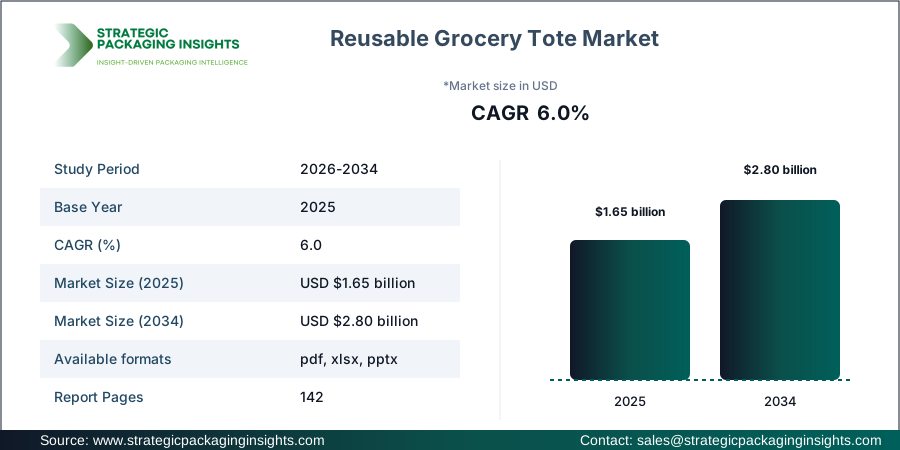
Despite the promising growth, the market faces challenges such as the high initial cost of reusable totes compared to single-use plastic bags, which can deter price-sensitive consumers. However, the long-term cost savings and environmental benefits are expected to outweigh these initial costs, encouraging more consumers to make the switch. The market also has potential for growth in emerging economies where awareness and adoption of sustainable practices are on the rise. As more retailers and supermarkets adopt reusable totes as part of their sustainability initiatives, the market is poised for substantial growth in the coming years.
Report Scope
| Attributes | Details |
| Report Title | Reusable Grocery Tote Market Size, Future Growth and Forecast 2034 |
| Material | Cotton, Jute, Recycled PET |
| Type | Foldable, Insulated, Large Capacity |
| End Use | Supermarkets, Grocery Stores, Retailers |
| Region | Asia Pacific, North America, Latin America, Europe, Middle East & Africa |
| Base Year | 2025 |
| Historic Period | 2018-2024 |
| Forecast Period | 2026-2034 |
| Number of Pages | 142 |
| Customization Available | Yes* |
Opportunities & Threats
The reusable grocery tote market presents numerous opportunities, particularly in the realm of customization and branding. Companies can capitalize on the growing trend of personalized products by offering customizable totes that cater to individual consumer preferences. This not only enhances customer engagement but also serves as a powerful marketing tool for businesses. Additionally, the increasing adoption of e-commerce platforms provides an opportunity for market players to expand their reach and offer a wider range of products to a global audience. The integration of technology, such as QR codes and RFID tags, into reusable totes can also enhance their functionality and appeal, providing consumers with additional value.
Another significant opportunity lies in the expansion of product lines to include innovative materials and designs. As consumers become more environmentally conscious, there is a growing demand for totes made from sustainable and biodegradable materials. Companies that invest in research and development to create new, eco-friendly materials can gain a competitive edge in the market. Furthermore, partnerships with retailers and supermarkets to offer exclusive tote designs can drive brand loyalty and increase market penetration.
However, the market is not without its threats. One of the primary challenges is the competition from low-cost alternatives, such as non-woven polypropylene bags, which are often perceived as more affordable options. Additionally, fluctuations in raw material prices can impact production costs and profit margins for manufacturers. The market also faces the threat of regulatory changes that could impose additional costs or restrictions on the production and distribution of reusable totes. Companies must stay abreast of these changes and adapt their strategies accordingly to mitigate potential risks.
Drivers & Challenges
The primary drivers of the reusable grocery tote market include increasing environmental awareness and government regulations aimed at reducing plastic waste. As consumers become more conscious of their environmental impact, there is a growing demand for sustainable alternatives to single-use plastic bags. Governments around the world are implementing policies and regulations to curb plastic pollution, which is driving the adoption of reusable totes. Additionally, the rise of eco-friendly consumerism is encouraging retailers and supermarkets to offer reusable totes as part of their sustainability initiatives, further boosting market growth.
Another key driver is the innovation in materials and designs, which is making reusable totes more appealing and functional for consumers. Companies are investing in research and development to create totes that are not only environmentally friendly but also durable and stylish. The integration of technology, such as RFID tags and QR codes, is enhancing the functionality of these totes, providing consumers with additional value. The growing trend of customization and personalization is also driving demand, as consumers seek products that reflect their individual style and preferences.
Despite these drivers, the market faces several challenges. One of the main challenges is the high initial cost of reusable totes compared to single-use plastic bags, which can deter price-sensitive consumers. Additionally, the market is highly competitive, with numerous players offering a wide range of products. Companies must differentiate themselves through innovation and branding to maintain a competitive edge. Fluctuations in raw material prices can also impact production costs and profit margins, posing a challenge for manufacturers. Furthermore, regulatory changes and trade policies can affect the production and distribution of reusable totes, requiring companies to adapt their strategies to navigate these challenges.
Market Share Analysis
The reusable grocery tote market is characterized by a competitive landscape with several key players vying for market share. Companies such as IKEA, Baggu, ChicoBag, EcoBags, ReuseThisBag, Earthwise, Calypso, Green Bag, Meijer, and Target are prominent in this market, each offering a diverse range of products to cater to varying consumer needs. These companies are leveraging their brand reputation, product innovation, and strategic partnerships to strengthen their market position. The competitive landscape is further intensified by the entry of new players and the expansion of existing ones into new regions and product segments.
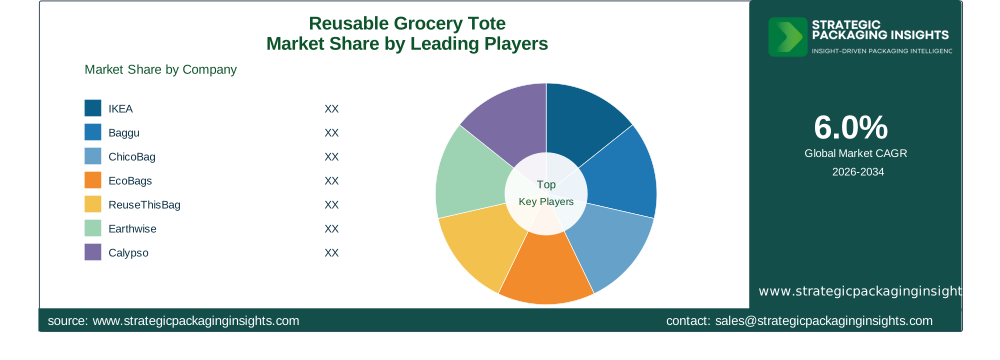
IKEA, a global leader in home furnishings, has made significant strides in the reusable grocery tote market by offering a range of eco-friendly and stylish totes. The company's commitment to sustainability and innovation has helped it capture a substantial share of the market. Baggu, known for its fashionable and functional bags, has also gained a strong foothold in the market by offering a wide variety of designs and materials. ChicoBag, with its focus on sustainability and environmental responsibility, has carved out a niche in the market by offering reusable totes made from recycled materials.
EcoBags, a pioneer in the reusable bag industry, has maintained its market position through continuous product innovation and a strong focus on sustainability. ReuseThisBag, known for its customizable and promotional totes, has capitalized on the growing trend of personalized products to expand its market reach. Earthwise, with its emphasis on affordability and quality, has captured a significant share of the market by offering a range of durable and eco-friendly totes. Calypso, Green Bag, Meijer, and Target are also key players in the market, each leveraging their unique strengths and strategies to compete effectively.
Key Highlights
- The reusable grocery tote market is projected to grow at a CAGR of 6.0% from 2026 to 2034.
- Increasing environmental awareness and government regulations are driving market growth.
- Innovation in materials and designs is enhancing the appeal and functionality of reusable totes.
- Customization and personalization are emerging trends in the market.
- Key players include IKEA, Baggu, ChicoBag, EcoBags, ReuseThisBag, and Earthwise.
- Fluctuations in raw material prices pose a challenge for manufacturers.
- Partnerships with retailers and supermarkets are driving market penetration.
- Technological integration, such as RFID tags, is enhancing product functionality.
- The market faces competition from low-cost alternatives like non-woven polypropylene bags.
- Regulatory changes and trade policies can impact production and distribution.
Top Countries Insights
In the reusable grocery tote market, the United States stands out as a leading country, with a market size of approximately $500 million and a CAGR of 5%. The growth in the U.S. is driven by strong consumer awareness about environmental issues and supportive government policies that encourage the use of sustainable products. The presence of major retailers and supermarkets offering reusable totes as part of their sustainability initiatives further boosts market growth.
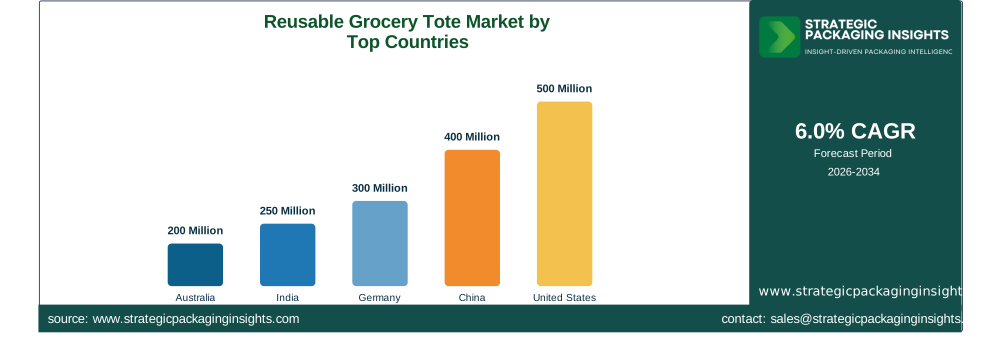
China is another significant player in the market, with a market size of around $400 million and a CAGR of 7%. The rapid urbanization and increasing disposable income in China are driving the demand for eco-friendly products, including reusable grocery totes. Government regulations aimed at reducing plastic waste are also contributing to market growth. The availability of low-cost manufacturing and a large consumer base make China a lucrative market for reusable totes.
Germany, with a market size of approximately $300 million and a CAGR of 6%, is a key market in Europe. The country's strong environmental policies and high consumer awareness about sustainability are driving the demand for reusable grocery totes. The presence of eco-conscious consumers and retailers offering a wide range of sustainable products further supports market growth in Germany.
In the Asia Pacific region, India is emerging as a promising market, with a market size of about $250 million and a CAGR of 8%. The growing middle class and increasing awareness about environmental issues are driving the demand for reusable totes. Government initiatives to reduce plastic waste and promote sustainable practices are also contributing to market growth in India.
Australia, with a market size of around $200 million and a CAGR of 5%, is another important market for reusable grocery totes. The country's strong environmental consciousness and supportive government policies are driving the adoption of reusable totes. The presence of major retailers and supermarkets offering eco-friendly products further boosts market growth in Australia.
Reusable Grocery Tote Market Segments Insights

Material Analysis
The material segment of the reusable grocery tote market is primarily categorized into cotton, jute, and recycled PET. Cotton totes are highly favored due to their durability, biodegradability, and aesthetic appeal. They are particularly popular among environmentally conscious consumers who prioritize sustainability. Jute totes, on the other hand, are gaining traction due to their natural fiber composition and eco-friendly attributes. They are often used for promotional purposes by companies looking to enhance their green image. Recycled PET totes are emerging as a popular choice due to their cost-effectiveness and environmental benefits, as they are made from recycled plastic bottles, reducing waste and promoting recycling.
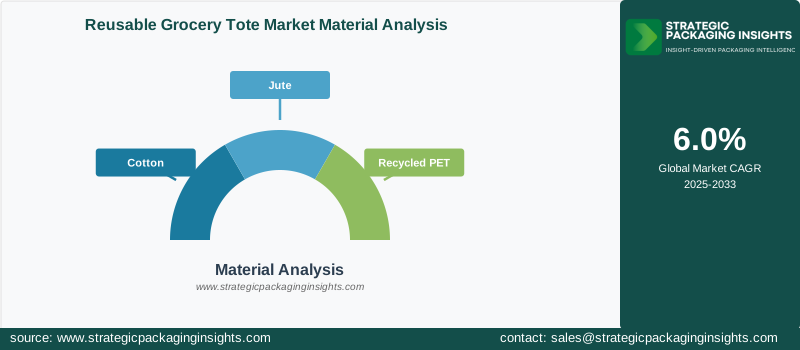
The demand for these materials is driven by consumer preferences for sustainable and eco-friendly products. Companies are investing in research and development to create innovative materials that offer enhanced durability and functionality. The competition in this segment is intense, with players focusing on product differentiation through unique designs and features. The growing trend of customization and personalization is also influencing the material segment, as consumers seek products that reflect their individual style and preferences.
Type Analysis
The type segment of the reusable grocery tote market includes foldable, insulated, and large capacity totes. Foldable totes are highly popular due to their convenience and portability, making them ideal for consumers who prioritize ease of use. Insulated totes are gaining popularity for their ability to maintain the temperature of perishable goods, making them a preferred choice for grocery shopping. Large capacity totes are favored by consumers who require ample space for carrying groceries and other items.
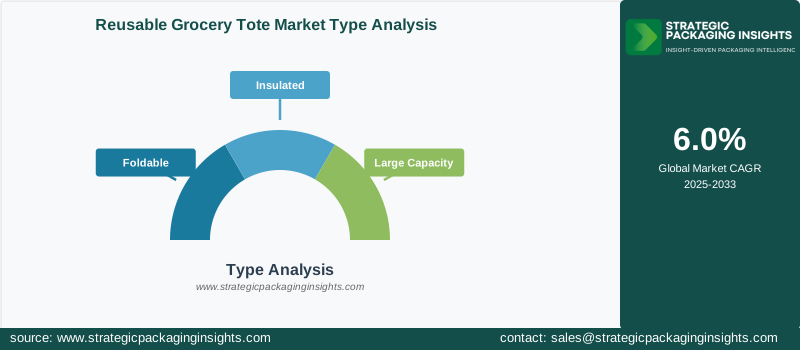
The demand for these types is driven by consumer preferences for functionality and convenience. Companies are focusing on product innovation to enhance the features and usability of these totes. The competition in this segment is fierce, with players offering a wide range of products to cater to varying consumer needs. The growing trend of eco-friendly consumerism is also influencing the type segment, as consumers seek products that align with their sustainability values.
End Use Analysis
The end use segment of the reusable grocery tote market is categorized into supermarkets, grocery stores, and retailers. Supermarkets are the largest end users of reusable totes, as they offer these products as part of their sustainability initiatives. Grocery stores are also significant end users, as they cater to environmentally conscious consumers who prefer reusable totes over single-use plastic bags. Retailers are increasingly adopting reusable totes as part of their branding and marketing strategies, offering customized and promotional totes to enhance customer engagement.
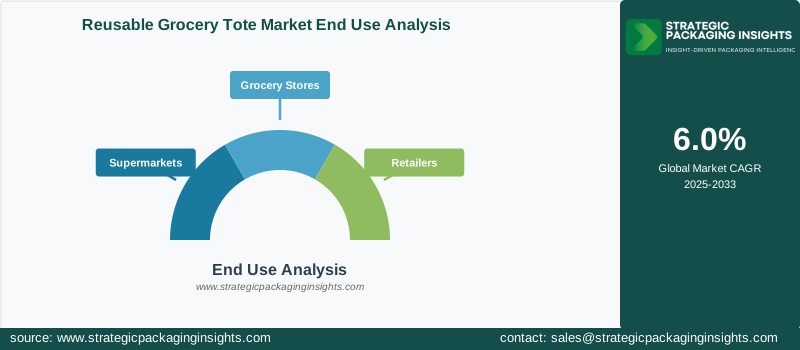
The demand for reusable totes in these end use segments is driven by consumer preferences for sustainable and eco-friendly products. Companies are partnering with retailers and supermarkets to offer exclusive tote designs and enhance their market reach. The competition in this segment is intense, with players focusing on product differentiation through unique designs and features. The growing trend of customization and personalization is also influencing the end use segment, as consumers seek products that reflect their individual style and preferences.
Reusable Grocery Tote Market Segments
The Reusable Grocery Tote market has been segmented on the basis ofMaterial
- Cotton
- Jute
- Recycled PET
Type
- Foldable
- Insulated
- Large Capacity
End Use
- Supermarkets
- Grocery Stores
- Retailers
Region
- Asia Pacific
- North America
- Latin America
- Europe
- Middle East & Africa




