


Refillable Beauty Packaging Systems Market Outlook
The Refillable Beauty Packaging Systems market size was valued at USD 3.06 Billion in 2025 and is anticipated to reach USD 8.58 Billion by 2034, growing at a CAGR of 12.2% during the forecast period according to Strategic Packaging Insights. This remarkable growth is driven by increasing consumer awareness and demand for sustainable packaging solutions. Major brands like AptarGroup and Albéa Group are leading the charge by innovating in eco-friendly packaging designs that cater to environmentally conscious consumers. The shift towards refillable systems is not only reducing waste but also offering cost-effective solutions for both manufacturers and consumers, thereby enhancing market attractiveness.
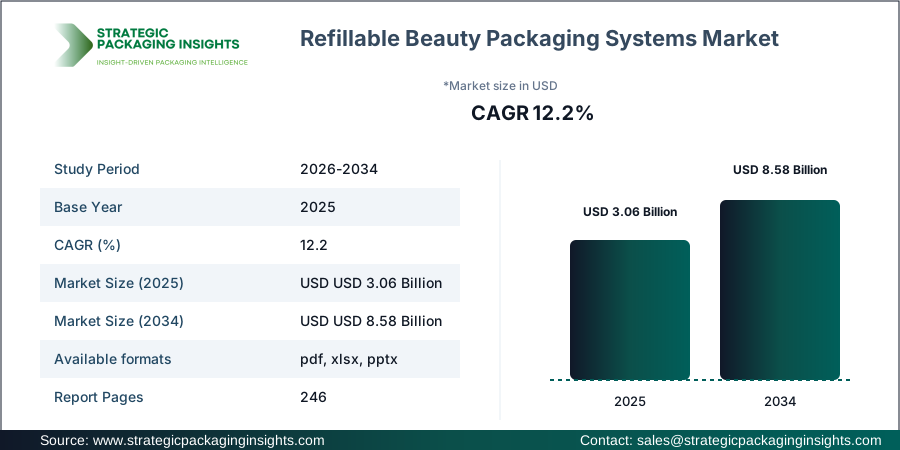
One of the most impactful drivers of this market is the growing regulatory pressure to reduce plastic waste, as highlighted by various government initiatives worldwide. For instance, the European Union's directive on single-use plastics is pushing brands to adopt refillable packaging solutions. This regulatory environment is fostering innovation and encouraging companies like Quadpack and Lumson S.p.A. to invest in sustainable packaging technologies. The increasing consumer preference for eco-friendly products is further propelling market growth, as consumers are more inclined to purchase from brands that demonstrate a commitment to sustainability.
Report Scope
| Attributes | Details |
| Report Title | Refillable Beauty Packaging Systems Market Size, Future Growth and Forecast 2034 |
| By Product Type | Refillable Bottles, Refillable Jars, Refillable Airless Systems, Refill Pouches, Refill Cartridges, Refill Pods |
| By Material | Glass, Plastic, Aluminum, Stainless Steel, Bio-Based Materials |
| By Application | Skincare, Haircare, Fragrances, Color Cosmetics, Personal Care, Body Care |
| By End User | Luxury Beauty Brands, Mass Market Beauty Brands, Contract Packaging Companies, Cosmetic Manufacturers, Retail & E-commerce |
| Region | Asia Pacific, North America, Latin America, Europe, Middle East & Africa |
| Base Year | 2025 |
| Historic Period | 2018-2024 |
| Forecast Period | 2026-2034 |
| Number of Pages | 246 |
| Customization Available | Yes* |
Sustainability & Circular Economy Analysis
Sustainability initiatives and circular economy practices are significantly influencing the refillable beauty packaging systems market. The adoption of recyclable materials and reusable packaging is becoming a standard practice among leading brands. Companies are increasingly investing in lightweight packaging solutions to reduce their carbon footprint and enhance transportation efficiency. For instance, the use of bio-based materials is gaining traction as it offers a sustainable alternative to traditional plastics, aligning with consumer preferences for eco-friendly products.
These sustainability trends are reshaping packaging design and manufacturing processes. Brands are focusing on eco-friendly material innovation to meet regulatory compliance and consumer demand. Extended Producer Responsibility (EPR) is encouraging manufacturers to take accountability for the entire lifecycle of their products, promoting waste reduction strategies. This shift is influencing investment decisions, as companies prioritize sustainable practices to maintain long-term market competitiveness.
Moreover, consumer sustainability preferences are driving brands to adopt ESG initiatives, which are becoming a critical factor in supply chain strategies. Packaging regulations are pushing companies to innovate and develop sustainable solutions that comply with environmental standards. This focus on sustainability is not only enhancing brand reputation but also attracting investment from stakeholders who prioritize ethical and sustainable business practices.
Packaging Value Chain & Supply Chain Analysis
The packaging value chain for refillable beauty systems is complex, involving multiple stakeholders from raw material sourcing to recycling networks. Raw material availability, particularly for sustainable materials like bio-based plastics and aluminum, plays a crucial role in determining production capabilities and supply chain efficiency. Packaging converters and manufacturers are pivotal in transforming these materials into innovative packaging solutions that meet consumer and regulatory demands.
Logistics and distribution channels are essential components of the supply chain, ensuring that products reach consumers efficiently. Strategic partnerships between brand owners, retailers, and logistics providers are enhancing supply chain resilience and localization efforts. Companies are increasingly focusing on procurement strategies and inventory management to mitigate risks associated with global sourcing and transportation challenges.
Supply chain efficiency is further influenced by technological advancements in packaging machinery, which enable manufacturers to produce high-quality, sustainable packaging at scale. Recycling networks are becoming integral to the value chain, as they facilitate the circular economy by ensuring that packaging materials are reused and recycled. This holistic approach to the supply chain is enhancing overall market performance and business competitiveness, providing a competitive edge to companies that prioritize sustainability and innovation.
Opportunities & Threats
The refillable beauty packaging systems market presents numerous opportunities for growth and innovation. One significant opportunity lies in the increasing consumer demand for personalized and customizable packaging solutions. Brands that offer unique, refillable packaging designs that cater to individual consumer preferences are likely to gain a competitive advantage. Additionally, the rise of e-commerce platforms provides an opportunity for brands to reach a broader audience and offer convenient refill options, enhancing customer loyalty and retention.
Another opportunity is the potential for technological advancements in packaging materials and manufacturing processes. Innovations in bio-based materials and smart packaging technologies can provide brands with a unique selling proposition, attracting environmentally conscious consumers. Companies that invest in research and development to create innovative, sustainable packaging solutions are well-positioned to capitalize on this growing market trend.
However, the market also faces threats, particularly from regulatory challenges and the high cost of sustainable materials. Compliance with stringent packaging regulations can be a significant barrier for companies, especially smaller players with limited resources. Additionally, the initial investment required for developing sustainable packaging solutions can be substantial, posing a financial challenge for some companies. To mitigate these threats, companies must focus on strategic partnerships and collaborations to share resources and expertise, enabling them to navigate regulatory complexities and reduce costs.
Drivers & Challenges
Several key drivers are propelling the growth of the refillable beauty packaging systems market. The increasing consumer awareness of environmental issues and the demand for sustainable products are primary drivers. Consumers are becoming more conscious of their purchasing decisions and are actively seeking brands that align with their values. This shift in consumer behavior is encouraging brands to adopt refillable packaging solutions that reduce waste and promote sustainability.
Technological advancements in packaging materials and manufacturing processes are also driving market growth. Innovations in bio-based materials and smart packaging technologies are enabling brands to create unique, sustainable packaging solutions that meet consumer and regulatory demands. Companies that invest in research and development to stay ahead of these technological trends are likely to gain a competitive advantage in the market.
Despite these drivers, the market faces several challenges. One significant challenge is the high cost of sustainable materials, which can be a barrier for companies looking to adopt refillable packaging solutions. Additionally, compliance with stringent packaging regulations can be complex and costly, particularly for smaller players with limited resources. To overcome these challenges, companies must focus on strategic partnerships and collaborations to share resources and expertise, enabling them to navigate regulatory complexities and reduce costs.
Market Share Analysis
The competitive landscape of the refillable beauty packaging systems market is characterized by the presence of several key players, each striving to gain a larger market share through innovation and strategic partnerships. Companies like AptarGroup and Albéa Group are leading the market with their extensive product portfolios and strong focus on sustainability. These companies are investing heavily in research and development to create innovative packaging solutions that meet consumer and regulatory demands.
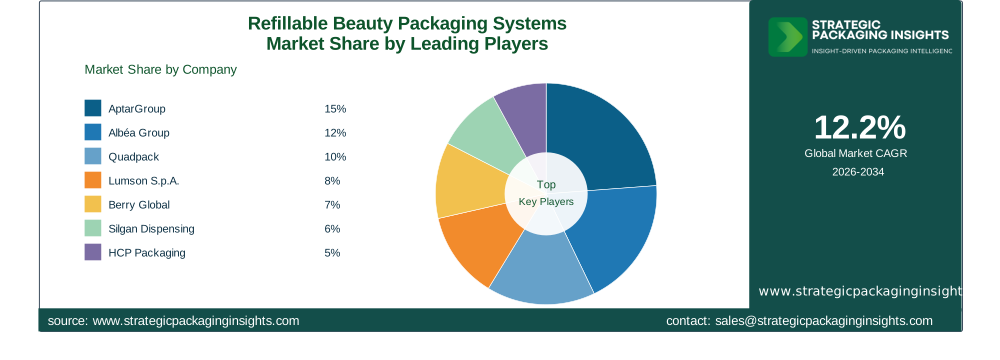
Quadpack and Lumson S.p.A. are also significant players in the market, known for their commitment to eco-friendly packaging designs. These companies are leveraging their expertise in sustainable materials and manufacturing processes to offer unique, refillable packaging solutions that cater to environmentally conscious consumers. Their strategic partnerships with leading beauty brands are enhancing their market presence and competitiveness.
Berry Global and Silgan Dispensing are focusing on expanding their product offerings and strengthening their distribution networks to reach a broader audience. These companies are investing in advanced packaging technologies to enhance their production capabilities and meet the growing demand for sustainable packaging solutions. Their strong focus on innovation and customer satisfaction is driving their market growth and competitiveness.
Other notable players in the market include HCP Packaging, APC Packaging, Cosmogen, Fusion Packaging, and Yonwoo Co. Ltd. These companies are known for their innovative packaging designs and commitment to sustainability. They are investing in research and development to create unique, eco-friendly packaging solutions that meet consumer and regulatory demands. Their strategic partnerships with leading beauty brands are enhancing their market presence and competitiveness.
Key Highlights
- Market Size: USD 3.06 Billion in 2025, projected to reach USD 8.58 Billion by 2034.
- Growth Rate: Forecasted CAGR of 12.2% from 2026 to 2034.
- Leading Companies: AptarGroup, Albéa Group, Quadpack, Lumson S.p.A.
- Growing Segments: Refillable Bottles and Refillable Airless Systems.
- Key Regions: Asia Pacific and North America showing significant growth.
- Material Innovation: Increasing use of bio-based materials and aluminum.
- Consumer Trends: Rising demand for eco-friendly and customizable packaging solutions.
Refillable Beauty Packaging Systems Market Segments Insights

By Product Type Analysis
The product type segment of the refillable beauty packaging systems market is diverse, encompassing various innovative solutions such as refillable bottles, jars, airless systems, pouches, cartridges, and pods. Refillable bottles and airless systems are gaining significant traction due to their convenience and ability to preserve product integrity. These products are particularly popular among consumers seeking sustainable and cost-effective packaging solutions. Companies like AptarGroup and Albéa Group are leading the way in developing advanced refillable systems that cater to the growing demand for eco-friendly packaging.
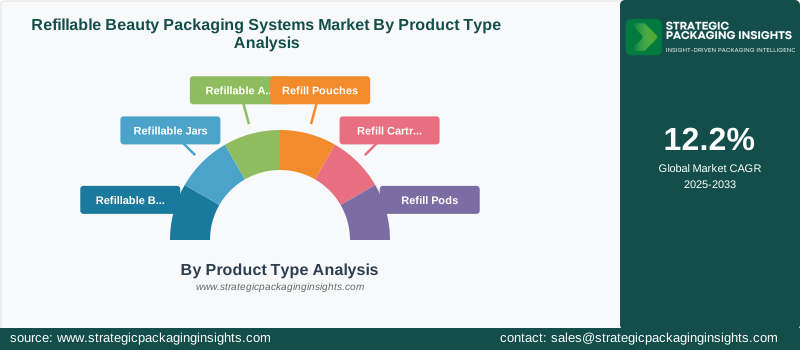
Refillable pouches and cartridges are also witnessing increased adoption, driven by their lightweight and flexible nature. These products offer a convenient and sustainable alternative to traditional packaging, reducing waste and enhancing transportation efficiency. The growing popularity of refillable pods is further contributing to market growth, as they offer a unique and customizable packaging solution that appeals to environmentally conscious consumers. Overall, the product type segment is characterized by continuous innovation and a strong focus on sustainability, driving market growth and competitiveness.
By Material Analysis
The material segment of the refillable beauty packaging systems market is evolving, with a strong emphasis on sustainability and innovation. Glass, plastic, aluminum, stainless steel, and bio-based materials are the primary materials used in refillable packaging solutions. Bio-based materials are gaining significant traction due to their eco-friendly nature and ability to reduce carbon footprint. Companies are increasingly investing in research and development to create innovative packaging solutions that utilize sustainable materials, aligning with consumer preferences for eco-friendly products.
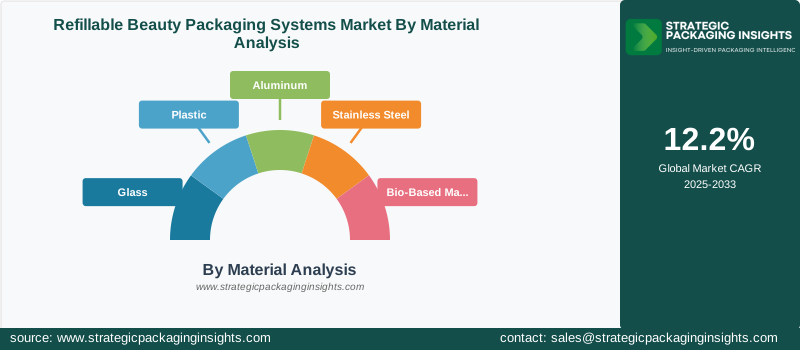
Aluminum and stainless steel are also popular choices for refillable packaging, offering durability and recyclability. These materials are particularly favored by luxury beauty brands seeking to enhance their brand image and appeal to environmentally conscious consumers. The use of glass in refillable packaging is driven by its premium appeal and ability to preserve product quality. Overall, the material segment is characterized by continuous innovation and a strong focus on sustainability, driving market growth and competitiveness.
By Application Analysis
The application segment of the refillable beauty packaging systems market is diverse, encompassing various product categories such as skincare, haircare, fragrances, color cosmetics, personal care, and body care. Skincare and haircare are the leading application segments, driven by the increasing consumer demand for sustainable and eco-friendly packaging solutions. Companies are focusing on developing innovative packaging designs that cater to the specific needs of these application segments, enhancing product appeal and consumer satisfaction.
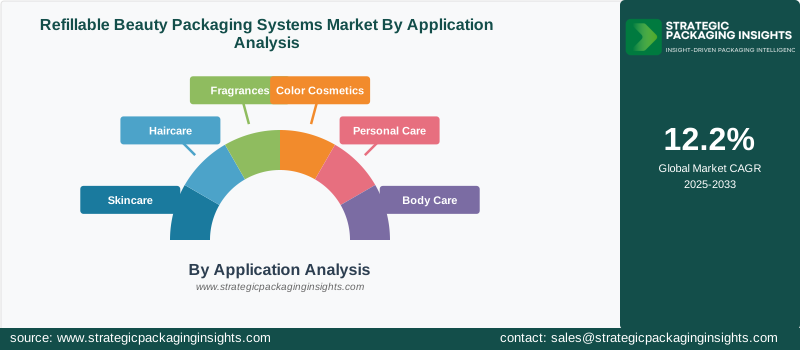
Fragrances and color cosmetics are also witnessing significant growth, driven by the rising consumer preference for premium and customizable packaging solutions. The personal care and body care segments are characterized by continuous innovation and a strong focus on sustainability, driving market growth and competitiveness. Overall, the application segment is characterized by a diverse range of products and a strong focus on sustainability, driving market growth and competitiveness.
By End User Analysis
The end user segment of the refillable beauty packaging systems market is diverse, encompassing various stakeholders such as luxury beauty brands, mass market beauty brands, contract packaging companies, cosmetic manufacturers, and retail & e-commerce. Luxury beauty brands are leading the market, driven by their strong focus on sustainability and innovation. These brands are investing heavily in research and development to create unique, eco-friendly packaging solutions that enhance brand image and appeal to environmentally conscious consumers.
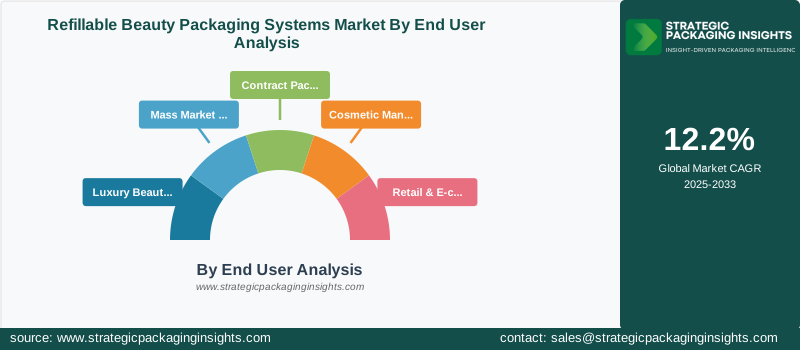
Mass market beauty brands are also significant players in the market, focusing on developing cost-effective and sustainable packaging solutions that cater to a broader audience. Contract packaging companies and cosmetic manufacturers are playing a crucial role in the market, offering innovative packaging solutions that meet consumer and regulatory demands. The retail & e-commerce segment is characterized by continuous innovation and a strong focus on sustainability, driving market growth and competitiveness.
Refillable Beauty Packaging Systems Market Segments
The Refillable Beauty Packaging Systems market has been segmented on the basis ofBy Product Type
- Refillable Bottles
- Refillable Jars
- Refillable Airless Systems
- Refill Pouches
- Refill Cartridges
- Refill Pods
By Material
- Glass
- Plastic
- Aluminum
- Stainless Steel
- Bio-Based Materials
By Application
- Skincare
- Haircare
- Fragrances
- Color Cosmetics
- Personal Care
- Body Care
By End User
- Luxury Beauty Brands
- Mass Market Beauty Brands
- Contract Packaging Companies
- Cosmetic Manufacturers
- Retail & E-commerce
Region
- Asia Pacific
- North America
- Latin America
- Europe
- Middle East & Africa




