


Recyclable Thermal Insulation Packs Market Outlook
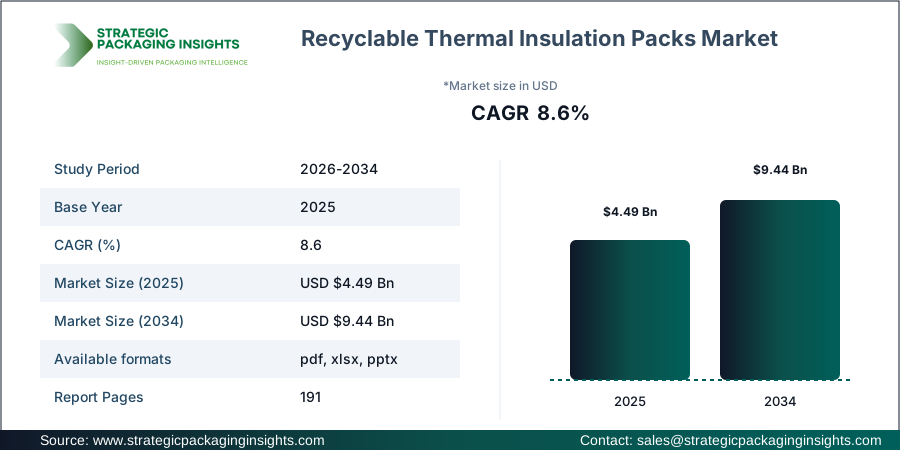
The Recyclable Thermal Insulation Packs market was valued at $4.49 billion in 2025 and is projected to reach $9.44 billion by 2034, growing at a CAGR of 8.6% during the forecast period 2026-2034. This market is experiencing significant growth due to the increasing demand for sustainable packaging solutions across various industries. The rising awareness about environmental conservation and the need to reduce carbon footprints are driving the adoption of recyclable thermal insulation packs. These packs are extensively used in sectors such as food and beverage, healthcare, and logistics, where maintaining temperature-sensitive products is crucial. The market is also benefiting from technological advancements that enhance the efficiency and effectiveness of these insulation solutions.
Despite the promising growth prospects, the market faces certain challenges that could hinder its expansion. Regulatory constraints related to packaging waste management and recycling processes pose significant hurdles. Additionally, the high initial costs associated with the development and deployment of advanced recyclable insulation technologies may deter small and medium-sized enterprises from adopting these solutions. However, the market's potential for growth remains substantial, driven by the increasing demand for eco-friendly packaging solutions and the continuous innovation in material science aimed at improving the performance of recyclable thermal insulation packs.
Report Scope
| Attributes | Details |
| Report Title | Recyclable Thermal Insulation Packs Market Size, Future Growth and Forecast 2034 |
| Product Type | Thermal Mailers, Insulated Box Liners, Gel Pack Systems, Pouch Packs |
| Material Type | Recycled Paper, Recycled PET, Wool, Bio-Based Insulation |
| Application | Cold Chain Shipping, Food Delivery, Pharma Logistics, E-commerce |
| End Use | Healthcare, Food & Beverage, Logistics, Retail |
| Region | Asia Pacific, North America, Latin America, Europe, Middle East & Africa |
| Base Year | 2025 |
| Historic Period | 2018-2024 |
| Forecast Period | 2026-2034 |
| Number of Pages | 191 |
| Customization Available | Yes* |
Opportunities & Threats
The Recyclable Thermal Insulation Packs market presents numerous opportunities for growth, primarily driven by the increasing demand for sustainable packaging solutions. As consumers become more environmentally conscious, there is a growing preference for products that minimize environmental impact. This trend is encouraging manufacturers to develop innovative recyclable insulation packs that not only meet the functional requirements but also align with sustainability goals. The expansion of e-commerce and online food delivery services is another significant opportunity, as these sectors require efficient thermal insulation solutions to maintain product quality during transit. Furthermore, the healthcare sector's reliance on temperature-sensitive logistics for pharmaceuticals and vaccines is expected to drive demand for advanced insulation technologies.
Another opportunity lies in the development of bio-based insulation materials, which are gaining traction due to their biodegradability and reduced environmental impact. Companies investing in research and development to create high-performance bio-based insulation solutions are likely to gain a competitive edge in the market. Additionally, government initiatives promoting sustainable packaging practices and offering incentives for adopting eco-friendly solutions are expected to boost market growth. Collaborations and partnerships between packaging companies and technology providers can also lead to the development of innovative products that cater to the evolving needs of various industries.
However, the market is not without its threats. One of the primary challenges is the stringent regulatory landscape governing packaging waste and recycling processes. Compliance with these regulations can be complex and costly, particularly for smaller companies. Moreover, the fluctuating prices of raw materials used in the production of recyclable insulation packs can impact profit margins. The market also faces competition from traditional insulation solutions, which may be more cost-effective in certain applications. To mitigate these threats, companies need to focus on continuous innovation, cost optimization, and strategic partnerships to enhance their market position.
Drivers & Challenges
The Recyclable Thermal Insulation Packs market is driven by several key factors, including the increasing demand for sustainable packaging solutions and the growing awareness of environmental issues. Consumers and businesses alike are becoming more conscious of their environmental impact, leading to a shift towards eco-friendly packaging options. This trend is particularly evident in the food and beverage industry, where maintaining product quality and safety during transportation is critical. The rise of e-commerce and online food delivery services has further fueled the demand for efficient thermal insulation solutions that can ensure the safe delivery of temperature-sensitive products.
Technological advancements in material science are also driving market growth. Innovations in recyclable materials and insulation technologies are enhancing the performance and efficiency of thermal insulation packs, making them more attractive to end-users. The development of bio-based insulation materials, which offer superior thermal performance and environmental benefits, is gaining traction in the market. Additionally, government regulations promoting sustainable packaging practices and offering incentives for adopting eco-friendly solutions are encouraging companies to invest in recyclable insulation technologies.
Despite these drivers, the market faces several challenges that could impede its growth. One of the primary challenges is the high initial cost associated with the development and deployment of advanced recyclable insulation technologies. This can be a significant barrier for small and medium-sized enterprises looking to adopt these solutions. Additionally, the complex regulatory landscape governing packaging waste and recycling processes can pose compliance challenges for companies. The fluctuating prices of raw materials used in the production of recyclable insulation packs can also impact profit margins. To overcome these challenges, companies need to focus on cost optimization, regulatory compliance, and continuous innovation to maintain their competitive edge in the market.
Market Share Analysis
The Recyclable Thermal Insulation Packs market is characterized by a competitive landscape with several key players vying for market share. Companies such as TemperPack, Cold Chain Technologies, Sonoco ThermoSafe, Sealed Air, Pregis, Ranpak, Softbox Systems, Insulated Products Corp, EcoCool, and Nordic Cold Chain Solutions are prominent players in this market. These companies are focusing on product innovation, strategic partnerships, and mergers and acquisitions to strengthen their market position and expand their product offerings.
TemperPack is a leading player in the market, known for its innovative and sustainable packaging solutions. The company has a strong focus on research and development, which has enabled it to introduce advanced recyclable insulation products that cater to the needs of various industries. Cold Chain Technologies is another major player, offering a wide range of thermal packaging solutions for the healthcare and food industries. The company's extensive distribution network and strong customer relationships have contributed to its significant market share.
Sonoco ThermoSafe is a key player in the market, providing temperature assurance packaging solutions for the pharmaceutical and healthcare sectors. The company's focus on quality and innovation has helped it maintain a strong market presence. Sealed Air, known for its Cryovac brand, offers a range of thermal insulation solutions for the food and beverage industry. The company's commitment to sustainability and innovation has positioned it as a leader in the market.
Pregis and Ranpak are also notable players in the market, offering a variety of sustainable packaging solutions. Pregis focuses on developing high-performance insulation products that meet the evolving needs of its customers, while Ranpak is known for its paper-based packaging solutions that offer environmental benefits. Softbox Systems, Insulated Products Corp, EcoCool, and Nordic Cold Chain Solutions are other significant players in the market, each with a unique product offering and market strategy.
Key Highlights
- The Recyclable Thermal Insulation Packs market is projected to grow at a CAGR of 8.6% from 2026 to 2034.
- Increasing demand for sustainable packaging solutions is driving market growth.
- Technological advancements in material science are enhancing product performance.
- Government regulations promoting eco-friendly packaging practices are boosting market adoption.
- The food and beverage industry is a major end-user of recyclable thermal insulation packs.
- Bio-based insulation materials are gaining traction due to their environmental benefits.
- Key players are focusing on product innovation and strategic partnerships to strengthen their market position.
Top Countries Insights
In the Recyclable Thermal Insulation Packs market, the United States holds a significant share, with a market size of approximately $1.2 billion and a CAGR of 7%. The country's strong focus on sustainability and the presence of major players contribute to its market dominance. Government initiatives promoting eco-friendly packaging solutions and the growing e-commerce sector are key growth drivers. However, regulatory challenges related to packaging waste management pose a challenge.
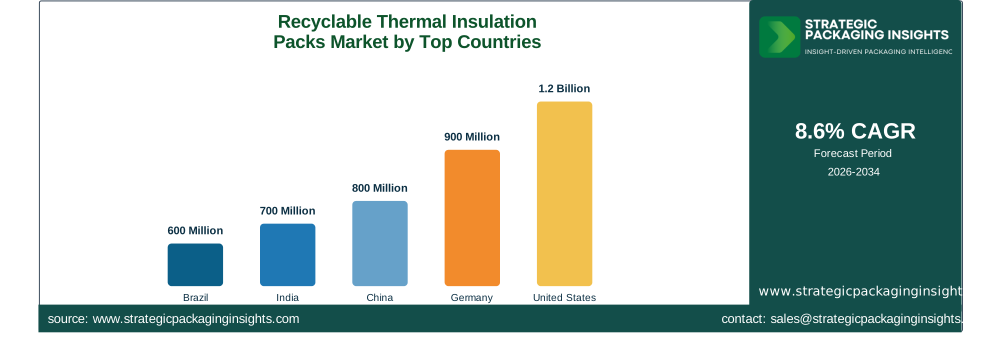
Germany is another key market, with a market size of around $900 million and a CAGR of 6%. The country's robust manufacturing sector and emphasis on sustainable practices drive demand for recyclable thermal insulation packs. Innovations in bio-based insulation materials and government support for green packaging solutions are significant growth drivers. However, high production costs and stringent regulations can be challenging for market players.
China, with a market size of approximately $800 million and a CAGR of 9%, is experiencing rapid growth in the recyclable thermal insulation packs market. The country's expanding e-commerce and food delivery sectors are driving demand for efficient thermal insulation solutions. Government policies supporting sustainable packaging practices and investments in research and development are further boosting market growth. However, competition from low-cost traditional insulation solutions remains a challenge.
India, with a market size of about $700 million and a CAGR of 10%, is emerging as a key market for recyclable thermal insulation packs. The country's growing food and beverage industry and increasing awareness of environmental issues are driving demand for sustainable packaging solutions. Government initiatives promoting eco-friendly practices and investments in infrastructure development are key growth drivers. However, the lack of standardized regulations and high initial costs can be challenging for market players.
Brazil, with a market size of approximately $600 million and a CAGR of 8%, is witnessing steady growth in the recyclable thermal insulation packs market. The country's expanding logistics and retail sectors are driving demand for efficient insulation solutions. Government support for sustainable packaging practices and the growing awareness of environmental issues are key growth drivers. However, economic instability and fluctuating raw material prices can pose challenges for market players.
Recyclable Thermal Insulation Packs Market Segments Insights

Product Type Analysis
The Recyclable Thermal Insulation Packs market is segmented by product type into Thermal Mailers, Insulated Box Liners, Gel Pack Systems, and Pouch Packs. Thermal Mailers are gaining popularity due to their lightweight and cost-effective nature, making them ideal for e-commerce and food delivery applications. Insulated Box Liners are preferred for their superior insulation properties, catering to the needs of the pharmaceutical and healthcare sectors. Gel Pack Systems are widely used in cold chain shipping, providing reliable temperature control for perishable goods. Pouch Packs, known for their versatility and ease of use, are increasingly adopted in the food and beverage industry.
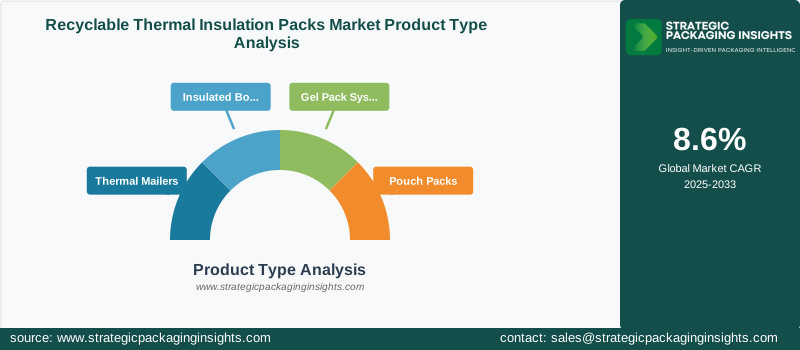
Each product type offers unique advantages, driving demand across various applications. The growing e-commerce sector and the need for efficient packaging solutions in food delivery are key drivers for the Thermal Mailers segment. Insulated Box Liners are witnessing increased adoption in the healthcare sector, where maintaining product integrity is crucial. Gel Pack Systems are essential for cold chain logistics, ensuring the safe transportation of temperature-sensitive products. Pouch Packs are gaining traction in the food and beverage industry, offering convenience and effective insulation for a wide range of products.
Material Type Analysis
The market is also segmented by material type into Recycled Paper, Recycled PET, Wool, and Bio-Based Insulation. Recycled Paper is favored for its eco-friendly nature and cost-effectiveness, making it a popular choice for sustainable packaging solutions. Recycled PET offers excellent insulation properties and durability, catering to the needs of the food and beverage industry. Wool, known for its natural insulation capabilities, is gaining traction in the pharmaceutical and healthcare sectors. Bio-Based Insulation materials are emerging as a sustainable alternative, offering biodegradability and reduced environmental impact.
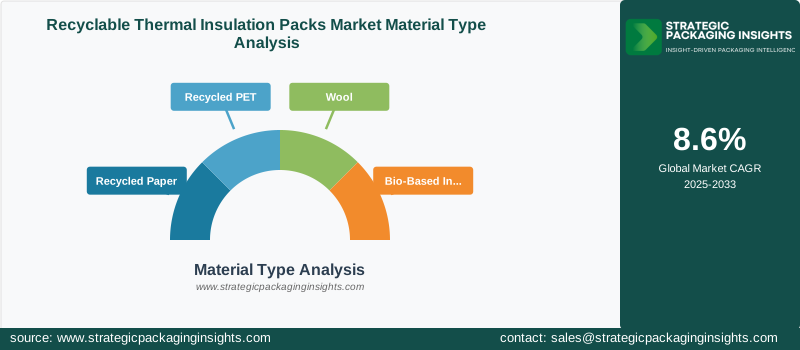
The demand for each material type is driven by its unique properties and applications. Recycled Paper is widely used in e-commerce and food delivery, where cost and sustainability are key considerations. Recycled PET is preferred in the food and beverage industry for its durability and insulation performance. Wool is increasingly adopted in the healthcare sector, where maintaining temperature-sensitive products is critical. Bio-Based Insulation materials are gaining popularity due to their environmental benefits and biodegradability, appealing to environmentally conscious consumers and businesses.
Application Analysis
The Recyclable Thermal Insulation Packs market is segmented by application into Cold Chain Shipping, Food Delivery, Pharma Logistics, and E-commerce. Cold Chain Shipping is a major application, driven by the need for reliable temperature control in the transportation of perishable goods. Food Delivery is witnessing significant growth, fueled by the rise of online food delivery services and the demand for efficient packaging solutions. Pharma Logistics is a critical application, where maintaining product integrity and temperature control is essential for the safe transportation of pharmaceuticals and vaccines. E-commerce is another key application, with the growing demand for sustainable packaging solutions to ensure product quality during transit.
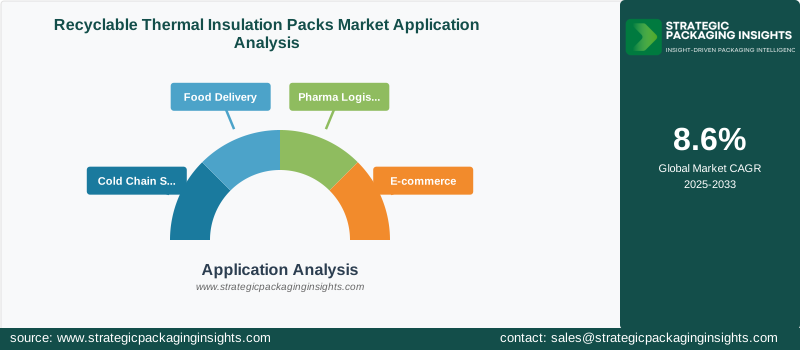
Each application segment presents unique opportunities and challenges. Cold Chain Shipping requires advanced insulation solutions to maintain temperature-sensitive products, driving demand for high-performance recyclable insulation packs. Food Delivery is benefiting from the increasing consumer preference for convenient and sustainable packaging options. Pharma Logistics is witnessing growth due to the expanding pharmaceutical industry and the need for reliable temperature control solutions. E-commerce is driving demand for lightweight and cost-effective packaging solutions that align with sustainability goals.
End Use Analysis
The market is further segmented by end use into Healthcare, Food & Beverage, Logistics, and Retail. The Healthcare sector is a major end-user, driven by the need for reliable temperature control solutions in the transportation of pharmaceuticals and medical supplies. The Food & Beverage industry is another significant end-user, where maintaining product quality and safety during transportation is critical. The Logistics sector is witnessing growth due to the increasing demand for efficient packaging solutions in cold chain logistics. The Retail sector is also a key end-user, with the growing demand for sustainable packaging solutions to enhance customer satisfaction and brand image.
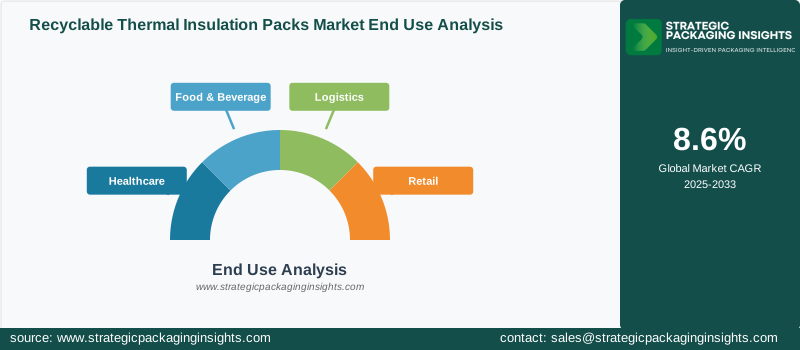
Each end-use segment presents unique opportunities and challenges. The Healthcare sector requires advanced insulation solutions to ensure the safe transportation of temperature-sensitive products, driving demand for high-performance recyclable insulation packs. The Food & Beverage industry is benefiting from the increasing consumer preference for sustainable packaging options. The Logistics sector is witnessing growth due to the expanding cold chain logistics industry and the need for reliable temperature control solutions. The Retail sector is driving demand for innovative and sustainable packaging solutions that enhance customer satisfaction and brand image.
Recyclable Thermal Insulation Packs Market Segments
The Recyclable Thermal Insulation Packs market has been segmented on the basis ofProduct Type
- Thermal Mailers
- Insulated Box Liners
- Gel Pack Systems
- Pouch Packs
Material Type
- Recycled Paper
- Recycled PET
- Wool
- Bio-Based Insulation
Application
- Cold Chain Shipping
- Food Delivery
- Pharma Logistics
- E-commerce
End Use
- Healthcare
- Food & Beverage
- Logistics
- Retail
Region
- Asia Pacific
- North America
- Latin America
- Europe
- Middle East & Africa




