


Recyclable Barrier Packaging Market Outlook
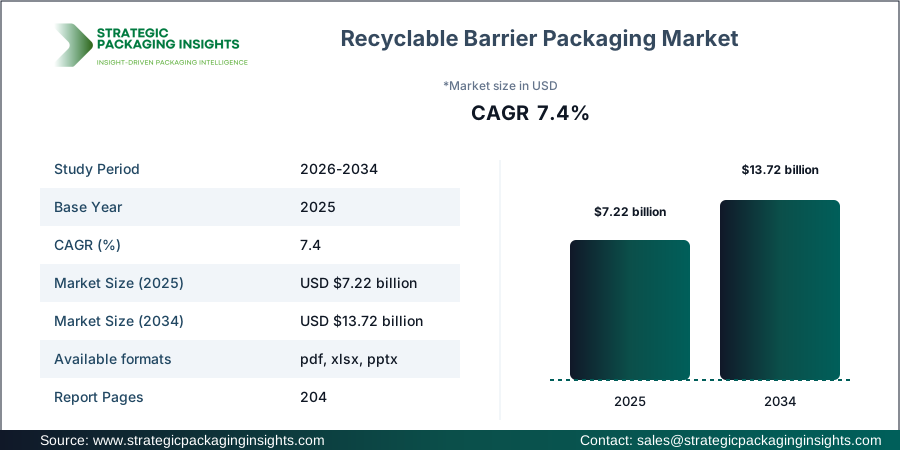
The Recyclable Barrier Packaging market was valued at $7.22 billion in 2025 and is projected to reach $13.72 billion by 2034, growing at a CAGR of 7.4% during the forecast period 2026-2034. This market is witnessing significant growth due to the increasing demand for sustainable packaging solutions across various industries. The shift towards eco-friendly packaging is driven by stringent environmental regulations and the growing consumer awareness regarding the environmental impact of packaging waste. The market is further propelled by advancements in material science, which have led to the development of innovative recyclable barrier materials that offer superior protection and shelf-life extension for packaged products.
Despite the promising growth prospects, the Recyclable Barrier Packaging market faces certain challenges. The high cost of recyclable materials compared to traditional packaging solutions is a significant restraint. Additionally, the lack of standardized recycling infrastructure in many regions poses a challenge to the widespread adoption of recyclable barrier packaging. However, the market holds immense potential for growth, driven by the increasing investments in research and development aimed at reducing the cost of recyclable materials and improving their performance. The growing trend of circular economy and the emphasis on reducing carbon footprint are expected to create lucrative opportunities for market players in the coming years.
Report Scope
| Attributes | Details |
| Report Title | Recyclable Barrier Packaging Market Size, Future Growth and Forecast 2034 |
| By Material Type | Mono-material PE, Mono-material PP, Paper-based Barrier, Recyclable Coated Films |
| By Application | Snacks, Coffee, Pet Food, Personal Care, Pharmaceuticals |
| By Packaging Type | Pouches, Wraps, Trays, Cartons |
| By End Use | FMCG, Food Brands, Retailers, Packaging Converters |
| Region | Asia Pacific, North America, Latin America, Europe, Middle East & Africa |
| Base Year | 2025 |
| Historic Period | 2018-2024 |
| Forecast Period | 2026-2034 |
| Number of Pages | 204 |
| Customization Available | Yes* |
Opportunities & Threats
The Recyclable Barrier Packaging market presents numerous opportunities for growth, primarily driven by the increasing demand for sustainable packaging solutions. As consumers become more environmentally conscious, there is a growing preference for products packaged in eco-friendly materials. This trend is particularly evident in the food and beverage industry, where companies are increasingly adopting recyclable barrier packaging to meet consumer demand and comply with environmental regulations. Additionally, the rise of e-commerce and the increasing demand for packaged goods are expected to drive the demand for recyclable barrier packaging, as it offers superior protection and shelf-life extension for products during transportation and storage.
Another significant opportunity lies in the development of innovative materials and technologies that enhance the performance of recyclable barrier packaging. Companies are investing heavily in research and development to create materials that offer improved barrier properties, such as moisture and oxygen resistance, while being fully recyclable. The integration of smart packaging technologies, such as QR codes and RFID tags, into recyclable barrier packaging is also expected to create new opportunities for market players, as it allows for enhanced product tracking and consumer engagement.
However, the market also faces certain threats that could hinder its growth. The high cost of recyclable materials compared to traditional packaging solutions is a significant barrier to adoption, particularly for small and medium-sized enterprises. Additionally, the lack of standardized recycling infrastructure in many regions poses a challenge to the widespread adoption of recyclable barrier packaging. The complexity of recycling multi-layered materials and the need for specialized recycling facilities further exacerbate this issue. To overcome these challenges, industry players need to collaborate with governments and other stakeholders to develop standardized recycling processes and infrastructure.
Drivers & Challenges
The primary driver of the Recyclable Barrier Packaging market is the increasing demand for sustainable packaging solutions. As consumers become more environmentally conscious, there is a growing preference for products packaged in eco-friendly materials. This trend is particularly evident in the food and beverage industry, where companies are increasingly adopting recyclable barrier packaging to meet consumer demand and comply with environmental regulations. Additionally, the rise of e-commerce and the increasing demand for packaged goods are expected to drive the demand for recyclable barrier packaging, as it offers superior protection and shelf-life extension for products during transportation and storage.
Technological advancements in material science are also driving the growth of the Recyclable Barrier Packaging market. Companies are investing heavily in research and development to create materials that offer improved barrier properties, such as moisture and oxygen resistance, while being fully recyclable. The integration of smart packaging technologies, such as QR codes and RFID tags, into recyclable barrier packaging is also expected to create new opportunities for market players, as it allows for enhanced product tracking and consumer engagement. These advancements are expected to drive the adoption of recyclable barrier packaging across various industries, including food and beverage, pharmaceuticals, and personal care.
Despite the promising growth prospects, the Recyclable Barrier Packaging market faces certain challenges. The high cost of recyclable materials compared to traditional packaging solutions is a significant barrier to adoption, particularly for small and medium-sized enterprises. Additionally, the lack of standardized recycling infrastructure in many regions poses a challenge to the widespread adoption of recyclable barrier packaging. The complexity of recycling multi-layered materials and the need for specialized recycling facilities further exacerbate this issue. To overcome these challenges, industry players need to collaborate with governments and other stakeholders to develop standardized recycling processes and infrastructure.
Market Share Analysis
The Recyclable Barrier Packaging market is characterized by intense competition, with several key players vying for market share. The competitive landscape is dominated by a few major companies, including Amcor, Mondi, ProAmpac, Berry Global, Huhtamaki, Constantia Flexibles, UFlex, Coveris, Sealed Air, and SÜDPACK. These companies are focusing on expanding their product portfolios and enhancing their production capabilities to cater to the growing demand for recyclable barrier packaging. They are also investing in research and development to create innovative materials and technologies that offer improved barrier properties and recyclability.
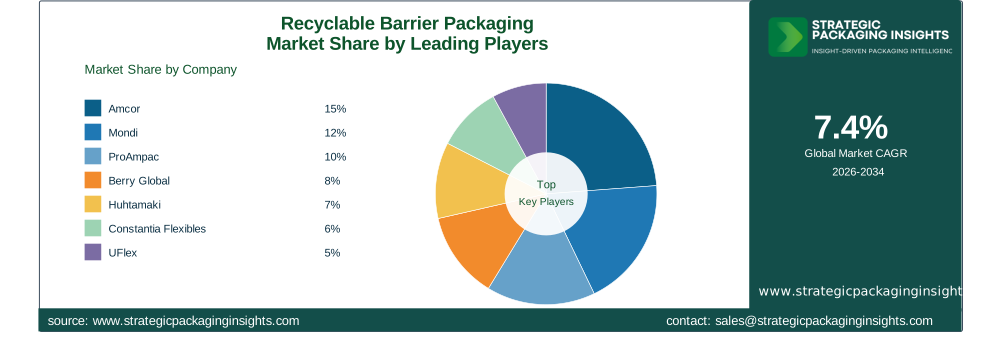
Amcor is one of the leading players in the Recyclable Barrier Packaging market, with a significant market share. The company is known for its extensive range of sustainable packaging solutions and its commitment to innovation. Amcor has been actively investing in research and development to create materials that offer improved barrier properties and recyclability. The company has also been expanding its production capabilities to cater to the growing demand for recyclable barrier packaging.
Mondi is another major player in the market, known for its innovative packaging solutions and commitment to sustainability. The company has a strong presence in the Recyclable Barrier Packaging market, with a focus on developing materials that offer superior barrier properties and recyclability. Mondi has been actively collaborating with other industry players and stakeholders to develop standardized recycling processes and infrastructure.
ProAmpac is a leading provider of flexible packaging solutions, with a strong focus on sustainability. The company has been investing heavily in research and development to create materials that offer improved barrier properties and recyclability. ProAmpac has also been expanding its production capabilities to cater to the growing demand for recyclable barrier packaging. The company is known for its innovative packaging solutions and its commitment to sustainability.
Key Highlights
- The Recyclable Barrier Packaging market is projected to grow at a CAGR of 7.4% from 2026 to 2034.
- The market was valued at $7.22 billion in 2025 and is expected to reach $13.72 billion by 2034.
- Key players in the market include Amcor, Mondi, ProAmpac, Berry Global, Huhtamaki, Constantia Flexibles, UFlex, Coveris, Sealed Air, and SÜDPACK.
- The market is driven by the increasing demand for sustainable packaging solutions and advancements in material science.
- The high cost of recyclable materials and the lack of standardized recycling infrastructure are significant challenges.
- Technological advancements in material science are driving the growth of the market.
- The integration of smart packaging technologies into recyclable barrier packaging is expected to create new opportunities.
- The food and beverage industry is a major end-user of recyclable barrier packaging.
- The rise of e-commerce is expected to drive the demand for recyclable barrier packaging.
- Companies are investing heavily in research and development to create innovative materials and technologies.
Top Countries Insights
In the Recyclable Barrier Packaging market, the United States holds a significant share, driven by the strong demand for sustainable packaging solutions in the food and beverage industry. The market in the U.S. is expected to grow at a CAGR of 6%, supported by favorable government policies promoting recycling and the increasing consumer awareness regarding environmental sustainability. The presence of major market players and the high adoption of advanced packaging technologies further contribute to the market growth in this region.
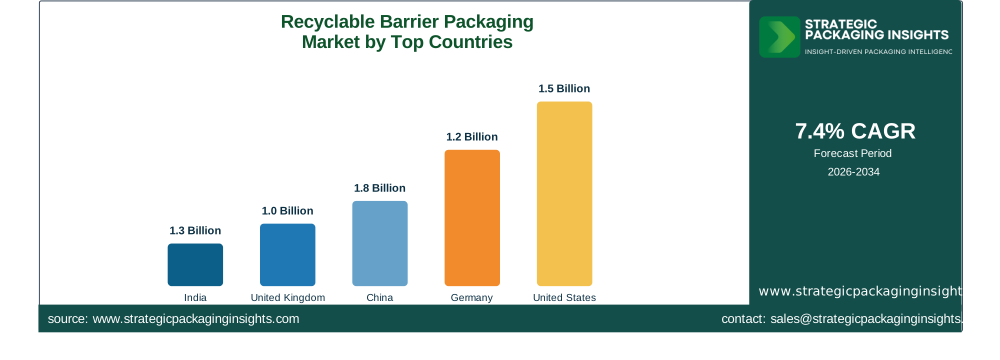
Germany is another key market for recyclable barrier packaging, with a strong focus on sustainability and innovation. The market in Germany is projected to grow at a CAGR of 5%, driven by the stringent environmental regulations and the increasing demand for eco-friendly packaging solutions. The country's well-established recycling infrastructure and the presence of leading packaging companies contribute to the market's growth prospects.
China is emerging as a significant market for recyclable barrier packaging, with a projected CAGR of 8%. The rapid growth of the e-commerce sector and the increasing demand for packaged goods are driving the market in this region. The Chinese government's initiatives to promote sustainable packaging and reduce plastic waste are also expected to boost the market growth. Additionally, the presence of a large consumer base and the increasing adoption of advanced packaging technologies contribute to the market's expansion.
In the United Kingdom, the recyclable barrier packaging market is expected to grow at a CAGR of 4%, driven by the increasing demand for sustainable packaging solutions and the government's initiatives to promote recycling. The presence of major market players and the high adoption of advanced packaging technologies further contribute to the market growth in this region. The UK's strong focus on sustainability and innovation is expected to create new opportunities for market players.
India is witnessing significant growth in the recyclable barrier packaging market, with a projected CAGR of 9%. The increasing demand for packaged goods and the growing awareness regarding environmental sustainability are driving the market in this region. The Indian government's initiatives to promote sustainable packaging and reduce plastic waste are also expected to boost the market growth. Additionally, the presence of a large consumer base and the increasing adoption of advanced packaging technologies contribute to the market's expansion.
Recyclable Barrier Packaging Market Segments Insights

Material Type Analysis
The material type segment in the Recyclable Barrier Packaging market is crucial as it determines the recyclability and barrier properties of the packaging. Mono-material PE and PP are gaining traction due to their ease of recyclability and cost-effectiveness. These materials are particularly popular in the food and beverage industry, where they are used to package snacks and beverages. The demand for paper-based barrier materials is also on the rise, driven by the increasing consumer preference for biodegradable and compostable packaging solutions. Recyclable coated films are being developed to offer enhanced barrier properties, such as moisture and oxygen resistance, while being fully recyclable. The development of innovative materials and technologies is expected to drive the growth of this segment.
Companies are investing heavily in research and development to create materials that offer improved barrier properties and recyclability. The integration of smart packaging technologies, such as QR codes and RFID tags, into recyclable barrier packaging is also expected to create new opportunities for market players. These advancements are expected to drive the adoption of recyclable barrier packaging across various industries, including food and beverage, pharmaceuticals, and personal care. The increasing demand for sustainable packaging solutions and the growing trend of circular economy are expected to create lucrative opportunities for market players in the coming years.
Application Analysis
The application segment of the Recyclable Barrier Packaging market is diverse, with significant demand from the food and beverage industry. Snacks, coffee, and pet food are major applications, driven by the increasing consumer demand for convenient and sustainable packaging solutions. The personal care and pharmaceuticals industries are also significant contributors to the market, as companies in these sectors are increasingly adopting recyclable barrier packaging to meet consumer demand and comply with environmental regulations. The rise of e-commerce and the increasing demand for packaged goods are expected to drive the demand for recyclable barrier packaging, as it offers superior protection and shelf-life extension for products during transportation and storage.
The integration of smart packaging technologies, such as QR codes and RFID tags, into recyclable barrier packaging is also expected to create new opportunities for market players. These technologies allow for enhanced product tracking and consumer engagement, which is particularly important in the food and beverage industry. The increasing demand for sustainable packaging solutions and the growing trend of circular economy are expected to create lucrative opportunities for market players in the coming years. Companies are investing heavily in research and development to create innovative materials and technologies that offer improved barrier properties and recyclability.
Packaging Type Analysis
The packaging type segment in the Recyclable Barrier Packaging market includes pouches, wraps, trays, and cartons. Pouches are the most popular packaging type, driven by their versatility and convenience. They are widely used in the food and beverage industry, where they offer superior protection and shelf-life extension for products. Wraps and trays are also gaining popularity, particularly in the personal care and pharmaceuticals industries, where they are used to package a wide range of products. Cartons are increasingly being used in the food and beverage industry, driven by the increasing consumer demand for sustainable packaging solutions.
The increasing demand for sustainable packaging solutions and the growing trend of circular economy are expected to create lucrative opportunities for market players in the coming years. Companies are investing heavily in research and development to create innovative materials and technologies that offer improved barrier properties and recyclability. The integration of smart packaging technologies, such as QR codes and RFID tags, into recyclable barrier packaging is also expected to create new opportunities for market players. These advancements are expected to drive the adoption of recyclable barrier packaging across various industries, including food and beverage, pharmaceuticals, and personal care.
End Use Analysis
The end-use segment of the Recyclable Barrier Packaging market includes FMCG, food brands, retailers, and packaging converters. The FMCG sector is the largest end-user of recyclable barrier packaging, driven by the increasing demand for sustainable packaging solutions. Food brands are also significant contributors to the market, as they are increasingly adopting recyclable barrier packaging to meet consumer demand and comply with environmental regulations. Retailers are also playing a crucial role in driving the demand for recyclable barrier packaging, as they are increasingly focusing on reducing their carbon footprint and promoting sustainable packaging solutions.
The increasing demand for sustainable packaging solutions and the growing trend of circular economy are expected to create lucrative opportunities for market players in the coming years. Companies are investing heavily in research and development to create innovative materials and technologies that offer improved barrier properties and recyclability. The integration of smart packaging technologies, such as QR codes and RFID tags, into recyclable barrier packaging is also expected to create new opportunities for market players. These advancements are expected to drive the adoption of recyclable barrier packaging across various industries, including food and beverage, pharmaceuticals, and personal care.
Recyclable Barrier Packaging Market Segments
The Recyclable Barrier Packaging market has been segmented on the basis ofBy Material Type
- Mono-material PE
- Mono-material PP
- Paper-based Barrier
- Recyclable Coated Films
By Application
- Snacks
- Coffee
- Pet Food
- Personal Care
- Pharmaceuticals
By Packaging Type
- Pouches
- Wraps
- Trays
- Cartons
By End Use
- FMCG
- Food Brands
- Retailers
- Packaging Converters
Region
- Asia Pacific
- North America
- Latin America
- Europe
- Middle East & Africa




