


Recovered Paper Market Outlook
The Recovered Paper market size was valued at USD 63.64 billion in 2025 and is anticipated to reach USD 94.58 billion by 2034, growing at a CAGR of 4.5% during the forecast period according to Strategic Packaging Insights. This growth is driven by increasing demand for sustainable packaging solutions and the rising awareness of environmental conservation. Companies like International Paper and Smurfit Westrock are leading the charge in adopting innovative recycling technologies to enhance the quality and efficiency of recovered paper products. The market's expansion is further supported by the growing trend of circular economy practices, which emphasize the reuse and recycling of materials to minimize waste and environmental impact.
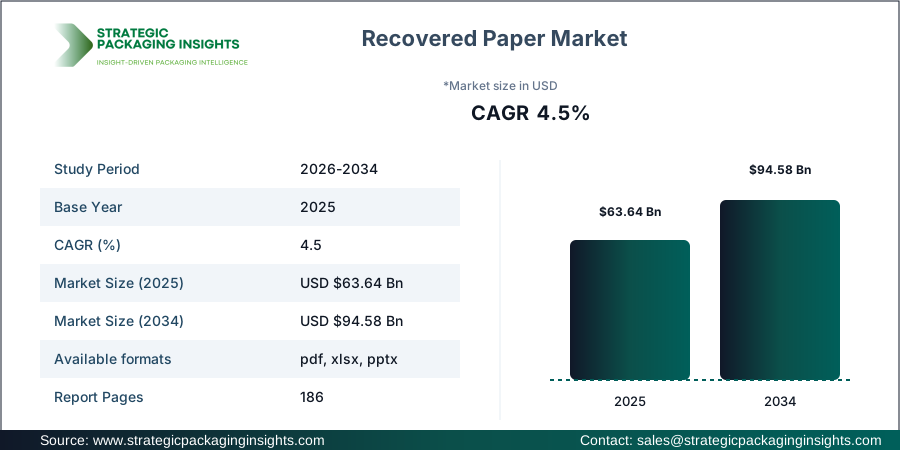
One of the most impactful drivers of the Recovered Paper market is the stringent government regulations aimed at reducing carbon footprints and promoting sustainable practices. For instance, various countries have implemented policies to encourage recycling and the use of eco-friendly materials, which has significantly boosted the demand for recovered paper. Additionally, the increasing consumer preference for sustainable products is compelling manufacturers to adopt recycled materials in their packaging solutions. This shift is not only enhancing the market's growth potential but also fostering innovation in product design and manufacturing processes, as companies strive to meet the evolving demands of environmentally conscious consumers.
Report Scope
| Attributes | Details |
| Report Title | Recovered Paper Market Size, Future Growth and Forecast 2034 |
| By Paper Grade | Old Corrugated Containers, Mixed Paper, Old Newspapers, High-Grade Deinked Paper |
| By Source | Commercial, Residential, Industrial |
| By Application | Containerboard, Tissue, Printing Paper, Packaging Paper |
| By End Use | Paper Mills, Packaging, Hygiene, Printing |
| Region | Asia Pacific, North America, Latin America, Europe, Middle East & Africa |
| Base Year | 2025 |
| Historic Period | 2018-2024 |
| Forecast Period | 2026-2034 |
| Number of Pages | 186 |
| Customization Available | Yes* |
Sustainability & Circular Economy Analysis
Sustainability initiatives and circular economy practices are profoundly influencing the packaging market, particularly in the realm of recovered paper. The emphasis on recyclable materials and reusable packaging is driving innovation in eco-friendly material development. Companies are investing in lightweight packaging solutions that reduce material usage and transportation costs, thereby minimizing their carbon footprint. This trend is not only enhancing the environmental credentials of packaging manufacturers but also aligning with consumer preferences for sustainable products. As a result, businesses are increasingly adopting waste reduction strategies and ESG initiatives to remain competitive in the market.
The influence of sustainability trends extends to packaging design and manufacturing processes. Companies are prioritizing the use of eco-friendly materials and implementing extended producer responsibility (EPR) programs to ensure the lifecycle management of their products. This shift is prompting significant investments in research and development to create innovative packaging solutions that meet regulatory compliance and consumer expectations. Moreover, the integration of sustainability into supply chain strategies is enhancing the long-term competitiveness of packaging manufacturers, as they seek to differentiate themselves in a crowded market.
Regulatory compliance is a critical factor driving the adoption of sustainable practices in the packaging industry. Governments worldwide are implementing stringent regulations to reduce environmental impact, compelling companies to innovate and adapt. This regulatory landscape is fostering a collaborative approach among stakeholders, including brand owners, converters, and retailers, to develop sustainable packaging solutions. As a result, the market is witnessing a surge in demand for recovered paper products, which are perceived as environmentally friendly alternatives to traditional packaging materials. This trend is expected to continue, as businesses recognize the importance of sustainability in achieving long-term success.
Packaging Value Chain & Supply Chain Analysis
The packaging value chain and supply chain ecosystem are integral to the performance and competitiveness of the recovered paper market. Raw material sourcing is a critical component, as the availability and quality of recovered paper directly impact production capabilities. Packaging converters and manufacturers play a pivotal role in transforming raw materials into finished products, utilizing advanced machinery and technologies to enhance efficiency and reduce waste. Logistics and distribution channels are equally important, ensuring that products reach consumers in a timely and cost-effective manner. Companies like DS Smith and Mondi are leveraging strategic partnerships to optimize their supply chains and enhance their market presence.
Supply chain efficiency is a key determinant of market performance, influencing both cost and quality. Companies are adopting innovative procurement strategies and inventory management practices to mitigate risks associated with raw material shortages and transportation disruptions. The focus on supply chain resilience is driving investments in localization and global sourcing, enabling businesses to adapt to changing market conditions and maintain a competitive edge. As a result, packaging manufacturers are better positioned to meet the growing demand for recovered paper products, while minimizing environmental impact and operational costs.
Strategic partnerships and collaborations are essential for enhancing supply chain capabilities and driving market growth. Companies are forming alliances with recycling networks and logistics providers to streamline operations and improve resource efficiency. This collaborative approach is fostering innovation and enabling businesses to develop sustainable packaging solutions that meet consumer expectations and regulatory requirements. As the market continues to evolve, the emphasis on supply chain optimization and strategic partnerships will remain a critical factor in achieving long-term success and competitiveness in the recovered paper industry.
Opportunities & Threats
The recovered paper market presents numerous opportunities for growth and innovation, driven by the increasing demand for sustainable packaging solutions. One significant opportunity lies in the development of advanced recycling technologies that enhance the quality and efficiency of recovered paper products. Companies are investing in research and development to create innovative solutions that meet the evolving needs of environmentally conscious consumers. Additionally, the growing trend of circular economy practices is opening new avenues for collaboration and partnership, as businesses seek to minimize waste and maximize resource efficiency.
Another opportunity in the recovered paper market is the expansion into emerging markets, where the demand for sustainable packaging solutions is rapidly increasing. As countries in Asia Pacific, Latin America, and Africa continue to develop, there is a growing need for eco-friendly materials and products. Companies that can effectively tap into these markets and establish a strong presence will be well-positioned to capitalize on the rising demand for recovered paper. Furthermore, the increasing consumer preference for sustainable products is driving innovation in packaging design and manufacturing processes, creating new opportunities for growth and differentiation.
Despite the numerous opportunities, the recovered paper market also faces several threats that could hinder its growth. One significant challenge is the volatility of raw material prices, which can impact production costs and profitability. Additionally, the market is subject to stringent regulatory requirements, which can increase compliance costs and limit operational flexibility. Companies must navigate these challenges by adopting innovative strategies and leveraging technology to enhance efficiency and reduce costs. Furthermore, the competitive landscape is becoming increasingly crowded, with new entrants and established players vying for market share. Businesses must differentiate themselves through innovation and sustainability to remain competitive in this dynamic market.
Drivers & Challenges
The recovered paper market is driven by several key factors, including the increasing demand for sustainable packaging solutions and the growing awareness of environmental conservation. Consumers are becoming more conscious of the environmental impact of their purchasing decisions, leading to a surge in demand for eco-friendly products. This trend is compelling manufacturers to adopt recycled materials in their packaging solutions, driving market growth. Additionally, government regulations aimed at reducing carbon footprints and promoting sustainable practices are further boosting the demand for recovered paper products.
Another significant driver of the recovered paper market is the advancement of recycling technologies, which are enhancing the quality and efficiency of recovered paper products. Companies are investing in research and development to create innovative solutions that meet the evolving needs of environmentally conscious consumers. This focus on innovation is fostering collaboration and partnership among stakeholders, as businesses seek to develop sustainable packaging solutions that meet regulatory compliance and consumer expectations. As a result, the market is witnessing a surge in demand for recovered paper products, which are perceived as environmentally friendly alternatives to traditional packaging materials.
Despite the positive drivers, the recovered paper market faces several challenges that could hinder its growth. One significant challenge is the volatility of raw material prices, which can impact production costs and profitability. Additionally, the market is subject to stringent regulatory requirements, which can increase compliance costs and limit operational flexibility. Companies must navigate these challenges by adopting innovative strategies and leveraging technology to enhance efficiency and reduce costs. Furthermore, the competitive landscape is becoming increasingly crowded, with new entrants and established players vying for market share. Businesses must differentiate themselves through innovation and sustainability to remain competitive in this dynamic market.
Market Share Analysis
The competitive landscape of the recovered paper market is characterized by the presence of several key players, each striving to enhance their market share through innovation and strategic partnerships. Companies like International Paper, Smurfit Westrock, and DS Smith are leading the market, leveraging their extensive experience and expertise to develop sustainable packaging solutions that meet the evolving needs of consumers. These companies are investing heavily in research and development to create innovative products that align with the growing demand for eco-friendly materials.
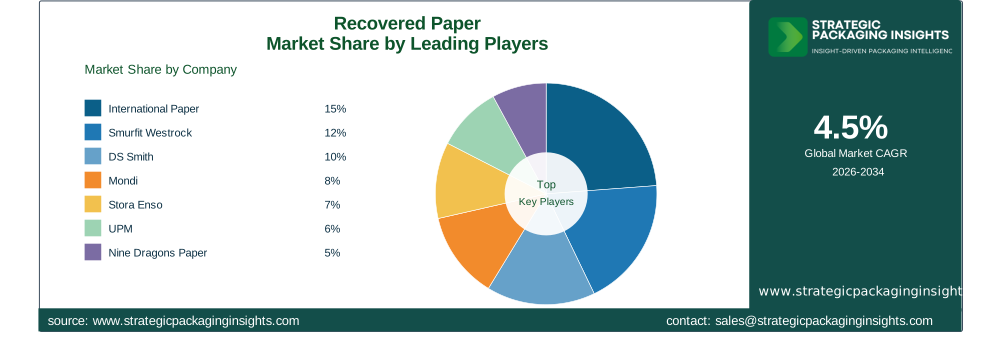
International Paper is a prominent player in the recovered paper market, known for its commitment to sustainability and innovation. The company is focused on developing advanced recycling technologies that enhance the quality and efficiency of recovered paper products. Smurfit Westrock, another key player, is leveraging its extensive network of recycling facilities to optimize its supply chain and reduce environmental impact. DS Smith is also making significant strides in the market, with a strong emphasis on circular economy practices and sustainable packaging solutions.
Mondi and Stora Enso are other notable players in the recovered paper market, each with a strong focus on sustainability and innovation. Mondi is investing in research and development to create eco-friendly packaging solutions that meet the evolving needs of consumers. Stora Enso, on the other hand, is leveraging its extensive experience in the paper and packaging industry to develop innovative products that align with the growing demand for sustainable materials. Both companies are committed to reducing their carbon footprint and enhancing their environmental credentials.
UPM, Nine Dragons Paper, and Lee & Man Paper are also key players in the recovered paper market, each with a unique approach to sustainability and innovation. UPM is focused on developing advanced recycling technologies that enhance the quality and efficiency of recovered paper products. Nine Dragons Paper is leveraging its extensive network of recycling facilities to optimize its supply chain and reduce environmental impact. Lee & Man Paper, on the other hand, is investing in research and development to create innovative packaging solutions that meet the evolving needs of consumers. These companies are well-positioned to capitalize on the growing demand for recovered paper products and enhance their market share.
Key Highlights
- Market Size: The recovered paper market was valued at USD 63.64 billion in 2025 and is projected to reach USD 94.58 billion by 2034.
- Growth Rate: The market is expected to grow at a CAGR of 4.5% during the forecast period.
- Leading Companies: Key players include International Paper, Smurfit Westrock, DS Smith, and Mondi.
- Regional Growth: Asia Pacific is anticipated to witness significant growth due to increasing demand for sustainable packaging solutions.
- Innovation Focus: Companies are investing in advanced recycling technologies to enhance product quality and efficiency.
- Consumer Preferences: There is a growing demand for eco-friendly packaging solutions among environmentally conscious consumers.
- Regulatory Impact: Stringent government regulations are driving the adoption of sustainable practices in the packaging industry.
Recovered Paper Market Segments Insights

Paper Grade Analysis
The paper grade segment of the recovered paper market is crucial, as it determines the quality and application of the recycled material. Old Corrugated Containers (OCC) are the most recycled paper grade, widely used in the production of containerboard and packaging materials. The demand for OCC is driven by the increasing need for sustainable packaging solutions, as companies seek to reduce their environmental impact. Mixed Paper, another significant sub-segment, is used in the production of tissue and printing paper. The versatility of mixed paper makes it a valuable resource for manufacturers looking to diversify their product offerings and meet the growing demand for eco-friendly materials.
Old Newspapers (ONP) and High-Grade Deinked Paper are also important sub-segments within the paper grade category. ONP is primarily used in the production of newsprint and other printing applications, while high-grade deinked paper is used in the production of high-quality printing and writing paper. The demand for these paper grades is driven by the increasing focus on sustainability and the need for high-quality recycled materials. Companies are investing in advanced recycling technologies to enhance the quality and efficiency of these paper grades, ensuring they meet the evolving needs of consumers and regulatory requirements.
Source Analysis
The source segment of the recovered paper market is categorized into commercial, residential, and industrial sources. Commercial sources, such as retail stores and offices, are the largest contributors to the recovered paper supply chain. The increasing focus on sustainability and waste reduction in commercial settings is driving the demand for recycled paper products. Residential sources, including households and small businesses, are also significant contributors, as consumers become more conscious of their environmental impact and seek to recycle more materials.
Industrial sources, such as manufacturing facilities and warehouses, play a crucial role in the recovered paper market. These sources generate large volumes of waste paper, which can be recycled and repurposed into new products. The demand for industrially sourced recovered paper is driven by the need for high-quality materials that meet the stringent requirements of various applications. Companies are investing in advanced recycling technologies to enhance the efficiency and quality of industrially sourced recovered paper, ensuring it meets the evolving needs of consumers and regulatory requirements.
Application Analysis
The application segment of the recovered paper market is diverse, encompassing containerboard, tissue, printing paper, and packaging paper. Containerboard is the largest application segment, driven by the increasing demand for sustainable packaging solutions. The use of recovered paper in containerboard production reduces the environmental impact of packaging materials and aligns with the growing consumer preference for eco-friendly products. Tissue and printing paper are also significant application segments, as companies seek to diversify their product offerings and meet the evolving needs of consumers.
Packaging paper is another important application segment, driven by the increasing demand for sustainable packaging solutions in various industries. The use of recovered paper in packaging paper production reduces the environmental impact of packaging materials and aligns with the growing consumer preference for eco-friendly products. Companies are investing in advanced recycling technologies to enhance the quality and efficiency of recovered paper products, ensuring they meet the evolving needs of consumers and regulatory requirements.
End Use Analysis
The end-use segment of the recovered paper market is categorized into paper mills, packaging, hygiene, and printing. Paper mills are the largest end-use segment, driven by the increasing demand for high-quality recycled materials. The use of recovered paper in paper mills reduces the environmental impact of paper production and aligns with the growing consumer preference for eco-friendly products. Packaging is another significant end-use segment, as companies seek to reduce their environmental impact and meet the evolving needs of consumers.
Hygiene and printing are also important end-use segments, driven by the increasing demand for sustainable products in these industries. The use of recovered paper in hygiene and printing applications reduces the environmental impact of these products and aligns with the growing consumer preference for eco-friendly materials. Companies are investing in advanced recycling technologies to enhance the quality and efficiency of recovered paper products, ensuring they meet the evolving needs of consumers and regulatory requirements.
Recovered Paper Market Segments
The Recovered Paper market has been segmented on the basis ofBy Paper Grade
- Old Corrugated Containers
- Mixed Paper
- Old Newspapers
- High-Grade Deinked Paper
By Source
- Commercial
- Residential
- Industrial
By Application
- Containerboard
- Tissue
- Printing Paper
- Packaging Paper
By End Use
- Paper Mills
- Packaging
- Hygiene
- Printing
Region
- Asia Pacific
- North America
- Latin America
- Europe
- Middle East & Africa




