


Protein-Coating Line Market Outlook
The Protein-Coating Line market was valued at $498.60 million in 2025 and is projected to reach $1.15 billion by 2034, growing at a CAGR of 9.7% during the forecast period 2026-2034. This market is witnessing significant growth due to the increasing demand for sustainable and eco-friendly packaging solutions. The shift towards protein-based coatings is driven by the need to reduce plastic usage and enhance the biodegradability of packaging materials. The market is also benefiting from advancements in coating technologies that improve the efficiency and effectiveness of protein coatings, making them more appealing to a wide range of industries, including food packaging and paper coatings.
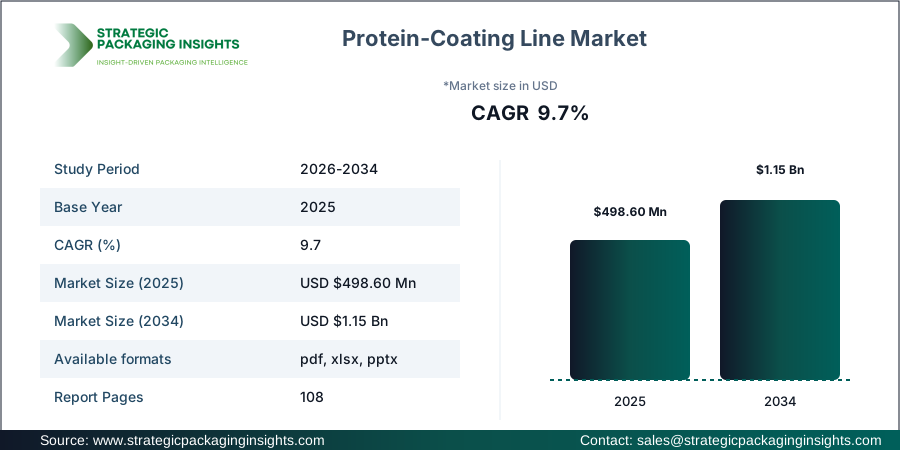
Despite the promising growth prospects, the Protein-Coating Line market faces several challenges. Regulatory constraints related to food safety and environmental standards can pose significant hurdles for market players. Additionally, the high cost of protein-based raw materials compared to conventional coatings can limit market expansion. However, ongoing research and development activities aimed at reducing production costs and improving the performance of protein coatings are expected to mitigate these challenges. The market also presents substantial growth potential in emerging economies where the demand for sustainable packaging solutions is on the rise.
Report Scope
| Attributes | Details |
| Report Title | Protein-Coating Line Market Size, Future Growth and Forecast 2034 |
| By Machine Type | Roll Coating Lines, Spray Coating Lines, Curtain Coating Lines |
| By Application | Barrier Coatings, Edible Coatings, Food Packaging, Paper Coatings |
| By Coating Type | Protein-Based, Bio-Based, Water-Based |
| By End Use | Packaging Converters, Food Processors, Paper Mills |
| Region | Asia Pacific, North America, Latin America, Europe, Middle East & Africa |
| Base Year | 2025 |
| Historic Period | 2018-2024 |
| Forecast Period | 2026-2034 |
| Number of Pages | 108 |
| Customization Available | Yes* |
Opportunities & Threats
The Protein-Coating Line market offers numerous opportunities for growth, particularly in the realm of sustainable packaging. As consumers and industries alike become more environmentally conscious, the demand for biodegradable and eco-friendly packaging solutions is on the rise. Protein coatings, being derived from natural sources, align perfectly with this trend, offering a viable alternative to traditional plastic coatings. This shift is further supported by government regulations and policies aimed at reducing plastic waste, creating a favorable environment for the adoption of protein-based coatings. Additionally, advancements in coating technologies are opening up new applications and markets for protein coatings, further driving their demand.
Another significant opportunity lies in the food industry, where protein coatings are increasingly being used to enhance the shelf life and safety of food products. Edible coatings, in particular, are gaining traction as they offer a protective barrier that can extend the freshness of perishable goods. This is particularly relevant in the context of global food supply chains, where maintaining product quality during transportation and storage is crucial. As the food industry continues to expand and evolve, the demand for innovative packaging solutions like protein coatings is expected to grow, presenting lucrative opportunities for market players.
However, the market is not without its threats. One of the primary challenges is the high cost of protein-based raw materials, which can make these coatings less competitive compared to conventional options. Additionally, the market is subject to stringent regulatory requirements, particularly in the food industry, where safety and compliance are paramount. These regulations can pose significant barriers to entry for new players and may require substantial investment in research and development to ensure compliance. Furthermore, the market faces competition from other sustainable coating alternatives, such as bio-based and water-based coatings, which could limit the growth potential of protein coatings.
Drivers & Challenges
The Protein-Coating Line market is primarily driven by the increasing demand for sustainable and eco-friendly packaging solutions. As environmental concerns continue to rise, industries are seeking alternatives to traditional plastic coatings, which are known for their negative impact on the environment. Protein coatings, derived from renewable sources, offer a biodegradable and sustainable option, making them highly attractive to environmentally conscious consumers and businesses. This trend is further supported by government regulations and initiatives aimed at reducing plastic waste and promoting sustainable practices, which are driving the adoption of protein-based coatings across various industries.
Technological advancements in coating processes are also playing a crucial role in driving the market. Innovations in coating technologies have led to the development of more efficient and effective protein coatings, which offer improved performance and durability. These advancements are enabling the use of protein coatings in a wider range of applications, from food packaging to paper coatings, thereby expanding the market's reach. Additionally, the growing focus on research and development activities aimed at enhancing the properties of protein coatings is expected to further boost market growth, as it leads to the creation of new and improved products that meet the evolving needs of consumers and industries.
Despite the positive drivers, the Protein-Coating Line market faces several challenges that could hinder its growth. One of the main challenges is the high cost of protein-based raw materials, which can make these coatings less competitive compared to conventional options. This cost factor can be a significant barrier for small and medium-sized enterprises looking to adopt protein coatings. Additionally, the market is subject to stringent regulatory requirements, particularly in the food industry, where safety and compliance are critical. These regulations can pose significant barriers to entry for new players and may require substantial investment in research and development to ensure compliance. Furthermore, the market faces competition from other sustainable coating alternatives, such as bio-based and water-based coatings, which could limit the growth potential of protein coatings.
Market Share Analysis
The Protein-Coating Line market is characterized by a competitive landscape with several key players dominating the market. Companies such as Bühler, Valmet, Voith, Andritz, Kroenert, Dürr, Nordson, Coatema, Bobst, and Davis-Standard are some of the major players in this market. These companies are actively engaged in research and development activities to enhance their product offerings and maintain their competitive edge. The market is also witnessing strategic collaborations and partnerships among key players to expand their market presence and strengthen their distribution networks.
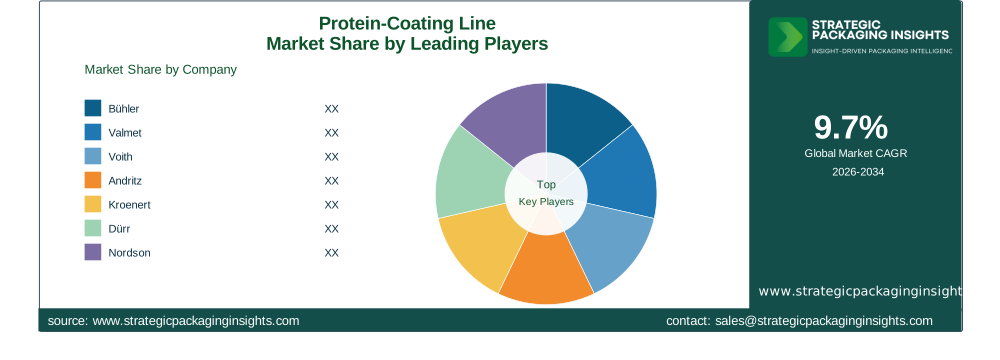
Bühler is a leading player in the Protein-Coating Line market, known for its innovative coating solutions and strong focus on sustainability. The company has a significant market share and is continuously investing in research and development to enhance its product portfolio. Valmet, another major player, is recognized for its advanced coating technologies and comprehensive service offerings. The company has a strong presence in the market and is focused on expanding its customer base through strategic partnerships and collaborations.
Voith and Andritz are also prominent players in the Protein-Coating Line market, known for their high-quality coating solutions and extensive industry experience. These companies have a strong market presence and are actively involved in developing new and innovative products to meet the evolving needs of their customers. Kroenert and Dürr are other key players in the market, offering a wide range of coating solutions and services to various industries. These companies are focused on expanding their market presence through strategic acquisitions and partnerships.
Nordson, Coatema, Bobst, and Davis-Standard are also significant players in the Protein-Coating Line market, known for their innovative coating technologies and strong customer focus. These companies are continuously investing in research and development to enhance their product offerings and maintain their competitive edge. The market is characterized by intense competition, with key players focusing on product innovation, strategic partnerships, and mergers and acquisitions to strengthen their market position and expand their customer base.
Key Highlights
- The Protein-Coating Line market is projected to grow at a CAGR of 9.7% from 2026 to 2034.
- Increasing demand for sustainable and eco-friendly packaging solutions is driving market growth.
- Advancements in coating technologies are expanding the application scope of protein coatings.
- High cost of protein-based raw materials poses a challenge to market growth.
- Stringent regulatory requirements in the food industry are a significant barrier to entry.
- Key players are focusing on research and development to enhance their product offerings.
- Strategic partnerships and collaborations are common among market players to expand their market presence.
- The market is witnessing competition from other sustainable coating alternatives, such as bio-based and water-based coatings.
- Emerging economies present significant growth opportunities for market players.
- Government regulations and initiatives aimed at reducing plastic waste are supporting market growth.
Top Countries Insights
In the Protein-Coating Line market, the United States is a leading player, with a market size of approximately $250 million and a CAGR of 8%. The country's strong focus on sustainability and eco-friendly packaging solutions is driving the demand for protein coatings. Government regulations aimed at reducing plastic waste and promoting sustainable practices are further supporting market growth. Additionally, the presence of key market players and ongoing research and development activities are contributing to the market's expansion.
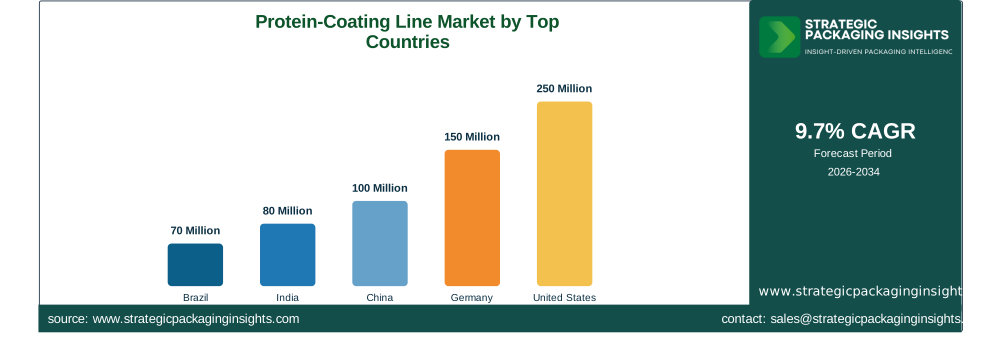
Germany is another significant market for protein coatings, with a market size of around $150 million and a CAGR of 7%. The country's strong manufacturing base and focus on innovation are driving the demand for advanced coating solutions. Germany's stringent environmental regulations and commitment to sustainability are also supporting the adoption of protein coatings. The presence of leading market players and a well-established supply chain further enhance the market's growth prospects.
China is emerging as a key market for protein coatings, with a market size of approximately $100 million and a CAGR of 12%. The country's rapid industrialization and growing focus on sustainable packaging solutions are driving the demand for protein coatings. Government initiatives aimed at reducing plastic waste and promoting eco-friendly practices are further supporting market growth. Additionally, the presence of a large consumer base and increasing investments in research and development are contributing to the market's expansion.
India is also witnessing significant growth in the Protein-Coating Line market, with a market size of around $80 million and a CAGR of 10%. The country's growing food processing industry and increasing demand for sustainable packaging solutions are driving the adoption of protein coatings. Government policies aimed at promoting sustainable practices and reducing plastic waste are further supporting market growth. Additionally, the presence of a large and growing consumer base presents significant growth opportunities for market players.
Brazil is another important market for protein coatings, with a market size of approximately $70 million and a CAGR of 9%. The country's strong agricultural base and focus on sustainable practices are driving the demand for protein coatings. Government initiatives aimed at promoting eco-friendly packaging solutions and reducing plastic waste are further supporting market growth. Additionally, the presence of key market players and ongoing research and development activities are contributing to the market's expansion.
Protein-Coating Line Market Segments Insights

Machine Type Analysis
The Protein-Coating Line market is segmented by machine type into roll coating lines, spray coating lines, and curtain coating lines. Roll coating lines are widely used due to their efficiency and ability to provide uniform coatings. These machines are particularly popular in the food packaging industry, where consistent and high-quality coatings are essential. Spray coating lines, on the other hand, offer flexibility and are suitable for a variety of applications, including barrier and edible coatings. Curtain coating lines are known for their precision and are often used in applications where a high degree of accuracy is required. The demand for these machines is driven by the need for efficient and cost-effective coating solutions across various industries.
Roll coating lines are expected to dominate the market due to their widespread use and versatility. These machines are capable of handling a wide range of coating materials and are suitable for both small and large-scale production. The growing demand for sustainable packaging solutions is further driving the adoption of roll coating lines, as they are capable of applying protein-based coatings efficiently. Spray coating lines are also gaining traction, particularly in the food industry, where they are used to apply edible coatings that enhance the shelf life and safety of food products. Curtain coating lines, while less common, are favored in applications where precision and accuracy are paramount.
Application Analysis
The Protein-Coating Line market is segmented by application into barrier coatings, edible coatings, food packaging, and paper coatings. Barrier coatings are used to provide a protective layer that prevents moisture and oxygen from penetrating the packaging, thereby extending the shelf life of the product. Edible coatings are gaining popularity in the food industry, where they are used to enhance the freshness and safety of perishable goods. Food packaging is a major application area for protein coatings, as they offer a sustainable and eco-friendly alternative to traditional plastic coatings. Paper coatings are also an important segment, as they provide a protective layer that enhances the durability and appearance of paper products.
The demand for barrier coatings is driven by the need for packaging solutions that can extend the shelf life of products and reduce food waste. Edible coatings are gaining traction due to their ability to enhance the safety and quality of food products. The growing focus on sustainability and the need to reduce plastic usage are driving the demand for protein coatings in the food packaging industry. Paper coatings are also witnessing growth, as they offer a sustainable alternative to traditional coatings and enhance the performance of paper products. The increasing demand for eco-friendly packaging solutions is expected to drive the growth of these application segments.
Coating Type Analysis
The Protein-Coating Line market is segmented by coating type into protein-based, bio-based, and water-based coatings. Protein-based coatings are derived from natural sources and offer a sustainable and biodegradable alternative to traditional coatings. These coatings are gaining popularity due to their eco-friendly properties and ability to enhance the performance of packaging materials. Bio-based coatings are also gaining traction, as they are derived from renewable sources and offer similar benefits to protein-based coatings. Water-based coatings are known for their low environmental impact and are widely used in applications where sustainability is a priority.
The demand for protein-based coatings is driven by the growing focus on sustainability and the need to reduce plastic usage. These coatings offer a biodegradable and eco-friendly alternative to traditional coatings, making them highly attractive to environmentally conscious consumers and businesses. Bio-based coatings are also gaining popularity, as they offer similar benefits and are derived from renewable sources. Water-based coatings are favored in applications where low environmental impact is a priority, and they are widely used in the food packaging and paper industries. The increasing demand for sustainable and eco-friendly coating solutions is expected to drive the growth of these coating type segments.
End Use Analysis
The Protein-Coating Line market is segmented by end use into packaging converters, food processors, and paper mills. Packaging converters are a major end-use segment, as they are responsible for converting raw materials into finished packaging products. The demand for protein coatings in this segment is driven by the need for sustainable and eco-friendly packaging solutions. Food processors are also a significant end-use segment, as they use protein coatings to enhance the shelf life and safety of food products. Paper mills are another important segment, as they use protein coatings to enhance the performance and durability of paper products.
The demand for protein coatings in the packaging converters segment is driven by the growing focus on sustainability and the need to reduce plastic usage. Food processors are increasingly adopting protein coatings to enhance the safety and quality of their products, as these coatings offer a protective barrier that extends the shelf life of perishable goods. Paper mills are also witnessing growth in the demand for protein coatings, as they offer a sustainable alternative to traditional coatings and enhance the performance of paper products. The increasing demand for eco-friendly packaging solutions is expected to drive the growth of these end-use segments.
Protein-Coating Line Market Segments
The Protein-Coating Line market has been segmented on the basis ofBy Machine Type
- Roll Coating Lines
- Spray Coating Lines
- Curtain Coating Lines
By Application
- Barrier Coatings
- Edible Coatings
- Food Packaging
- Paper Coatings
By Coating Type
- Protein-Based
- Bio-Based
- Water-Based
By End Use
- Packaging Converters
- Food Processors
- Paper Mills
Region
- Asia Pacific
- North America
- Latin America
- Europe
- Middle East & Africa




