


Printing Machinery Market Outlook
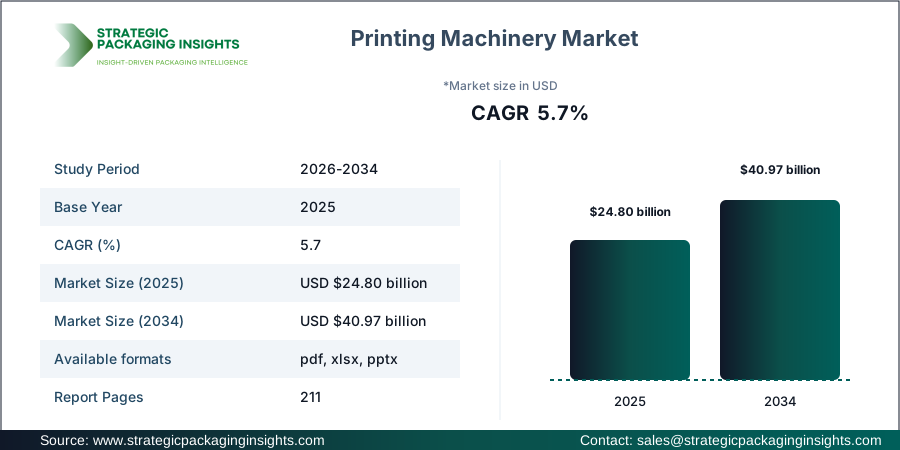
The Printing Machinery market was valued at $24.80 billion in 2025 and is projected to reach $40.97 billion by 2034, growing at a CAGR of 5.7% during the forecast period 2026-2034. This market is experiencing significant growth driven by technological advancements and the increasing demand for high-quality printing solutions across various industries. The shift towards digital printing technologies, which offer faster turnaround times and cost-effective solutions, is a major factor contributing to the market's expansion. Additionally, the growing packaging industry, which requires advanced printing machinery for high-volume production, is further propelling market growth.
Despite the promising growth prospects, the printing machinery market faces certain challenges. Regulatory constraints related to environmental concerns and the high initial investment required for advanced machinery are some of the key restraining factors. However, the market holds substantial growth potential, particularly in emerging economies where industrialization and urbanization are driving demand for printed materials. The increasing adoption of eco-friendly printing technologies and the development of innovative machinery with enhanced capabilities are expected to create new opportunities for market players.
Report Scope
| Attributes | Details |
| Report Title | Printing Machinery Market Size, Future Growth and Forecast 2034 |
| Technology | Offset, Digital, Screen Printing |
| End Use | Commercial Printing, Labels, Packaging |
| Region | Asia Pacific, North America, Latin America, Europe, Middle East & Africa |
| Base Year | 2025 |
| Historic Period | 2018-2024 |
| Forecast Period | 2026-2034 |
| Number of Pages | 211 |
| Customization Available | Yes* |
Opportunities & Threats
The printing machinery market presents numerous opportunities, particularly with the rise of digital printing technologies. Digital printing offers significant advantages over traditional methods, including reduced setup times, lower costs for short runs, and the ability to print on demand. This has opened up new possibilities for customization and personalization in printing, catering to the growing consumer demand for unique and tailored products. Additionally, the expansion of e-commerce and online retailing has increased the need for printed packaging materials, further driving demand for advanced printing machinery. The development of eco-friendly printing solutions, such as water-based inks and energy-efficient machines, also presents opportunities for companies to differentiate themselves in the market.
Another opportunity lies in the growing demand for printed electronics, which require specialized printing machinery. This emerging field offers potential for significant growth as industries such as automotive, healthcare, and consumer electronics increasingly incorporate printed electronic components into their products. The ability to print flexible and lightweight electronic circuits using advanced printing machinery is expected to drive innovation and create new revenue streams for market players. Furthermore, the increasing focus on sustainability and the circular economy is encouraging companies to invest in machinery that supports recycling and waste reduction, providing additional opportunities for growth.
However, the market also faces threats, particularly from the rapid pace of technological change. Companies must continuously innovate and adapt to stay competitive, which can be challenging given the high costs associated with research and development. Additionally, the market is highly competitive, with numerous players vying for market share. This intense competition can lead to price wars and margin pressures, posing a threat to profitability. Furthermore, the ongoing shift towards digital media and the decline in demand for traditional print products, such as newspapers and magazines, could negatively impact the market.
Drivers & Challenges
One of the primary drivers of the printing machinery market is the increasing demand for high-quality printed materials across various industries. The packaging industry, in particular, is a major contributor to market growth, as companies seek advanced printing solutions to enhance the visual appeal and functionality of their packaging. The rise of e-commerce and online retailing has further fueled demand for printed packaging materials, as businesses require innovative and eye-catching designs to attract consumers. Additionally, the growing trend of customization and personalization in printing is driving demand for digital printing technologies, which offer greater flexibility and efficiency compared to traditional methods.
Technological advancements are another key driver of the market. The development of digital printing technologies, such as inkjet and laser printing, has revolutionized the industry by offering faster turnaround times, lower costs, and the ability to print on a wide range of substrates. These advancements have enabled companies to meet the growing demand for short-run and on-demand printing, catering to the needs of various industries, including advertising, publishing, and packaging. Furthermore, the increasing adoption of eco-friendly printing solutions, such as water-based inks and energy-efficient machines, is driving market growth as companies seek to reduce their environmental impact and comply with regulatory requirements.
Despite these drivers, the printing machinery market faces several challenges. One of the main challenges is the high initial investment required for advanced printing machinery, which can be a barrier for small and medium-sized enterprises. Additionally, the market is subject to regulatory constraints related to environmental concerns, such as emissions and waste management. Companies must invest in eco-friendly technologies and practices to comply with these regulations, which can increase operational costs. Furthermore, the rapid pace of technological change requires companies to continuously innovate and adapt to stay competitive, which can be challenging given the high costs associated with research and development.
Market Share Analysis
The competitive landscape of the printing machinery market is characterized by the presence of several key players, each vying for market share through innovation, strategic partnerships, and mergers and acquisitions. Companies such as HP, Canon, and Epson are leading the market with their advanced printing solutions and strong brand presence. These companies have invested heavily in research and development to introduce cutting-edge technologies and expand their product portfolios. Additionally, they have established extensive distribution networks to reach a wide customer base and enhance their market presence.
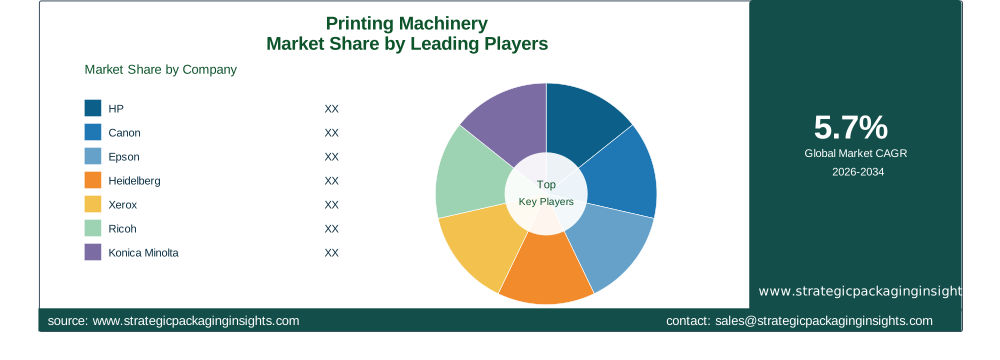
Heidelberg, a prominent player in the printing machinery market, is known for its high-quality offset printing machines and comprehensive service offerings. The company has a strong focus on sustainability and has developed eco-friendly printing solutions to meet the growing demand for environmentally responsible products. Xerox, another major player, has a diverse product portfolio that includes digital printing presses and multifunction printers. The company has leveraged its expertise in digital technology to offer innovative solutions that cater to the evolving needs of the market.
Ricoh and Konica Minolta are also significant players in the market, offering a range of printing solutions for various industries. These companies have focused on expanding their digital printing capabilities and have introduced advanced technologies to enhance print quality and efficiency. Agfa, known for its expertise in imaging and printing technologies, has a strong presence in the market with its innovative solutions for commercial and industrial printing applications. Roland and Fuji are also key players, offering a wide range of printing machinery for different applications, including signage, textiles, and packaging.
Overall, the printing machinery market is highly competitive, with companies continuously striving to innovate and differentiate themselves through product development and strategic collaborations. The market is characterized by rapid technological advancements, which require companies to invest in research and development to stay ahead of the competition. Additionally, the increasing focus on sustainability and the demand for eco-friendly printing solutions are driving companies to develop new technologies and practices to meet regulatory requirements and consumer expectations.
Key Highlights
- The printing machinery market is projected to grow from $24.80 billion in 2025 to $40.97 billion by 2034, at a CAGR of 5.7%.
- Digital printing technologies are driving market growth due to their cost-effectiveness and flexibility.
- The packaging industry is a major contributor to market demand, driven by the rise of e-commerce.
- Eco-friendly printing solutions are gaining traction as companies seek to reduce their environmental impact.
- Technological advancements, such as inkjet and laser printing, are revolutionizing the industry.
- High initial investment and regulatory constraints are key challenges for market players.
- Key players include HP, Canon, Epson, Heidelberg, Xerox, Ricoh, Konica Minolta, Agfa, Roland, and Fuji.
- The market is characterized by intense competition and rapid technological change.
- Customization and personalization in printing are emerging trends driving demand for digital solutions.
- Emerging markets offer significant growth potential due to industrialization and urbanization.
Top Countries Insights
In the printing machinery market, the United States stands out as a key player, with a market size of approximately $8 billion and a CAGR of 4%. The country's strong industrial base and advanced technological infrastructure drive demand for high-quality printing solutions. The presence of major companies like HP and Xerox further strengthens the market. However, regulatory challenges related to environmental standards pose a hurdle for growth.
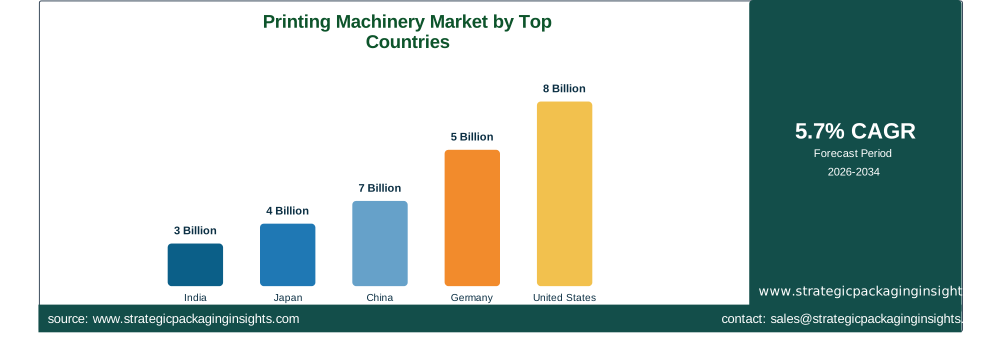
Germany, with a market size of around $5 billion and a CAGR of 3%, is another significant player in the printing machinery market. The country's strong manufacturing sector and focus on innovation drive demand for advanced printing technologies. The presence of leading companies like Heidelberg and Agfa contributes to the market's growth. However, the high cost of advanced machinery and regulatory constraints related to emissions are challenges for the market.
China, with a market size of approximately $7 billion and a CAGR of 6%, is a rapidly growing market for printing machinery. The country's expanding manufacturing sector and increasing demand for printed packaging materials drive market growth. The government's focus on industrialization and technological advancement further supports the market. However, the market faces challenges related to environmental regulations and the need for eco-friendly solutions.
Japan, with a market size of around $4 billion and a CAGR of 5%, is a key player in the printing machinery market. The country's strong technological base and focus on innovation drive demand for advanced printing solutions. The presence of major companies like Canon and Epson further strengthens the market. However, the market faces challenges related to high operational costs and regulatory constraints.
India, with a market size of approximately $3 billion and a CAGR of 7%, is an emerging market for printing machinery. The country's growing industrial sector and increasing demand for printed materials drive market growth. The government's focus on industrialization and infrastructure development further supports the market. However, the market faces challenges related to the high cost of advanced machinery and the need for skilled labor.
Printing Machinery Market Segments Insights

Technology Analysis
The printing machinery market is segmented by technology into offset, digital, and screen printing. Offset printing remains a dominant segment due to its high-quality output and cost-effectiveness for large-volume printing. It is widely used in commercial printing and packaging applications, where consistency and precision are crucial. However, the digital printing segment is rapidly gaining traction, driven by the demand for short-run and on-demand printing solutions. Digital printing offers significant advantages, including reduced setup times, lower costs for small print runs, and the ability to print on a wide range of substrates. This segment is expected to witness substantial growth as industries increasingly adopt digital technologies to meet evolving consumer demands.
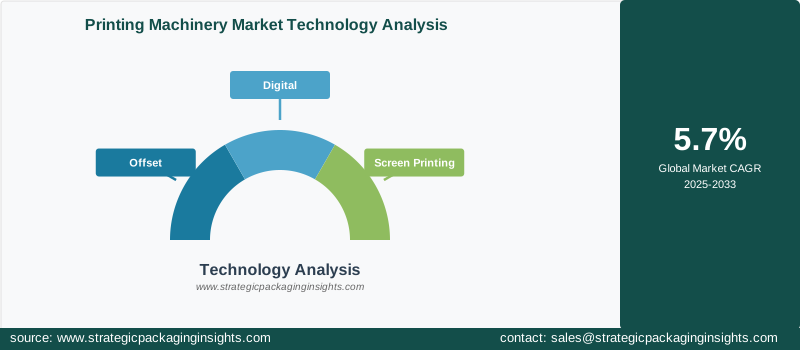
Screen printing, although a smaller segment, continues to hold relevance in specific applications such as textiles and signage. Its ability to print on various materials and produce vibrant colors makes it a preferred choice for certain industries. However, the segment faces challenges from digital printing technologies, which offer greater flexibility and efficiency. Overall, the technology segment of the printing machinery market is characterized by rapid advancements and innovation, with companies continuously developing new solutions to enhance print quality, speed, and sustainability.
End Use Analysis
The printing machinery market is also segmented by end use into commercial printing, labels, and packaging. The commercial printing segment remains a significant contributor to market demand, driven by the need for high-quality printed materials in advertising, publishing, and corporate communications. The rise of digital media has led to a decline in demand for traditional print products, such as newspapers and magazines, but the segment continues to evolve with the adoption of digital printing technologies that offer greater flexibility and efficiency.
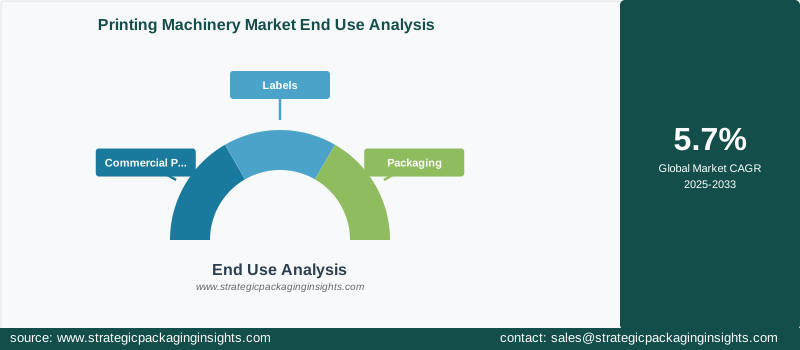
The labels segment is experiencing growth due to the increasing demand for product labeling in various industries, including food and beverage, pharmaceuticals, and consumer goods. The need for high-quality, durable labels that can withstand various environmental conditions is driving demand for advanced printing machinery. The packaging segment is a major driver of market growth, fueled by the rise of e-commerce and the need for innovative and eye-catching packaging designs. Companies are investing in advanced printing solutions to enhance the visual appeal and functionality of their packaging, further propelling demand for printing machinery.
Region Analysis
The printing machinery market is segmented by region into Asia Pacific, North America, Latin America, Europe, and Middle East & Africa. Asia Pacific is a key growth region, driven by the expanding manufacturing sector and increasing demand for printed materials in countries like China and India. The region's focus on industrialization and technological advancement supports market growth, although challenges related to environmental regulations and the need for eco-friendly solutions persist.
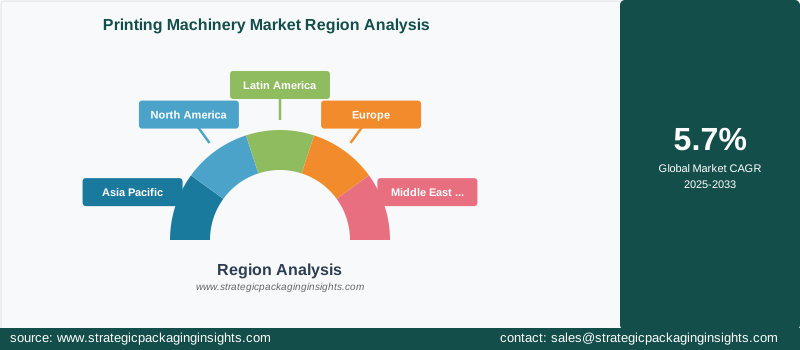
North America and Europe are mature markets with a strong presence of major companies and advanced technological infrastructure. These regions continue to drive demand for high-quality printing solutions, although regulatory constraints and high operational costs pose challenges. Latin America and Middle East & Africa are emerging markets with significant growth potential, driven by industrialization and urbanization. However, these regions face challenges related to infrastructure development and the availability of skilled labor.
Printing Machinery Market Segments
The Printing Machinery market has been segmented on the basis ofTechnology
- Offset
- Digital
- Screen Printing
End Use
- Commercial Printing
- Labels
- Packaging
Region
- Asia Pacific
- North America
- Latin America
- Europe
- Middle East & Africa




