


Printer Ribbon Market Outlook
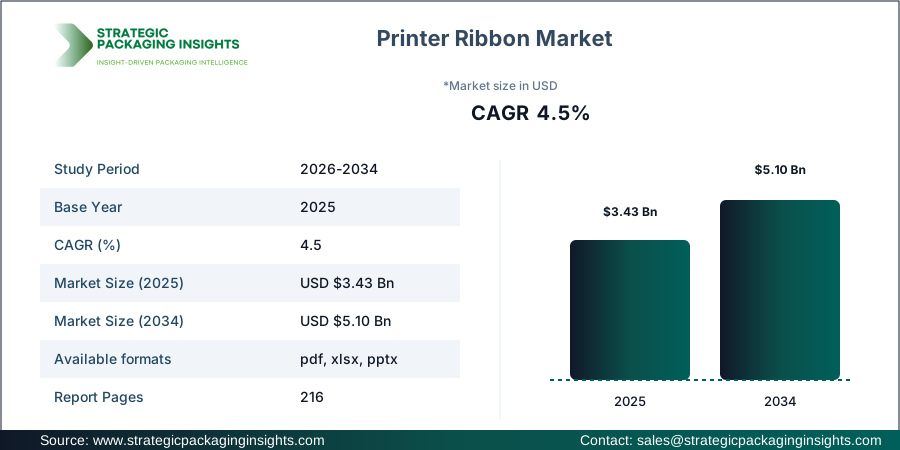
The Printer Ribbon market size was valued at USD 3.43 billion in 2025 and is anticipated to reach USD 5.10 billion by 2034, growing at a CAGR of 4.5% during the forecast period according to Strategic Packaging Insights. The market is witnessing significant growth due to the increasing demand for efficient and reliable printing solutions across various industries. Companies like Zebra Technologies and Armor-IIMAK are leading the charge in innovation, offering advanced printer ribbons that cater to diverse printing needs. The rise in e-commerce and logistics has further fueled the demand for barcode and label printing, which in turn drives the printer ribbon market.
One of the most impactful drivers of the printer ribbon market is the growing emphasis on sustainability and eco-friendly printing solutions. As businesses and consumers become more environmentally conscious, there is a rising demand for printer ribbons that are recyclable and made from sustainable materials. This trend is supported by government regulations and initiatives aimed at reducing carbon footprints and promoting green technologies. Companies like Ricoh and Brother Industries are at the forefront of this movement, developing printer ribbons that not only meet high-performance standards but also align with environmental sustainability goals.
Report Scope
| Attributes | Details |
| Report Title | Printer Ribbon Market Size, Future Growth and Forecast 2034 |
| Ribbon Type | Wax Ribbons, Wax-Resin Ribbons, Resin Ribbons, Impact Printer Ribbons |
| Application | Barcode Printing, Labels, Receipts, Industrial Marking |
| End Use | Retail, Logistics, Manufacturing, Healthcare |
| Printer Type | Thermal Transfer, Dot Matrix, POS |
| Region | Asia Pacific, North America, Latin America, Europe, Middle East & Africa |
| Base Year | 2025 |
| Historic Period | 2018-2024 |
| Forecast Period | 2026-2034 |
| Number of Pages | 216 |
| Customization Available | Yes* |
Sustainability & Circular Economy Analysis
Sustainability initiatives are reshaping the printer ribbon market, with a strong focus on eco-friendly materials and waste reduction strategies. Companies are increasingly adopting recyclable materials and reusable packaging to minimize environmental impact. This shift is driven by consumer preferences for sustainable products and stringent packaging regulations. As a result, printer ribbon manufacturers are investing in research and development to innovate eco-friendly materials that do not compromise on quality or performance. These efforts are crucial for maintaining competitiveness in a market that is progressively leaning towards sustainability.
The circular economy model is gaining traction in the printer ribbon industry, encouraging manufacturers to design products with end-of-life recycling in mind. Extended Producer Responsibility (EPR) policies are pushing companies to take accountability for the entire lifecycle of their products, including disposal and recycling. This has led to the development of lightweight packaging solutions that reduce material usage and transportation costs. By integrating circular economy practices, companies like Epson and Canon are not only reducing their carbon footprint but also enhancing their brand image and customer loyalty.
Moreover, sustainability trends are influencing investment decisions and supply chain strategies within the printer ribbon market. Companies are prioritizing partnerships with suppliers who adhere to ESG (Environmental, Social, and Governance) criteria, ensuring that their entire value chain aligns with sustainability goals. This holistic approach to sustainability is essential for regulatory compliance and long-term market competitiveness. As the demand for sustainable printing solutions continues to rise, companies that proactively embrace these trends are likely to gain a significant competitive advantage.
Packaging Value Chain & Supply Chain Analysis
The printer ribbon market's value chain is complex, involving multiple stakeholders from raw material suppliers to end-users. Raw material sourcing is a critical component, as the availability and cost of materials like wax, resin, and other chemicals directly impact production capabilities and pricing strategies. Packaging converters and manufacturers play a pivotal role in transforming these raw materials into finished products that meet specific industry standards. Companies like DNP and SATO are known for their efficient production processes and strategic partnerships with raw material suppliers, ensuring a steady supply of high-quality printer ribbons.
Logistics and distribution channels are equally important in the printer ribbon market, as they determine the efficiency and cost-effectiveness of product delivery. With the rise of e-commerce and global trade, companies are focusing on optimizing their logistics networks to reduce lead times and transportation costs. This involves strategic partnerships with logistics providers and the adoption of advanced inventory management systems. Brand owners and retailers, such as Toshiba Tec and Fujicopian, rely on these efficient supply chains to maintain a competitive edge and meet the growing demand for printer ribbons across various regions.
Recycling networks are becoming an integral part of the printer ribbon supply chain, driven by the increasing emphasis on sustainability and waste reduction. Companies are implementing closed-loop systems that allow for the collection and recycling of used printer ribbons, thereby minimizing environmental impact and reducing raw material consumption. This not only aligns with regulatory requirements but also enhances brand reputation and customer satisfaction. As the market continues to evolve, supply chain resilience and localization strategies will be key factors in ensuring business competitiveness and long-term success.
Opportunities & Threats
The printer ribbon market presents numerous opportunities for growth, particularly in emerging economies where industrialization and digitalization are on the rise. The increasing adoption of barcode and label printing in sectors like retail, logistics, and healthcare is driving demand for high-quality printer ribbons. Companies that can offer innovative solutions tailored to these industries stand to gain a significant market share. Additionally, the growing trend towards automation and smart manufacturing is creating opportunities for advanced printer ribbons that can integrate seamlessly with modern printing technologies.
Another promising opportunity lies in the development of eco-friendly and sustainable printer ribbons. As environmental concerns continue to influence consumer behavior and regulatory policies, there is a growing demand for products that minimize environmental impact. Companies that invest in research and development to create sustainable printing solutions are likely to attract environmentally conscious customers and gain a competitive edge. Furthermore, the expansion of e-commerce and online retail is expected to boost demand for printer ribbons used in packaging and labeling, providing additional growth avenues for market players.
Despite these opportunities, the printer ribbon market faces several threats that could hinder growth. One of the primary challenges is the increasing competition from digital and paperless solutions, which are gaining popularity due to their cost-effectiveness and convenience. As businesses and consumers shift towards digital documentation and communication, the demand for traditional printing solutions, including printer ribbons, may decline. Additionally, fluctuations in raw material prices and supply chain disruptions pose significant risks to market stability. Companies must navigate these challenges by diversifying their product offerings and adopting flexible supply chain strategies to mitigate potential threats.
Drivers & Challenges
The printer ribbon market is driven by several key factors, including the growing demand for efficient and reliable printing solutions across various industries. The rise of e-commerce and logistics has significantly increased the need for barcode and label printing, which in turn drives the demand for high-quality printer ribbons. Companies like Zebra Technologies and Armor-IIMAK are leading the charge in innovation, offering advanced printer ribbons that cater to diverse printing needs. Additionally, the increasing adoption of thermal transfer and dot matrix printers in sectors like retail, logistics, and healthcare is further propelling market growth.
Another major driver of the printer ribbon market is the growing emphasis on sustainability and eco-friendly printing solutions. As businesses and consumers become more environmentally conscious, there is a rising demand for printer ribbons that are recyclable and made from sustainable materials. This trend is supported by government regulations and initiatives aimed at reducing carbon footprints and promoting green technologies. Companies like Ricoh and Brother Industries are at the forefront of this movement, developing printer ribbons that not only meet high-performance standards but also align with environmental sustainability goals.
However, the printer ribbon market also faces several challenges that could impact its growth. One of the primary challenges is the increasing competition from digital and paperless solutions, which are gaining popularity due to their cost-effectiveness and convenience. As businesses and consumers shift towards digital documentation and communication, the demand for traditional printing solutions, including printer ribbons, may decline. Additionally, fluctuations in raw material prices and supply chain disruptions pose significant risks to market stability. Companies must navigate these challenges by diversifying their product offerings and adopting flexible supply chain strategies to mitigate potential threats.
Market Share Analysis
The printer ribbon market is characterized by a competitive landscape with several key players vying for market share. Companies like Zebra Technologies, Armor-IIMAK, and Ricoh are among the leading players, known for their innovative products and strong market presence. Zebra Technologies, for instance, is renowned for its high-quality printer ribbons that cater to a wide range of applications, from barcode printing to industrial marking. Armor-IIMAK, on the other hand, is a leader in sustainable printing solutions, offering eco-friendly ribbons that meet the growing demand for environmentally conscious products.
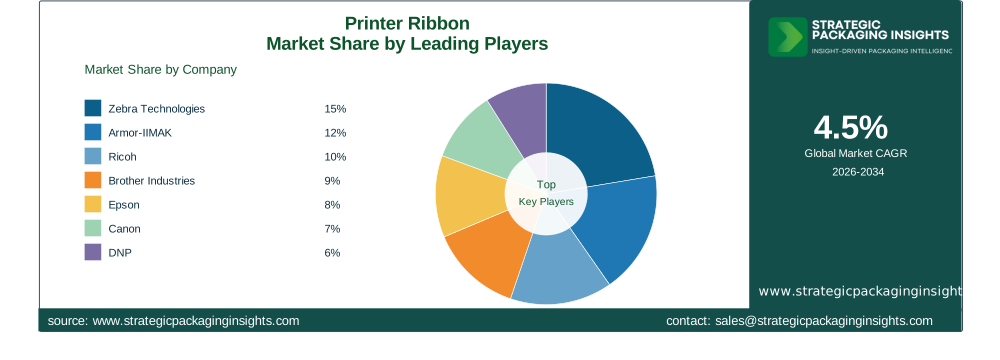
Brother Industries and Epson are also significant players in the printer ribbon market, known for their advanced printing technologies and extensive product portfolios. Brother Industries has a strong focus on research and development, continuously innovating to offer high-performance printer ribbons that meet the evolving needs of various industries. Epson, with its global presence and robust distribution network, is well-positioned to capitalize on the growing demand for printer ribbons in emerging markets.
Canon and DNP are other notable players in the market, offering a diverse range of printer ribbons that cater to different printing needs. Canon is known for its high-quality products and strong brand reputation, while DNP is recognized for its innovative solutions and commitment to sustainability. SATO and Toshiba Tec are also key players, with a focus on providing reliable and efficient printing solutions for industries like retail, logistics, and healthcare. Fujicopian, with its extensive experience and expertise in the printing industry, is another important player, known for its high-quality printer ribbons and strong customer relationships.
Overall, the printer ribbon market is highly competitive, with companies continuously striving to innovate and differentiate their products to gain a competitive edge. The market is characterized by a mix of established players and emerging companies, each with its unique strengths and capabilities. As the demand for printer ribbons continues to grow, companies that can offer innovative, high-quality, and sustainable solutions are likely to succeed in this dynamic market.
Key Highlights
- Market Size: The printer ribbon market was valued at USD 3.43 billion in 2025 and is projected to reach USD 5.10 billion by 2034.
- Growth Rate: The market is expected to grow at a CAGR of 4.5% during the forecast period.
- Leading Companies: Key players include Zebra Technologies, Armor-IIMAK, Ricoh, Brother Industries, and Epson.
- Regional Insights: Asia Pacific is anticipated to witness significant growth due to increasing industrialization and digitalization.
- Sustainability Trends: Growing demand for eco-friendly and recyclable printer ribbons.
- Technological Advancements: Innovations in thermal transfer and dot matrix printing technologies.
- Application Growth: Rising demand for barcode and label printing in retail and logistics sectors.
Printer Ribbon Market Segments Insights

Ribbon Type Analysis
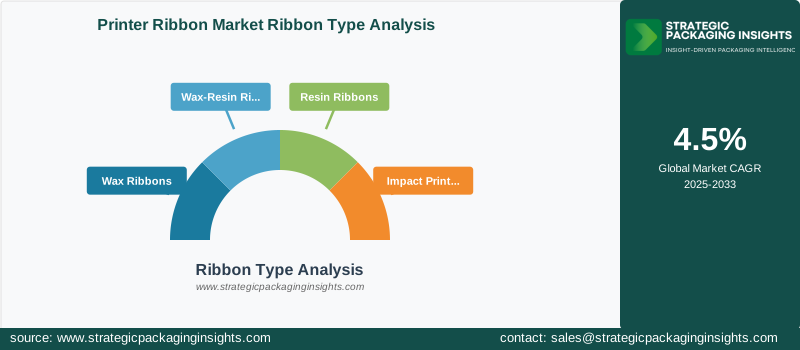
The printer ribbon market is segmented by ribbon type, including wax ribbons, wax-resin ribbons, resin ribbons, and impact printer ribbons. Wax ribbons are widely used due to their cost-effectiveness and suitability for general-purpose printing applications. They are particularly popular in retail and logistics sectors for barcode and label printing. Wax-resin ribbons, on the other hand, offer enhanced durability and are preferred for applications requiring higher resistance to abrasion and chemicals. Resin ribbons are known for their superior print quality and durability, making them ideal for industrial marking and labeling applications. Impact printer ribbons, although less common, are still used in specific applications where dot matrix printers are prevalent.
Companies like Zebra Technologies and Armor-IIMAK are leading the innovation in ribbon types, offering products that cater to diverse printing needs. The demand for high-quality and durable printer ribbons is driving manufacturers to invest in research and development to enhance product performance and meet industry standards. As businesses continue to seek efficient and reliable printing solutions, the printer ribbon market is expected to witness steady growth across all ribbon types.
Application Analysis
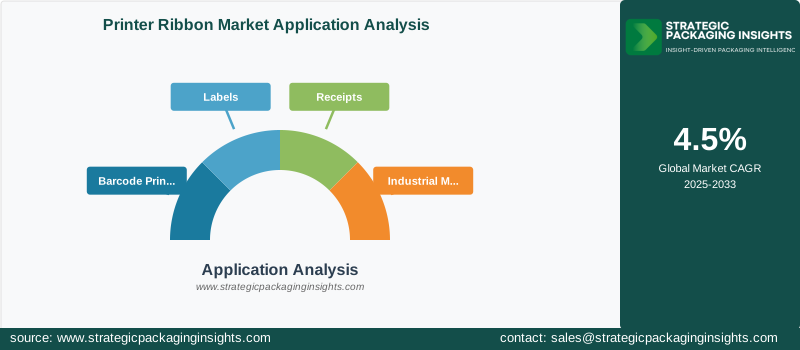
The application segment of the printer ribbon market includes barcode printing, labels, receipts, and industrial marking. Barcode printing is a major driver of the market, fueled by the increasing adoption of barcodes in retail, logistics, and healthcare sectors. The demand for accurate and reliable barcode printing solutions is driving the growth of the printer ribbon market. Label printing is another significant application, with industries like manufacturing and logistics requiring high-quality labels for product identification and tracking. Receipt printing, although facing competition from digital solutions, remains relevant in sectors like retail and hospitality.
Industrial marking is a niche but growing application, with industries like automotive and electronics requiring durable and high-quality printing solutions for product identification and traceability. Companies like Ricoh and Brother Industries are at the forefront of innovation in this segment, offering advanced printer ribbons that meet the specific needs of various applications. As the demand for efficient and reliable printing solutions continues to rise, the application segment of the printer ribbon market is expected to witness significant growth.
End Use Analysis
The printer ribbon market is segmented by end use, including retail, logistics, manufacturing, and healthcare. The retail sector is a major consumer of printer ribbons, driven by the need for barcode and label printing solutions for inventory management and point-of-sale systems. The logistics sector is another significant end-user, with the increasing demand for efficient and reliable printing solutions for shipping labels and tracking systems. The manufacturing sector requires high-quality printer ribbons for product labeling and identification, while the healthcare sector relies on printer ribbons for patient identification and record-keeping.
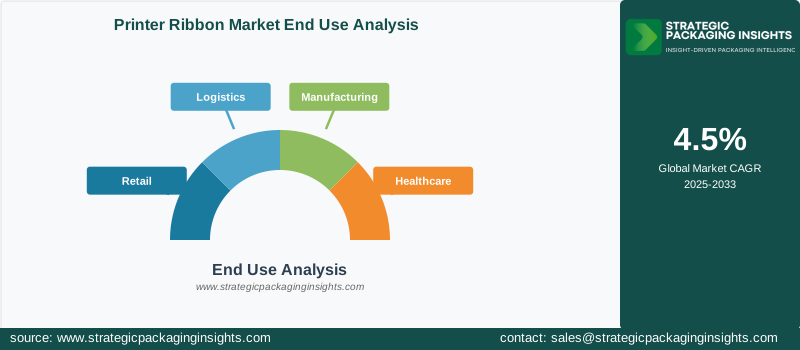
Companies like Epson and Canon are focusing on developing printer ribbons that cater to the specific needs of these end-use industries. The growing emphasis on automation and digitalization in these sectors is driving the demand for advanced printing solutions, further propelling the growth of the printer ribbon market. As industries continue to seek efficient and reliable printing solutions, the end-use segment of the printer ribbon market is expected to witness steady growth.
Printer Type Analysis
The printer ribbon market is segmented by printer type, including thermal transfer, dot matrix, and POS printers. Thermal transfer printers are widely used due to their high-quality and durable printing capabilities, making them ideal for barcode and label printing applications. Dot matrix printers, although less common, are still used in specific applications where impact printing is required. POS printers are prevalent in the retail and hospitality sectors, where they are used for receipt printing and transaction processing.
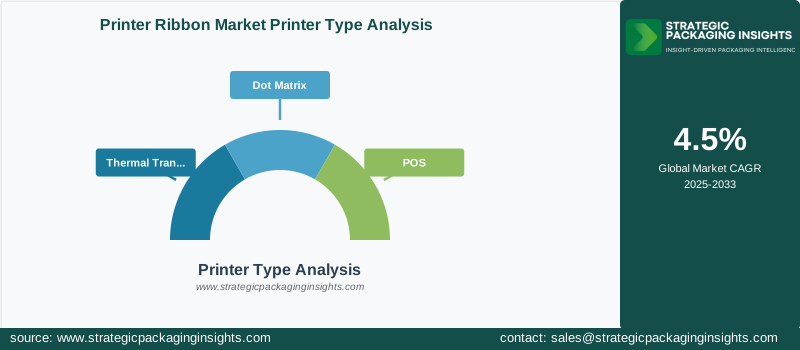
Companies like DNP and SATO are leading the innovation in printer types, offering advanced printing solutions that cater to diverse industry needs. The demand for efficient and reliable printing solutions is driving manufacturers to invest in research and development to enhance product performance and meet industry standards. As businesses continue to seek high-quality and durable printing solutions, the printer type segment of the printer ribbon market is expected to witness steady growth.
Printer Ribbon Market Segments
The Printer Ribbon market has been segmented on the basis ofRibbon Type
- Wax Ribbons
- Wax-Resin Ribbons
- Resin Ribbons
- Impact Printer Ribbons
Application
- Barcode Printing
- Labels
- Receipts
- Industrial Marking
End Use
- Retail
- Logistics
- Manufacturing
- Healthcare
Printer Type
- Thermal Transfer
- Dot Matrix
- POS
Region
- Asia Pacific
- North America
- Latin America
- Europe
- Middle East & Africa




