


Printed Labels Market Outlook
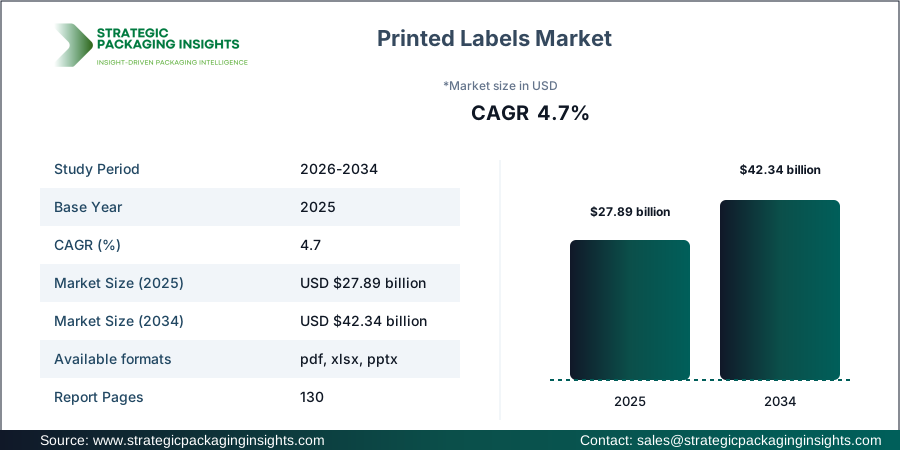
The Printed Labels market was valued at $27.89 billion in 2025 and is projected to reach $42.34 billion by 2034, growing at a CAGR of 4.7% during the forecast period 2026-2034. This growth is driven by the increasing demand for sustainable and efficient labeling solutions across various industries such as food, beverage, and pharmaceuticals. The market is witnessing a shift towards digital printing technologies, which offer high-quality, cost-effective, and customizable label solutions. Additionally, the rise in e-commerce and retail sectors is further propelling the demand for printed labels, as they play a crucial role in product identification and brand differentiation.
Despite the promising growth prospects, the printed labels market faces certain challenges, including stringent environmental regulations and the high cost of raw materials. However, advancements in printing technologies and the development of eco-friendly label materials are expected to mitigate these challenges and offer lucrative growth opportunities. The market is also witnessing increased investments in research and development activities to enhance the durability and functionality of printed labels, thereby expanding their application scope across various end-use industries.
Report Scope
| Attributes | Details |
| Report Title | Printed Labels Market Size, Future Growth and Forecast 2034 |
| Product Type | Pressure-Sensitive Labels, Shrink Sleeve Labels, In-Mold Labels |
| Material Type | Paper, Film, Foil |
| Printing Technology | Digital, Flexographic, Offset, Gravure |
| End Use | Food, Beverage, Pharma, Personal Care |
| Region | Asia Pacific, North America, Latin America, Europe, Middle East & Africa |
| Base Year | 2025 |
| Historic Period | 2018-2024 |
| Forecast Period | 2026-2034 |
| Number of Pages | 130 |
| Customization Available | Yes* |
Opportunities & Threats
The printed labels market presents significant opportunities for growth, driven by the increasing demand for sustainable and eco-friendly labeling solutions. With growing environmental concerns, consumers and businesses are shifting towards labels made from biodegradable and recyclable materials. This trend is encouraging manufacturers to innovate and develop new products that meet these sustainability criteria. Additionally, the rise of smart labels, which incorporate technologies like RFID and QR codes, is creating new avenues for market expansion. These smart labels offer enhanced functionality, such as real-time tracking and product authentication, which are highly valued in industries like pharmaceuticals and logistics.
Another opportunity lies in the rapid growth of the e-commerce sector, which is driving the demand for printed labels. As online shopping continues to rise, the need for effective labeling solutions for packaging and shipping is becoming increasingly important. Printed labels play a crucial role in ensuring accurate product information, brand visibility, and compliance with regulatory requirements. This trend is expected to fuel the demand for printed labels, particularly in regions with high e-commerce penetration, such as North America and Asia Pacific.
However, the printed labels market also faces certain threats, primarily from the increasing competition from digital labeling solutions. Digital labels offer several advantages, including faster production times, lower costs, and the ability to produce short runs with variable data. As a result, traditional printed labels are facing stiff competition, which could impact their market share. Additionally, the volatility in raw material prices and the stringent environmental regulations related to label production pose significant challenges for market players.
Drivers & Challenges
The printed labels market is primarily driven by the growing demand for packaged food and beverages, which require effective labeling solutions for branding and information dissemination. The increasing consumer preference for convenience foods and ready-to-drink beverages is boosting the demand for printed labels, as they provide essential product information and enhance shelf appeal. Moreover, the rising awareness about food safety and the need for compliance with labeling regulations are further propelling the market growth. The pharmaceutical industry is another key driver, as printed labels are crucial for ensuring accurate dosage information and product traceability.
Technological advancements in printing technologies are also driving the growth of the printed labels market. The adoption of digital printing technologies, such as inkjet and laser printing, is gaining traction due to their ability to produce high-quality labels with intricate designs and vibrant colors. These technologies offer several advantages, including faster production times, reduced waste, and the ability to print on a wide range of substrates. Additionally, the integration of smart technologies, such as RFID and NFC, into printed labels is enhancing their functionality and expanding their application scope across various industries.
Despite the positive growth drivers, the printed labels market faces several challenges, including the high cost of raw materials and the increasing competition from digital labeling solutions. The volatility in the prices of raw materials, such as paper and ink, can significantly impact the profitability of label manufacturers. Additionally, the stringent environmental regulations related to label production and disposal are posing challenges for market players. To overcome these challenges, companies are focusing on developing sustainable and cost-effective labeling solutions that comply with regulatory standards and meet the evolving needs of consumers.
Market Share Analysis
The printed labels market is characterized by intense competition, with several key players dominating the landscape. Companies such as Avery Dennison, CCL Industries, and Multi-Color Corporation hold significant market shares due to their extensive product portfolios and strong distribution networks. These companies are continuously investing in research and development to innovate and expand their product offerings, thereby maintaining their competitive edge. The market is also witnessing strategic collaborations and mergers and acquisitions, as companies aim to strengthen their market position and expand their geographical presence.
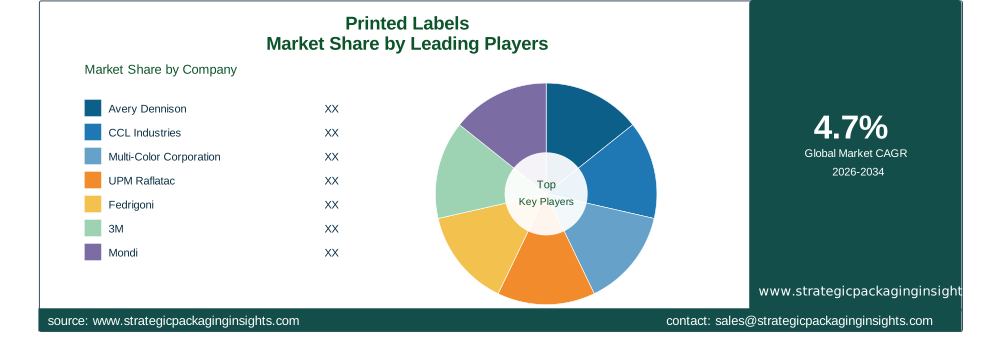
Avery Dennison is a leading player in the printed labels market, known for its innovative labeling solutions and sustainable product offerings. The company has a strong focus on research and development, which enables it to introduce new products that meet the evolving needs of consumers. CCL Industries is another major player, offering a wide range of labeling solutions for various industries, including food, beverage, and pharmaceuticals. The company's extensive global presence and strong customer relationships have contributed to its significant market share.
Multi-Color Corporation is a prominent player in the printed labels market, known for its high-quality labeling solutions and customer-centric approach. The company has a strong focus on sustainability and innovation, which has helped it to maintain its competitive edge in the market. UPM Raflatac is another key player, offering a comprehensive range of labeling solutions that cater to the diverse needs of its customers. The company's commitment to sustainability and its focus on developing eco-friendly label materials have contributed to its strong market position.
Other notable players in the printed labels market include Fedrigoni, 3M, Mondi, Lintec, Constantia Flexibles, and Sappi. These companies are continuously investing in research and development to enhance their product offerings and expand their market presence. The competitive landscape of the printed labels market is characterized by continuous innovation and strategic partnerships, as companies aim to capitalize on the growing demand for sustainable and efficient labeling solutions.
Key Highlights
- The printed labels market is projected to grow from $27.89 billion in 2025 to $42.34 billion by 2034, at a CAGR of 4.7%.
- Increasing demand for sustainable and eco-friendly labeling solutions is driving market growth.
- Technological advancements in digital printing are enhancing the quality and efficiency of printed labels.
- The rise of e-commerce is boosting the demand for printed labels for packaging and shipping.
- Smart labels incorporating RFID and QR codes are creating new market opportunities.
- Stringent environmental regulations and high raw material costs pose challenges for market players.
- Key players include Avery Dennison, CCL Industries, and Multi-Color Corporation, among others.
- Strategic collaborations and mergers and acquisitions are shaping the competitive landscape.
- The food and beverage industry is a major driver of the printed labels market.
- Asia Pacific and North America are key regions for market growth.
Top Countries Insights
In the printed labels market, the United States stands out as a key player, with a market size of approximately $8.5 billion and a CAGR of 5%. The country's robust e-commerce sector and stringent labeling regulations in the food and pharmaceutical industries are major growth drivers. Additionally, the increasing demand for sustainable labeling solutions is encouraging manufacturers to innovate and develop eco-friendly products. However, the market faces challenges from the high cost of raw materials and the need for compliance with environmental regulations.
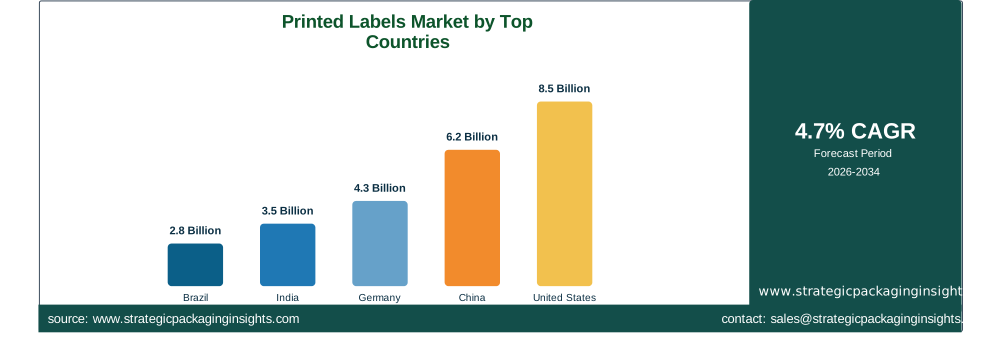
China is another significant market for printed labels, with a market size of around $6.2 billion and a CAGR of 6%. The country's booming e-commerce industry and the growing demand for packaged food and beverages are driving the market growth. The Chinese government's focus on improving food safety and labeling standards is also contributing to the demand for high-quality printed labels. However, the market faces challenges from the increasing competition from digital labeling solutions and the volatility in raw material prices.
Germany is a key market in Europe, with a market size of approximately $4.3 billion and a CAGR of 4%. The country's strong manufacturing sector and the increasing demand for sustainable labeling solutions are driving market growth. The German government's focus on environmental sustainability and the implementation of stringent labeling regulations are also contributing to the demand for printed labels. However, the market faces challenges from the high cost of raw materials and the need for compliance with environmental regulations.
India is an emerging market for printed labels, with a market size of around $3.5 billion and a CAGR of 7%. The country's growing middle-class population and the increasing demand for packaged food and beverages are driving market growth. The Indian government's focus on improving food safety and labeling standards is also contributing to the demand for high-quality printed labels. However, the market faces challenges from the increasing competition from digital labeling solutions and the volatility in raw material prices.
Brazil is a significant market in Latin America, with a market size of approximately $2.8 billion and a CAGR of 5%. The country's growing e-commerce sector and the increasing demand for packaged food and beverages are driving market growth. The Brazilian government's focus on improving food safety and labeling standards is also contributing to the demand for high-quality printed labels. However, the market faces challenges from the high cost of raw materials and the need for compliance with environmental regulations.
Printed Labels Market Segments Insights

Product Type Analysis
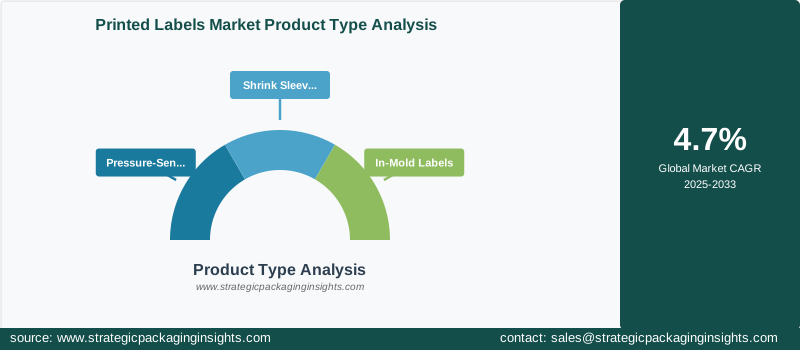
The printed labels market is segmented by product type into pressure-sensitive labels, shrink sleeve labels, and in-mold labels. Pressure-sensitive labels dominate the market due to their versatility and ease of application across various industries. These labels are widely used in the food and beverage industry for branding and product information purposes. The demand for shrink sleeve labels is also on the rise, driven by their ability to conform to complex container shapes and provide 360-degree branding opportunities. In-mold labels are gaining traction in the packaging industry, particularly for durable goods, as they offer enhanced durability and resistance to moisture and abrasion.
The increasing demand for sustainable labeling solutions is driving innovation in the product type segment. Manufacturers are focusing on developing eco-friendly labels that meet the evolving needs of consumers and comply with environmental regulations. The rise of smart labels, which incorporate technologies like RFID and QR codes, is also creating new opportunities for growth in this segment. These smart labels offer enhanced functionality, such as real-time tracking and product authentication, which are highly valued in industries like pharmaceuticals and logistics.
Material Type Analysis
The material type segment of the printed labels market includes paper, film, and foil. Paper labels are the most commonly used due to their cost-effectiveness and ease of printing. However, the demand for film labels is increasing, driven by their durability and resistance to moisture and chemicals. Film labels are widely used in the food and beverage industry, where they provide a high-quality finish and enhance product shelf appeal. Foil labels are gaining popularity in the luxury goods sector, where they offer a premium look and feel.
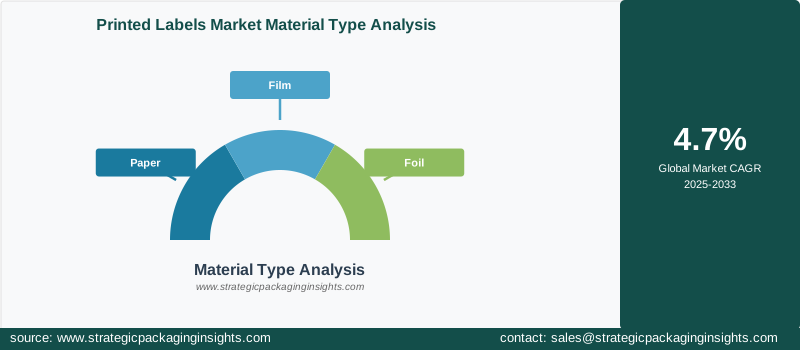
The increasing focus on sustainability is driving the demand for eco-friendly label materials. Manufacturers are developing biodegradable and recyclable labels to meet the growing environmental concerns of consumers and comply with regulatory standards. The development of new materials, such as bio-based films and water-based adhesives, is also contributing to the growth of this segment. These innovations are expected to enhance the functionality and application scope of printed labels across various industries.
Printing Technology Analysis
The printed labels market is segmented by printing technology into digital, flexographic, offset, and gravure. Digital printing is gaining traction due to its ability to produce high-quality labels with intricate designs and vibrant colors. This technology offers several advantages, including faster production times, reduced waste, and the ability to print on a wide range of substrates. Flexographic printing is widely used for large-volume production, particularly in the food and beverage industry, where it provides cost-effective and high-quality labeling solutions.
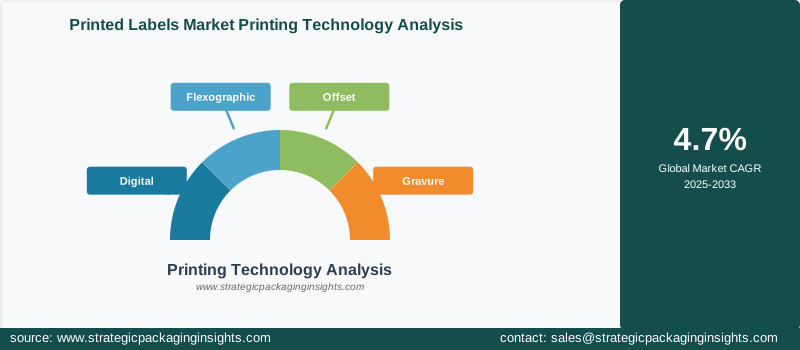
Offset printing is known for its high-quality output and is commonly used for premium labels in the luxury goods sector. Gravure printing is used for high-volume production of labels with complex designs and is favored in industries like pharmaceuticals and personal care. The increasing adoption of digital printing technologies is driving innovation in this segment, as manufacturers focus on developing new solutions that enhance the quality and efficiency of printed labels. The integration of smart technologies, such as RFID and NFC, into printed labels is also expanding their application scope across various industries.
End Use Analysis
The end-use segment of the printed labels market includes food, beverage, pharma, and personal care. The food and beverage industry is the largest consumer of printed labels, driven by the increasing demand for packaged food and beverages and the need for effective branding and product information. The pharmaceutical industry is another key end-user, as printed labels are crucial for ensuring accurate dosage information and product traceability. The personal care industry is also a significant consumer of printed labels, where they are used for branding and product information purposes.
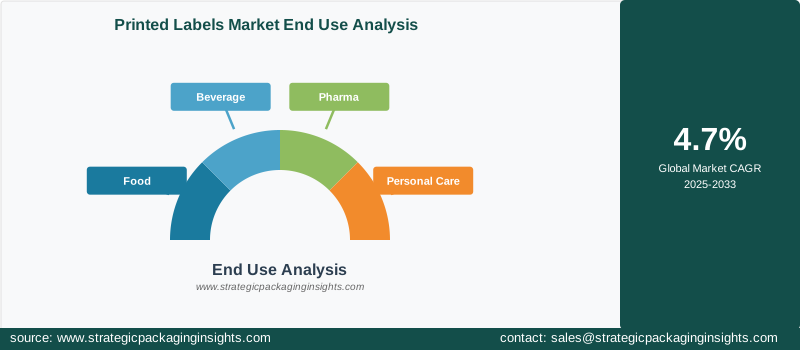
The increasing focus on sustainability and the need for compliance with labeling regulations are driving the demand for eco-friendly labeling solutions in the end-use segment. Manufacturers are developing new products that meet these sustainability criteria and enhance the functionality of printed labels. The rise of smart labels, which offer enhanced functionality and real-time tracking capabilities, is also creating new opportunities for growth in this segment. These innovations are expected to expand the application scope of printed labels across various industries and drive market growth.
Printed Labels Market Segments
The Printed Labels market has been segmented on the basis ofProduct Type
- Pressure-Sensitive Labels
- Shrink Sleeve Labels
- In-Mold Labels
Material Type
- Paper
- Film
- Foil
Printing Technology
- Digital
- Flexographic
- Offset
- Gravure
End Use
- Food
- Beverage
- Pharma
- Personal Care
Region
- Asia Pacific
- North America
- Latin America
- Europe
- Middle East & Africa




