


Polyethylene Furanoate PEF Barrier Resin Market Outlook
The Polyethylene Furanoate (PEF) Barrier Resin market size was valued at USD 60 million in 2025 and is anticipated to reach USD 447 million by 2034, growing at a CAGR of 25.00% during the forecast period according to Strategic Packaging Insights. This remarkable growth trajectory is driven by the increasing demand for sustainable packaging solutions, with Avantium leading the charge in innovation and development. The market's expansion is further fueled by the rising consumer awareness regarding environmental issues and the shift towards eco-friendly materials. As a result, PEF is gaining traction as a viable alternative to traditional PET, offering superior barrier properties and a reduced carbon footprint.
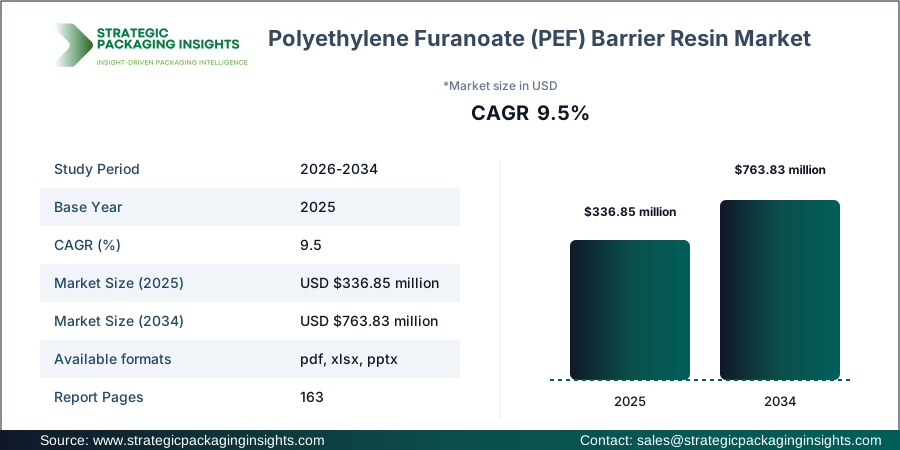
One of the most impactful drivers of the PEF market is the growing regulatory support for sustainable packaging solutions. Governments worldwide are implementing stringent regulations to reduce plastic waste and promote the use of biodegradable materials. This regulatory push is encouraging manufacturers to adopt PEF as a sustainable alternative, thereby boosting market growth. Additionally, the increasing investments in research and development by key players like Origin Materials and Toyobo are expected to enhance the production efficiency and cost-effectiveness of PEF, further propelling its adoption across various applications.
Report Scope
| Attributes | Details |
| Report Title | Polyethylene Furanoate PEF Barrier Resin Market Size, Future Growth and Forecast 2034 |
| By Grade | Bottle Grade, Film Grade, Fiber Grade |
| By Production Route | FDCA from Fructose (Plant-Based), Recycled / Circular PEF |
| By Application | Beverage Bottles, High-Barrier Films, Cosmetic Packaging, Fibers |
| By End Use | Carbonated Soft Drinks & Water, Juices, Beer & Wine, Personal Care |
| By Region | North America (U.S., Canada, Mexico), Europe (Germany, UK, France, Italy, Spain, Rest of Europe), Asia Pacific (China, India, Japan, South Korea, Australia, Rest of Asia Pacific), Latin America (Brazil, Argentina, Rest of Latin America), Middle East & Africa (GCC Countries, South Africa, Rest of MEA) |
| Base Year | 2025 |
| Historic Period | 2018-2024 |
| Forecast Period | 2026-2034 |
| Number of Pages | 108 |
| Customization Available | Yes* |
Sustainability & Circular Economy Analysis
Sustainability initiatives and circular economy practices are significantly influencing the packaging market, particularly in the realm of Polyethylene Furanoate (PEF) Barrier Resin. The shift towards recyclable materials and reusable packaging is driving innovation in eco-friendly material development. Companies are increasingly focusing on lightweight packaging solutions to reduce transportation emissions and overall carbon footprint. This trend is not only shaping packaging design but also impacting manufacturing processes and investment decisions. As a result, businesses are prioritizing sustainable practices to align with consumer preferences and regulatory requirements.
The integration of waste reduction strategies and ESG initiatives is becoming a cornerstone for companies operating in the PEF market. Extended Producer Responsibility (EPR) regulations are compelling manufacturers to take accountability for the entire lifecycle of their products, from production to disposal. This has led to the adoption of closed-loop systems and the development of biodegradable packaging solutions. As a result, companies like Corbion are investing in innovative technologies to enhance the recyclability and sustainability of PEF, ensuring long-term market competitiveness.
Consumer preferences for sustainable packaging are driving demand for PEF, influencing supply chain strategies and regulatory compliance. The emphasis on reducing carbon footprints is prompting companies to explore alternative raw materials and production methods. This shift is fostering collaborations between packaging manufacturers, brand owners, and recycling networks to create a more sustainable value chain. As a result, the PEF market is poised for significant growth, with companies leveraging sustainability trends to gain a competitive edge and meet evolving consumer demands.
Packaging Value Chain & Supply Chain Analysis
The packaging value chain for Polyethylene Furanoate (PEF) Barrier Resin is a complex ecosystem involving multiple stakeholders, from raw material sourcing to recycling networks. The availability of raw materials, such as FDCA from fructose, plays a crucial role in determining production capabilities and supply chain efficiency. Companies like Avantium are at the forefront of developing sustainable production routes, ensuring a steady supply of high-quality PEF. This focus on raw material sourcing is essential for maintaining competitive pricing and meeting the growing demand for eco-friendly packaging solutions.
Packaging converters and manufacturers are pivotal in transforming raw materials into finished products, such as beverage bottles and high-barrier films. The efficiency of packaging machinery and logistics plays a significant role in optimizing production processes and reducing lead times. Strategic partnerships between manufacturers and logistics providers are enhancing distribution channels, ensuring timely delivery of PEF products to brand owners and retailers. This collaboration is crucial for maintaining supply chain resilience and meeting the dynamic demands of the market.
Recycling networks and procurement strategies are integral components of the PEF supply chain, influencing overall market performance and business competitiveness. Companies are increasingly focusing on localization and global sourcing to mitigate risks associated with raw material shortages and transportation disruptions. Inventory management and strategic partnerships with recycling networks are enabling companies to create closed-loop systems, enhancing the sustainability of the PEF value chain. As a result, the market is witnessing increased investments in recycling infrastructure and innovative technologies to support the circular economy.
Opportunities & Threats
The Polyethylene Furanoate (PEF) Barrier Resin market presents numerous opportunities for growth, driven by the increasing demand for sustainable packaging solutions. The shift towards eco-friendly materials is creating a favorable environment for PEF, with companies like Avantium and Origin Materials leading the charge in innovation and development. The growing consumer awareness regarding environmental issues is driving demand for biodegradable and recyclable packaging, providing a significant opportunity for PEF to capture market share from traditional PET. Additionally, the regulatory support for sustainable packaging solutions is encouraging manufacturers to adopt PEF, further boosting market growth.
Another opportunity lies in the expanding applications of PEF across various industries. The superior barrier properties of PEF make it an ideal choice for high-barrier films, beverage bottles, and cosmetic packaging. The increasing investments in research and development are expected to enhance the production efficiency and cost-effectiveness of PEF, enabling its adoption in new applications. Companies are also exploring the potential of PEF in the textile industry, with fibers being a promising area for growth. This diversification of applications is expected to drive demand for PEF and create new revenue streams for market players.
Despite the promising opportunities, the PEF market faces several threats that could hinder its growth. The high production costs associated with PEF compared to traditional PET pose a significant challenge for manufacturers. The limited availability of raw materials, such as FDCA from fructose, could also impact production capabilities and supply chain efficiency. Additionally, the lack of consumer awareness and acceptance of PEF as a viable alternative to PET could slow down market adoption. Companies need to invest in marketing and education efforts to raise awareness about the benefits of PEF and drive consumer demand.
Drivers & Challenges
The primary driver of the Polyethylene Furanoate (PEF) Barrier Resin market is the increasing demand for sustainable packaging solutions. The shift towards eco-friendly materials is driven by growing consumer awareness regarding environmental issues and the need to reduce plastic waste. PEF offers superior barrier properties and a reduced carbon footprint compared to traditional PET, making it an attractive alternative for manufacturers. The regulatory support for sustainable packaging solutions is also encouraging the adoption of PEF, with governments worldwide implementing stringent regulations to reduce plastic waste and promote biodegradable materials.
Another significant driver is the technological advancements in PEF production and processing. Companies like Toyobo and Sulzer are investing in research and development to enhance the production efficiency and cost-effectiveness of PEF. These advancements are expected to improve the scalability of PEF production and enable its adoption across various applications. The increasing investments in recycling infrastructure and innovative technologies are also supporting the growth of the PEF market, as companies strive to create closed-loop systems and enhance the sustainability of the packaging value chain.
Despite the promising drivers, the PEF market faces several challenges that could hinder its growth. The high production costs associated with PEF compared to traditional PET pose a significant challenge for manufacturers. The limited availability of raw materials, such as FDCA from fructose, could also impact production capabilities and supply chain efficiency. Additionally, the lack of consumer awareness and acceptance of PEF as a viable alternative to PET could slow down market adoption. Companies need to invest in marketing and education efforts to raise awareness about the benefits of PEF and drive consumer demand.
Market Share Analysis
The competitive landscape of the Polyethylene Furanoate (PEF) Barrier Resin market is characterized by the presence of several key players, each striving to gain a competitive edge through innovation and strategic partnerships. Avantium is a leading player in the market, known for its pioneering work in developing sustainable production routes for PEF. The company's focus on research and development has enabled it to maintain a strong market position and drive the adoption of PEF across various applications. Origin Materials is another prominent player, leveraging its expertise in sustainable materials to enhance the production efficiency and cost-effectiveness of PEF.
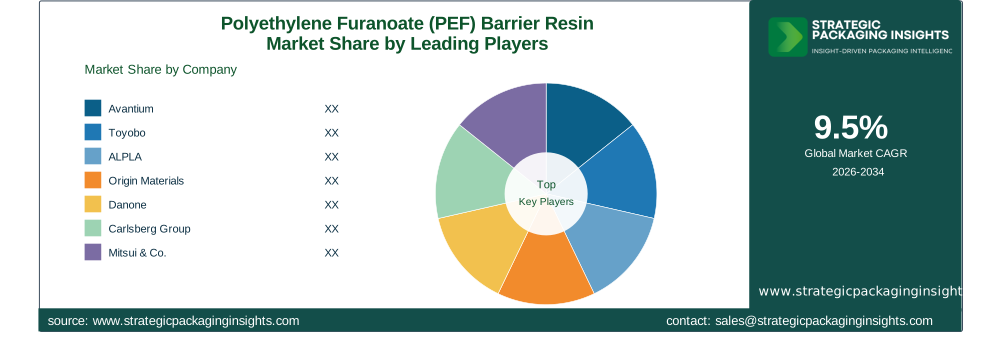
Toyobo is a key player in the PEF market, known for its technological advancements in PEF production and processing. The company's investments in research and development have enabled it to improve the scalability of PEF production and expand its application across various industries. Sulzer, a licensing partner, is also contributing to the growth of the PEF market by providing innovative technologies and solutions to enhance the production efficiency of PEF. The company's strategic partnerships with other market players are helping to drive the adoption of PEF and create new growth opportunities.
ALPLA, a development partner, is playing a crucial role in the PEF market by collaborating with other key players to develop innovative packaging solutions. The company's focus on sustainability and eco-friendly materials is driving the adoption of PEF in the packaging industry. Corbion, a key player in the FDCA ecosystem, is also contributing to the growth of the PEF market by providing sustainable raw materials and enhancing the recyclability of PEF. The company's investments in research and development are expected to drive innovation and create new growth opportunities in the PEF market.
AVA Biochem is another important player in the PEF market, known for its expertise in sustainable raw materials and innovative technologies. The company's focus on research and development is driving the adoption of PEF across various applications, including beverage bottles, high-barrier films, and cosmetic packaging. The competitive landscape of the PEF market is expected to remain dynamic, with companies leveraging innovation and strategic partnerships to gain a competitive edge and meet the evolving demands of consumers.
Key Highlights
- Market Size: USD 60 million in 2025, projected to reach USD 447 million by 2034.
- Growth Rate: Impressive CAGR of 25.00% during the forecast period.
- Leading Companies: Avantium, Origin Materials, Toyobo, Sulzer, ALPLA, Corbion, AVA Biochem.
- Key Applications: Beverage bottles, high-barrier films, cosmetic packaging, fibers.
- Production Routes: FDCA from fructose (plant-based), recycled/circular PEF.
- Regional Insights: Significant growth expected in Asia Pacific and Europe.
- Sustainability Focus: Emphasis on eco-friendly materials and circular economy practices.
Polyethylene Furanoate PEF Barrier Resin Market Segments Insights

By Grade Analysis
The Polyethylene Furanoate (PEF) Barrier Resin market is segmented by grade into Bottle Grade, Film Grade, and Fiber Grade. Bottle Grade PEF is gaining significant traction due to its superior barrier properties, making it an ideal choice for beverage bottles. The demand for sustainable packaging solutions is driving the adoption of Bottle Grade PEF, with companies like Avantium leading the charge in innovation and development. Film Grade PEF is also witnessing increased demand, particularly in the packaging industry, where high-barrier films are essential for preserving product quality and extending shelf life. The growing consumer awareness regarding environmental issues is further boosting the demand for Film Grade PEF.
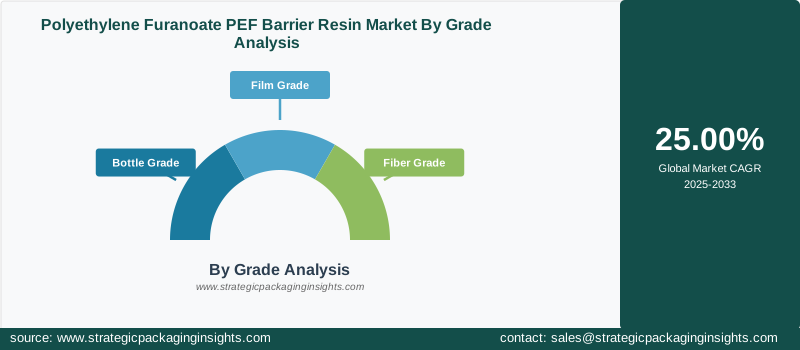
Fiber Grade PEF is emerging as a promising segment, with potential applications in the textile industry. The superior mechanical properties of Fiber Grade PEF make it an attractive alternative to traditional materials, offering enhanced durability and sustainability. The increasing investments in research and development are expected to enhance the production efficiency and cost-effectiveness of Fiber Grade PEF, enabling its adoption across various applications. The diversification of applications is expected to drive demand for PEF and create new revenue streams for market players.
By Production Route Analysis
The PEF market is segmented by production route into FDCA from Fructose (Plant-Based) and Recycled/Circular PEF. The FDCA from Fructose route is gaining popularity due to its sustainable nature, with companies like Corbion investing in innovative technologies to enhance the production efficiency of PEF. The shift towards plant-based materials is driven by the growing consumer demand for eco-friendly packaging solutions and the need to reduce carbon footprints. The Recycled/Circular PEF route is also witnessing increased adoption, as companies strive to create closed-loop systems and enhance the sustainability of the packaging value chain.
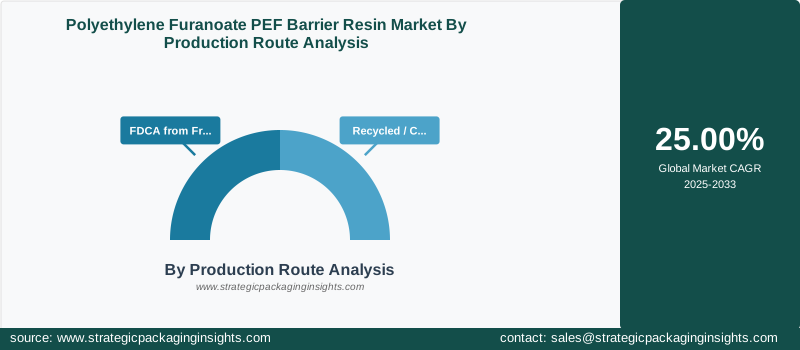
The emphasis on circular economy practices is driving the adoption of Recycled/Circular PEF, with companies like AVA Biochem leading the charge in innovation and development. The integration of waste reduction strategies and ESG initiatives is becoming a cornerstone for companies operating in the PEF market, with extended producer responsibility (EPR) regulations compelling manufacturers to take accountability for the entire lifecycle of their products. This focus on sustainability is expected to drive the growth of the PEF market and create new opportunities for market players.
By Application Analysis
The PEF market is segmented by application into Beverage Bottles, High-Barrier Films, Cosmetic Packaging, and Fibers. Beverage Bottles are the largest application segment, driven by the increasing demand for sustainable packaging solutions in the beverage industry. The superior barrier properties of PEF make it an ideal choice for beverage bottles, offering enhanced product preservation and extended shelf life. High-Barrier Films are also witnessing increased demand, particularly in the packaging industry, where they are essential for preserving product quality and extending shelf life.
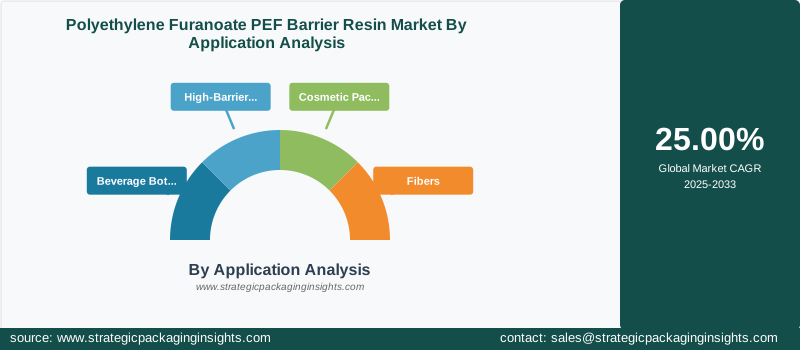
Cosmetic Packaging is another promising application segment, with companies like ALPLA investing in innovative packaging solutions to enhance the sustainability of cosmetic products. The growing consumer awareness regarding environmental issues is driving demand for eco-friendly packaging solutions, providing a significant opportunity for PEF to capture market share from traditional materials. Fibers are emerging as a promising application segment, with potential applications in the textile industry. The superior mechanical properties of PEF make it an attractive alternative to traditional materials, offering enhanced durability and sustainability.
By End Use Analysis
The PEF market is segmented by end use into Carbonated Soft Drinks & Water, Juices, Beer & Wine, and Personal Care. Carbonated Soft Drinks & Water is the largest end-use segment, driven by the increasing demand for sustainable packaging solutions in the beverage industry. The superior barrier properties of PEF make it an ideal choice for carbonated soft drinks and water bottles, offering enhanced product preservation and extended shelf life. Juices are also witnessing increased demand, particularly in the packaging industry, where high-barrier films are essential for preserving product quality and extending shelf life.
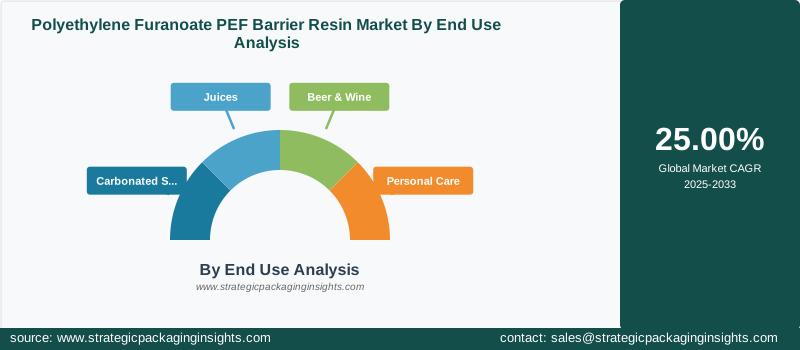
Beer & Wine is another promising end-use segment, with companies like Toyobo investing in innovative packaging solutions to enhance the sustainability of alcoholic beverages. The growing consumer awareness regarding environmental issues is driving demand for eco-friendly packaging solutions, providing a significant opportunity for PEF to capture market share from traditional materials. Personal Care is emerging as a promising end-use segment, with potential applications in the cosmetic industry. The superior mechanical properties of PEF make it an attractive alternative to traditional materials, offering enhanced durability and sustainability.
Polyethylene Furanoate PEF Barrier Resin Market Segments
The Polyethylene Furanoate PEF Barrier Resin market has been segmented on the basis ofBy Grade
- Bottle Grade
- Film Grade
- Fiber Grade
By Production Route
- FDCA from Fructose (Plant-Based)
- Recycled / Circular PEF
By Application
- Beverage Bottles
- High-Barrier Films
- Cosmetic Packaging
- Fibers
By End Use
- Carbonated Soft Drinks & Water
- Juices
- Beer & Wine
- Personal Care
By Region
- North America (U.S., Canada, Mexico)
- Europe (Germany, UK, France, Italy, Spain, Rest of Europe)
- Asia Pacific (China, India, Japan, South Korea, Australia, Rest of Asia Pacific)
- Latin America (Brazil, Argentina, Rest of Latin America)
- Middle East & Africa (GCC Countries, South Africa, Rest of MEA)




