


Plant-Based Foam Market Outlook
The Plant-Based Foam market was valued at $334.56 million in 2025 and is projected to reach $876.86 million by 2034, growing at a CAGR of 11.3% during the forecast period 2026-2034. This market is witnessing significant growth due to the increasing demand for sustainable and eco-friendly packaging solutions. The shift towards biodegradable materials in various industries, including packaging, automotive, and construction, is driving the demand for plant-based foam. The market is also benefiting from technological advancements that enhance the properties of plant-based foams, making them more competitive with traditional petroleum-based foams. Additionally, consumer awareness regarding environmental issues and the benefits of using renewable resources is further propelling market growth.
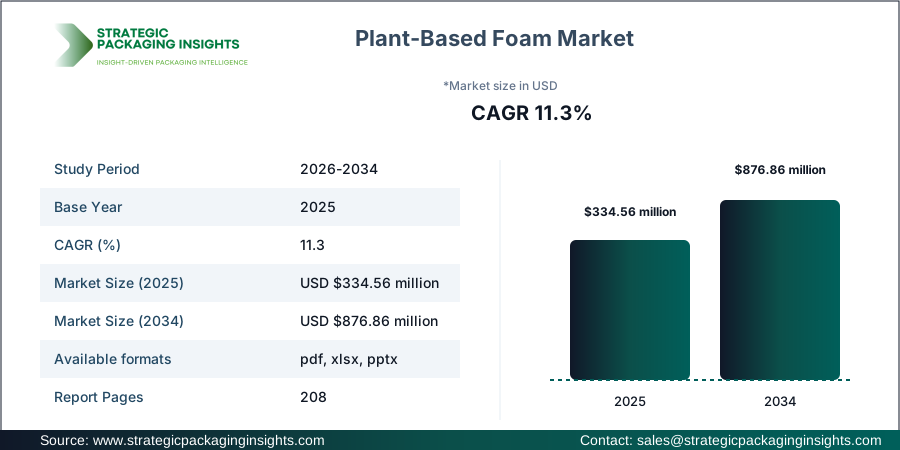
Despite the promising growth prospects, the Plant-Based Foam market faces certain challenges. Regulatory constraints and the high cost of raw materials are some of the major restraints that could hinder market growth. However, the potential for innovation and the development of cost-effective production techniques present significant opportunities for market players. The increasing investment in research and development activities to improve the quality and performance of plant-based foams is expected to open new avenues for growth. Furthermore, the growing trend of circular economy and zero-waste initiatives is likely to boost the adoption of plant-based foams across various sectors.
Report Scope
| Attributes | Details |
| Report Title | Plant-Based Foam Market Size, Future Growth and Forecast 2034 |
| By Base | Mushroom, Cornstarch |
| By Density | Low, High |
| By Application | Protective, Cushioning |
| By Form | Sheets, Molds |
| Region | Asia Pacific, North America, Latin America, Europe, Middle East & Africa |
| Base Year | 2025 |
| Historic Period | 2018-2024 |
| Forecast Period | 2026-2034 |
| Number of Pages | 208 |
| Customization Available | Yes* |
Opportunities & Threats
The Plant-Based Foam market is ripe with opportunities, particularly in the realm of sustainable packaging solutions. As consumers and businesses alike become more environmentally conscious, the demand for biodegradable and compostable materials is on the rise. This shift is creating a fertile ground for plant-based foam manufacturers to expand their product offerings and capture a larger market share. Additionally, the increasing regulatory support for eco-friendly materials in various regions is expected to further drive the adoption of plant-based foams. Companies that can innovate and offer high-performance, cost-effective solutions are likely to thrive in this evolving market landscape.
Another significant opportunity lies in the automotive and construction industries, where plant-based foams are being increasingly used for insulation and cushioning applications. The lightweight and durable nature of these foams make them an attractive alternative to traditional materials. As these industries continue to seek sustainable solutions to reduce their carbon footprint, the demand for plant-based foams is expected to grow. Furthermore, the development of new applications and the expansion of existing ones in emerging markets present additional growth opportunities for industry players.
However, the market is not without its threats. One of the primary challenges is the high cost of production, which can make plant-based foams less competitive compared to conventional foams. Additionally, the availability of raw materials can be inconsistent, leading to supply chain disruptions. The market also faces competition from other sustainable materials, which could limit the growth potential of plant-based foams. Companies need to continuously innovate and improve their production processes to overcome these challenges and maintain their competitive edge.
Drivers & Challenges
The primary drivers of the Plant-Based Foam market include the growing consumer awareness about environmental sustainability and the increasing demand for eco-friendly packaging solutions. As more consumers become conscious of the environmental impact of their purchasing decisions, there is a growing preference for products that are biodegradable and made from renewable resources. This trend is driving the demand for plant-based foams, which are seen as a sustainable alternative to traditional petroleum-based foams. Additionally, the regulatory push towards reducing plastic waste and promoting the use of biodegradable materials is further propelling market growth.
Technological advancements are also playing a crucial role in driving the market. Innovations in production techniques and the development of new plant-based materials are enhancing the properties of plant-based foams, making them more competitive with conventional foams. These advancements are enabling manufacturers to produce high-quality foams that meet the performance requirements of various applications, from packaging to automotive and construction. As a result, the adoption of plant-based foams is expected to increase across different industries.
Despite the positive drivers, the Plant-Based Foam market faces several challenges. One of the major challenges is the high cost of production, which can make plant-based foams less competitive compared to traditional foams. The cost of raw materials and the complexity of the production process contribute to the higher price of plant-based foams. Additionally, the market faces competition from other sustainable materials, which could limit the growth potential of plant-based foams. Companies need to continuously innovate and improve their production processes to overcome these challenges and maintain their competitive edge.
Market Share Analysis
The competitive landscape of the Plant-Based Foam market is characterized by the presence of several key players who are actively engaged in research and development to enhance their product offerings. Companies such as Ecovative, Rodenberg, BioFoam, Green Cell Foam, and MycoWorks are leading the market with their innovative solutions and strong market presence. These companies are focusing on expanding their product portfolios and strengthening their distribution networks to capture a larger share of the market. The market is also witnessing strategic collaborations and partnerships among key players to leverage each other's strengths and enhance their market position.
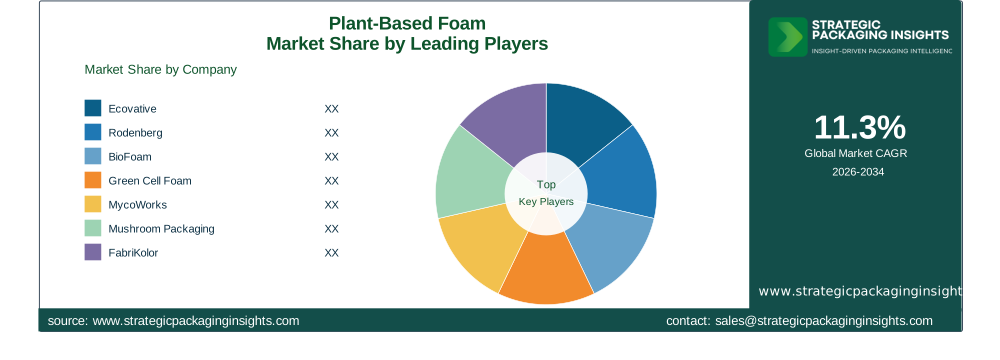
Ecovative is one of the prominent players in the market, known for its innovative use of mycelium technology to produce sustainable packaging solutions. The company has a strong focus on research and development, which has enabled it to offer high-performance plant-based foams that meet the needs of various industries. Rodenberg is another key player, offering a wide range of plant-based foam products for different applications. The company's commitment to sustainability and innovation has helped it establish a strong foothold in the market.
BioFoam is recognized for its eco-friendly foam solutions that cater to the packaging and construction industries. The company's focus on quality and sustainability has earned it a significant market share. Green Cell Foam is another major player, known for its biodegradable foam products that are used in a variety of applications, including protective packaging and cushioning. The company's strong distribution network and commitment to sustainability have contributed to its success in the market.
MycoWorks is a leading innovator in the field of plant-based foams, utilizing mycelium technology to create high-performance materials. The company's focus on research and development has enabled it to offer unique solutions that cater to the needs of various industries. Mushroom Packaging, FabriKolor, Compostable, Vegetal, and LastObject are also key players in the market, each offering a range of plant-based foam products that cater to different applications. These companies are continuously investing in research and development to enhance their product offerings and maintain their competitive edge in the market.
Key Highlights
- The Plant-Based Foam market is projected to grow at a CAGR of 11.3% from 2026 to 2034.
- Increasing demand for sustainable and eco-friendly packaging solutions is driving market growth.
- Technological advancements are enhancing the properties of plant-based foams, making them more competitive.
- Regulatory support for biodegradable materials is boosting the adoption of plant-based foams.
- The automotive and construction industries are emerging as significant end-users of plant-based foams.
- High production costs and raw material availability are major challenges for the market.
- Key players are focusing on research and development to enhance their product offerings.
- Strategic collaborations and partnerships are common among market players to strengthen their market position.
- The market is witnessing a growing trend of circular economy and zero-waste initiatives.
Top Countries Insights
In the Plant-Based Foam market, the United States is a leading player, with a market size of approximately $150 million and a CAGR of 10%. The country's strong focus on sustainability and the presence of key market players are driving growth. Government regulations promoting the use of biodegradable materials are also contributing to the market's expansion. However, high production costs remain a challenge for manufacturers.
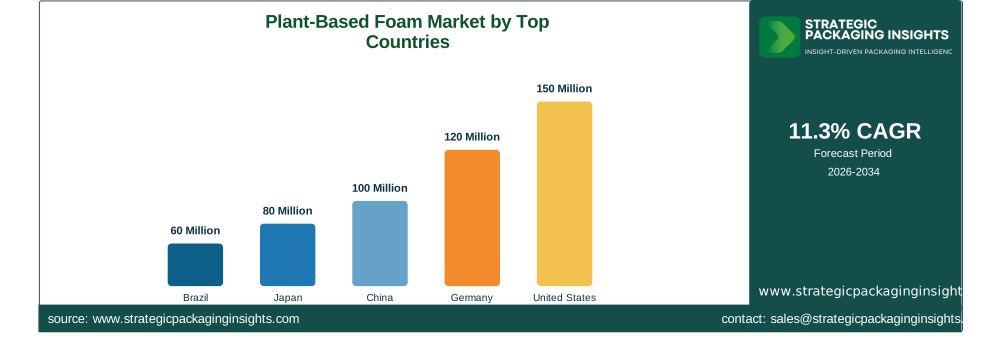
Germany is another significant market, with a market size of around $120 million and a CAGR of 9%. The country's advanced manufacturing capabilities and strong emphasis on environmental sustainability are key growth drivers. The automotive and packaging industries are major end-users of plant-based foams in Germany. However, competition from other sustainable materials poses a challenge to market growth.
China is experiencing rapid growth in the Plant-Based Foam market, with a market size of approximately $100 million and a CAGR of 15%. The country's large consumer base and increasing demand for eco-friendly products are driving market expansion. Government initiatives to reduce plastic waste and promote sustainable materials are also contributing to growth. However, the market faces challenges related to raw material availability and production costs.
In Japan, the Plant-Based Foam market is valued at around $80 million, with a CAGR of 8%. The country's focus on innovation and technology is driving the development of high-performance plant-based foams. The packaging and automotive industries are key end-users, and government support for sustainable materials is boosting market growth. However, high production costs remain a challenge for manufacturers.
Brazil is an emerging market for plant-based foams, with a market size of approximately $60 million and a CAGR of 7%. The country's growing focus on sustainability and the increasing demand for eco-friendly packaging solutions are driving market growth. However, the market faces challenges related to infrastructure and supply chain issues.
Plant-Based Foam Market Segments Insights

By Base Analysis
The Plant-Based Foam market is segmented by base into Mushroom and Cornstarch. Mushroom-based foams are gaining popularity due to their biodegradability and sustainable production process. These foams are made using mycelium, the root structure of mushrooms, which can be grown on agricultural waste. This makes them an environmentally friendly alternative to traditional foams. The demand for mushroom-based foams is driven by their use in packaging, construction, and automotive industries, where sustainability is a key concern. Cornstarch-based foams, on the other hand, are derived from renewable resources and are known for their lightweight and cushioning properties. They are widely used in protective packaging applications, where they provide excellent shock absorption and protection for fragile items.
The competition in the by base segment is intense, with companies focusing on innovation and product development to gain a competitive edge. The growing consumer preference for sustainable products is driving the demand for both mushroom and cornstarch-based foams. However, the high cost of production and raw material availability are challenges that manufacturers need to address. Companies are investing in research and development to improve the performance and cost-effectiveness of their products, which is expected to drive market growth in the coming years.
By Density Analysis
The Plant-Based Foam market is segmented by density into Low and High. Low-density foams are lightweight and provide excellent cushioning properties, making them ideal for packaging and protective applications. They are widely used in the electronics and consumer goods industries, where they offer protection for delicate items during transportation. High-density foams, on the other hand, are known for their durability and strength, making them suitable for construction and automotive applications. These foams provide excellent insulation and structural support, which are essential in these industries.
The demand for low-density foams is driven by the increasing need for lightweight and cost-effective packaging solutions. The growing e-commerce industry is also contributing to the demand for low-density foams, as they provide protection for products during shipping. High-density foams are gaining traction in the construction and automotive industries, where they are used for insulation and structural applications. The competition in the by density segment is fierce, with companies focusing on product innovation and development to meet the evolving needs of end-users. The market is expected to witness significant growth in the coming years, driven by the increasing demand for sustainable and high-performance foams.
By Application Analysis
The Plant-Based Foam market is segmented by application into Protective and Cushioning. Protective applications are a major driver of the market, as plant-based foams provide excellent shock absorption and protection for fragile items. These foams are widely used in the packaging industry, where they offer a sustainable alternative to traditional protective materials. The demand for protective applications is driven by the increasing need for eco-friendly packaging solutions and the growing e-commerce industry, which requires effective protection for products during shipping.
Cushioning applications are also a significant segment of the market, as plant-based foams provide comfort and support in various applications. These foams are used in the furniture and bedding industries, where they offer a sustainable alternative to traditional cushioning materials. The demand for cushioning applications is driven by the growing consumer preference for sustainable and eco-friendly products. The competition in the by application segment is intense, with companies focusing on product innovation and development to meet the evolving needs of end-users. The market is expected to witness significant growth in the coming years, driven by the increasing demand for sustainable and high-performance foams.
By Form Analysis
The Plant-Based Foam market is segmented by form into Sheets and Molds. Sheets are widely used in the packaging industry, where they provide a sustainable alternative to traditional packaging materials. These sheets are lightweight and provide excellent cushioning properties, making them ideal for protective packaging applications. The demand for sheets is driven by the increasing need for eco-friendly packaging solutions and the growing e-commerce industry, which requires effective protection for products during shipping.
Molds are used in various applications, including construction and automotive industries, where they provide structural support and insulation. These molds are known for their durability and strength, making them suitable for high-performance applications. The demand for molds is driven by the increasing need for sustainable and high-performance materials in these industries. The competition in the by form segment is fierce, with companies focusing on product innovation and development to meet the evolving needs of end-users. The market is expected to witness significant growth in the coming years, driven by the increasing demand for sustainable and high-performance foams.
Plant-Based Foam Market Segments
The Plant-Based Foam market has been segmented on the basis ofBy Base
- Mushroom
- Cornstarch
By Density
- Low
- High
By Application
- Protective
- Cushioning
By Form
- Sheets
- Molds
Region
- Asia Pacific
- North America
- Latin America
- Europe
- Middle East & Africa




