


Pipe Marking Tapes Market Outlook
The Pipe Marking Tapes market size was valued at USD 1.29 billion in 2025 and is anticipated to reach USD 2.02 billion by 2034, growing at a CAGR of 5.1% during the forecast period according to Strategic Packaging Insights. This growth is driven by the increasing demand for safety and compliance in industrial settings, where pipe marking tapes play a crucial role in identifying pipe contents and flow directions. Companies like Brady Corporation and 3M are leading the charge in innovation, offering a wide range of products that cater to various industrial needs, from chemical plants to HVAC systems. The market's expansion is further supported by stringent safety regulations and the need for efficient operational workflows in industries such as oil & gas and manufacturing.
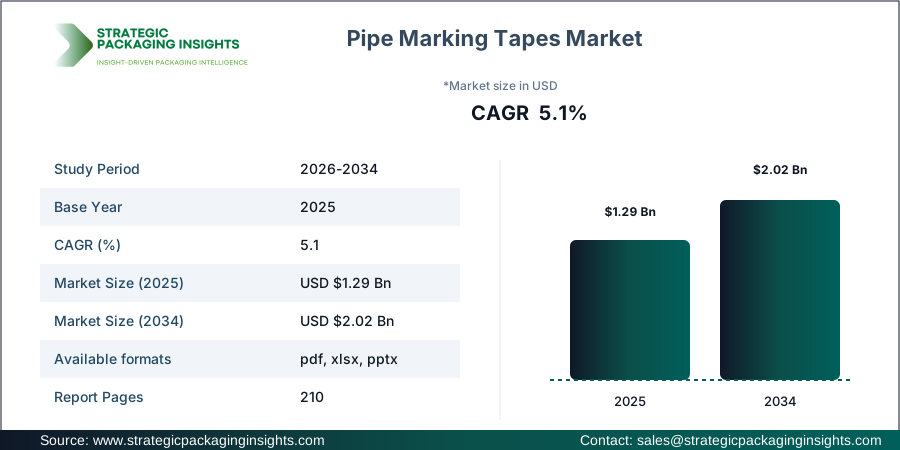
One of the most impactful drivers of the Pipe Marking Tapes market is the growing emphasis on workplace safety and regulatory compliance. According to the Occupational Safety and Health Administration (OSHA), proper labeling and marking of pipes are essential for preventing accidents and ensuring worker safety. This regulatory push has led to increased adoption of pipe marking tapes across various sectors, including construction and utilities. Companies like Avery Dennison and Seton are capitalizing on this trend by developing innovative products that not only meet but exceed regulatory standards, thereby enhancing their market position. The focus on safety and compliance is expected to continue driving market growth, as industries prioritize risk management and operational efficiency.
Report Scope
| Attributes | Details |
| Report Title | Pipe Marking Tapes Market Size, Future Growth and Forecast 2034 |
| By Material Type | Vinyl, Polyester, Polypropylene, Reflective Film |
| By Product Type | Directional Flow Tapes, Hazard Tapes, Color-Coded Tapes |
| By Application | Industrial Pipes, Utility Lines, Chemical Plants, HVAC |
| By End Use | Manufacturing, Oil & Gas, Construction, Utilities |
| Region | Asia Pacific, North America, Latin America, Europe, Middle East & Africa |
| Base Year | 2025 |
| Historic Period | 2018-2024 |
| Forecast Period | 2026-2034 |
| Number of Pages | 210 |
| Customization Available | Yes* |
Sustainability & Circular Economy Analysis
Sustainability initiatives are increasingly shaping the Pipe Marking Tapes market, as manufacturers and end-users alike seek to reduce their environmental impact. The use of recyclable materials and eco-friendly innovations in tape production is becoming more prevalent, driven by consumer demand for sustainable products and stringent environmental regulations. Companies are investing in research and development to create tapes that are not only effective but also environmentally friendly, thereby aligning with global sustainability goals. This shift towards sustainable practices is influencing packaging design and manufacturing processes, as companies strive to minimize waste and reduce their carbon footprint.
The circular economy is also playing a significant role in the market, with extended producer responsibility (EPR) and waste reduction strategies gaining traction. Manufacturers are exploring ways to incorporate recycled materials into their products, thereby closing the loop and promoting resource efficiency. This approach not only enhances the sustainability of pipe marking tapes but also offers cost benefits by reducing reliance on virgin materials. As a result, companies like Tesa and Nitto Denko are focusing on developing products that support circular economy principles, thereby enhancing their competitive edge in the market.
Consumer preferences for sustainable products are driving investment decisions and supply chain strategies in the Pipe Marking Tapes market. Companies are increasingly prioritizing ESG initiatives and carbon footprint reduction in their operations, as they seek to meet the growing demand for eco-friendly solutions. This trend is influencing regulatory compliance and long-term market competitiveness, as businesses that fail to adapt to sustainability trends risk losing market share. By embracing sustainable practices, companies can not only enhance their brand reputation but also achieve operational efficiencies and cost savings, thereby securing their position in the market.
Packaging Value Chain & Supply Chain Analysis
The packaging value chain for Pipe Marking Tapes involves a complex ecosystem of raw material sourcing, manufacturing, and distribution. Raw materials such as vinyl, polyester, and polypropylene are sourced from suppliers, and their availability can significantly impact production capabilities and market performance. Packaging converters and manufacturers play a crucial role in transforming these materials into finished products, with companies like Graphic Products and LabelTac leading the way in innovation and quality. Efficient procurement strategies and inventory management are essential for maintaining supply chain resilience and ensuring timely delivery of products to end-users.
Logistics and distribution channels are critical components of the supply chain, as they facilitate the movement of products from manufacturers to retailers and end-users. Strategic partnerships and collaborations with logistics providers can enhance supply chain efficiency and reduce transportation costs, thereby improving overall market competitiveness. Companies like HellermannTyton and Panduit are leveraging their global presence and distribution networks to reach a wider customer base and expand their market share. Localization and global sourcing strategies are also being employed to mitigate risks associated with supply chain disruptions and ensure a steady supply of raw materials.
Recycling networks and waste management are becoming increasingly important in the Pipe Marking Tapes market, as companies seek to enhance their sustainability credentials and comply with environmental regulations. By integrating recycling initiatives into their supply chain strategies, manufacturers can reduce waste and promote resource efficiency, thereby supporting circular economy principles. This approach not only aligns with consumer sustainability preferences but also offers cost benefits by minimizing waste disposal costs. As a result, companies that prioritize sustainability in their supply chain operations are better positioned to achieve long-term market success and maintain a competitive edge.
Opportunities & Threats
The Pipe Marking Tapes market presents numerous opportunities for growth, driven by the increasing demand for safety and compliance in industrial settings. The expansion of industries such as oil & gas, construction, and utilities offers significant potential for market growth, as these sectors require effective pipe marking solutions to ensure operational efficiency and safety. Companies can capitalize on this demand by developing innovative products that cater to the specific needs of these industries, thereby enhancing their market position. Additionally, the growing emphasis on sustainability and eco-friendly solutions presents opportunities for manufacturers to differentiate themselves by offering environmentally friendly products.
Technological advancements and product innovations also present opportunities for market growth, as companies seek to enhance the functionality and performance of their products. The development of advanced materials and adhesive technologies can improve the durability and effectiveness of pipe marking tapes, thereby increasing their appeal to end-users. Companies that invest in research and development to create cutting-edge products are likely to gain a competitive advantage and capture a larger share of the market. Furthermore, the increasing adoption of digital technologies and automation in manufacturing processes can enhance production efficiency and reduce costs, thereby driving market growth.
Despite the numerous opportunities, the Pipe Marking Tapes market faces several threats that could hinder its growth. One of the primary challenges is the volatility in raw material prices, which can impact production costs and profit margins. Fluctuations in the prices of materials such as vinyl and polyester can create uncertainty for manufacturers and affect their ability to maintain competitive pricing. Additionally, the market is subject to stringent regulatory requirements, which can increase compliance costs and create barriers to entry for new players. Companies must navigate these challenges by implementing effective risk management strategies and maintaining a focus on innovation and quality.
Drivers & Challenges
The primary driver of the Pipe Marking Tapes market is the increasing emphasis on workplace safety and regulatory compliance. Industries such as manufacturing, oil & gas, and construction are prioritizing safety measures to prevent accidents and ensure the well-being of their workers. Pipe marking tapes play a crucial role in this regard, as they provide clear and visible identification of pipe contents and flow directions. Companies like Brady Corporation and 3M are leading the market by offering a wide range of products that meet regulatory standards and enhance safety in industrial settings. The growing awareness of safety regulations and the need for compliance are expected to continue driving market growth.
Another significant driver of the market is the expansion of industrial infrastructure and the increasing demand for efficient operational workflows. As industries grow and expand, the need for effective pipe marking solutions becomes more critical to ensure smooth operations and prevent disruptions. The construction of new facilities and the expansion of existing ones create opportunities for market growth, as companies seek to implement effective safety measures and enhance operational efficiency. The focus on infrastructure development and the need for efficient workflows are expected to drive demand for pipe marking tapes in the coming years.
However, the market faces several challenges that could impact its growth. One of the primary challenges is the competition from alternative labeling solutions, which can offer similar benefits at a lower cost. Companies must differentiate themselves by offering superior products and services to maintain their market position. Additionally, the market is subject to fluctuations in raw material prices, which can impact production costs and profit margins. Manufacturers must implement effective cost management strategies and maintain a focus on innovation to overcome these challenges and achieve long-term success in the market.
Market Share Analysis
The competitive landscape of the Pipe Marking Tapes market is characterized by the presence of several key players, each vying for market share through innovation, quality, and strategic partnerships. Companies like Brady Corporation and 3M are at the forefront of the market, leveraging their extensive product portfolios and strong brand recognition to maintain their leadership positions. These companies are investing in research and development to create innovative products that meet the evolving needs of their customers and comply with regulatory standards. Their focus on quality and customer satisfaction has enabled them to capture a significant share of the market.
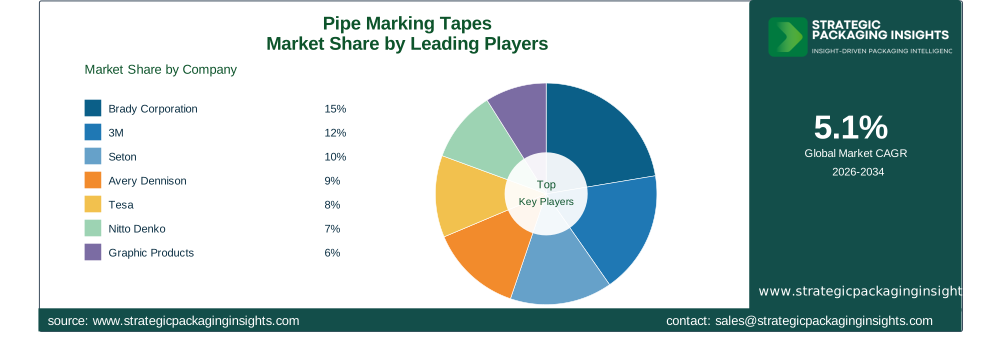
Avery Dennison and Seton are also prominent players in the market, known for their high-quality products and commitment to sustainability. These companies are focusing on developing eco-friendly solutions that align with global sustainability goals and meet the growing demand for environmentally friendly products. By prioritizing sustainability and innovation, Avery Dennison and Seton are enhancing their competitive edge and expanding their market presence. Their strategic partnerships and collaborations with other industry players further strengthen their market position and enable them to reach a wider customer base.
Tesa and Nitto Denko are key players in the market, known for their advanced adhesive technologies and high-performance products. These companies are investing in research and development to create cutting-edge solutions that enhance the durability and effectiveness of pipe marking tapes. Their focus on innovation and quality has enabled them to capture a significant share of the market and maintain their competitive edge. By leveraging their global presence and distribution networks, Tesa and Nitto Denko are expanding their market reach and enhancing their brand reputation.
Graphic Products, LabelTac, HellermannTyton, and Panduit are also notable players in the market, known for their innovative products and commitment to customer satisfaction. These companies are focusing on developing solutions that meet the specific needs of their customers and enhance operational efficiency. By prioritizing quality and customer service, they are strengthening their market position and capturing a larger share of the market. Their strategic partnerships and collaborations with other industry players further enhance their competitive edge and enable them to expand their market presence.
Key Highlights
- Market Size: The Pipe Marking Tapes market was valued at USD 1.29 billion in 2025 and is projected to reach USD 2.02 billion by 2034.
- Growth Rate: The market is expected to grow at a CAGR of 5.1% during the forecast period.
- Leading Companies: Key players include Brady Corporation, 3M, Seton, Avery Dennison, and Tesa.
- Material Type: Vinyl, Polyester, Polypropylene, and Reflective Film are the primary materials used.
- Product Type: Includes Directional Flow Tapes, Hazard Tapes, and Color-Coded Tapes.
- Application Areas: Industrial Pipes, Utility Lines, Chemical Plants, and HVAC systems.
- End Use Industries: Manufacturing, Oil & Gas, Construction, and Utilities.
Pipe Marking Tapes Market Segments Insights

Material Type Analysis
The Pipe Marking Tapes market is segmented by material type into Vinyl, Polyester, Polypropylene, and Reflective Film. Vinyl is the most commonly used material due to its durability and resistance to harsh environmental conditions. It is widely used in industrial settings where exposure to chemicals and extreme temperatures is common. Companies like Brady Corporation and 3M are leading the market by offering high-quality vinyl tapes that meet industry standards and enhance safety in industrial environments. Polyester and Polypropylene tapes are also gaining popularity due to their cost-effectiveness and versatility. These materials are suitable for a wide range of applications, including utility lines and chemical plants, where durability and performance are critical.
Reflective Film tapes are increasingly being used in applications where visibility is a priority, such as in low-light conditions or areas with high traffic. These tapes enhance safety by providing clear and visible identification of pipe contents and flow directions. Companies like Avery Dennison and Seton are focusing on developing innovative reflective film tapes that meet the specific needs of their customers and comply with regulatory standards. The growing demand for safety and compliance in industrial settings is expected to drive the adoption of reflective film tapes in the coming years.
Product Type Analysis
The market is segmented by product type into Directional Flow Tapes, Hazard Tapes, and Color-Coded Tapes. Directional Flow Tapes are widely used in industrial settings to indicate the direction of flow in pipes, thereby enhancing safety and operational efficiency. Companies like Tesa and Nitto Denko are leading the market by offering high-quality directional flow tapes that meet industry standards and enhance safety in industrial environments. Hazard Tapes are used to indicate potential hazards and ensure compliance with safety regulations. These tapes are essential in industries such as oil & gas and chemical plants, where safety is a top priority.
Color-Coded Tapes are used to identify different types of pipes and their contents, thereby enhancing safety and operational efficiency. These tapes are widely used in industries such as manufacturing and utilities, where clear and visible identification of pipes is essential for preventing accidents and ensuring smooth operations. Companies like Graphic Products and LabelTac are focusing on developing innovative color-coded tapes that meet the specific needs of their customers and comply with regulatory standards. The growing emphasis on safety and compliance in industrial settings is expected to drive the adoption of color-coded tapes in the coming years.
Application Analysis
The Pipe Marking Tapes market is segmented by application into Industrial Pipes, Utility Lines, Chemical Plants, and HVAC systems. Industrial Pipes are the largest application segment, driven by the increasing demand for safety and compliance in industrial settings. Companies like HellermannTyton and Panduit are leading the market by offering high-quality pipe marking tapes that meet industry standards and enhance safety in industrial environments. Utility Lines are also a significant application segment, as they require effective pipe marking solutions to ensure operational efficiency and safety.
Chemical Plants and HVAC systems are also key application segments, as they require effective pipe marking solutions to ensure safety and compliance with regulatory standards. Companies are focusing on developing innovative products that meet the specific needs of these industries and enhance operational efficiency. The growing emphasis on safety and compliance in industrial settings is expected to drive the adoption of pipe marking tapes in these application segments in the coming years.
End Use Analysis
The market is segmented by end use into Manufacturing, Oil & Gas, Construction, and Utilities. Manufacturing is the largest end-use segment, driven by the increasing demand for safety and compliance in industrial settings. Companies like Brady Corporation and 3M are leading the market by offering high-quality pipe marking tapes that meet industry standards and enhance safety in manufacturing environments. Oil & Gas is also a significant end-use segment, as it requires effective pipe marking solutions to ensure safety and compliance with regulatory standards.
Construction and Utilities are also key end-use segments, as they require effective pipe marking solutions to ensure operational efficiency and safety. Companies are focusing on developing innovative products that meet the specific needs of these industries and enhance operational efficiency. The growing emphasis on safety and compliance in industrial settings is expected to drive the adoption of pipe marking tapes in these end-use segments in the coming years.
Pipe Marking Tapes Market Segments
The Pipe Marking Tapes market has been segmented on the basis ofBy Material Type
- Vinyl
- Polyester
- Polypropylene
- Reflective Film
By Product Type
- Directional Flow Tapes
- Hazard Tapes
- Color-Coded Tapes
By Application
- Industrial Pipes
- Utility Lines
- Chemical Plants
- HVAC
By End Use
- Manufacturing
- Oil & Gas
- Construction
- Utilities
Region
- Asia Pacific
- North America
- Latin America
- Europe
- Middle East & Africa




