


Pharmaceutical-Grade PCR Blister Packaging Market Outlook
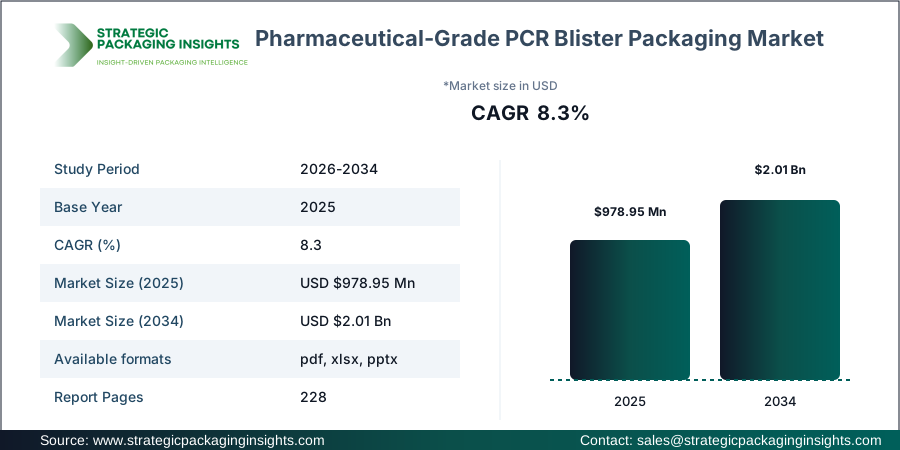
The Pharmaceutical-Grade PCR Blister Packaging market was valued at $978.95 million in 2025 and is projected to reach $2.01 billion by 2034, growing at a CAGR of 8.3% during the forecast period 2026-2034. This market is witnessing significant growth due to the increasing demand for sustainable and eco-friendly packaging solutions in the pharmaceutical industry. The shift towards using post-consumer recycled (PCR) materials in blister packaging is driven by stringent environmental regulations and the growing consumer awareness about sustainability. The adoption of PCR blister packaging is further fueled by advancements in material technology, which enhance the barrier properties and extend the shelf life of pharmaceutical products.
Despite the promising growth prospects, the market faces challenges such as high initial costs associated with the adoption of PCR materials and the need for specialized machinery for production. Regulatory hurdles also pose a significant barrier, as pharmaceutical packaging must comply with strict safety and quality standards. However, the potential for growth remains substantial, as pharmaceutical companies increasingly prioritize sustainability in their operations. The market is also poised to benefit from the rising demand for over-the-counter (OTC) medicines and nutraceuticals, which require efficient and reliable packaging solutions.
Report Scope
| Attributes | Details |
| Report Title | Pharmaceutical-Grade PCR Blister Packaging Market Size, Future Growth and Forecast 2034 |
| By Material Type | rPET blister films, recycled PVC alternatives, PCR barrier films |
| By Packaging Type | tablet blisters, capsule blisters, unit-dose packs |
| By Application | solid dose drugs, OTC medicines, nutraceuticals |
| By End Use | pharma companies, CDMOs, packaging converters |
| Region | Asia Pacific, North America, Latin America, Europe, Middle East & Africa |
| Base Year | 2025 |
| Historic Period | 2018-2024 |
| Forecast Period | 2026-2034 |
| Number of Pages | 228 |
| Customization Available | Yes* |
Opportunities & Threats
The Pharmaceutical-Grade PCR Blister Packaging market presents numerous opportunities, primarily driven by the increasing emphasis on sustainability and environmental responsibility. As consumers and regulatory bodies push for greener solutions, pharmaceutical companies are compelled to adopt eco-friendly packaging options. This shift is creating a lucrative market for PCR blister packaging, which not only meets environmental standards but also offers enhanced product protection. Additionally, the growing demand for OTC medicines and nutraceuticals, which require efficient packaging solutions, is further propelling market growth. The expansion of the pharmaceutical industry in emerging markets also presents significant opportunities, as these regions seek to modernize their healthcare infrastructure and adopt sustainable practices.
Another opportunity lies in technological advancements that are enhancing the functionality and appeal of PCR blister packaging. Innovations in material science are leading to the development of high-barrier films that improve the shelf life and safety of pharmaceutical products. These advancements are making PCR blister packaging more attractive to pharmaceutical companies looking to enhance their product offerings. Furthermore, the increasing focus on personalized medicine and the need for unit-dose packaging solutions are driving demand for PCR blister packaging, as it offers precise dosing and improved patient compliance.
However, the market is not without its threats. One of the primary challenges is the high cost associated with the production and adoption of PCR materials. The initial investment required for specialized machinery and the complexities involved in the recycling process can be prohibitive for some companies. Additionally, the market faces regulatory challenges, as pharmaceutical packaging must adhere to stringent safety and quality standards. Any changes in regulations or delays in approvals can impact market growth. Moreover, the availability of raw materials for PCR production can be inconsistent, leading to supply chain disruptions and increased costs.
Drivers & Challenges
The Pharmaceutical-Grade PCR Blister Packaging market is driven by several key factors, including the increasing demand for sustainable packaging solutions and the growing awareness of environmental issues. As consumers become more environmentally conscious, there is a rising demand for packaging solutions that minimize environmental impact. PCR blister packaging, made from recycled materials, aligns with this trend and offers pharmaceutical companies a way to reduce their carbon footprint. Additionally, the regulatory push for sustainable practices in the pharmaceutical industry is encouraging companies to adopt PCR packaging solutions. The need for efficient and reliable packaging for OTC medicines and nutraceuticals is also driving market growth, as these products require packaging that ensures product integrity and safety.
Technological advancements are another significant driver of the market. Innovations in material science are leading to the development of high-performance PCR materials that offer superior barrier properties and extend the shelf life of pharmaceutical products. These advancements are making PCR blister packaging more attractive to pharmaceutical companies looking to enhance their product offerings. Furthermore, the increasing focus on personalized medicine and the need for unit-dose packaging solutions are driving demand for PCR blister packaging, as it offers precise dosing and improved patient compliance.
Despite the positive drivers, the market faces several challenges that could hinder its growth. One of the primary challenges is the high cost associated with the production and adoption of PCR materials. The initial investment required for specialized machinery and the complexities involved in the recycling process can be prohibitive for some companies. Additionally, the market faces regulatory challenges, as pharmaceutical packaging must adhere to stringent safety and quality standards. Any changes in regulations or delays in approvals can impact market growth. Moreover, the availability of raw materials for PCR production can be inconsistent, leading to supply chain disruptions and increased costs.
Market Share Analysis
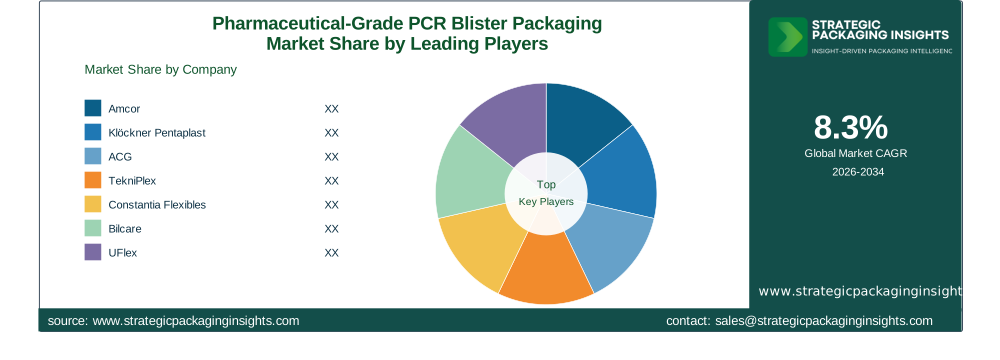
The competitive landscape of the Pharmaceutical-Grade PCR Blister Packaging market is characterized by the presence of several key players who are driving innovation and growth in the industry. Companies such as Amcor, Klöckner Pentaplast, ACG, TekniPlex, Constantia Flexibles, Bilcare, UFlex, Honeywell, Perlen Packaging, and Liveo Research are at the forefront of this market, leveraging their expertise and resources to develop advanced packaging solutions. These companies are focusing on expanding their product portfolios and enhancing their production capabilities to meet the growing demand for sustainable packaging solutions.
Amcor, a leading player in the market, is known for its innovative packaging solutions and commitment to sustainability. The company has been investing in research and development to create high-performance PCR materials that offer superior barrier properties and extend the shelf life of pharmaceutical products. Klöckner Pentaplast, another major player, is focused on developing eco-friendly packaging solutions that meet the stringent regulatory requirements of the pharmaceutical industry. The company's expertise in material science and its global presence make it a key player in the market.
ACG and TekniPlex are also significant contributors to the market, offering a wide range of PCR blister packaging solutions that cater to the diverse needs of the pharmaceutical industry. These companies are investing in advanced manufacturing technologies to enhance their production capabilities and improve the quality of their products. Constantia Flexibles and Bilcare are known for their innovative approaches to packaging design and their commitment to sustainability. These companies are leveraging their expertise in material science to develop high-performance PCR materials that meet the evolving needs of the pharmaceutical industry.
UFlex, Honeywell, Perlen Packaging, and Liveo Research are also key players in the market, each bringing unique strengths and capabilities to the table. UFlex is known for its advanced manufacturing technologies and its focus on sustainability, while Honeywell is recognized for its expertise in material science and its commitment to innovation. Perlen Packaging and Liveo Research are also making significant contributions to the market, offering a range of PCR blister packaging solutions that cater to the diverse needs of the pharmaceutical industry.
Key Highlights
- The Pharmaceutical-Grade PCR Blister Packaging market is projected to grow at a CAGR of 8.3% from 2026 to 2034.
- Increasing demand for sustainable and eco-friendly packaging solutions is driving market growth.
- Technological advancements in material science are enhancing the functionality of PCR blister packaging.
- Regulatory push for sustainable practices in the pharmaceutical industry is encouraging the adoption of PCR packaging solutions.
- The market is witnessing significant growth in emerging markets due to the expansion of the pharmaceutical industry.
- High initial costs and regulatory challenges are key restraints for market growth.
- Key players in the market include Amcor, Klöckner Pentaplast, ACG, TekniPlex, and Constantia Flexibles.
Top Countries Insights
In the Pharmaceutical-Grade PCR Blister Packaging market, the United States stands out as a key player, with a market size of approximately $500 million and a CAGR of 7%. The country's strong regulatory framework and emphasis on sustainability are driving the adoption of PCR blister packaging. The demand for eco-friendly packaging solutions is further fueled by consumer awareness and the pharmaceutical industry's commitment to reducing its environmental impact. Additionally, technological advancements and the presence of major market players contribute to the growth of the market in the United States.
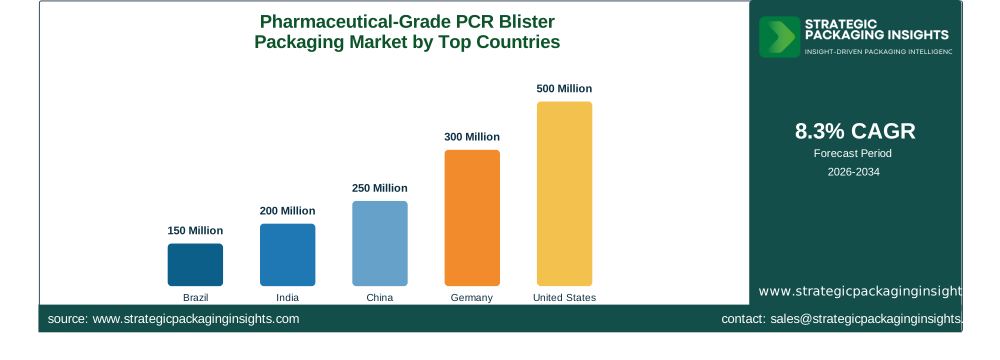
Germany is another significant market, with a market size of around $300 million and a CAGR of 6%. The country's robust pharmaceutical industry and focus on innovation are key drivers of market growth. Germany's commitment to sustainability and stringent regulatory standards are encouraging the adoption of PCR blister packaging. The presence of leading packaging companies and advancements in material science are further propelling market growth in the region.
China, with a market size of approximately $250 million and a CAGR of 9%, is experiencing rapid growth in the Pharmaceutical-Grade PCR Blister Packaging market. The country's expanding pharmaceutical industry and increasing focus on sustainability are driving demand for eco-friendly packaging solutions. Government initiatives to promote sustainable practices and the presence of a large consumer base are further contributing to market growth in China.
India, with a market size of around $200 million and a CAGR of 10%, is emerging as a key market for PCR blister packaging. The country's growing pharmaceutical industry and emphasis on sustainability are driving demand for eco-friendly packaging solutions. The government's focus on promoting sustainable practices and the presence of a large consumer base are further contributing to market growth in India.
Brazil, with a market size of approximately $150 million and a CAGR of 8%, is also witnessing significant growth in the Pharmaceutical-Grade PCR Blister Packaging market. The country's expanding pharmaceutical industry and focus on sustainability are driving demand for eco-friendly packaging solutions. Government initiatives to promote sustainable practices and the presence of a large consumer base are further contributing to market growth in Brazil.
Pharmaceutical-Grade PCR Blister Packaging Market Segments Insights

Material Type Analysis
The Pharmaceutical-Grade PCR Blister Packaging market is segmented by material type into rPET blister films, recycled PVC alternatives, and PCR barrier films. rPET blister films are gaining traction due to their excellent barrier properties and recyclability, making them a preferred choice for pharmaceutical companies aiming to reduce their environmental footprint. The demand for recycled PVC alternatives is also on the rise, driven by regulatory pressures to eliminate PVC from pharmaceutical packaging due to its environmental impact. PCR barrier films are becoming increasingly popular as they offer enhanced protection against moisture and oxygen, ensuring the integrity and shelf life of pharmaceutical products.
Technological advancements in material science are playing a crucial role in the development of high-performance PCR materials. These advancements are enabling the production of films with superior barrier properties, which are essential for maintaining the efficacy and safety of pharmaceutical products. The growing focus on sustainability and the need to comply with stringent regulatory standards are driving the adoption of PCR materials in blister packaging. As pharmaceutical companies continue to prioritize sustainability, the demand for PCR materials is expected to increase, further propelling market growth.
Packaging Type Analysis
The market is also segmented by packaging type into tablet blisters, capsule blisters, and unit-dose packs. Tablet blisters are the most widely used packaging type, owing to their ability to provide excellent protection and convenience for solid dose drugs. Capsule blisters are also gaining popularity, as they offer similar benefits and are suitable for a wide range of pharmaceutical products. Unit-dose packs are becoming increasingly important in the market, driven by the growing demand for personalized medicine and the need for precise dosing solutions.
The demand for unit-dose packs is particularly strong in the OTC medicines and nutraceuticals segments, where precise dosing and patient compliance are critical. The increasing focus on patient-centric healthcare and the need for efficient packaging solutions are driving the adoption of unit-dose packs in the pharmaceutical industry. As the market continues to evolve, the demand for innovative packaging solutions that enhance patient safety and convenience is expected to grow, further driving the adoption of PCR blister packaging.
Application Analysis
By application, the market is segmented into solid dose drugs, OTC medicines, and nutraceuticals. Solid dose drugs represent the largest application segment, as they require robust packaging solutions to ensure product integrity and safety. The demand for PCR blister packaging in this segment is driven by the need for sustainable and eco-friendly packaging solutions that comply with regulatory standards. OTC medicines and nutraceuticals are also significant application segments, as they require packaging solutions that offer convenience and enhance patient compliance.
The growing demand for OTC medicines and nutraceuticals is driving the adoption of PCR blister packaging, as these products require packaging solutions that ensure product safety and integrity. The increasing focus on health and wellness and the rising consumer awareness about the benefits of nutraceuticals are further propelling market growth. As the demand for these products continues to rise, the need for efficient and reliable packaging solutions is expected to increase, driving the adoption of PCR blister packaging in the pharmaceutical industry.
End Use Analysis
The market is segmented by end use into pharma companies, CDMOs, and packaging converters. Pharma companies are the largest end-use segment, as they are the primary consumers of PCR blister packaging solutions. The demand for sustainable and eco-friendly packaging solutions is driving the adoption of PCR blister packaging among pharma companies, as they seek to reduce their environmental impact and comply with regulatory standards. CDMOs and packaging converters are also significant end-use segments, as they play a crucial role in the production and distribution of pharmaceutical packaging solutions.
The growing demand for PCR blister packaging among CDMOs and packaging converters is driven by the need for efficient and reliable packaging solutions that meet the evolving needs of the pharmaceutical industry. As the market continues to evolve, the demand for innovative packaging solutions that enhance product safety and convenience is expected to grow, further driving the adoption of PCR blister packaging. The increasing focus on sustainability and the need to comply with regulatory standards are also driving the adoption of PCR blister packaging among CDMOs and packaging converters.
Pharmaceutical-Grade PCR Blister Packaging Market Segments
The Pharmaceutical-Grade PCR Blister Packaging market has been segmented on the basis ofBy Material Type
- rPET blister films
- recycled PVC alternatives
- PCR barrier films
By Packaging Type
- tablet blisters
- capsule blisters
- unit-dose packs
By Application
- solid dose drugs
- OTC medicines
- nutraceuticals
By End Use
- pharma companies
- CDMOs
- packaging converters
Region
- Asia Pacific
- North America
- Latin America
- Europe
- Middle East & Africa




