


PFAS-Free Barrier Coatings for Food Paper Market Outlook
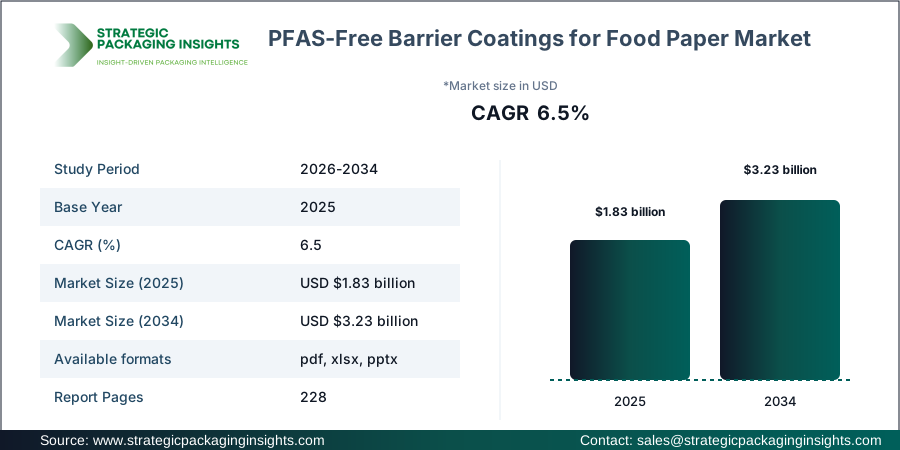
The PFAS-Free Barrier Coatings for Food Paper market was valued at $1.83 billion in 2025 and is projected to reach $3.23 billion by 2034, growing at a CAGR of 6.5% during the forecast period 2026-2034. This market is witnessing significant growth due to increasing consumer awareness and regulatory pressures to eliminate per- and polyfluoroalkyl substances (PFAS) from food packaging materials. The demand for sustainable and eco-friendly packaging solutions is driving the adoption of PFAS-free barrier coatings, which offer effective moisture, oil, and grease resistance without the environmental and health risks associated with PFAS. The market is also benefiting from technological advancements in coating formulations, which enhance the performance and application versatility of these products.
Despite the promising growth trajectory, the PFAS-Free Barrier Coatings for Food Paper market faces challenges such as the high cost of raw materials and the complexity of developing coatings that meet stringent performance standards. Regulatory frameworks across different regions are also evolving, which can create uncertainties for manufacturers. However, the potential for growth remains substantial, driven by the increasing demand for sustainable packaging solutions and the ongoing innovation in coating technologies. Companies are investing in research and development to create more cost-effective and efficient PFAS-free coatings, which is expected to further propel market growth in the coming years.
Report Scope
| Attributes | Details |
| Report Title | PFAS-Free Barrier Coatings for Food Paper Market Size, Future Growth and Forecast 2034 |
| Application | Packaging, Foodservice |
| End Use | Paper, Cartons, Trays |
| Barrier Type | Moisture, Oil, Grease |
| Region | Asia Pacific, North America, Latin America, Europe, Middle East & Africa |
| Base Year | 2025 |
| Historic Period | 2018-2024 |
| Forecast Period | 2026-2034 |
| Number of Pages | 228 |
| Customization Available | Yes* |
Opportunities & Threats
The PFAS-Free Barrier Coatings for Food Paper market presents numerous opportunities, primarily driven by the growing consumer demand for sustainable and environmentally friendly packaging solutions. As awareness about the harmful effects of PFAS on health and the environment increases, there is a significant shift towards PFAS-free alternatives. This trend is further supported by stringent regulations and bans on PFAS in several regions, creating a favorable environment for market growth. Additionally, advancements in coating technologies are enabling the development of high-performance PFAS-free coatings that offer superior barrier properties, opening new avenues for application in various food packaging formats.
Another opportunity lies in the expanding foodservice industry, which is increasingly adopting PFAS-free barrier coatings to meet consumer preferences for sustainable packaging. The rise of e-commerce and food delivery services has also contributed to the demand for effective barrier coatings that ensure food safety and quality during transportation. Moreover, collaborations between coating manufacturers and food packaging companies are fostering innovation and accelerating the adoption of PFAS-free solutions. These partnerships are crucial in addressing the challenges of cost and performance, thereby enhancing the market's growth potential.
However, the market faces threats from the high cost of developing and producing PFAS-free barrier coatings, which can limit their adoption, especially among small and medium-sized enterprises. The complexity of formulating coatings that meet diverse performance requirements without PFAS poses a significant challenge for manufacturers. Additionally, the market is subject to regulatory uncertainties, as different regions have varying standards and timelines for PFAS phase-out. These factors can create barriers to entry and hinder the market's growth, necessitating strategic planning and investment in research and development to overcome these challenges.
Drivers & Challenges
The primary drivers of the PFAS-Free Barrier Coatings for Food Paper market include the increasing regulatory pressure to eliminate PFAS from food packaging and the growing consumer demand for sustainable packaging solutions. Governments and regulatory bodies worldwide are implementing stringent regulations and bans on PFAS, prompting manufacturers to seek alternative solutions. This regulatory landscape is a significant driver for the market, as companies strive to comply with new standards and avoid potential penalties. Additionally, the rising awareness of environmental issues and the demand for eco-friendly products are encouraging the adoption of PFAS-free barrier coatings, which offer a safer and more sustainable option for food packaging.
Technological advancements in coating formulations are also driving market growth by enhancing the performance and application versatility of PFAS-free barrier coatings. Innovations in materials science are enabling the development of coatings that provide effective moisture, oil, and grease resistance without the use of PFAS. These advancements are crucial in meeting the diverse needs of the food packaging industry, which requires coatings that can withstand various environmental conditions and maintain food quality. Furthermore, the increasing focus on research and development is leading to the creation of more cost-effective and efficient PFAS-free coatings, which is expected to boost market adoption.
Despite these drivers, the market faces several challenges, including the high cost of raw materials and the complexity of developing coatings that meet stringent performance standards. The formulation of PFAS-free barrier coatings requires advanced materials and technologies, which can increase production costs and limit their adoption, particularly among smaller companies. Additionally, the market is subject to regulatory uncertainties, as different regions have varying standards and timelines for PFAS phase-out. These challenges necessitate strategic planning and investment in research and development to overcome barriers and capitalize on the market's growth potential.
Market Share Analysis
The competitive landscape of the PFAS-Free Barrier Coatings for Food Paper market is characterized by the presence of several key players who are actively investing in research and development to enhance their product offerings and gain a competitive edge. Companies such as 3M, DuPont, Ahlstrom-Munksjö, BASF, Dow, Solvay, Honeywell, Avery Dennison, Archroma, and Rayonier Advanced Materials are leading the market with their innovative PFAS-free barrier coating solutions. These companies are focusing on developing high-performance coatings that meet the evolving needs of the food packaging industry while complying with regulatory standards.
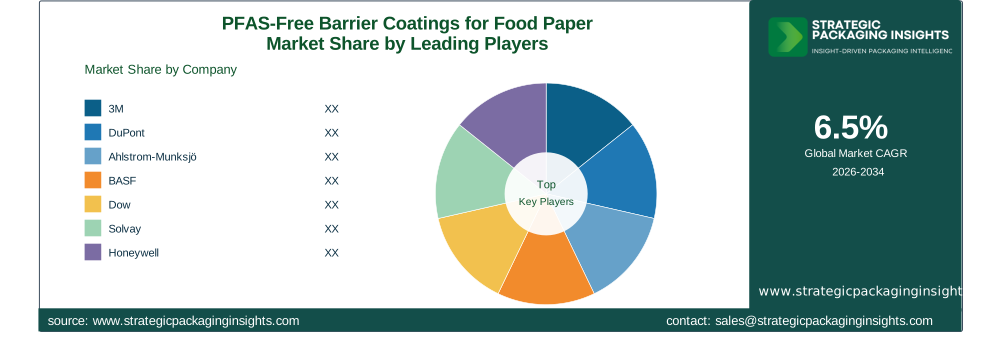
3M is a prominent player in the market, known for its extensive range of PFAS-free barrier coatings that offer superior performance and environmental benefits. The company's commitment to sustainability and innovation has positioned it as a leader in the industry. DuPont, another key player, is leveraging its expertise in materials science to develop advanced PFAS-free coatings that provide effective barrier properties and enhance food safety. Ahlstrom-Munksjö is also making significant strides in the market with its sustainable and high-performance barrier coatings, which are gaining traction among food packaging manufacturers.
BASF and Dow are major players in the PFAS-Free Barrier Coatings for Food Paper market, known for their strong focus on research and development and their ability to deliver innovative solutions that meet the industry's demands. Solvay and Honeywell are also key contributors to the market, offering a range of PFAS-free coatings that cater to various applications in the food packaging sector. Avery Dennison and Archroma are expanding their product portfolios to include PFAS-free barrier coatings, capitalizing on the growing demand for sustainable packaging solutions.
Rayonier Advanced Materials is another significant player in the market, known for its commitment to sustainability and innovation. The company's PFAS-free barrier coatings are designed to provide effective protection against moisture, oil, and grease, making them ideal for food packaging applications. Overall, the competitive landscape of the PFAS-Free Barrier Coatings for Food Paper market is dynamic, with companies continuously investing in research and development to enhance their product offerings and meet the evolving needs of the industry.
Key Highlights
- The PFAS-Free Barrier Coatings for Food Paper market is projected to grow at a CAGR of 6.5% from 2026 to 2034.
- Increasing regulatory pressure to eliminate PFAS from food packaging is a significant driver for market growth.
- Technological advancements in coating formulations are enhancing the performance of PFAS-free barrier coatings.
- The foodservice industry is a key end-user segment, driving demand for sustainable packaging solutions.
- High raw material costs and regulatory uncertainties pose challenges to market growth.
- Key players in the market include 3M, DuPont, Ahlstrom-Munksjö, BASF, Dow, Solvay, Honeywell, Avery Dennison, Archroma, and Rayonier Advanced Materials.
- Collaborations between coating manufacturers and food packaging companies are fostering innovation and accelerating market adoption.
- The market is witnessing a shift towards eco-friendly and sustainable packaging solutions.
- Research and development investments are crucial for overcoming challenges and capitalizing on growth opportunities.
Top Countries Insights
In the PFAS-Free Barrier Coatings for Food Paper market, the United States is a leading country, with a market size of approximately $650 million and a CAGR of 7%. The country's growth is driven by stringent regulations on PFAS usage and a strong consumer preference for sustainable packaging solutions. The presence of major market players and ongoing research and development activities further contribute to the market's expansion in the United States.
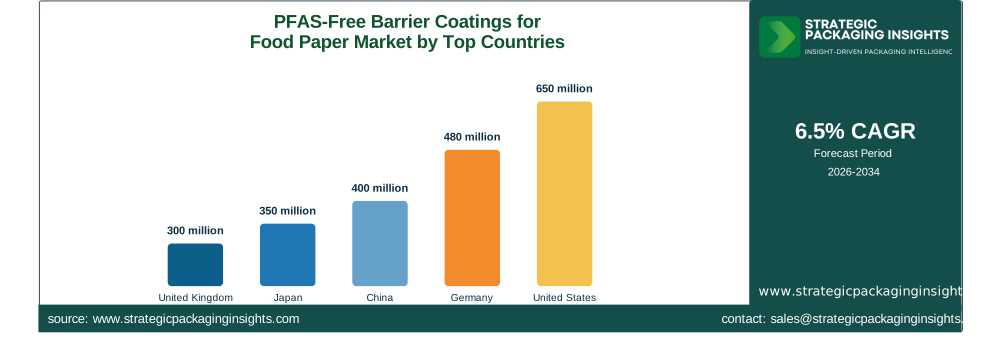
Germany is another key market, with a market size of around $480 million and a CAGR of 6%. The country's robust regulatory framework and focus on environmental sustainability are driving the adoption of PFAS-free barrier coatings. Germany's well-established food packaging industry and technological advancements in coating formulations are also contributing to market growth.
China is experiencing rapid growth in the PFAS-Free Barrier Coatings for Food Paper market, with a market size of approximately $400 million and a CAGR of 8%. The country's expanding foodservice industry and increasing consumer awareness of environmental issues are driving demand for sustainable packaging solutions. Government initiatives to reduce PFAS usage and promote eco-friendly alternatives are further supporting market growth in China.
Japan is a significant market for PFAS-free barrier coatings, with a market size of about $350 million and a CAGR of 5%. The country's strong focus on innovation and technological advancements in coating formulations are driving market growth. Japan's commitment to environmental sustainability and the presence of key market players are also contributing to the adoption of PFAS-free solutions.
In the United Kingdom, the PFAS-Free Barrier Coatings for Food Paper market is valued at approximately $300 million, with a CAGR of 6%. The country's stringent regulations on PFAS usage and growing consumer demand for sustainable packaging are driving market growth. The presence of a well-established food packaging industry and ongoing research and development activities are further supporting the market's expansion in the United Kingdom.
PFAS-Free Barrier Coatings for Food Paper Market Segments Insights

Application Analysis
The application segment of the PFAS-Free Barrier Coatings for Food Paper market is primarily divided into packaging and foodservice. The packaging segment is witnessing significant growth due to the increasing demand for sustainable and eco-friendly packaging solutions. As consumers become more aware of the environmental impact of PFAS, there is a growing preference for PFAS-free alternatives that offer effective barrier properties without compromising on performance. The foodservice segment is also experiencing robust growth, driven by the rise of e-commerce and food delivery services, which require effective barrier coatings to ensure food safety and quality during transportation.
Technological advancements in coating formulations are playing a crucial role in the growth of the application segment. Innovations in materials science are enabling the development of high-performance PFAS-free coatings that provide superior moisture, oil, and grease resistance. These advancements are crucial in meeting the diverse needs of the food packaging industry, which requires coatings that can withstand various environmental conditions and maintain food quality. Additionally, collaborations between coating manufacturers and food packaging companies are fostering innovation and accelerating the adoption of PFAS-free solutions, further driving growth in the application segment.
End Use Analysis
The end-use segment of the PFAS-Free Barrier Coatings for Food Paper market includes paper, cartons, and trays. The paper segment is the largest end-user, driven by the increasing demand for sustainable and eco-friendly packaging solutions. As consumers become more aware of the environmental impact of PFAS, there is a growing preference for PFAS-free alternatives that offer effective barrier properties without compromising on performance. The cartons and trays segments are also experiencing robust growth, driven by the rise of e-commerce and food delivery services, which require effective barrier coatings to ensure food safety and quality during transportation.
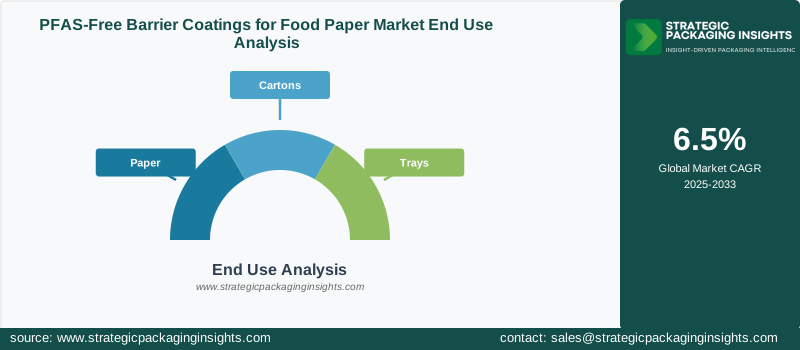
Technological advancements in coating formulations are playing a crucial role in the growth of the end-use segment. Innovations in materials science are enabling the development of high-performance PFAS-free coatings that provide superior moisture, oil, and grease resistance. These advancements are crucial in meeting the diverse needs of the food packaging industry, which requires coatings that can withstand various environmental conditions and maintain food quality. Additionally, collaborations between coating manufacturers and food packaging companies are fostering innovation and accelerating the adoption of PFAS-free solutions, further driving growth in the end-use segment.
Barrier Type Analysis
The barrier type segment of the PFAS-Free Barrier Coatings for Food Paper market is divided into moisture, oil, and grease barriers. The moisture barrier segment is witnessing significant growth due to the increasing demand for effective moisture-resistant coatings in food packaging. As consumers become more aware of the environmental impact of PFAS, there is a growing preference for PFAS-free alternatives that offer effective moisture barrier properties without compromising on performance. The oil and grease barrier segments are also experiencing robust growth, driven by the rise of e-commerce and food delivery services, which require effective barrier coatings to ensure food safety and quality during transportation.
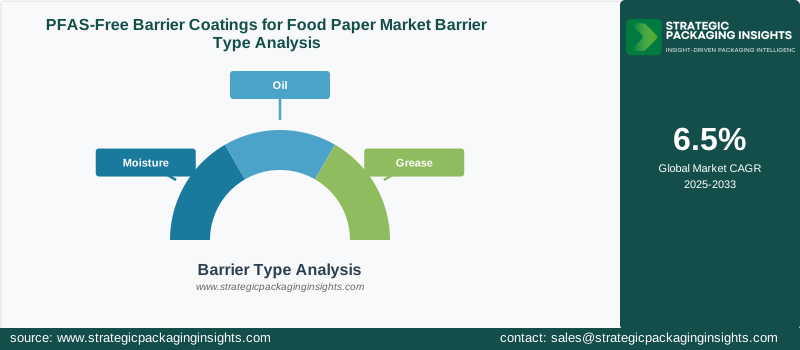
Technological advancements in coating formulations are playing a crucial role in the growth of the barrier type segment. Innovations in materials science are enabling the development of high-performance PFAS-free coatings that provide superior moisture, oil, and grease resistance. These advancements are crucial in meeting the diverse needs of the food packaging industry, which requires coatings that can withstand various environmental conditions and maintain food quality. Additionally, collaborations between coating manufacturers and food packaging companies are fostering innovation and accelerating the adoption of PFAS-free solutions, further driving growth in the barrier type segment.
PFAS-Free Barrier Coatings for Food Paper Market Segments
The PFAS-Free Barrier Coatings for Food Paper market has been segmented on the basis ofApplication
- Packaging
- Foodservice
End Use
- Paper
- Cartons
- Trays
Barrier Type
- Moisture
- Oil
- Grease
Region
- Asia Pacific
- North America
- Latin America
- Europe
- Middle East & Africa




