


Personal Care Packaging Market Outlook
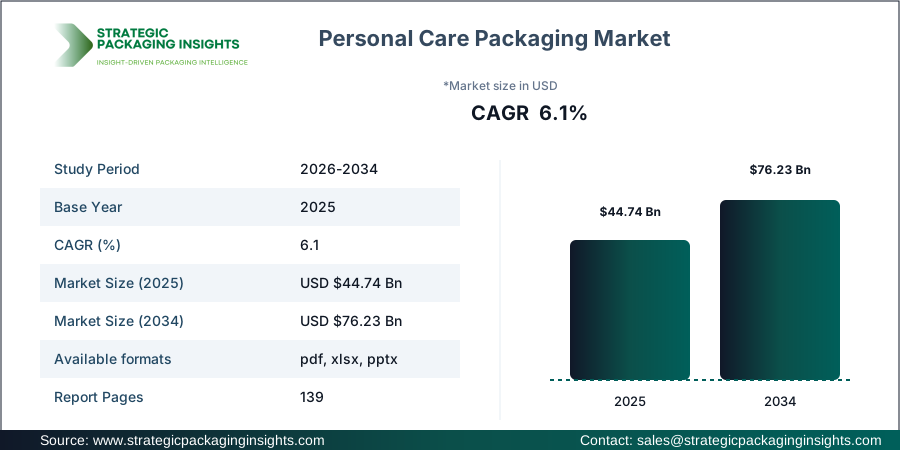
The Personal Care Packaging market size was valued at USD 44.74 billion in 2025 and is anticipated to reach USD 76.23 billion by 2034, growing at a CAGR of 6.1% during the forecast period according to Strategic Packaging Insights. The market is witnessing robust growth driven by increasing consumer demand for personal care products, which is further fueled by rising disposable incomes and urbanization. Companies like AptarGroup and Berry Global are at the forefront, innovating in sustainable packaging solutions to meet the evolving consumer preferences. The shift towards eco-friendly and recyclable materials is also a significant trend, as consumers become more environmentally conscious.
One of the most impactful drivers of the Personal Care Packaging market is the growing emphasis on sustainability and eco-friendly packaging solutions. Governments worldwide are implementing stringent regulations to reduce plastic waste, which is pushing companies to innovate and adopt sustainable practices. For instance, the European Union's directive on single-use plastics is compelling manufacturers to explore alternative materials and designs. This regulatory push, combined with consumer demand for greener products, is creating a fertile ground for growth in the personal care packaging sector. Companies like Amcor and Albea are investing heavily in research and development to create packaging that not only meets regulatory standards but also appeals to environmentally conscious consumers.
Report Scope
| Attributes | Details |
| Report Title | Personal Care Packaging Market Size, Future Growth and Forecast 2034 |
| By Packaging Type | Bottles, Tubes, Jars, Pumps |
| By Material Type | Plastic, Glass, Metal, Paperboard |
| By Application | Skincare, Haircare, Oral Care, Fragrances |
| By End Use | Beauty Brands, FMCG, Contract Fillers, Retail |
| Region | Asia Pacific, North America, Latin America, Europe, Middle East & Africa |
| Base Year | 2025 |
| Historic Period | 2018-2024 |
| Forecast Period | 2026-2034 |
| Number of Pages | 139 |
| Customization Available | Yes* |
Sustainability & Circular Economy Analysis
Sustainability initiatives and circular economy practices are significantly shaping the personal care packaging market. The increasing use of recyclable materials and the development of reusable packaging solutions are at the forefront of this transformation. Companies are focusing on lightweight packaging to reduce material usage and transportation costs, which also contributes to a lower carbon footprint. Innovations in eco-friendly materials, such as biodegradable plastics and plant-based alternatives, are gaining traction as brands strive to meet consumer expectations for sustainable products.
These sustainability trends are influencing packaging design and manufacturing processes, prompting companies to invest in new technologies and materials. The emphasis on waste reduction strategies and extended producer responsibility (EPR) is encouraging manufacturers to rethink their supply chain strategies. ESG initiatives are becoming a critical factor in investment decisions, as stakeholders prioritize companies with strong environmental credentials. This shift is driving long-term competitiveness in the market, as brands that align with sustainability goals are more likely to gain consumer trust and loyalty.
Regulatory compliance is another crucial aspect of sustainability in the personal care packaging market. Governments are implementing stricter packaging regulations to minimize environmental impact, which is compelling companies to innovate and adapt. The focus on reducing carbon footprints and adhering to packaging regulations is influencing supply chain strategies, as companies seek to localize production and sourcing to minimize environmental impact. This trend is expected to continue, with sustainability becoming a key differentiator in the competitive landscape of the personal care packaging market.
Packaging Value Chain & Supply Chain Analysis
The packaging value chain in the personal care industry is complex, involving multiple stakeholders from raw material suppliers to end consumers. Raw material sourcing is a critical component, with companies like Berry Global and Amcor focusing on sustainable materials to meet consumer demand and regulatory requirements. Packaging converters and manufacturers play a vital role in transforming these materials into finished products, utilizing advanced machinery and technologies to enhance efficiency and reduce waste.
Logistics and distribution channels are essential for ensuring the timely delivery of packaging products to brand owners and retailers. Efficient inventory management and supply chain resilience are crucial for maintaining competitiveness in the market. Companies are increasingly adopting localization strategies to mitigate risks associated with global sourcing and transportation. Strategic partnerships and collaborations are also becoming more prevalent, as companies seek to enhance their production capabilities and expand their market reach.
Recycling networks are an integral part of the packaging supply chain, as companies strive to close the loop and promote circular economy practices. Procurement strategies are evolving to prioritize sustainable materials and suppliers, aligning with broader ESG goals. The availability of raw materials and transportation capabilities are key factors influencing market performance, as companies navigate challenges related to supply chain disruptions and fluctuating material costs. Overall, the packaging value chain is becoming more integrated and sustainable, driven by consumer demand and regulatory pressures.
Opportunities & Threats
The personal care packaging market presents numerous opportunities for growth, driven by the increasing demand for innovative and sustainable packaging solutions. The rise of e-commerce and online retailing is creating new avenues for packaging companies to explore, as brands seek to enhance the consumer experience with unique and functional packaging designs. The growing popularity of subscription-based models in the personal care industry is also driving demand for customized and branded packaging solutions, offering companies the chance to differentiate themselves in a competitive market.
Another significant opportunity lies in the development of smart packaging technologies, which can enhance product functionality and consumer engagement. Companies are investing in research and development to create packaging that incorporates features such as QR codes, NFC tags, and augmented reality experiences. These innovations not only improve the consumer experience but also provide valuable data insights for brands, enabling them to tailor their marketing strategies and product offerings more effectively.
However, the personal care packaging market also faces several threats, including the volatility of raw material prices and supply chain disruptions. The reliance on plastic materials, despite the shift towards sustainability, poses a challenge as companies navigate fluctuating costs and regulatory pressures. Additionally, the increasing competition from private label brands and low-cost manufacturers is putting pressure on established companies to innovate and maintain their market share. To mitigate these threats, companies must focus on building resilient supply chains and investing in sustainable materials and technologies.
Drivers & Challenges
The personal care packaging market is driven by several key factors, including the growing consumer demand for personal care products and the increasing focus on sustainability. The rise in disposable incomes and urbanization is leading to higher consumption of personal care products, driving demand for packaging solutions. Companies like AptarGroup and Silgan Holdings are capitalizing on this trend by developing innovative packaging designs that cater to consumer preferences for convenience and functionality.
Another significant driver is the regulatory push towards sustainable packaging solutions. Governments worldwide are implementing stricter regulations to reduce plastic waste and promote recycling, compelling companies to innovate and adopt eco-friendly practices. This regulatory environment is creating opportunities for companies to differentiate themselves by offering sustainable packaging solutions that align with consumer values and expectations.
Despite these drivers, the personal care packaging market faces several challenges, including the volatility of raw material prices and supply chain disruptions. The reliance on plastic materials, despite the shift towards sustainability, poses a challenge as companies navigate fluctuating costs and regulatory pressures. Additionally, the increasing competition from private label brands and low-cost manufacturers is putting pressure on established companies to innovate and maintain their market share. To overcome these challenges, companies must focus on building resilient supply chains and investing in sustainable materials and technologies.
Market Share Analysis
The competitive landscape of the personal care packaging market is characterized by the presence of several key players, each striving to gain a larger share of the market. Companies like AptarGroup, Berry Global, and Amcor are leading the market with their innovative packaging solutions and strong focus on sustainability. These companies are investing heavily in research and development to create packaging that meets consumer demands for eco-friendly and functional designs.
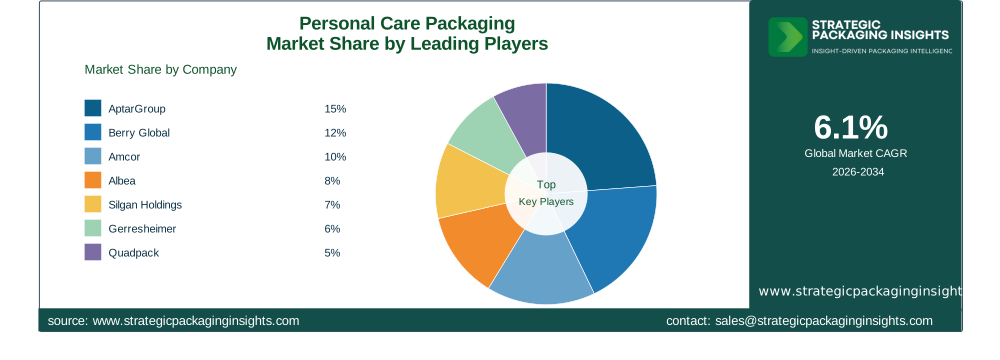
AptarGroup is a prominent player in the market, known for its innovative dispensing solutions and commitment to sustainability. The company is focused on developing packaging that enhances the consumer experience while minimizing environmental impact. Berry Global is another key player, offering a wide range of packaging solutions that cater to various personal care applications. The company's emphasis on sustainable materials and advanced manufacturing technologies has helped it maintain a strong market position.
Amcor is a leading provider of flexible and rigid packaging solutions, with a strong focus on sustainability and innovation. The company is committed to reducing its carbon footprint and promoting circular economy practices through its packaging designs. Albea is another significant player, known for its expertise in cosmetic packaging and its commitment to sustainable development. The company's focus on eco-friendly materials and innovative designs has helped it gain a competitive edge in the market.
Silgan Holdings is a major player in the personal care packaging market, offering a wide range of packaging solutions for various applications. The company's focus on sustainability and innovation has helped it maintain a strong market presence. Gerresheimer is another key player, known for its expertise in glass and plastic packaging solutions. The company's commitment to quality and sustainability has helped it establish a strong foothold in the market.
Key Highlights
- Market Size: The personal care packaging market was valued at USD 44.74 billion in 2025 and is projected to reach USD 76.23 billion by 2034.
- Growth Rate: The market is expected to grow at a CAGR of 6.1% during the forecast period.
- Leading Companies: Key players include AptarGroup, Berry Global, Amcor, and Albea.
- Packaging Type: Bottles and tubes are the most popular packaging types in the market.
- Material Type: Plastic remains the dominant material, but there is a growing shift towards sustainable alternatives.
- Application: Skincare and haircare are the largest application segments.
- Regional Growth: Asia Pacific is expected to witness the highest growth rate during the forecast period.
Personal Care Packaging Market Segments Insights

Packaging Type Analysis
The personal care packaging market is segmented by packaging type into bottles, tubes, jars, and pumps. Bottles and tubes are the most popular packaging types, driven by their versatility and convenience. Bottles are widely used for liquid products such as shampoos and lotions, while tubes are preferred for creams and gels due to their ease of use and portability. Companies like AptarGroup and Berry Global are focusing on innovative designs and materials to enhance the functionality and sustainability of these packaging types.
Jars and pumps are also gaining traction in the market, particularly for premium and luxury personal care products. Jars are favored for their aesthetic appeal and ability to preserve product integrity, making them ideal for high-end skincare and cosmetic products. Pumps, on the other hand, offer convenience and precise dispensing, making them popular for liquid and semi-liquid products. The growing demand for premium packaging solutions is driving innovation in this segment, with companies investing in advanced materials and technologies to meet consumer expectations.
Material Type Analysis
The personal care packaging market is segmented by material type into plastic, glass, metal, and paperboard. Plastic remains the dominant material due to its versatility, cost-effectiveness, and lightweight properties. However, there is a growing shift towards sustainable alternatives as consumers and regulators push for eco-friendly packaging solutions. Companies like Amcor and Albea are investing in biodegradable plastics and plant-based materials to meet this demand.
Glass is another popular material, particularly for premium and luxury products, due to its aesthetic appeal and recyclability. Metal packaging is favored for its durability and ability to preserve product integrity, making it ideal for products with longer shelf lives. Paperboard is gaining popularity as a sustainable alternative, offering a balance between functionality and environmental impact. The increasing focus on sustainability is driving innovation in material development, with companies exploring new materials and technologies to enhance the environmental performance of their packaging solutions.
Application Analysis
The personal care packaging market is segmented by application into skincare, haircare, oral care, and fragrances. Skincare and haircare are the largest application segments, driven by the growing demand for personal care products and the increasing focus on grooming and self-care. Companies like AptarGroup and Silgan Holdings are developing innovative packaging solutions to cater to the specific needs of these segments, such as airless pumps and tamper-evident closures.
Oral care and fragrances are also significant application segments, with companies focusing on packaging designs that enhance product functionality and consumer experience. The growing popularity of natural and organic products is driving demand for packaging solutions that preserve product integrity and align with consumer values. The increasing focus on sustainability is also influencing packaging design in these segments, with companies exploring eco-friendly materials and designs to meet consumer expectations.
End Use Analysis
The personal care packaging market is segmented by end use into beauty brands, FMCG, contract fillers, and retail. Beauty brands are the largest end-use segment, driven by the growing demand for innovative and sustainable packaging solutions. Companies like Amcor and Albea are focusing on developing packaging designs that enhance brand identity and consumer engagement, such as customized and branded packaging solutions.
FMCG and contract fillers are also significant end-use segments, with companies seeking packaging solutions that offer convenience, functionality, and sustainability. The growing popularity of e-commerce and online retailing is driving demand for packaging solutions that enhance the consumer experience and protect products during transit. The increasing focus on sustainability is also influencing packaging design in these segments, with companies exploring eco-friendly materials and designs to meet consumer expectations.
Personal Care Packaging Market Segments
The Personal Care Packaging market has been segmented on the basis ofBy Packaging Type
- Bottles
- Tubes
- Jars
- Pumps
By Material Type
- Plastic
- Glass
- Metal
- Paperboard
By Application
- Skincare
- Haircare
- Oral Care
- Fragrances
By End Use
- Beauty Brands
- FMCG
- Contract Fillers
- Retail
Region
- Asia Pacific
- North America
- Latin America
- Europe
- Middle East & Africa




