


PCR Market for Liquor, Water and Beverage Bottles Market Outlook
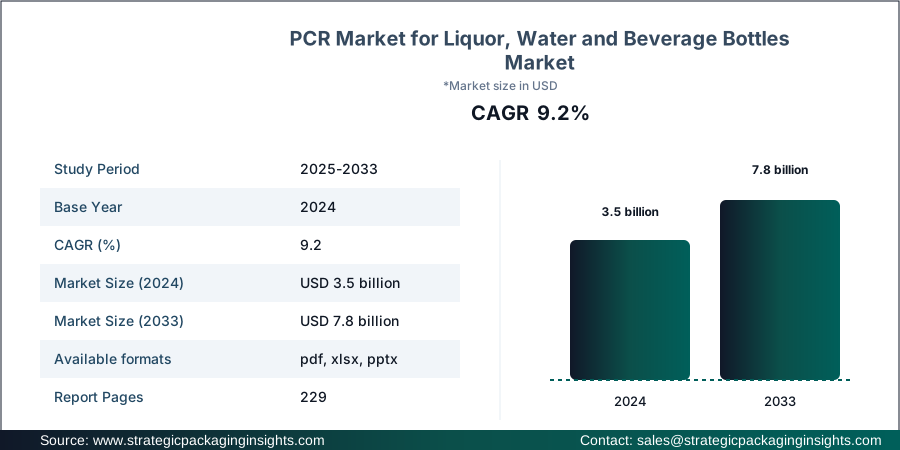
The PCR (Post-Consumer Recycled) market for liquor, water, and beverage bottles was valued at $3.5 billion in 2024 and is projected to reach $7.8 billion by 2033, growing at a CAGR of 9.2% during the forecast period 2025-2033. This market is driven by the increasing demand for sustainable packaging solutions, as consumers and companies alike are becoming more environmentally conscious. The shift towards using recycled materials in packaging is not only a response to consumer demand but also a strategic move by companies to comply with stringent environmental regulations. The beverage industry, in particular, is seeing a significant push towards PCR materials as brands aim to reduce their carbon footprint and promote a circular economy. The growth of this market is further supported by technological advancements in recycling processes, which have improved the quality and usability of recycled materials.
Report Scope
| Attributes | Details |
| Report Title | PCR Market for Liquor, Water and Beverage Bottles Market Size, Future Growth and Forecast 2033 |
| Material Type | PET, HDPE, LDPE, Others |
| Application | Liquor Bottles, Water Bottles, Beverage Bottles |
| End-User | Beverage Industry, Liquor Industry, Others |
| Region | Asia Pacific, North America, Latin America, Europe, Middle East & Africa |
| Base Year | 2024 |
| Historic Period | 2017-2023 |
| Forecast Period | 2025-2033 |
| Number of Pages | 229 |
| Customization Available | Yes* |
Opportunities & Threats
One of the primary opportunities in the PCR market for liquor, water, and beverage bottles is the increasing consumer preference for eco-friendly products. As awareness about environmental issues grows, consumers are more inclined to choose products that are packaged sustainably. This shift in consumer behavior presents a significant opportunity for companies to differentiate themselves by offering products in PCR packaging. Additionally, government regulations and incentives aimed at promoting recycling and reducing plastic waste are encouraging companies to adopt PCR materials. These regulations not only provide a framework for sustainable practices but also offer financial incentives for companies that comply, further driving the adoption of PCR materials.
Another opportunity lies in the technological advancements in recycling processes. Innovations in recycling technology have made it possible to produce high-quality PCR materials that are comparable to virgin materials in terms of performance and aesthetics. This has opened up new possibilities for the use of PCR materials in premium packaging applications, such as liquor bottles, where appearance and quality are critical. Companies that invest in advanced recycling technologies can gain a competitive edge by offering superior PCR products that meet the high standards of premium brands.
However, the PCR market for liquor, water, and beverage bottles also faces challenges, particularly in terms of supply chain constraints. The availability of high-quality post-consumer recycled materials is limited, which can lead to supply shortages and increased costs. Additionally, the recycling infrastructure in many regions is underdeveloped, making it difficult to collect and process sufficient quantities of recyclable materials. These challenges can hinder the growth of the PCR market, as companies may struggle to secure a reliable supply of materials to meet their production needs.
Drivers & Challenges
The primary driver of the PCR market for liquor, water, and beverage bottles is the growing demand for sustainable packaging solutions. As consumers become more environmentally conscious, they are increasingly seeking out products that are packaged in eco-friendly materials. This trend is particularly pronounced in the beverage industry, where brands are under pressure to reduce their environmental impact and promote sustainability. The use of PCR materials in packaging allows companies to meet these consumer demands while also complying with environmental regulations.
Another significant driver is the regulatory environment, which is increasingly favoring the use of recycled materials. Governments around the world are implementing policies and regulations aimed at reducing plastic waste and promoting recycling. These regulations often include mandates for the use of recycled materials in packaging, providing a strong incentive for companies to adopt PCR materials. Additionally, financial incentives such as tax breaks and subsidies are available to companies that use recycled materials, further encouraging the adoption of PCR packaging.
Despite these drivers, the PCR market for liquor, water, and beverage bottles faces several challenges. One of the main challenges is the cost of PCR materials, which can be higher than that of virgin materials due to the complexities involved in the recycling process. Additionally, the quality of PCR materials can vary, which can affect the performance and appearance of the final product. Companies must invest in advanced recycling technologies and quality control measures to ensure that their PCR products meet the high standards required by the beverage industry. Furthermore, the lack of a robust recycling infrastructure in many regions can limit the availability of high-quality PCR materials, posing a challenge for companies looking to scale up their use of recycled materials.
PCR Market for Liquor, Water and Beverage Bottles Strategic Outlook
| Trend | Market Driver | Technological/Material Shift | Business Impact |
|---|---|---|---|
| Sustainability | Consumer Demand | Advanced Recycling Technologies | Increased Market Share |
| Smart Tech | Regulatory Compliance | AI in Design | Operational Efficiency |
| Consumer Behavior | Eco-Consciousness | Mono-Material Transitions | Brand Loyalty |
| Logistics | Supply Chain Optimization | Blockchain Tracking | Cost Reduction |
Expert Synthesis: As of 2026, the PCR market for liquor, water, and beverage bottles is poised for significant growth, driven by the dual forces of consumer demand for sustainable packaging and regulatory mandates for recycled materials. The primary disruptor in this niche is the evolving regulatory landscape, which increasingly favors the use of PCR materials. To maintain market share by 2033, brands must pivot towards integrating advanced recycling technologies and AI-driven design processes to enhance the quality and appeal of their PCR products. Embracing these innovations will not only ensure compliance with environmental regulations but also position brands as leaders in sustainability, thereby securing consumer loyalty and expanding market presence.
Market Share Analysis
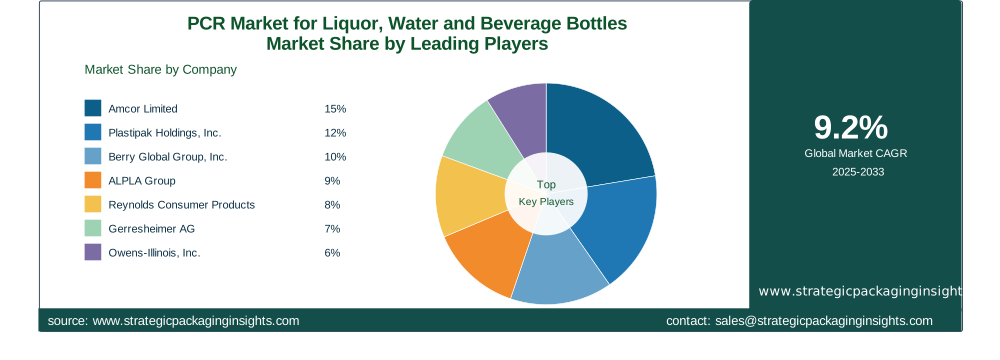
The competitive landscape of the PCR market for liquor, water, and beverage bottles is characterized by a mix of established players and emerging companies, all vying for a share of this rapidly growing market. The market is dominated by a few key players who have established themselves as leaders in the production and supply of PCR materials. These companies have invested heavily in advanced recycling technologies and have developed strong supply chains to ensure a steady supply of high-quality PCR materials. Their ability to produce PCR materials that meet the stringent quality standards of the beverage industry has given them a competitive edge in the market.
In addition to these established players, there are several emerging companies that are making significant strides in the PCR market. These companies are leveraging innovative technologies and business models to disrupt the market and capture market share. They are focusing on developing new recycling processes that improve the quality and performance of PCR materials, as well as exploring new applications for these materials in the beverage industry. Their agility and willingness to experiment with new approaches have allowed them to quickly adapt to changing market conditions and consumer preferences.
Overall, the competitive landscape of the PCR market for liquor, water, and beverage bottles is dynamic and evolving. Companies that can effectively leverage technology and innovation to produce high-quality PCR materials will be well-positioned to succeed in this market. Additionally, those that can establish strong partnerships with beverage brands and other stakeholders in the supply chain will have a competitive advantage. As the market continues to grow, we can expect to see increased competition and consolidation as companies seek to strengthen their market positions.
Some of the major companies in this market include Amcor Limited, Plastipak Holdings, Inc., Berry Global Group, Inc., and ALPLA Group. Amcor Limited is a global leader in packaging solutions, offering a wide range of PCR materials for the beverage industry. The company has invested heavily in recycling technologies and has a strong commitment to sustainability. Plastipak Holdings, Inc. is another key player, known for its innovative recycling processes and high-quality PCR materials. The company has a strong presence in the beverage industry and is committed to reducing its environmental impact through the use of recycled materials.
Berry Global Group, Inc. is a leading provider of sustainable packaging solutions, offering a range of PCR materials for the beverage industry. The company has a strong focus on innovation and has developed several proprietary recycling technologies that improve the quality and performance of its PCR materials. ALPLA Group is a global leader in plastic packaging solutions, with a strong commitment to sustainability. The company has invested heavily in recycling technologies and has developed a range of high-quality PCR materials for the beverage industry.
Key Highlights
- The PCR market for liquor, water, and beverage bottles is projected to grow at a CAGR of 9.2% from 2025 to 2033.
- Technological advancements in recycling processes are driving the quality and usability of PCR materials.
- Government regulations and incentives are encouraging the adoption of PCR materials in packaging.
- Supply chain constraints and limited availability of high-quality PCR materials pose challenges to market growth.
- Consumer demand for sustainable packaging solutions is a key driver of market growth.
- Established players and emerging companies are competing for market share in this dynamic market.
- Partnerships with beverage brands and stakeholders in the supply chain are critical for success.
- Advanced recycling technologies and AI-driven design processes are key to maintaining market share.
- The market is characterized by a mix of established players and innovative newcomers.
Top Countries Insights
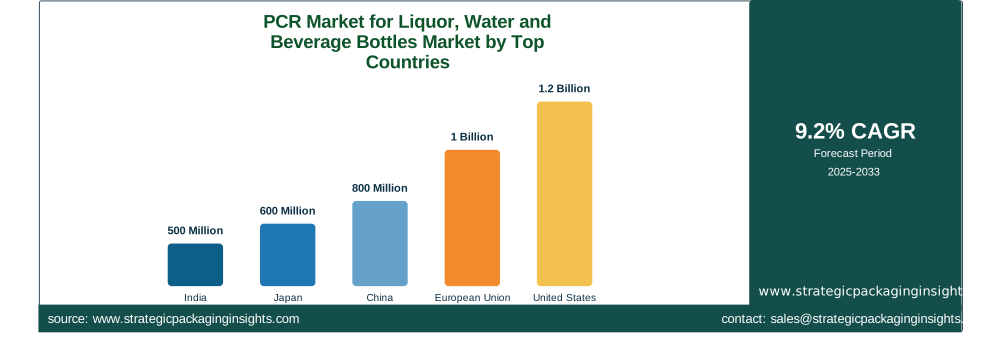
The United States is a leading market for PCR materials in the beverage industry, with a market size of $1.2 billion and a CAGR of 8%. The country's strong regulatory framework and consumer demand for sustainable packaging are driving growth. The European Union, with a market size of $1 billion and a CAGR of 9%, is also a key player, benefiting from stringent environmental regulations and a well-developed recycling infrastructure. China, with a market size of $800 million and a CAGR of 10%, is experiencing rapid growth due to increasing consumer awareness and government initiatives to promote recycling. Japan, with a market size of $600 million and a CAGR of 7%, is focusing on technological advancements in recycling processes to improve the quality of PCR materials. India, with a market size of $500 million and a CAGR of 12%, is emerging as a significant market, driven by government policies and a growing middle class demanding sustainable packaging solutions.
PCR Market for Liquor, Water and Beverage Bottles Market Segments Insights

Material Type Analysis
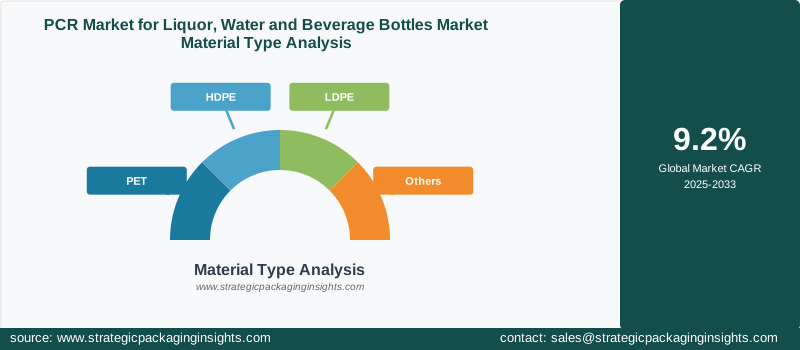
The material type segment of the PCR market for liquor, water, and beverage bottles is dominated by PET, which is widely used due to its excellent clarity, strength, and recyclability. PET is the preferred choice for beverage bottles as it provides a good barrier to gases and moisture, ensuring the quality and freshness of the contents. The demand for PET is driven by its versatility and the increasing focus on sustainability, as it can be easily recycled into new bottles. HDPE and LDPE are also significant segments, with HDPE being favored for its strength and resistance to impact, making it suitable for larger containers. LDPE, on the other hand, is valued for its flexibility and is often used in combination with other materials to enhance the properties of the final product.
In recent years, there has been a growing interest in developing new materials that offer improved performance and sustainability. Companies are investing in research and development to create innovative materials that can meet the evolving needs of the beverage industry. These efforts are focused on enhancing the recyclability of materials, reducing their environmental impact, and improving their performance in terms of strength, clarity, and barrier properties. As a result, we can expect to see the introduction of new materials in the market that offer superior performance and sustainability.
Application Analysis
The application segment of the PCR market for liquor, water, and beverage bottles is primarily driven by the beverage industry, which accounts for the largest share of the market. The demand for PCR materials in this segment is fueled by the increasing consumer preference for sustainable packaging solutions and the need for brands to comply with environmental regulations. Water bottles are a significant application, as they are widely consumed and have a high turnover rate, making them ideal candidates for recycling. The liquor industry is also adopting PCR materials, particularly for premium products where sustainability is a key selling point.
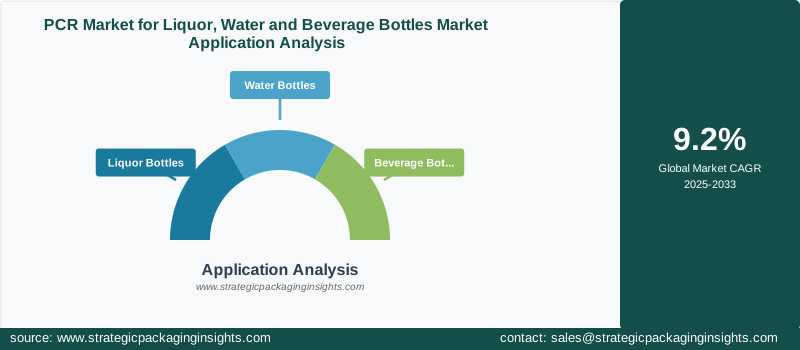
As consumer awareness about environmental issues continues to grow, the demand for PCR materials in the beverage industry is expected to increase. Brands are increasingly using PCR materials to differentiate themselves in the market and appeal to eco-conscious consumers. This trend is particularly pronounced in the premium segment, where consumers are willing to pay a premium for products that are packaged sustainably. As a result, the application segment of the PCR market is expected to see significant growth in the coming years.
End-User Analysis
The end-user segment of the PCR market for liquor, water, and beverage bottles is dominated by the beverage industry, which is the largest consumer of PCR materials. The industry's focus on sustainability and the need to comply with environmental regulations are driving the demand for PCR materials. The liquor industry is also a significant end-user, as brands seek to enhance their sustainability credentials and appeal to eco-conscious consumers. Other end-users include food and personal care industries, which are increasingly adopting PCR materials to meet consumer demand for sustainable packaging solutions.
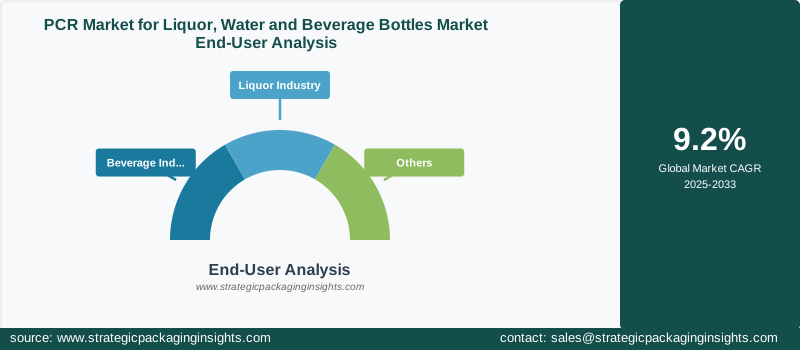
The demand for PCR materials among end-users is expected to continue to grow as companies seek to reduce their environmental impact and comply with regulations. The beverage industry, in particular, is expected to see significant growth, driven by the increasing consumer preference for sustainable packaging solutions. As a result, the end-user segment of the PCR market is expected to see significant growth in the coming years.
Region Analysis
The regional analysis of the PCR market for liquor, water, and beverage bottles reveals significant growth opportunities across different regions. North America and Europe are the leading markets, driven by strong regulatory frameworks and consumer demand for sustainable packaging solutions. The Asia Pacific region is experiencing rapid growth, driven by increasing consumer awareness and government initiatives to promote recycling. Latin America and the Middle East & Africa are also emerging markets, with significant growth potential driven by the increasing focus on sustainability and the need to comply with environmental regulations.
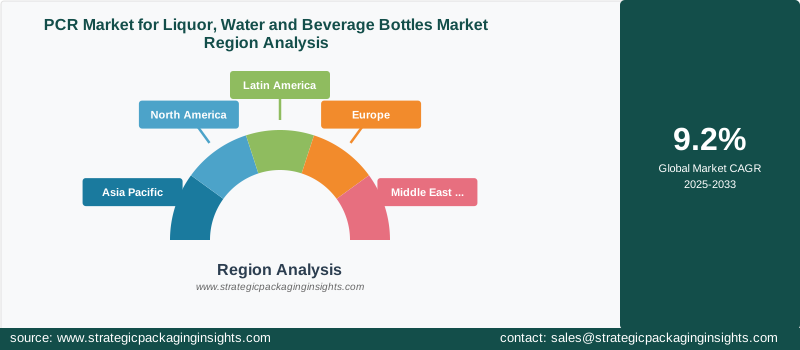
The regional analysis highlights the importance of understanding the unique dynamics of each market and tailoring strategies to meet the specific needs of consumers and regulators. Companies that can effectively navigate the regulatory landscape and meet consumer demand for sustainable packaging solutions will be well-positioned to succeed in the PCR market for liquor, water, and beverage bottles.
PCR Market for Liquor, Water and Beverage Bottles Market Segments
The PCR Market for Liquor, Water and Beverage Bottles market has been segmented on the basis ofMaterial Type
- PET
- HDPE
- LDPE
- Others
Application
- Liquor Bottles
- Water Bottles
- Beverage Bottles
End-User
- Beverage Industry
- Liquor Industry
- Others
Region
- Asia Pacific
- North America
- Latin America
- Europe
- Middle East & Africa




