


Food-Grade PCR Resin Market Outlook
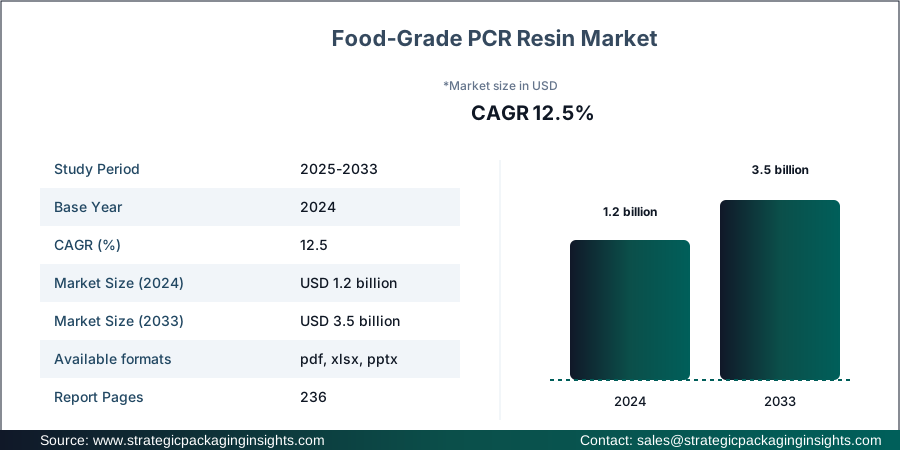
The Food-Grade PCR Resin market was valued at $1.2 billion in 2024 and is projected to reach $3.5 billion by 2033, growing at a CAGR of 12.5% during the forecast period 2025-2033. This market is witnessing significant growth due to the increasing demand for sustainable packaging solutions in the food and beverage industry. The shift towards eco-friendly materials is driven by both consumer preferences and stringent regulatory frameworks aimed at reducing plastic waste. As a result, manufacturers are increasingly adopting post-consumer recycled (PCR) resins to meet these demands, thereby propelling the market forward. The market's expansion is further supported by technological advancements in recycling processes, which enhance the quality and safety of PCR resins for food-grade applications.
Report Scope
| Attributes | Details |
| Report Title | Food-Grade PCR Resin Market Size, Future Growth and Forecast 2033 |
| Type | Polyethylene, Polypropylene, Polyethylene Terephthalate |
| Application | Bottles, Containers, Films, Others |
| End-User | Food & Beverage, Pharmaceuticals, Personal Care, Others |
| Base Year | 2024 |
| Historic Period | 2017-2023 |
| Forecast Period | 2025-2033 |
| Number of Pages | 236 |
| Customization Available | Yes* |
Opportunities & Threats
One of the primary opportunities in the Food-Grade PCR Resin market lies in the growing consumer awareness and demand for sustainable packaging solutions. As consumers become more environmentally conscious, there is a significant shift towards products that utilize recycled materials. This trend is particularly strong in the food and beverage sector, where packaging plays a crucial role in product appeal and environmental impact. Companies that can effectively market their use of PCR resins as part of a broader sustainability strategy are likely to gain a competitive edge. Additionally, advancements in recycling technologies are opening new avenues for the production of high-quality PCR resins, further enhancing their appeal to manufacturers looking to reduce their carbon footprint.
Another opportunity is the increasing regulatory support for sustainable packaging solutions. Governments worldwide are implementing policies and incentives to encourage the use of recycled materials, including PCR resins, in packaging. These regulations are designed to reduce plastic waste and promote a circular economy, providing a favorable environment for the growth of the Food-Grade PCR Resin market. Companies that align their operations with these regulatory frameworks can benefit from tax incentives, subsidies, and enhanced brand reputation, driving further market growth.
However, the market faces certain restrainers, such as the high cost of recycling processes and the limited availability of high-quality PCR resins. The production of food-grade PCR resins requires advanced recycling technologies and stringent quality control measures, which can be costly and complex. Additionally, the supply of post-consumer plastics suitable for recycling into food-grade materials is limited, posing a challenge for manufacturers. These factors can hinder the widespread adoption of PCR resins, particularly among smaller companies with limited resources.
Drivers & Challenges
The primary driver of the Food-Grade PCR Resin market is the increasing demand for sustainable packaging solutions. As consumers and businesses alike prioritize environmental responsibility, the demand for packaging materials that reduce environmental impact is on the rise. PCR resins, made from recycled plastics, offer a viable solution to this demand, providing manufacturers with a way to reduce their reliance on virgin plastics and lower their carbon footprint. This trend is particularly pronounced in the food and beverage industry, where packaging sustainability is becoming a key differentiator in the marketplace.
Technological advancements in recycling processes are another significant driver of the market. Innovations in sorting, cleaning, and processing technologies have improved the quality and safety of PCR resins, making them suitable for food-grade applications. These advancements have also increased the efficiency of recycling operations, reducing costs and making PCR resins more accessible to a broader range of manufacturers. As technology continues to evolve, the quality and availability of food-grade PCR resins are expected to improve, further driving market growth.
Despite these drivers, the market faces challenges such as the high cost of recycling infrastructure and the need for stringent quality control measures. Establishing and maintaining the necessary infrastructure for producing food-grade PCR resins requires significant investment, which can be a barrier for many companies. Additionally, ensuring the safety and quality of PCR resins for food contact applications involves rigorous testing and certification processes, which can be time-consuming and costly. These challenges must be addressed to fully realize the potential of the Food-Grade PCR Resin market.
Market Share Analysis
The competitive landscape of the Food-Grade PCR Resin market is characterized by the presence of several key players who are actively investing in research and development to enhance the quality and performance of their products. These companies are focusing on strategic partnerships, mergers, and acquisitions to expand their market presence and strengthen their product portfolios. The market is moderately fragmented, with a mix of established players and emerging companies vying for market share. As the demand for sustainable packaging solutions continues to grow, competition among these players is expected to intensify, driving innovation and product development.
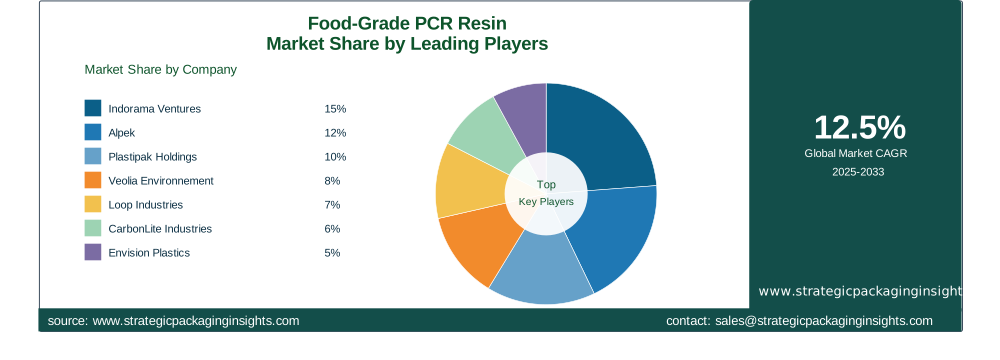
Major companies in the market include Indorama Ventures Public Company Limited, which holds a significant market share due to its extensive product portfolio and strong global presence. The company is known for its commitment to sustainability and innovation, offering a wide range of PCR resins for various applications. Another key player is Alpek S.A.B. de C.V., which has a strong foothold in the market thanks to its advanced recycling technologies and strategic partnerships with major brands. The company's focus on quality and customer satisfaction has helped it maintain a competitive edge in the market.
Plastipak Holdings, Inc. is another prominent player in the Food-Grade PCR Resin market, known for its innovative recycling solutions and commitment to sustainability. The company has invested heavily in research and development to enhance the quality and performance of its PCR resins, making it a preferred choice for many manufacturers. Additionally, companies like Veolia Environnement S.A. and Loop Industries, Inc. are making significant strides in the market with their cutting-edge recycling technologies and strong focus on environmental responsibility.
Other notable players in the market include CarbonLite Industries LLC, which specializes in producing high-quality PCR resins for the beverage industry, and Envision Plastics, which is known for its innovative recycling processes and commitment to sustainability. These companies, along with others like Phoenix Technologies International, LLC and UltrePET, LLC, are contributing to the growth and development of the Food-Grade PCR Resin market through their focus on innovation and quality.
Key Highlights
- The Food-Grade PCR Resin market is projected to grow at a CAGR of 12.5% from 2025 to 2033.
- Increasing consumer demand for sustainable packaging solutions is a major driver of market growth.
- Technological advancements in recycling processes are enhancing the quality and safety of PCR resins.
- Regulatory support for sustainable packaging solutions is providing a favorable environment for market growth.
- The high cost of recycling processes and limited availability of high-quality PCR resins are key challenges.
- Major players in the market are focusing on strategic partnerships and mergers to expand their market presence.
- The market is moderately fragmented, with a mix of established players and emerging companies.
- Companies are investing in research and development to enhance the quality and performance of their products.
- The food and beverage industry is a key end-user of food-grade PCR resins.
- Innovation and product development are driving competition among market players.
Top Countries Insights
In the Food-Grade PCR Resin market, the United States holds a significant share, with a market size of $500 million and a CAGR of 10%. The country's strong regulatory framework supporting sustainable packaging solutions and the presence of major industry players drive market growth. Additionally, consumer demand for eco-friendly packaging is a key growth driver in the U.S.
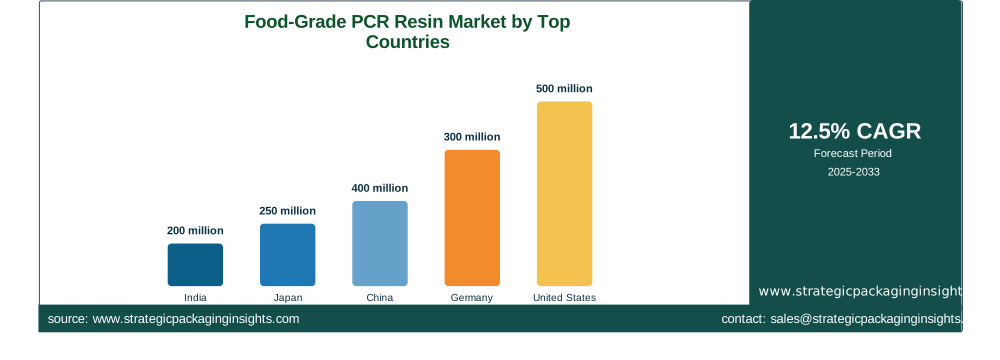
Germany is another leading market, valued at $300 million with a CAGR of 9%. The country's focus on environmental sustainability and advanced recycling technologies contribute to its market position. Government initiatives promoting the use of recycled materials in packaging further support market growth in Germany.
China, with a market size of $400 million and a CAGR of 15%, is experiencing rapid growth in the Food-Grade PCR Resin market. The country's large consumer base and increasing awareness of environmental issues drive demand for sustainable packaging solutions. Additionally, government policies encouraging recycling and waste reduction support market expansion.
In Japan, the market is valued at $250 million with a CAGR of 8%. The country's strong focus on innovation and technology in recycling processes enhances the quality of PCR resins, driving market growth. Consumer demand for sustainable packaging solutions also contributes to the market's expansion in Japan.
India, with a market size of $200 million and a CAGR of 12%, is emerging as a key player in the Food-Grade PCR Resin market. The country's growing population and increasing consumer awareness of environmental issues drive demand for sustainable packaging solutions. Government initiatives promoting recycling and waste reduction further support market growth in India.
Food-Grade PCR Resin Market Segments Insights

Type Analysis
The Food-Grade PCR Resin market is segmented by type into polyethylene, polypropylene, and polyethylene terephthalate. Polyethylene holds a significant share due to its widespread use in packaging applications, particularly in the food and beverage industry. Its versatility and durability make it a preferred choice for manufacturers looking to incorporate recycled materials into their products. Polypropylene is also gaining traction, driven by its excellent chemical resistance and high melting point, making it suitable for a variety of food-grade applications. Polyethylene terephthalate, known for its clarity and strength, is widely used in the production of bottles and containers, further driving its demand in the market.
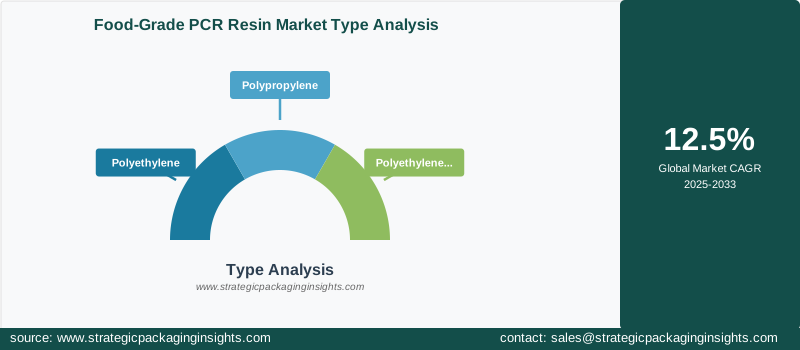
Polyethylene's dominance in the market is attributed to its cost-effectiveness and ease of processing, making it an attractive option for manufacturers. The increasing demand for sustainable packaging solutions in the food and beverage industry is driving the adoption of polyethylene PCR resins. Polypropylene's growth is supported by its superior mechanical properties and resistance to heat and chemicals, making it ideal for food contact applications. Polyethylene terephthalate's popularity is driven by its excellent barrier properties and recyclability, making it a preferred choice for beverage packaging.
Application Analysis
The application segment of the Food-Grade PCR Resin market includes bottles, containers, films, and others. Bottles hold a significant share due to the high demand for sustainable packaging solutions in the beverage industry. The use of PCR resins in bottle production helps manufacturers reduce their environmental impact and meet consumer demand for eco-friendly products. Containers are also a key application, driven by the increasing demand for sustainable packaging solutions in the food industry. The use of PCR resins in container production helps manufacturers reduce their reliance on virgin plastics and lower their carbon footprint.
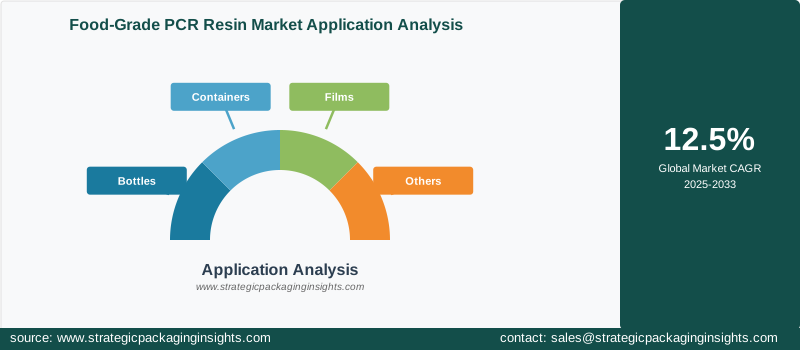
Films are gaining traction in the market, driven by their versatility and ability to provide excellent barrier properties. The use of PCR resins in film production helps manufacturers meet the growing demand for sustainable packaging solutions in the food and beverage industry. Other applications, such as trays and lids, are also contributing to market growth, driven by the increasing demand for sustainable packaging solutions in various industries. The use of PCR resins in these applications helps manufacturers reduce their environmental impact and meet consumer demand for eco-friendly products.
End-User Analysis
The end-user segment of the Food-Grade PCR Resin market includes food & beverage, pharmaceuticals, personal care, and others. The food & beverage industry holds a significant share due to the high demand for sustainable packaging solutions. The use of PCR resins in food and beverage packaging helps manufacturers reduce their environmental impact and meet consumer demand for eco-friendly products. The pharmaceuticals industry is also a key end-user, driven by the increasing demand for sustainable packaging solutions in the healthcare sector.
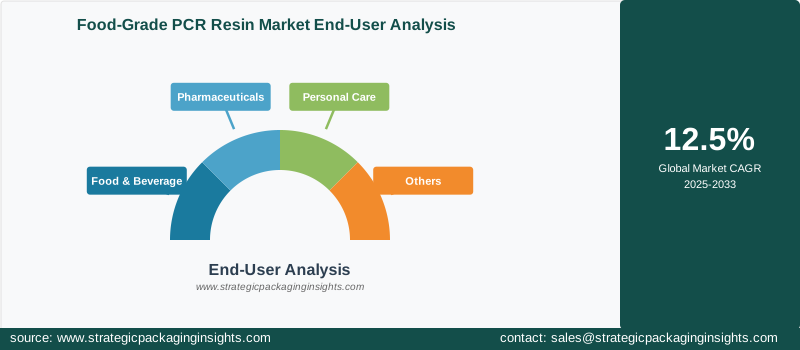
The personal care industry is gaining traction in the market, driven by the growing demand for sustainable packaging solutions in the cosmetics and personal care sector. The use of PCR resins in personal care packaging helps manufacturers reduce their reliance on virgin plastics and lower their carbon footprint. Other end-users, such as household products and industrial applications, are also contributing to market growth, driven by the increasing demand for sustainable packaging solutions in various industries.
Regional Market Intelligence Chart
The Food-Grade PCR Resin market is witnessing significant growth across various regions, driven by the increasing demand for sustainable packaging solutions. North America holds a significant share, with a CAGR of 12%, driven by the strong regulatory framework supporting sustainable packaging solutions and the presence of major industry players. Europe is another leading market, with a CAGR of 9%, driven by the focus on environmental sustainability and advanced recycling technologies. The Asia Pacific region is experiencing rapid growth, with a CAGR of 15%, driven by the large consumer base and increasing awareness of environmental issues. Latin America and the Middle East & Africa are also witnessing growth, with CAGRs of 7% and 5%, respectively, driven by the increasing demand for sustainable packaging solutions in these regions.
Food-Grade PCR Resin Market Segments
The Food-Grade PCR Resin market has been segmented on the basis ofType
- Polyethylene
- Polypropylene
- Polyethylene Terephthalate
Application
- Bottles
- Containers
- Films
- Others
End-User
- Food & Beverage
- Pharmaceuticals
- Personal Care
- Others




