


Paper Napkin Converting Lines Market Outlook
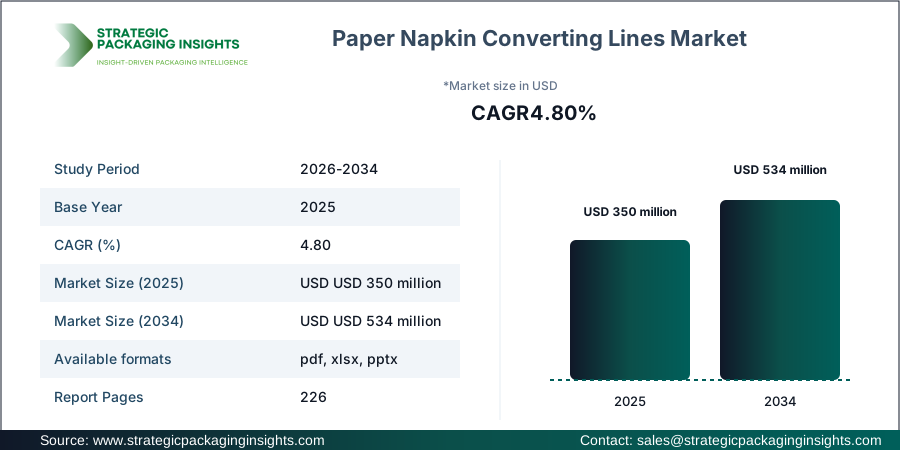
The Paper Napkin Converting Lines market size was valued at USD 350 million in 2025 and is anticipated to reach USD 534 million by 2034, growing at a CAGR of 4.80% during the forecast period according to Strategic Packaging Insights. The market is witnessing robust growth driven by the increasing demand for paper napkins across various sectors, including hospitality, healthcare, and household applications. Companies like Fabio Perini and OMET are leading the charge with innovative converting lines that enhance production efficiency and product quality. The growing trend towards hygiene and convenience is further propelling the demand for paper napkins, thereby boosting the market for converting lines. As consumers become more environmentally conscious, the demand for sustainable and biodegradable napkin products is also on the rise, influencing the market dynamics significantly.
One of the most impactful drivers of the Paper Napkin Converting Lines market is the increasing focus on sustainability and eco-friendly products. Governments and regulatory bodies worldwide are implementing stringent regulations to reduce plastic waste and promote the use of biodegradable materials. This shift is encouraging manufacturers to invest in advanced converting lines that can handle eco-friendly materials efficiently. Companies like MTC and Futura are at the forefront, developing machines that not only enhance production capabilities but also align with environmental standards. The push towards sustainability is not just a regulatory requirement but also a consumer-driven demand, as more individuals prefer products that have a minimal environmental impact. This trend is expected to continue, driving innovation and growth in the Paper Napkin Converting Lines market.
Report Scope
| Attributes | Details |
| Report Title | Paper Napkin Converting Lines Market Size, Future Growth and Forecast 2034 |
| By Machine Type | Folding Machines (1/4, 1/8 Fold), Printing & Embossing Units, Lamination Units, Packaging / Banding Units |
| By Napkin Type | Lunch Napkins, Dinner Napkins, Cocktail Napkins, Dispenser Napkins |
| By Speed | Below 500 napkins/min, 500-1,000, Above 1,000 |
| By End Use | Tissue Converters, Integrated Paper Mills, Private Label Producers |
| By Region | North America (U.S., Canada, Mexico), Europe (Germany, UK, France, Italy, Spain, Rest of Europe), Asia Pacific (China, India, Japan, South Korea, Australia, Rest of Asia Pacific), Latin America (Brazil, Argentina, Rest of Latin America), Middle East & Africa (GCC Countries, South Africa, Rest of MEA) |
| Base Year | 2025 |
| Historic Period | 2018-2024 |
| Forecast Period | 2026-2034 |
| Number of Pages | 226 |
| Customization Available | Yes* |
Sustainability & Circular Economy Analysis
Sustainability initiatives are significantly shaping the Paper Napkin Converting Lines market, with a strong emphasis on recyclable materials and eco-friendly innovations. Companies are increasingly adopting lightweight packaging solutions and reusable packaging designs to minimize waste and reduce their carbon footprint. The integration of ESG initiatives is becoming a standard practice, influencing investment decisions and supply chain strategies. As consumer preferences shift towards sustainable products, manufacturers are compelled to innovate and comply with packaging regulations that promote environmental responsibility.
The circular economy is driving changes in packaging design and manufacturing processes. By focusing on waste reduction strategies and extended producer responsibility (EPR), companies are enhancing their long-term market competitiveness. This approach not only aligns with regulatory compliance but also meets the growing consumer demand for sustainable packaging solutions. The use of eco-friendly materials is becoming a key differentiator in the market, influencing brand perception and customer loyalty.
These sustainability trends are reshaping the packaging value chain, from raw material sourcing to end-product delivery. Manufacturers are investing in advanced technologies to improve production efficiency and reduce environmental impact. This shift towards sustainable practices is not only beneficial for the environment but also offers economic advantages by reducing costs and enhancing brand reputation. As the market continues to evolve, companies that prioritize sustainability are likely to gain a competitive edge and drive future growth.
Packaging Value Chain & Supply Chain Analysis
The packaging value chain for Paper Napkin Converting Lines involves a complex ecosystem of raw material suppliers, converters, manufacturers, and logistics providers. Efficient raw material sourcing is crucial for maintaining production capabilities and meeting market demand. Companies like Servo Tissue and C.G. Bretting are optimizing their procurement strategies to ensure a steady supply of high-quality materials. Strategic partnerships with suppliers and distributors are enhancing supply chain resilience and enabling companies to respond swiftly to market changes.
Manufacturers are investing in advanced packaging machinery to improve production efficiency and reduce operational costs. The integration of automation and digital technologies is streamlining manufacturing processes and enhancing product quality. Logistics and distribution channels play a vital role in ensuring timely delivery of products to retailers and end-users. Companies are adopting localization strategies to minimize transportation costs and reduce their carbon footprint, thereby enhancing overall market performance.
Recycling networks are becoming an integral part of the packaging value chain, driven by the increasing focus on sustainability and waste reduction. Companies are implementing inventory management systems to optimize stock levels and reduce waste. Global sourcing strategies are being balanced with localization efforts to ensure supply chain efficiency and resilience. As the market continues to evolve, companies that effectively manage their supply chains are likely to achieve greater business competitiveness and market success.
Opportunities & Threats
The Paper Napkin Converting Lines market presents numerous opportunities for growth, driven by the increasing demand for sustainable and eco-friendly products. As consumers become more environmentally conscious, there is a growing preference for biodegradable and recyclable napkin products. This trend is encouraging manufacturers to invest in advanced converting lines that can efficiently handle eco-friendly materials. Companies that prioritize sustainability and innovation are likely to gain a competitive edge and capture a larger market share.
Another significant opportunity lies in the expansion of the hospitality and healthcare sectors, which are major consumers of paper napkins. The rising demand for hygiene and convenience is driving the need for high-quality napkin products, creating a lucrative market for converting lines. Manufacturers can capitalize on this demand by developing machines that enhance production efficiency and product quality. Additionally, the growing trend towards private label products offers opportunities for tissue converters and integrated paper mills to expand their product offerings and increase their market presence.
Despite the growth opportunities, the Paper Napkin Converting Lines market faces several threats, including regulatory challenges and fluctuating raw material prices. Stringent environmental regulations require manufacturers to invest in sustainable practices and technologies, which can increase operational costs. Additionally, the volatility in raw material prices can impact profit margins and affect market stability. Companies need to adopt effective risk management strategies and maintain strong supplier relationships to mitigate these threats and ensure long-term success.
Drivers & Challenges
The primary driver of the Paper Napkin Converting Lines market is the increasing demand for hygiene and convenience products. As consumers become more health-conscious, there is a growing preference for disposable napkins that offer convenience and cleanliness. This trend is driving the demand for advanced converting lines that can produce high-quality napkin products efficiently. Companies like Baosuo and Hobema are investing in innovative technologies to enhance production capabilities and meet the evolving consumer needs.
Another significant driver is the growing focus on sustainability and eco-friendly products. Governments and regulatory bodies worldwide are implementing stringent regulations to reduce plastic waste and promote the use of biodegradable materials. This shift is encouraging manufacturers to invest in advanced converting lines that can handle eco-friendly materials efficiently. The push towards sustainability is not just a regulatory requirement but also a consumer-driven demand, as more individuals prefer products that have a minimal environmental impact.
However, the market also faces several challenges, including the high cost of advanced converting lines and the need for skilled labor. The initial investment required for setting up state-of-the-art machinery can be a significant barrier for small and medium-sized enterprises. Additionally, the shortage of skilled labor can impact production efficiency and product quality. Companies need to invest in training and development programs to enhance workforce capabilities and ensure operational excellence. By addressing these challenges, manufacturers can improve their competitiveness and drive market growth.
Market Share Analysis
The Paper Napkin Converting Lines market is characterized by a competitive landscape with several key players vying for market share. Companies like Fabio Perini, OMET, and MTC are leading the market with their innovative converting lines and strong market presence. These companies are focusing on product innovation and strategic partnerships to enhance their market position and expand their customer base. The competitive landscape is further intensified by the presence of regional players who are leveraging their local expertise to capture market share.
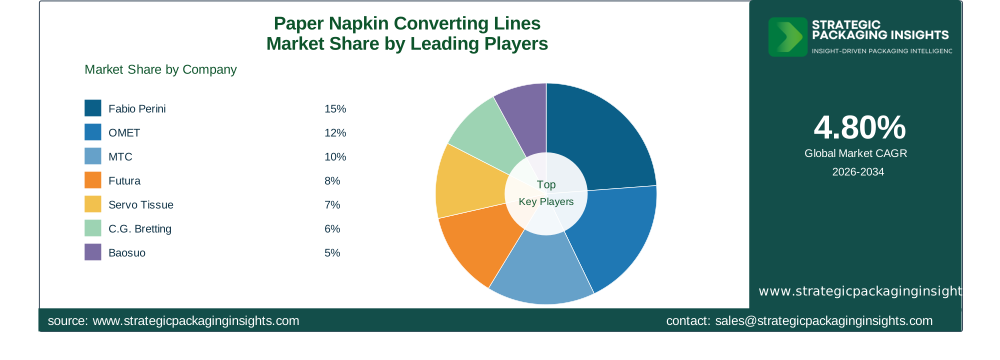
Fabio Perini, a subsidiary of Korber, is a prominent player in the market, known for its advanced converting lines that offer high efficiency and product quality. The company is investing in research and development to introduce innovative solutions that meet the evolving consumer needs. OMET is another key player, offering a wide range of converting lines that cater to different napkin types and production speeds. The company's focus on sustainability and eco-friendly solutions is enhancing its market reputation and driving growth.
MTC, also a part of Korber, is known for its cutting-edge technology and high-performance converting lines. The company is focusing on expanding its product portfolio and strengthening its global presence through strategic partnerships and collaborations. Futura is another significant player, offering innovative solutions that enhance production efficiency and reduce operational costs. The company's commitment to sustainability and environmental responsibility is resonating well with consumers and driving market success.
Servo Tissue and C.G. Bretting are also key players in the market, known for their high-quality converting lines and strong customer relationships. These companies are focusing on enhancing their production capabilities and expanding their market reach through strategic investments and partnerships. Baosuo and Hobema are regional players that are gaining traction in the market with their cost-effective solutions and local expertise. The competitive landscape is dynamic, with companies continuously innovating and adapting to market trends to maintain their market position.
Key Highlights
- Market Size: USD 350 million in 2025, projected to reach USD 534 million by 2034.
- Growth Rate: CAGR of 4.80% during the forecast period.
- Leading Companies: Fabio Perini, OMET, MTC, Futura, Servo Tissue, C.G. Bretting, Baosuo, Hobema.
- Key Segments: Folding Machines, Lunch Napkins, Below 500 napkins/min, Tissue Converters.
- Regional Insights: Asia Pacific and North America are key growth regions.
- Sustainability Focus: Increasing demand for eco-friendly and biodegradable napkin products.
- Technological Advancements: Investment in advanced converting lines and automation technologies.
Paper Napkin Converting Lines Market Segments Insights

By Machine Type Analysis
The Paper Napkin Converting Lines market is segmented by machine type, including Folding Machines, Printing & Embossing Units, Lamination Units, and Packaging/Banding Units. Folding Machines, particularly the 1/4 and 1/8 fold types, are witnessing significant demand due to their efficiency and versatility in producing various napkin sizes. Companies like Fabio Perini and OMET are leading the market with their innovative folding machines that offer high-speed production and superior product quality. The demand for Printing & Embossing Units is also on the rise, driven by the need for customized and aesthetically appealing napkin designs. These units are essential for adding value to napkin products and enhancing brand differentiation.
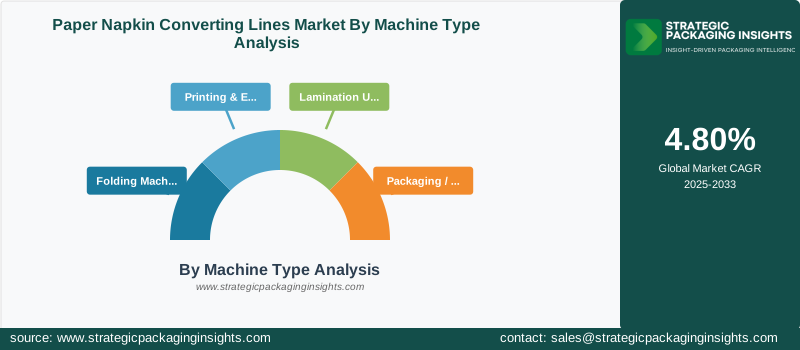
Lamination Units are gaining traction as manufacturers focus on improving the durability and functionality of napkin products. These units enable the production of multi-layered napkins that offer enhanced absorbency and strength. Packaging/Banding Units are crucial for ensuring the safe and efficient packaging of napkin products, facilitating easy transportation and storage. The integration of automation and digital technologies in these units is enhancing production efficiency and reducing operational costs. As the market continues to evolve, companies that invest in advanced machine types are likely to gain a competitive edge and drive future growth.
By Napkin Type Analysis
The market is also segmented by napkin type, including Lunch Napkins, Dinner Napkins, Cocktail Napkins, and Dispenser Napkins. Lunch Napkins are the most popular segment, driven by their widespread use in households, restaurants, and catering services. The demand for Dinner Napkins is also significant, particularly in the hospitality sector, where they are used for formal dining settings. Companies are focusing on developing high-quality dinner napkins that offer superior absorbency and aesthetic appeal.
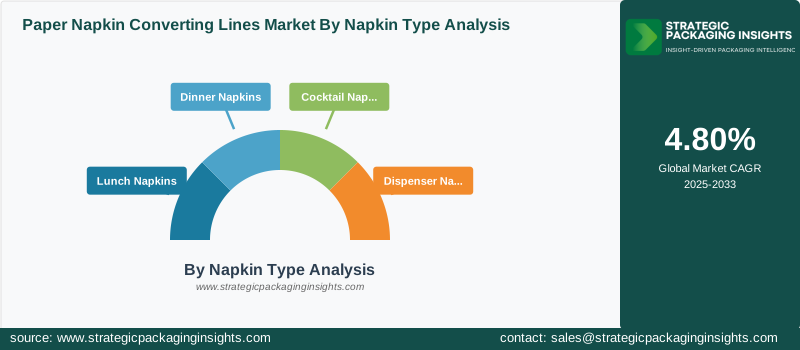
Cocktail Napkins are gaining popularity in bars and entertainment venues, where they are used for serving beverages and snacks. The demand for Dispenser Napkins is on the rise, driven by their convenience and ease of use in high-traffic areas such as cafeterias and fast-food outlets. Manufacturers are focusing on developing innovative napkin designs and materials that cater to the evolving consumer preferences and enhance the overall dining experience. As consumer demand for hygiene and convenience continues to grow, the market for different napkin types is expected to expand, offering lucrative opportunities for manufacturers.
By Speed Analysis
The Paper Napkin Converting Lines market is segmented by speed, including Below 500 napkins/min, 500-1, 000 napkins/min, and Above 1, 000 napkins/min. The demand for high-speed converting lines is increasing as manufacturers seek to enhance production efficiency and meet the growing market demand. Converting lines with speeds of 500-1, 000 napkins/min are particularly popular, offering a balance between production capacity and operational costs. Companies like MTC and Futura are investing in high-speed converting lines that offer superior performance and product quality.
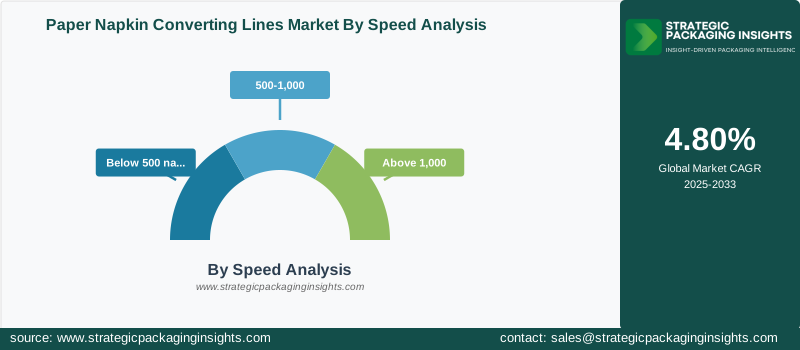
Converting lines with speeds above 1, 000 napkins/min are gaining traction in large-scale production facilities, where high output and efficiency are critical. These lines are equipped with advanced automation and digital technologies that enhance production capabilities and reduce downtime. The demand for converting lines with speeds below 500 napkins/min is also significant, particularly in small and medium-sized enterprises that focus on niche markets and customized products. As the market continues to evolve, manufacturers that invest in high-speed converting lines are likely to gain a competitive advantage and drive future growth.
By End Use Analysis
The market is segmented by end use, including Tissue Converters, Integrated Paper Mills, and Private Label Producers. Tissue Converters are the largest segment, driven by their ability to produce a wide range of napkin products for various applications. These converters are focusing on enhancing their production capabilities and expanding their product offerings to meet the evolving consumer needs. Integrated Paper Mills are also significant players in the market, leveraging their vertical integration capabilities to produce high-quality napkin products at competitive prices.
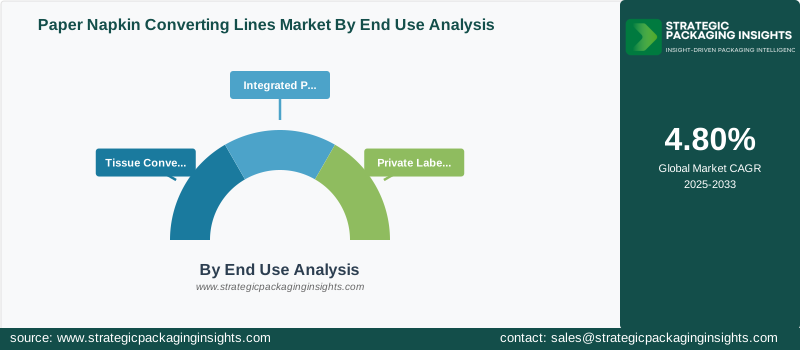
Private Label Producers are gaining traction in the market, driven by the growing demand for customized and branded napkin products. These producers are focusing on developing innovative designs and materials that cater to the specific needs of their clients. The demand for private label products is particularly strong in the retail sector, where consumers are seeking unique and personalized products. As the market continues to evolve, companies that focus on expanding their end-use applications and enhancing their production capabilities are likely to achieve greater market success.
Paper Napkin Converting Lines Market Segments
The Paper Napkin Converting Lines market has been segmented on the basis ofBy Machine Type
- Folding Machines (1/4, 1/8 Fold)
- Printing & Embossing Units
- Lamination Units
- Packaging / Banding Units
By Napkin Type
- Lunch Napkins
- Dinner Napkins
- Cocktail Napkins
- Dispenser Napkins
By Speed
- Below 500 napkins/min
- 500-1,000
- Above 1,000
By End Use
- Tissue Converters
- Integrated Paper Mills
- Private Label Producers
By Region
- North America (U.S., Canada, Mexico)
- Europe (Germany, UK, France, Italy, Spain, Rest of Europe)
- Asia Pacific (China, India, Japan, South Korea, Australia, Rest of Asia Pacific)
- Latin America (Brazil, Argentina, Rest of Latin America)
- Middle East & Africa (GCC Countries, South Africa, Rest of MEA)




