


Packing Tape Market Outlook
The Packing Tape market size was valued at USD 34.14 billion in 2025 and is anticipated to reach USD 52.97 billion by 2034, growing at a CAGR of 5.0% during the forecast period according to Strategic Packaging Insights. The market is witnessing robust growth driven by the increasing demand for efficient packaging solutions across various industries. Companies like 3M and tesa are leading the charge by innovating in adhesive technologies and expanding their product lines to cater to diverse applications. The rise in e-commerce and the need for secure packaging in logistics are significant contributors to the market's expansion, as businesses seek reliable solutions to ensure product safety during transit.
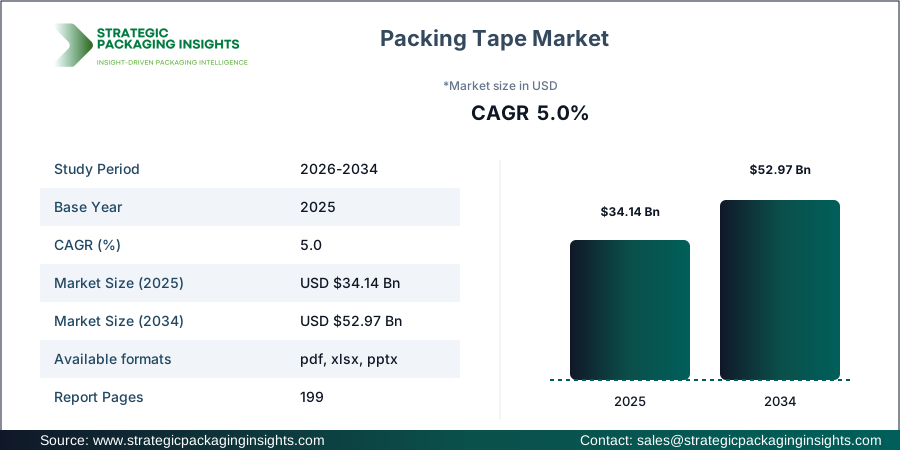
One of the most impactful drivers of the Packing Tape market is the surge in global trade and the corresponding increase in shipping activities. According to the World Trade Organization, global merchandise trade volume is expected to grow, which directly boosts the demand for packing tapes used in shipping and logistics. Companies like Nitto Denko and Intertape Polymer Group are capitalizing on this trend by enhancing their production capabilities and focusing on sustainable packaging solutions. The emphasis on reducing carbon footprints and adhering to environmental regulations is also pushing manufacturers to innovate in eco-friendly adhesive technologies, further propelling market growth.
Report Scope
| Attributes | Details |
| Report Title | Packing Tape Market Size, Future Growth and Forecast 2034 |
| Product Type | Carton Sealing Tape, Filament Tape, Paper Tape, Double-Sided Tape |
| Adhesive Type | Acrylic, Hot Melt, Rubber-Based |
| Application | Carton Sealing, Bundling, Shipping, E-commerce |
| End Use | Logistics, Retail, Manufacturing, Consumer Goods |
| Region | Asia Pacific, North America, Latin America, Europe, Middle East & Africa |
| Base Year | 2025 |
| Historic Period | 2018-2024 |
| Forecast Period | 2026-2034 |
| Number of Pages | 199 |
| Customization Available | Yes* |
Sustainability & Circular Economy Analysis
Sustainability initiatives are significantly shaping the Packing Tape market as companies strive to meet consumer demand for eco-friendly products. The use of recyclable materials and the development of biodegradable adhesives are becoming increasingly prevalent. Companies like Avery Dennison and Berry Global are investing in research and development to create tapes that not only perform well but also minimize environmental impact. This shift towards sustainable practices is influencing packaging design, as manufacturers aim to reduce waste and improve the recyclability of their products.
The circular economy is gaining traction in the packaging industry, with extended producer responsibility (EPR) policies encouraging manufacturers to take accountability for the entire lifecycle of their products. This has led to innovations in reusable and lightweight packaging solutions, which are not only cost-effective but also reduce the carbon footprint. As a result, companies are re-evaluating their supply chain strategies to incorporate sustainable practices, which in turn enhances their long-term competitiveness in the market.
Consumer preferences are increasingly leaning towards brands that demonstrate a commitment to sustainability. This trend is driving packaging manufacturers to adopt eco-friendly materials and processes, thereby aligning with regulatory compliance and ESG initiatives. The focus on reducing carbon emissions and waste is prompting companies to invest in new technologies and materials that support a circular economy. This strategic shift is expected to create new opportunities for growth and innovation in the Packing Tape market.
Packaging Value Chain & Supply Chain Analysis
The packaging value chain is a complex ecosystem that involves multiple stakeholders, from raw material suppliers to end-users. Raw material sourcing is a critical component, as the availability and cost of materials like adhesives and films directly impact production capabilities. Companies like Henkel and Scapa are focusing on securing reliable sources of raw materials to ensure consistent supply and maintain competitive pricing. Strategic partnerships with suppliers and converters are essential for optimizing procurement strategies and enhancing supply chain resilience.
Packaging converters and manufacturers play a pivotal role in transforming raw materials into finished products. The efficiency of production processes and the adoption of advanced packaging machinery are crucial for meeting the growing demand for packing tapes. Logistics and distribution channels are equally important, as they ensure timely delivery of products to retailers and end-users. Companies are increasingly investing in inventory management systems and localization strategies to improve supply chain efficiency and reduce lead times.
Recycling networks are becoming an integral part of the packaging value chain, as companies aim to close the loop and promote sustainability. The integration of recycling processes into the supply chain not only supports environmental goals but also enhances brand reputation. As global sourcing becomes more prevalent, companies are focusing on building robust supply chains that can withstand disruptions and adapt to changing market dynamics. This strategic approach is essential for maintaining business competitiveness and driving growth in the Packing Tape market.
Opportunities & Threats
The Packing Tape market presents numerous opportunities for growth, particularly in emerging economies where industrialization and urbanization are on the rise. The expansion of e-commerce platforms in regions like Asia Pacific and Latin America is driving demand for efficient packaging solutions, creating a lucrative market for packing tape manufacturers. Companies like Shurtape and Saint-Gobain are well-positioned to capitalize on these opportunities by expanding their product offerings and enhancing their distribution networks to reach new customers.
Technological advancements in adhesive formulations and tape manufacturing processes are opening new avenues for innovation. The development of high-performance tapes that offer superior adhesion and durability is a key focus area for companies looking to differentiate themselves in the market. Additionally, the growing emphasis on sustainability is driving demand for eco-friendly tapes, providing opportunities for manufacturers to develop products that align with environmental regulations and consumer preferences.
Despite the positive outlook, the Packing Tape market faces several threats that could hinder growth. Fluctuations in raw material prices and supply chain disruptions pose significant challenges for manufacturers. The reliance on petrochemical-based materials makes the industry vulnerable to volatility in oil prices, which can impact production costs and profit margins. Additionally, stringent environmental regulations and the increasing demand for sustainable packaging solutions require companies to invest in research and development, which can strain resources and affect competitiveness.
Drivers & Challenges
The primary drivers of the Packing Tape market include the increasing demand for secure and efficient packaging solutions across various industries. The rise of e-commerce and the need for reliable packaging in logistics are significant contributors to market growth. Companies like 3M and tesa are leading the way by developing innovative adhesive technologies that enhance the performance and versatility of packing tapes. The focus on reducing product damage during transit and improving supply chain efficiency is driving demand for high-quality tapes that offer superior adhesion and durability.
Another key driver is the growing emphasis on sustainability and environmental responsibility. Consumers and businesses alike are seeking packaging solutions that minimize environmental impact, leading to increased demand for recyclable and biodegradable tapes. Manufacturers are responding by investing in research and development to create eco-friendly products that meet regulatory requirements and align with consumer preferences. This trend is expected to drive innovation and create new opportunities for growth in the Packing Tape market.
However, the market also faces several challenges that could impact growth. The volatility of raw material prices and supply chain disruptions are significant concerns for manufacturers. The reliance on petrochemical-based materials makes the industry vulnerable to fluctuations in oil prices, which can affect production costs and profit margins. Additionally, the need to comply with stringent environmental regulations and invest in sustainable packaging solutions requires significant resources and can strain company finances. These challenges highlight the importance of strategic planning and investment in research and development to maintain competitiveness in the market.
Market Share Analysis
The competitive landscape of the Packing Tape market is characterized by the presence of several key players who are driving innovation and growth. Companies like 3M, tesa, and Nitto Denko hold significant market shares due to their extensive product portfolios and strong global presence. These companies are continuously investing in research and development to enhance their product offerings and meet the evolving needs of customers. Their focus on sustainability and eco-friendly solutions is also contributing to their competitive advantage in the market.
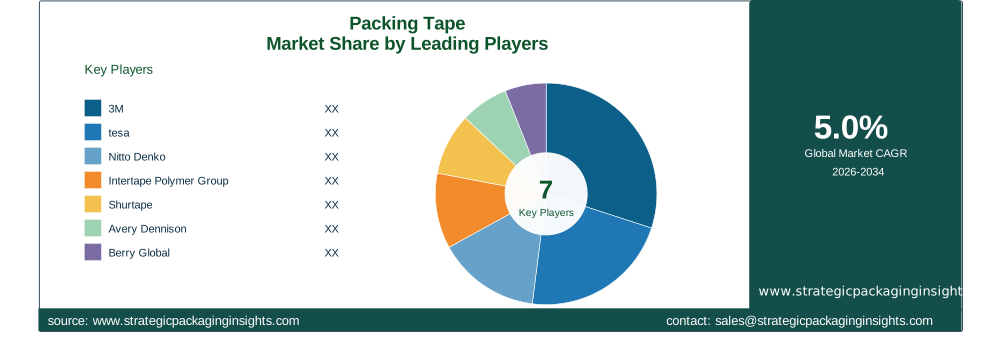
Intertape Polymer Group and Shurtape are other major players in the market, known for their high-quality adhesive technologies and diverse product lines. These companies are leveraging their expertise in adhesive formulations to develop innovative packing tapes that offer superior performance and durability. Their strategic partnerships with suppliers and distributors are helping them expand their reach and strengthen their market position.
Avery Dennison and Berry Global are also prominent players in the Packing Tape market, with a strong focus on sustainability and environmental responsibility. These companies are investing in research and development to create eco-friendly tapes that meet regulatory requirements and align with consumer preferences. Their commitment to sustainability is enhancing their brand reputation and driving demand for their products.
Scapa, Saint-Gobain, and Henkel are other key players in the market, known for their advanced adhesive technologies and innovative product offerings. These companies are focusing on expanding their product lines and enhancing their distribution networks to reach new customers and capture additional market share. Their emphasis on sustainability and eco-friendly solutions is also contributing to their competitive advantage in the market.
Key Highlights
- Market Size: USD 34.14 billion in 2025, projected to reach USD 52.97 billion by 2034.
- Growth Rate: Expected CAGR of 5.0% during the forecast period.
- Leading Companies: 3M, tesa, Nitto Denko, Intertape Polymer Group, Shurtape.
- Product Innovation: Focus on eco-friendly and high-performance adhesive technologies.
- Regional Growth: Significant opportunities in Asia Pacific and Latin America.
- Sustainability Trends: Increasing demand for recyclable and biodegradable tapes.
- Market Drivers: Rise of e-commerce and global trade boosting demand.
Packing Tape Market Segments Insights

Product Type Analysis
The Packing Tape market is segmented by product type into Carton Sealing Tape, Filament Tape, Paper Tape, and Double-Sided Tape. Carton Sealing Tape holds the largest market share due to its widespread use in packaging and shipping applications. The demand for secure and efficient packaging solutions is driving the growth of this segment, as businesses seek reliable tapes to ensure product safety during transit. Filament Tape is also gaining traction, particularly in heavy-duty applications where strength and durability are critical. Companies like 3M and tesa are leading the way in product innovation, developing advanced adhesive technologies that enhance the performance of these tapes.
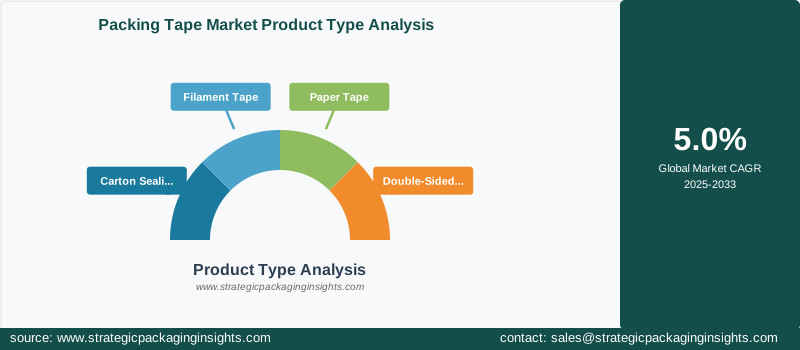
Paper Tape is becoming increasingly popular due to its eco-friendly properties and ease of use. The growing emphasis on sustainability and environmental responsibility is driving demand for recyclable and biodegradable tapes, making Paper Tape an attractive option for businesses looking to reduce their carbon footprint. Double-Sided Tape is also experiencing growth, particularly in applications where a strong bond is required without visible tape lines. The versatility and performance of these tapes are making them a preferred choice for various industries, including retail and manufacturing.
Adhesive Type Analysis
The market is also segmented by adhesive type into Acrylic, Hot Melt, and Rubber-Based adhesives. Acrylic adhesives are the most widely used due to their excellent adhesion properties and versatility. They are suitable for a wide range of applications, including carton sealing and bundling, making them a popular choice for businesses across various industries. Hot Melt adhesives are gaining popularity due to their quick bonding capabilities and resistance to temperature fluctuations. These properties make them ideal for applications in shipping and logistics, where fast and reliable adhesion is essential.
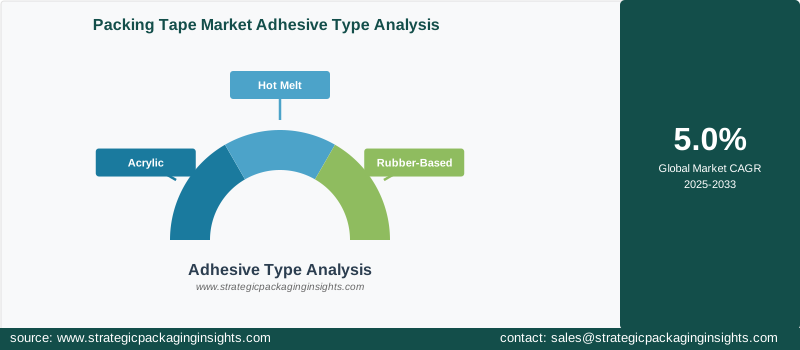
Rubber-Based adhesives are known for their strong bonding capabilities and durability, making them suitable for heavy-duty applications. The demand for high-performance tapes that offer superior adhesion and durability is driving the growth of this segment. Companies like Nitto Denko and Intertape Polymer Group are focusing on developing advanced adhesive technologies that enhance the performance of their tapes and meet the evolving needs of customers. The emphasis on sustainability and eco-friendly solutions is also influencing the development of new adhesive formulations that minimize environmental impact.
Application Analysis
The Packing Tape market is segmented by application into Carton Sealing, Bundling, Shipping, and E-commerce. Carton Sealing is the largest application segment, driven by the increasing demand for secure and efficient packaging solutions in logistics and retail. The rise of e-commerce is also contributing to the growth of this segment, as businesses seek reliable tapes to ensure product safety during transit. Bundling is another key application, particularly in industries where products need to be grouped together for storage or transportation.
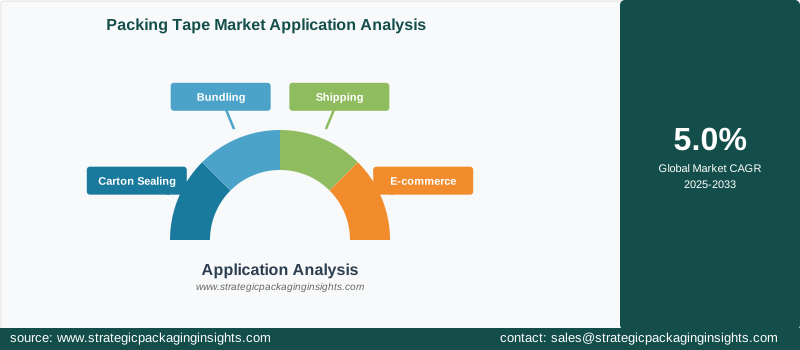
Shipping is a critical application for packing tapes, as they play a vital role in ensuring the safe and secure delivery of products. The demand for high-quality tapes that offer superior adhesion and durability is driving the growth of this segment. E-commerce is also a significant driver of demand, as the need for efficient packaging solutions continues to grow with the expansion of online shopping platforms. Companies like Shurtape and Saint-Gobain are focusing on developing innovative tapes that meet the specific needs of these applications and enhance supply chain efficiency.
End Use Analysis
The market is segmented by end use into Logistics, Retail, Manufacturing, and Consumer Goods. Logistics is the largest end-use segment, driven by the increasing demand for secure and efficient packaging solutions in shipping and transportation. The rise of e-commerce and global trade is also contributing to the growth of this segment, as businesses seek reliable tapes to ensure product safety during transit. Retail is another key end-use segment, particularly in applications where products need to be packaged and displayed for sale.
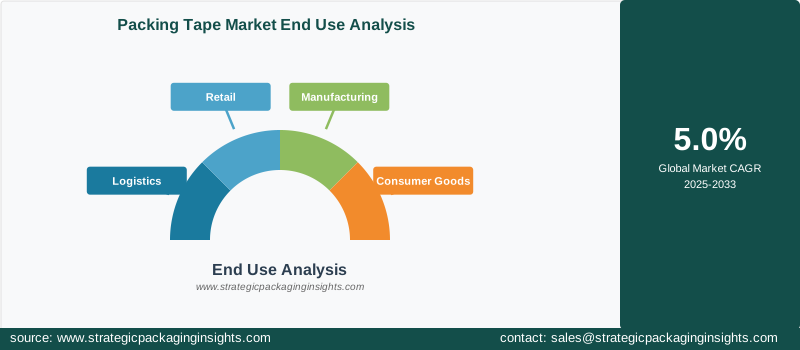
Manufacturing is a significant end-use segment, as packing tapes play a vital role in ensuring the safe and secure delivery of products. The demand for high-quality tapes that offer superior adhesion and durability is driving the growth of this segment. Consumer Goods is also a growing end-use segment, as the need for efficient packaging solutions continues to grow with the expansion of online shopping platforms. Companies like Avery Dennison and Berry Global are focusing on developing innovative tapes that meet the specific needs of these end-use segments and enhance supply chain efficiency.
Packing Tape Market Segments
The Packing Tape market has been segmented on the basis ofProduct Type
- Carton Sealing Tape
- Filament Tape
- Paper Tape
- Double-Sided Tape
Adhesive Type
- Acrylic
- Hot Melt
- Rubber-Based
Application
- Carton Sealing
- Bundling
- Shipping
- E-commerce
End Use
- Logistics
- Retail
- Manufacturing
- Consumer Goods
Region
- Asia Pacific
- North America
- Latin America
- Europe
- Middle East & Africa




