


On-Pack Recycling Label Compliance Market Outlook
The On-Pack Recycling Label Compliance market size was valued at USD 286.0 Million in 2025 and is anticipated to reach USD 1.08 Billion by 2034, growing at a CAGR of 15.9% during the forecast period according to Strategic Packaging Insights. This market is driven by the increasing demand for sustainable packaging solutions, as consumers and regulatory bodies push for more transparency and accountability in recycling practices. Companies like OPRL Ltd. and GreenBlue (How2Recycle) are at the forefront, providing innovative solutions that help brands comply with recycling label standards. The market's growth is further fueled by advancements in technology that enable more efficient label management and compliance tracking, making it easier for companies to adhere to regional and international recycling standards.
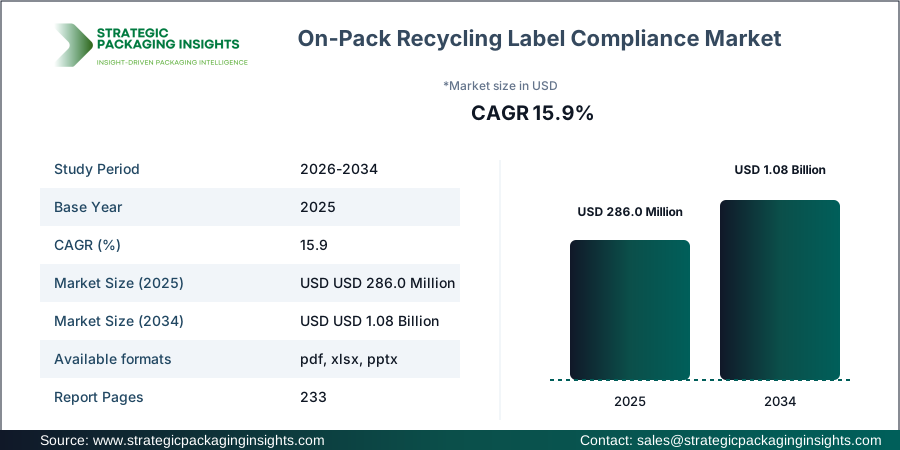
One of the most impactful drivers of the On-Pack Recycling Label Compliance market is the growing emphasis on environmental sustainability and the circular economy. Governments worldwide are implementing stricter regulations to reduce packaging waste and promote recycling, which is compelling companies to adopt compliant labeling practices. For instance, the European Union's Circular Economy Action Plan aims to make sustainable products the norm, thereby increasing the demand for recycling labels. This regulatory push is complemented by consumer preferences for eco-friendly products, which are driving brands to adopt transparent recycling labels to enhance their market appeal. Companies like SAP and Specright are leveraging these trends by offering comprehensive compliance software solutions that streamline the labeling process, ensuring that brands can meet both regulatory requirements and consumer expectations.
Report Scope
| Attributes | Details |
| Report Title | On-Pack Recycling Label Compliance Market Size, Future Growth and Forecast 2034 |
| By Deployment | Cloud-Based, On-Premises, Hybrid |
| By Solution | Recycling Label Management, Packaging Compliance Software, Artwork & Label Verification, Packaging Data Management, Regulatory Reporting |
| By Label Standard | On-Pack Recycling Label (OPRL), How2Recycle, Triman Label, Australasian Recycling Label (ARL), Other Regional Recycling Labels |
| By End User | Food & Beverage, Personal Care & Cosmetics, Healthcare & Pharmaceuticals, Consumer Goods, Industrial Packaging, Retail & E-commerce |
| Region | Asia Pacific, North America, Latin America, Europe, Middle East & Africa |
| Base Year | 2025 |
| Historic Period | 2018-2024 |
| Forecast Period | 2026-2034 |
| Number of Pages | 233 |
| Customization Available | Yes* |
Sustainability & Circular Economy Analysis
Sustainability initiatives and circular economy practices are significantly influencing the packaging market, particularly in the realm of recycling label compliance. As consumers become more environmentally conscious, there is a growing demand for packaging that is not only recyclable but also clearly labeled to indicate its recyclability. This has led to an increased focus on the use of recyclable materials and the development of reusable packaging solutions. Companies are investing in eco-friendly material innovations to reduce their carbon footprint and align with consumer sustainability preferences. These trends are driving changes in packaging design and manufacturing processes, as brands strive to create packaging that meets both regulatory standards and consumer expectations.
The influence of sustainability trends extends beyond packaging design to impact investment decisions and supply chain strategies. Companies are prioritizing investments in technologies and processes that support waste reduction and carbon footprint reduction. This includes the adoption of lightweight packaging solutions that minimize material usage and transportation costs. Additionally, extended producer responsibility (EPR) regulations are prompting companies to take greater accountability for the end-of-life management of their packaging. This has led to the development of recycling networks and partnerships aimed at improving the recyclability of packaging materials and enhancing supply chain resilience.
Regulatory compliance is a critical factor in the long-term competitiveness of companies in the packaging market. As governments implement stricter packaging regulations, companies must ensure that their packaging solutions meet these requirements to avoid penalties and maintain their market position. This has led to an increased focus on packaging data management and regulatory reporting solutions, which help companies track and report their compliance efforts. By adopting these solutions, companies can not only meet regulatory requirements but also demonstrate their commitment to sustainability, thereby enhancing their brand reputation and consumer trust.
Packaging Value Chain & Supply Chain Analysis
The packaging value chain and supply chain ecosystem are complex and multifaceted, involving numerous stakeholders from raw material sourcing to recycling networks. Raw material availability is a critical factor influencing the efficiency of the supply chain, as fluctuations in material supply can impact production capabilities and lead to delays. Packaging converters and manufacturers play a key role in transforming raw materials into finished packaging products, and their ability to innovate and adapt to changing market demands is crucial for maintaining competitiveness. Companies like Recyda and osapiens are leveraging advanced technologies to enhance their production capabilities and streamline their operations, ensuring that they can meet the growing demand for compliant recycling labels.
Logistics and distribution channels are essential components of the packaging supply chain, as they facilitate the movement of packaging products from manufacturers to brand owners and retailers. Efficient transportation and inventory management strategies are vital for minimizing costs and ensuring timely delivery of products. Companies are increasingly adopting localization strategies to reduce transportation costs and improve supply chain resilience. This involves sourcing materials and manufacturing products closer to end markets, thereby reducing the environmental impact of transportation and enhancing the overall sustainability of the supply chain.
Strategic partnerships and collaborations are becoming increasingly important in the packaging value chain, as companies seek to enhance their capabilities and expand their market reach. By partnering with technology providers and recycling networks, companies can access new technologies and expertise that enable them to improve their packaging solutions and meet regulatory requirements. These partnerships also facilitate the sharing of best practices and the development of innovative solutions that drive market growth. Companies like Trace One and Sphera are at the forefront of these efforts, offering comprehensive solutions that help brands navigate the complexities of the packaging value chain and achieve their sustainability goals.
Opportunities & Threats
The On-Pack Recycling Label Compliance market presents numerous opportunities for growth and innovation. One of the key opportunities lies in the development of advanced recycling label management solutions that leverage cutting-edge technologies such as artificial intelligence and machine learning. These technologies can enhance the accuracy and efficiency of label management processes, enabling companies to comply with complex regulatory requirements more effectively. Additionally, the growing demand for personalized and customizable packaging solutions presents an opportunity for companies to differentiate themselves in the market by offering tailored recycling labels that meet the specific needs of their clients.
Another significant opportunity in the market is the expansion of recycling label standards to new regions and industries. As more countries implement recycling regulations, there is a growing need for standardized labeling solutions that can be easily adopted across different markets. Companies that can develop flexible and scalable solutions that cater to diverse regional requirements will be well-positioned to capture a larger share of the market. Furthermore, the increasing focus on sustainability and circular economy practices presents an opportunity for companies to enhance their brand reputation by demonstrating their commitment to environmental responsibility through transparent and compliant recycling labels.
Despite the numerous opportunities, the On-Pack Recycling Label Compliance market also faces several threats that could hinder its growth. One of the primary challenges is the complexity of navigating diverse regulatory environments, as different regions have varying requirements for recycling labels. This can create compliance challenges for companies operating in multiple markets, as they must ensure that their labeling solutions meet the specific standards of each region. Additionally, the high costs associated with implementing and maintaining compliant labeling solutions can be a barrier for smaller companies, limiting their ability to compete with larger players in the market.
Drivers & Challenges
The On-Pack Recycling Label Compliance market is driven by several key factors that are shaping its growth trajectory. One of the primary drivers is the increasing consumer demand for sustainable and eco-friendly packaging solutions. As consumers become more environmentally conscious, they are seeking products that align with their values, leading to a growing preference for packaging that is clearly labeled with recycling information. This trend is driving companies to adopt compliant recycling labels as a means of enhancing their market appeal and meeting consumer expectations. Additionally, advancements in technology are enabling companies to develop more efficient and accurate labeling solutions, further driving market growth.
Another significant driver of the market is the implementation of stringent packaging regulations by governments worldwide. These regulations are aimed at reducing packaging waste and promoting recycling, compelling companies to adopt compliant labeling practices to avoid penalties and maintain their market position. The European Union's Circular Economy Action Plan, for example, is a key regulatory initiative that is driving the adoption of recycling labels in the region. Companies that can effectively navigate these regulatory environments and develop solutions that meet the specific requirements of each market will be well-positioned to capitalize on the growing demand for compliant recycling labels.
Despite the positive drivers, the On-Pack Recycling Label Compliance market also faces several challenges that could impact its growth. One of the primary challenges is the complexity of managing and maintaining compliance with diverse recycling label standards across different regions. This requires companies to invest in sophisticated label management solutions that can handle the intricacies of various regulatory environments. Additionally, the high costs associated with implementing and maintaining these solutions can be a barrier for smaller companies, limiting their ability to compete with larger players in the market. Companies must also contend with the rapidly evolving nature of recycling regulations, which can create uncertainty and require continuous adaptation to remain compliant.
Market Share Analysis
The On-Pack Recycling Label Compliance market is characterized by a competitive landscape with several key players vying for market share. Companies like OPRL Ltd., GreenBlue (How2Recycle), and Recyda are leading the market with their innovative solutions and strong brand presence. These companies have established themselves as leaders in the recycling label compliance space by offering comprehensive solutions that cater to the diverse needs of their clients. Their ability to adapt to changing market demands and regulatory requirements has enabled them to maintain a competitive edge and capture a significant share of the market.
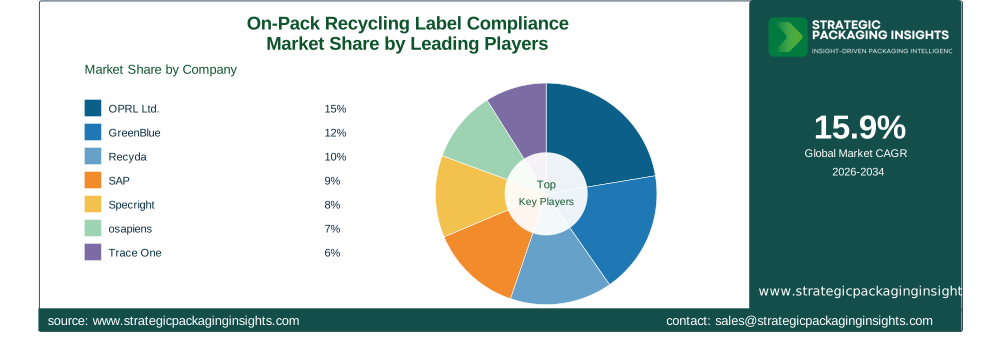
OPRL Ltd. is a prominent player in the market, known for its On-Pack Recycling Label (OPRL) standard, which is widely adopted by brands in the UK and beyond. The company's focus on providing clear and consistent recycling labels has made it a trusted partner for brands looking to enhance their sustainability credentials. GreenBlue, through its How2Recycle program, has also made a significant impact in the market by offering a standardized labeling system that simplifies recycling for consumers and brands alike. The program's success is attributed to its collaborative approach, working with brands to develop labels that are both informative and easy to understand.
Recyda is another key player in the market, offering a digital platform that streamlines the recycling label compliance process for brands. The company's platform provides real-time data and insights that help brands make informed decisions about their packaging solutions, ensuring compliance with regional and international recycling standards. SAP and Specright are also notable players in the market, offering comprehensive software solutions that enable brands to manage their recycling label compliance efforts more efficiently. These companies have leveraged their expertise in technology and data management to develop solutions that address the complexities of the recycling label compliance process.
Other notable companies in the market include osapiens, Trace One, and Sphera, which offer a range of solutions that cater to the diverse needs of brands in the recycling label compliance space. These companies have established themselves as leaders in the market by providing innovative solutions that enhance the efficiency and accuracy of the labeling process. Their ability to adapt to changing market demands and regulatory requirements has enabled them to maintain a competitive edge and capture a significant share of the market. As the market continues to evolve, these companies are well-positioned to capitalize on the growing demand for compliant recycling labels and drive further growth in the industry.
Key Highlights
- Market Size: The On-Pack Recycling Label Compliance market is projected to grow from USD 286.0 Million in 2025 to USD 1.08 Billion by 2034.
- Growth Rate: The market is expected to grow at a CAGR of 15.9% during the forecast period.
- Key Players: Major companies include OPRL Ltd., GreenBlue (How2Recycle), Recyda, and SAP.
- Regional Growth: Asia Pacific is anticipated to witness significant growth due to increasing regulatory initiatives.
- Technological Advancements: Innovations in recycling label management and compliance software are driving market growth.
- Consumer Demand: Growing consumer preference for sustainable packaging solutions is a key market driver.
- Regulatory Impact: Stricter packaging regulations are compelling companies to adopt compliant labeling practices.
On-Pack Recycling Label Compliance Market Segments Insights

By Deployment Analysis
The deployment segment of the On-Pack Recycling Label Compliance market is categorized into Cloud-Based, On-Premises, and Hybrid solutions. Cloud-Based solutions are gaining traction due to their scalability and flexibility, allowing companies to manage their recycling label compliance efforts more efficiently. These solutions offer real-time data access and collaboration capabilities, enabling brands to streamline their compliance processes and reduce operational costs. On-Premises solutions, while less flexible, provide enhanced security and control over data, making them a preferred choice for companies with stringent data protection requirements. Hybrid solutions offer a balance between the two, providing the benefits of both cloud and on-premises deployments.
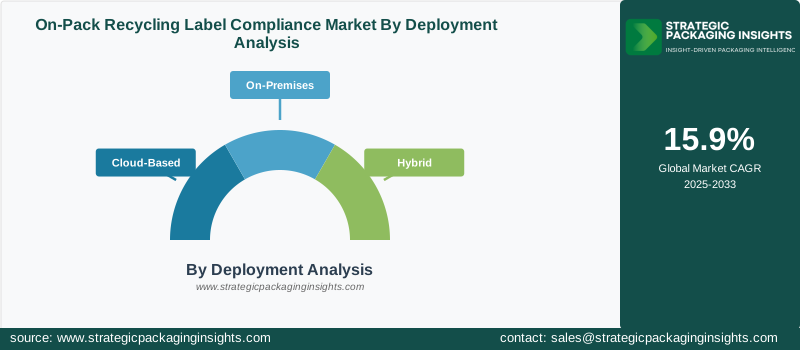
The growing demand for Cloud-Based solutions is driven by the increasing adoption of digital technologies and the need for efficient compliance management. Companies are leveraging cloud platforms to enhance their operational efficiency and ensure compliance with regional and international recycling standards. The flexibility and scalability of cloud solutions make them an attractive option for companies looking to expand their operations and adapt to changing market demands. As the market continues to evolve, the adoption of Cloud-Based solutions is expected to increase, driven by advancements in technology and the growing need for efficient compliance management.
By Solution Analysis
The solution segment of the On-Pack Recycling Label Compliance market includes Recycling Label Management, Packaging Compliance Software, Artwork & Label Verification, Packaging Data Management, and Regulatory Reporting. Recycling Label Management solutions are essential for ensuring that packaging labels comply with regional and international recycling standards. These solutions provide real-time data and insights that help brands make informed decisions about their packaging solutions, ensuring compliance with regulatory requirements. Packaging Compliance Software offers comprehensive tools for managing the entire compliance process, from label design to regulatory reporting.
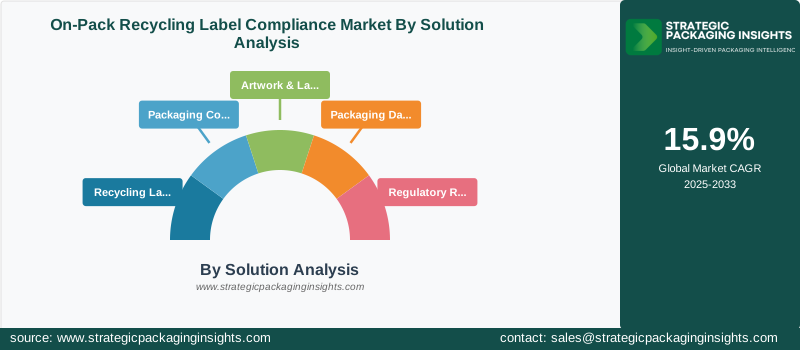
Artwork & Label Verification solutions play a critical role in ensuring the accuracy and consistency of recycling labels, reducing the risk of non-compliance and enhancing brand reputation. Packaging Data Management solutions provide a centralized platform for managing packaging data, enabling brands to streamline their compliance efforts and improve operational efficiency. Regulatory Reporting solutions help companies track and report their compliance efforts, ensuring that they meet regulatory requirements and avoid penalties. As the market continues to evolve, the demand for these solutions is expected to increase, driven by the growing need for efficient compliance management and the increasing complexity of recycling regulations.
By Label Standard Analysis
The label standard segment of the On-Pack Recycling Label Compliance market includes On-Pack Recycling Label (OPRL), How2Recycle, Triman Label, Australasian Recycling Label (ARL), and Other Regional Recycling Labels. The OPRL standard is widely adopted in the UK and is known for its clear and consistent labeling system that simplifies recycling for consumers. How2Recycle is a popular standard in North America, offering a standardized labeling system that provides clear recycling instructions for consumers. The Triman Label is a mandatory recycling label in France, providing consumers with information on how to recycle packaging materials.
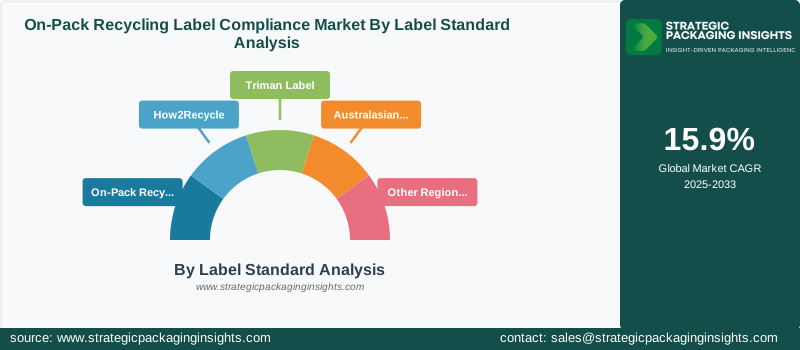
The Australasian Recycling Label (ARL) is gaining traction in Australia and New Zealand, offering a clear and consistent labeling system that helps consumers make informed recycling decisions. Other Regional Recycling Labels cater to the specific needs of different markets, providing tailored solutions that meet regional regulatory requirements. As the market continues to evolve, the demand for standardized recycling labels is expected to increase, driven by the growing need for clear and consistent labeling systems that enhance consumer understanding and promote recycling.
By End User Analysis
The end-user segment of the On-Pack Recycling Label Compliance market includes Food & Beverage, Personal Care & Cosmetics, Healthcare & Pharmaceuticals, Consumer Goods, Industrial Packaging, and Retail & E-commerce. The Food & Beverage industry is a major driver of the market, as companies in this sector are increasingly adopting recycling labels to enhance their sustainability credentials and meet consumer demand for eco-friendly packaging solutions. Personal Care & Cosmetics companies are also adopting recycling labels to align with consumer preferences for sustainable products and enhance their brand reputation.
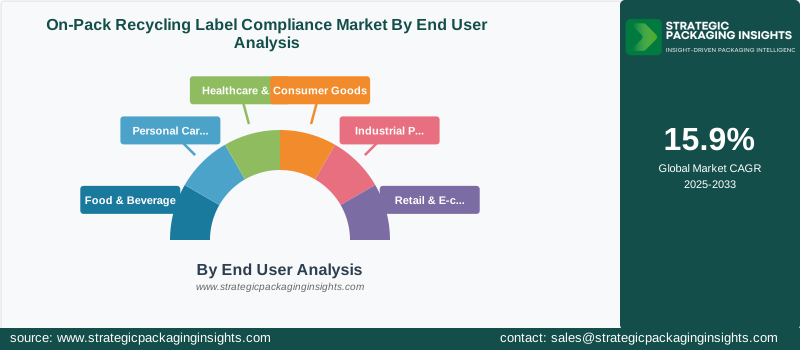
The Healthcare & Pharmaceuticals industry is adopting recycling labels to comply with stringent packaging regulations and enhance the recyclability of their packaging solutions. Consumer Goods companies are leveraging recycling labels to differentiate their products in the market and meet consumer demand for sustainable packaging solutions. Industrial Packaging companies are adopting recycling labels to enhance the recyclability of their packaging materials and comply with regulatory requirements. Retail & E-commerce companies are leveraging recycling labels to enhance their sustainability credentials and meet consumer demand for eco-friendly packaging solutions.
On-Pack Recycling Label Compliance Market Segments
The On-Pack Recycling Label Compliance market has been segmented on the basis ofBy Deployment
- Cloud-Based
- On-Premises
- Hybrid
By Solution
- Recycling Label Management
- Packaging Compliance Software
- Artwork & Label Verification
- Packaging Data Management
- Regulatory Reporting
By Label Standard
- On-Pack Recycling Label (OPRL)
- How2Recycle
- Triman Label
- Australasian Recycling Label (ARL)
- Other Regional Recycling Labels
By End User
- Food & Beverage
- Personal Care & Cosmetics
- Healthcare & Pharmaceuticals
- Consumer Goods
- Industrial Packaging
- Retail & E-commerce
Region
- Asia Pacific
- North America
- Latin America
- Europe
- Middle East & Africa




