


Oily Waste Can Market Outlook
The oily waste can market was valued at $336.85 million in 2025 and is projected to reach $452.53 million by 2034, growing at a CAGR of 3.3% during the forecast period 2026-2034. This market is driven by the increasing awareness of workplace safety and stringent regulations regarding waste management. The demand for oily waste cans is primarily fueled by industries such as manufacturing, automotive, and laboratories, where the safe disposal of oily waste is critical. The market is also witnessing a shift towards more durable and corrosion-resistant materials, such as stainless steel, which is expected to enhance the longevity and safety of these products.

Despite the promising growth, the market faces challenges such as the high cost of raw materials and the need for continuous innovation to meet evolving safety standards. Regulatory bodies across various regions are imposing strict guidelines on waste management, which could potentially restrain market growth if manufacturers fail to comply. However, the increasing adoption of eco-friendly practices and the development of advanced waste management solutions present significant growth opportunities. The market is also expected to benefit from technological advancements that enhance the functionality and efficiency of oily waste cans.
Report Scope
| Attributes | Details |
| Report Title | Oily Waste Can Market Size, Future Growth and Forecast 2034 |
| Product Type | Foot-Operated Cans, Self-Closing Cans, Bench Cans |
| Material Type | Steel, Galvanized Steel, Stainless Steel |
| Application | Oily Rags, Solvent Wipes, Hazardous Waste |
| End Use | Industrial Facilities, Laboratories, Automotive, Manufacturing |
| Region | Asia Pacific, North America, Latin America, Europe, Middle East & Africa |
| Base Year | 2025 |
| Historic Period | 2018-2024 |
| Forecast Period | 2026-2034 |
| Number of Pages | 207 |
| Customization Available | Yes* |
Opportunities & Threats
The oily waste can market presents numerous opportunities, particularly in the realm of technological advancements and product innovation. As industries continue to prioritize safety and environmental sustainability, there is a growing demand for innovative waste management solutions. Manufacturers are investing in research and development to create products that not only meet regulatory standards but also offer enhanced safety features and durability. The shift towards eco-friendly materials and designs is another opportunity for market players to differentiate themselves and capture a larger market share. Additionally, the expansion of industrial activities in emerging economies presents a lucrative opportunity for market growth, as these regions are increasingly adopting stringent waste management practices.
Another significant opportunity lies in the customization of oily waste cans to cater to specific industry needs. With industries such as automotive and manufacturing requiring specialized waste management solutions, there is a growing demand for customized products that address unique challenges. This trend is expected to drive innovation and create new revenue streams for market players. Furthermore, the increasing focus on workplace safety and the implementation of stringent safety regulations are expected to boost the demand for high-quality oily waste cans, providing a steady growth trajectory for the market.
However, the market also faces threats, primarily from the high cost of raw materials and the intense competition among market players. The volatility in raw material prices can significantly impact the profitability of manufacturers, making it challenging to maintain competitive pricing. Additionally, the market is characterized by the presence of numerous players, leading to intense competition and price wars. This competitive landscape can pose a threat to smaller players who may struggle to compete with established brands. Moreover, the stringent regulatory environment requires continuous compliance, which can be a significant burden for manufacturers, especially those operating in multiple regions.
Drivers & Challenges
The primary drivers of the oily waste can market include the increasing emphasis on workplace safety and the stringent regulations governing waste management. Industries are becoming more aware of the potential hazards associated with improper disposal of oily waste, leading to a growing demand for reliable and safe waste management solutions. The implementation of strict safety standards by regulatory bodies is compelling industries to adopt high-quality oily waste cans, thereby driving market growth. Additionally, the rise in industrial activities, particularly in emerging economies, is contributing to the increased demand for oily waste cans, as these regions are adopting advanced waste management practices to ensure compliance with international standards.
Another significant driver is the technological advancements in the design and manufacturing of oily waste cans. Manufacturers are focusing on developing products that offer enhanced safety features, such as self-closing lids and foot-operated mechanisms, to prevent accidental spills and fires. The use of durable and corrosion-resistant materials, such as stainless steel, is also gaining traction, as it enhances the longevity and safety of the products. These advancements are expected to drive the adoption of oily waste cans across various industries, further propelling market growth.
Despite the positive growth prospects, the market faces several challenges, including the high cost of raw materials and the need for continuous innovation to meet evolving safety standards. The volatility in raw material prices can significantly impact the profitability of manufacturers, making it challenging to maintain competitive pricing. Additionally, the market is characterized by intense competition, with numerous players vying for market share. This competitive landscape can pose a challenge for smaller players who may struggle to compete with established brands. Moreover, the stringent regulatory environment requires continuous compliance, which can be a significant burden for manufacturers, especially those operating in multiple regions.
Market Share Analysis
The oily waste can market is characterized by a competitive landscape with several key players dominating the market. Companies such as Justrite, Eagle Manufacturing, DENIOS, New Pig, and Securall hold significant market shares due to their extensive product portfolios and strong distribution networks. These companies have established themselves as leaders in the market by consistently delivering high-quality products that meet stringent safety standards. Their focus on innovation and customer satisfaction has enabled them to maintain a competitive edge in the market.

Justrite is one of the leading players in the oily waste can market, known for its comprehensive range of safety products. The company has a strong presence in the market, with a significant share attributed to its innovative product offerings and commitment to quality. Eagle Manufacturing is another prominent player, recognized for its durable and reliable waste management solutions. The company's focus on product innovation and customer-centric approach has helped it capture a substantial market share.
DENIOS, a global leader in hazardous materials storage and handling, is also a key player in the oily waste can market. The company's extensive product portfolio and strong emphasis on safety and compliance have contributed to its significant market share. New Pig, known for its innovative spill control and containment solutions, is another major player in the market. The company's focus on sustainability and eco-friendly products has resonated well with customers, further strengthening its market position.
Other notable players in the market include Securall, Vestil, Grainger, Brady Corporation, HAZMATPAC, and U.S. Plastic Corp. These companies have established themselves as reliable providers of oily waste cans, offering a wide range of products to cater to diverse industry needs. Their strong distribution networks and focus on customer satisfaction have enabled them to maintain a competitive position in the market. Overall, the market is characterized by intense competition, with key players continuously striving to innovate and expand their product offerings to capture a larger market share.
Key Highlights
- The oily waste can market is projected to grow at a CAGR of 3.3% from 2026 to 2034.
- Increasing awareness of workplace safety and stringent regulations are driving market growth.
- Technological advancements and product innovation are key trends in the market.
- The market is characterized by intense competition among key players.
- Customization of products to cater to specific industry needs is a growing trend.
- The use of durable and corrosion-resistant materials is gaining traction.
- Emerging economies present significant growth opportunities for market players.
- High raw material costs and regulatory compliance are major challenges.
- Key players include Justrite, Eagle Manufacturing, DENIOS, and New Pig.
- The market is witnessing a shift towards eco-friendly materials and designs.
Top Countries Insights
In the oily waste can market, the United States holds a significant position, with a market size of approximately $120 million and a CAGR of 3%. The country's stringent regulations on waste management and workplace safety are key drivers of market growth. The demand for high-quality waste management solutions is further fueled by the presence of numerous industries, including automotive and manufacturing, which require reliable disposal methods for oily waste. Additionally, the focus on sustainability and eco-friendly practices is encouraging the adoption of advanced waste management solutions.
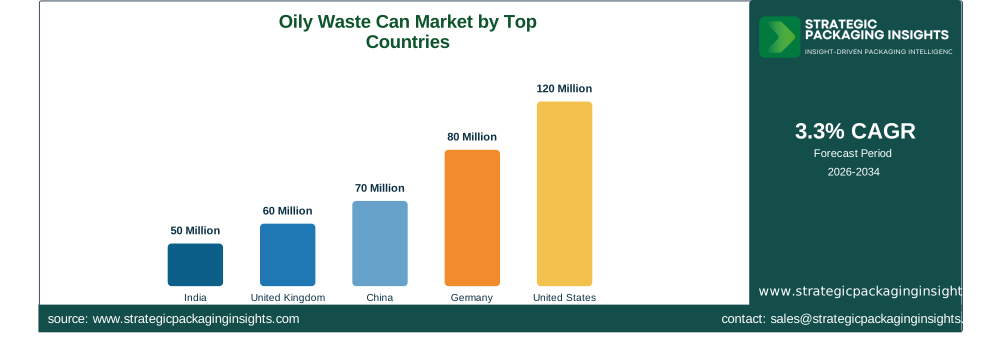
Germany is another prominent market for oily waste cans, with a market size of around $80 million and a CAGR of 4%. The country's strong industrial base and emphasis on environmental sustainability are driving the demand for innovative waste management solutions. The implementation of strict safety standards and regulations is compelling industries to adopt high-quality oily waste cans, further propelling market growth. Additionally, the focus on technological advancements and product innovation is expected to drive the adoption of oily waste cans in the country.
China, with a market size of approximately $70 million and a CAGR of 5%, is a rapidly growing market for oily waste cans. The country's expanding industrial activities and increasing awareness of workplace safety are key drivers of market growth. The adoption of stringent waste management practices and the focus on sustainability are further contributing to the demand for high-quality oily waste cans. Additionally, the government's initiatives to promote environmental sustainability and reduce industrial waste are expected to drive market growth in the coming years.
In the United Kingdom, the oily waste can market is valued at around $60 million, with a CAGR of 3%. The country's strong regulatory framework and emphasis on workplace safety are driving the demand for reliable waste management solutions. The focus on sustainability and eco-friendly practices is also encouraging the adoption of advanced waste management solutions. Additionally, the presence of a robust industrial base and the increasing adoption of technological advancements are expected to drive market growth in the country.
India, with a market size of approximately $50 million and a CAGR of 6%, is an emerging market for oily waste cans. The country's expanding industrial activities and increasing awareness of workplace safety are key drivers of market growth. The adoption of stringent waste management practices and the focus on sustainability are further contributing to the demand for high-quality oily waste cans. Additionally, the government's initiatives to promote environmental sustainability and reduce industrial waste are expected to drive market growth in the coming years.
Oily Waste Can Market Segments Insights

Product Type Analysis
The oily waste can market is segmented by product type into foot-operated cans, self-closing cans, and bench cans. Foot-operated cans are gaining popularity due to their convenience and safety features, allowing users to dispose of waste without using their hands. This feature is particularly beneficial in industries where hygiene and safety are paramount. Self-closing cans are also in demand as they minimize the risk of accidental spills and fires, making them ideal for environments where hazardous waste is handled. Bench cans, while less common, are used in specific applications where space is limited, and ease of access is required.

Each product type caters to different industry needs, with foot-operated and self-closing cans being the most popular due to their safety features. The demand for these products is driven by the increasing emphasis on workplace safety and the need for reliable waste management solutions. Manufacturers are focusing on enhancing the safety features of these products, such as incorporating flame arresters and leak-proof designs, to meet stringent safety standards. The market is also witnessing a trend towards customization, with manufacturers offering products tailored to specific industry requirements.
Material Type Analysis
The market is also segmented by material type into steel, galvanized steel, and stainless steel. Steel is the most commonly used material due to its durability and cost-effectiveness. However, galvanized steel and stainless steel are gaining traction due to their corrosion-resistant properties, which enhance the longevity and safety of the products. Stainless steel, in particular, is preferred in industries where hygiene and corrosion resistance are critical, such as laboratories and food processing facilities.

The choice of material is influenced by factors such as cost, durability, and specific industry requirements. Manufacturers are increasingly focusing on using high-quality materials to enhance the safety and longevity of their products. The trend towards eco-friendly materials is also gaining momentum, with manufacturers exploring sustainable alternatives to traditional materials. This shift is driven by the increasing emphasis on environmental sustainability and the need to comply with stringent regulations.
Application Analysis
By application, the market is segmented into oily rags, solvent wipes, and hazardous waste. Oily rags are the most common application, as they are widely used in industries such as automotive and manufacturing. The safe disposal of oily rags is critical to prevent fires and environmental contamination, driving the demand for reliable waste management solutions. Solvent wipes and hazardous waste are also significant applications, with industries requiring specialized solutions to handle these types of waste safely.

The demand for oily waste cans in these applications is driven by the increasing emphasis on workplace safety and the need to comply with stringent regulations. Manufacturers are focusing on developing products that offer enhanced safety features, such as self-closing lids and flame arresters, to meet the specific needs of these applications. The market is also witnessing a trend towards customization, with manufacturers offering products tailored to specific industry requirements.
End Use Analysis
The market is segmented by end use into industrial facilities, laboratories, automotive, and manufacturing. Industrial facilities are the largest end-use segment, as they generate significant amounts of oily waste that require safe disposal. The demand for oily waste cans in this segment is driven by the need to comply with stringent safety regulations and the increasing emphasis on workplace safety. Laboratories and automotive industries are also significant end-use segments, with these industries requiring specialized waste management solutions to handle hazardous waste safely.

The demand for oily waste cans in these end-use segments is driven by the increasing emphasis on workplace safety and the need to comply with stringent regulations. Manufacturers are focusing on developing products that offer enhanced safety features, such as self-closing lids and flame arresters, to meet the specific needs of these end-use segments. The market is also witnessing a trend towards customization, with manufacturers offering products tailored to specific industry requirements.
Oily Waste Can Market Segments
The Oily Waste Can market has been segmented on the basis ofProduct Type
- Foot-Operated Cans
- Self-Closing Cans
- Bench Cans
Material Type
- Steel
- Galvanized Steel
- Stainless Steel
Application
- Oily Rags
- Solvent Wipes
- Hazardous Waste
End Use
- Industrial Facilities
- Laboratories
- Automotive
- Manufacturing
Region
- Asia Pacific
- North America
- Latin America
- Europe
- Middle East & Africa




