


Cans Market Outlook
The Cans market size was valued at USD 78.78 billion in 2025 and is anticipated to reach USD 120.14 billion by 2034, growing at a CAGR of 4.8% during the forecast period according to Strategic Packaging Insights. The market is driven by the increasing demand for sustainable and recyclable packaging solutions, with major brands like Ball Corporation and Crown Holdings leading the charge. The shift towards eco-friendly packaging is further fueled by consumer preferences for environmentally responsible products, which is pushing companies to innovate in material usage and can design.
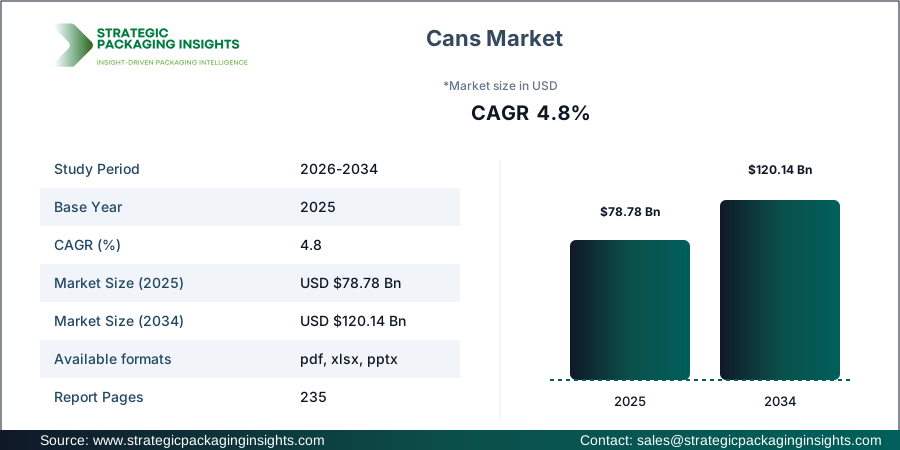
One of the most impactful drivers of the Cans market is the growing emphasis on reducing carbon footprints and enhancing recyclability. Governments worldwide are implementing stringent regulations to minimize environmental impact, which is encouraging manufacturers to adopt sustainable practices. For instance, the European Union's directives on packaging waste are compelling companies to innovate in their packaging solutions. This regulatory push, combined with consumer demand for sustainable products, is significantly influencing the market dynamics, making sustainability a core focus for brands like Ardagh Group and Silgan Holdings.
Report Scope
| Attributes | Details |
| Report Title | Cans Market Size, Future Growth and Forecast 2034 |
| By Material Type | Aluminum, Steel, Tinplate |
| By Can Type | 2-Piece Cans, 3-Piece Cans, Aerosol Cans, Food Cans |
| By Application | Beverages, Food, Chemicals, Personal Care |
| By End Use | Food & Beverage, FMCG, Industrial, Healthcare |
| Region | Asia Pacific, North America, Latin America, Europe, Middle East & Africa |
| Base Year | 2025 |
| Historic Period | 2018-2024 |
| Forecast Period | 2026-2034 |
| Number of Pages | 235 |
| Customization Available | Yes* |
Sustainability & Circular Economy Analysis
Sustainability initiatives are reshaping the Cans market, with a strong focus on recyclable materials and eco-friendly innovations. Companies are increasingly adopting lightweight packaging solutions to reduce material usage and transportation emissions. This trend is evident in the efforts of brands like Trivium Packaging, which are investing in advanced material technologies to enhance recyclability and reduce waste. The integration of ESG initiatives is becoming a standard practice, influencing packaging design and manufacturing processes to align with environmental goals.
The circular economy is gaining traction as companies strive to close the loop on packaging waste. Extended Producer Responsibility (EPR) schemes are encouraging manufacturers to take accountability for the entire lifecycle of their products, from production to disposal. This shift is prompting investments in recycling networks and reusable packaging systems, which are crucial for long-term market competitiveness. As a result, companies like Canpack are focusing on developing closed-loop systems that minimize waste and maximize resource efficiency.
Consumer preferences for sustainable packaging are driving regulatory compliance and investment decisions across the supply chain. Packaging regulations are becoming more stringent, requiring companies to innovate in material sourcing and production capabilities. This regulatory landscape is pushing brands to adopt sustainable practices, which are essential for maintaining market relevance and competitiveness. The focus on reducing carbon footprints and enhancing recyclability is not only a regulatory requirement but also a strategic driver for growth in the Cans market.
Packaging Value Chain & Supply Chain Analysis
The packaging value chain in the Cans market is complex, involving multiple stakeholders from raw material suppliers to end consumers. Raw material sourcing is a critical component, with aluminum and steel being the primary materials used in can production. The availability and cost of these materials significantly impact production capabilities and pricing strategies. Packaging converters and manufacturers play a pivotal role in transforming raw materials into finished products, with companies like Toyo Seikan and CPMC Holdings leading the way in innovation and efficiency.
Supply chain efficiency is crucial for maintaining competitiveness in the Cans market. Logistics and distribution channels must be optimized to ensure timely delivery and cost-effectiveness. Strategic partnerships with logistics providers and retailers are essential for streamlining operations and enhancing market reach. Inventory management and procurement strategies are also vital for mitigating risks associated with raw material shortages and fluctuating demand. Companies are increasingly focusing on localization and global sourcing to enhance supply chain resilience and reduce dependency on single markets.
Recycling networks are becoming an integral part of the packaging supply chain, driven by the need for sustainable practices and regulatory compliance. Companies are investing in recycling infrastructure to support the circular economy and meet consumer demand for eco-friendly products. This investment is crucial for reducing waste and enhancing resource efficiency, which are key factors for long-term market success. The integration of recycling networks into the supply chain is not only a regulatory requirement but also a strategic advantage for companies looking to differentiate themselves in the competitive Cans market.
Opportunities & Threats
The Cans market presents significant opportunities for growth, driven by the increasing demand for sustainable packaging solutions. The shift towards eco-friendly materials and recyclable packaging is creating new avenues for innovation and product development. Companies that invest in advanced material technologies and sustainable practices are well-positioned to capitalize on this trend. The growing consumer preference for environmentally responsible products is also driving demand for sustainable packaging, providing a lucrative opportunity for brands to differentiate themselves in the market.
Emerging markets offer substantial growth potential for the Cans market, with rising disposable incomes and changing consumer lifestyles driving demand for packaged goods. The expansion of the food and beverage industry in regions like Asia Pacific and Latin America is creating new opportunities for can manufacturers. Companies that can effectively tap into these markets by offering innovative and cost-effective packaging solutions are likely to experience significant growth. Additionally, the increasing focus on reducing plastic waste is driving demand for metal cans, which are perceived as a more sustainable alternative.
However, the Cans market also faces several threats, including regulatory challenges and fluctuating raw material prices. Stringent packaging regulations and environmental standards are increasing compliance costs for manufacturers. Companies must invest in sustainable practices and technologies to meet these requirements, which can be a significant financial burden. Additionally, the volatility in raw material prices, particularly aluminum and steel, poses a risk to profitability. Manufacturers must develop effective procurement strategies and cost management practices to mitigate these risks and maintain competitiveness.
Drivers & Challenges
The primary drivers of the Cans market include the growing demand for sustainable packaging solutions and the increasing focus on reducing carbon footprints. Consumers are becoming more environmentally conscious, driving demand for eco-friendly packaging options. This trend is encouraging manufacturers to innovate in material usage and can design, with a focus on recyclability and waste reduction. The regulatory push towards sustainable practices is also a significant driver, with governments implementing stringent packaging waste directives that compel companies to adopt sustainable practices.
Technological advancements in can manufacturing are also driving market growth. Innovations in material technologies and production processes are enabling manufacturers to produce lightweight and durable cans that meet consumer and regulatory demands. The development of advanced coating technologies is enhancing the performance and sustainability of cans, providing a competitive edge for manufacturers. Additionally, the increasing use of digital printing technologies is enabling brands to offer customized and visually appealing packaging solutions, further driving demand in the market.
Despite these drivers, the Cans market faces several challenges, including regulatory compliance and raw material price volatility. The stringent packaging regulations and environmental standards are increasing compliance costs for manufacturers, requiring significant investments in sustainable practices and technologies. Additionally, the volatility in raw material prices, particularly aluminum and steel, poses a risk to profitability. Manufacturers must develop effective procurement strategies and cost management practices to mitigate these risks and maintain competitiveness in the market.
Market Share Analysis
The competitive landscape of the Cans market is characterized by the presence of several key players, each striving to enhance their market share through innovation and strategic partnerships. Ball Corporation, a leading player in the market, is known for its focus on sustainability and innovation in can manufacturing. The company has made significant investments in advanced material technologies and production processes to enhance the performance and sustainability of its products. Crown Holdings is another major player, renowned for its extensive product portfolio and global presence. The company has a strong focus on research and development, enabling it to offer innovative and customized packaging solutions to its clients.
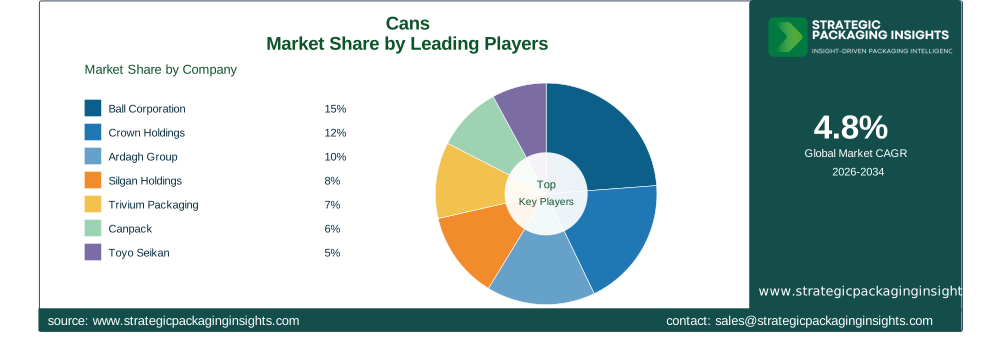
Ardagh Group is a prominent player in the Cans market, with a strong emphasis on sustainability and eco-friendly packaging solutions. The company has invested heavily in recycling infrastructure and sustainable practices to meet the growing demand for environmentally responsible products. Silgan Holdings is another key player, known for its focus on innovation and customer-centric solutions. The company has a diverse product portfolio and a strong global presence, enabling it to cater to a wide range of industries and applications.
Trivium Packaging is a leading provider of sustainable packaging solutions, with a strong focus on recyclability and waste reduction. The company has made significant investments in advanced material technologies and production processes to enhance the sustainability of its products. Canpack is another major player, known for its innovative and cost-effective packaging solutions. The company has a strong focus on research and development, enabling it to offer customized and visually appealing packaging solutions to its clients.
Other notable players in the Cans market include Toyo Seikan, CPMC Holdings, Envases Group, and Daiwa Can. These companies are known for their focus on innovation and sustainability, with a strong emphasis on meeting the growing demand for eco-friendly packaging solutions. The competitive landscape of the Cans market is characterized by intense competition and a strong focus on innovation and sustainability, with companies striving to enhance their market share through strategic partnerships and investments in advanced material technologies.
Key Highlights
- Market Size: The Cans market was valued at USD 78.78 billion in 2025 and is projected to reach USD 120.14 billion by 2034.
- Growth Rate: The market is expected to grow at a CAGR of 4.8% during the forecast period.
- Leading Companies: Key players include Ball Corporation, Crown Holdings, and Ardagh Group.
- Material Type: Aluminum and steel are the primary materials used in can production.
- Application Segments: Beverages and food are the major application segments driving demand.
- Regional Insights: Asia Pacific is expected to witness significant growth due to rising demand for packaged goods.
- Sustainability Focus: Increasing emphasis on recyclable and eco-friendly packaging solutions.
Cans Market Segments Insights

By Material Type Analysis
The Cans market is segmented by material type into aluminum, steel, and tinplate, with aluminum being the most widely used material due to its lightweight and recyclable properties. The demand for aluminum cans is driven by the increasing focus on sustainability and the need for eco-friendly packaging solutions. Companies like Ball Corporation and Crown Holdings are investing in advanced material technologies to enhance the recyclability and performance of aluminum cans. Steel and tinplate are also used in can production, offering durability and strength, which are essential for certain applications.
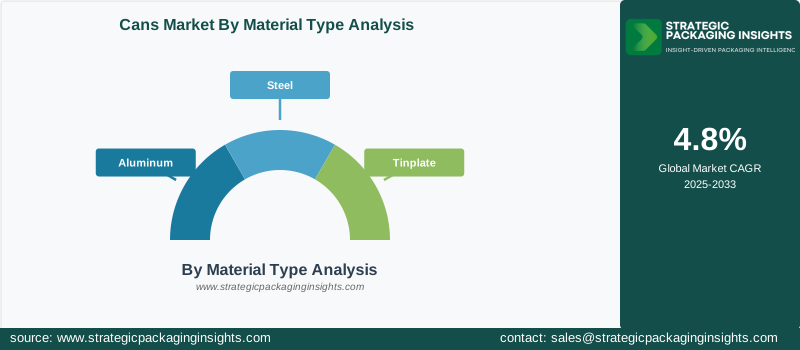
The choice of material type is influenced by factors such as cost, availability, and environmental impact. Aluminum is preferred for its lightweight and corrosion-resistant properties, making it ideal for beverage cans. Steel and tinplate are commonly used for food cans due to their strength and ability to preserve the contents. The growing emphasis on reducing carbon footprints and enhancing recyclability is driving innovation in material usage, with companies exploring new alloys and coatings to improve the sustainability of their products.
By Can Type Analysis
The Cans market is segmented by can type into 2-piece cans, 3-piece cans, aerosol cans, and food cans. 2-piece cans are widely used in the beverage industry due to their lightweight and cost-effective production process. The demand for 2-piece cans is driven by the increasing consumption of beverages and the need for sustainable packaging solutions. 3-piece cans are commonly used for food packaging, offering durability and strength, which are essential for preserving the contents.
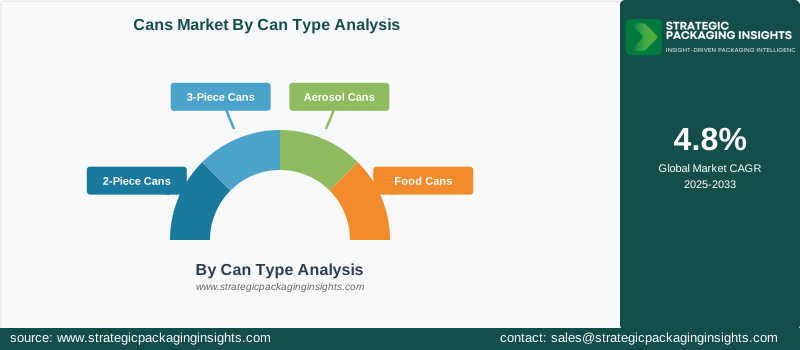
Aerosol cans are used in various applications, including personal care and household products, due to their convenience and ease of use. The demand for aerosol cans is driven by the growing consumer preference for convenient and easy-to-use packaging solutions. Food cans are used for packaging a wide range of food products, offering durability and protection against contamination. The choice of can type is influenced by factors such as cost, application, and environmental impact, with companies focusing on innovation and sustainability to meet consumer and regulatory demands.
By Application Analysis
The Cans market is segmented by application into beverages, food, chemicals, and personal care. The beverage segment is the largest application segment, driven by the increasing consumption of beverages and the need for sustainable packaging solutions. Companies like Ball Corporation and Crown Holdings are focusing on innovation and sustainability to meet the growing demand for eco-friendly beverage cans. The food segment is also a major application segment, with cans being used for packaging a wide range of food products.
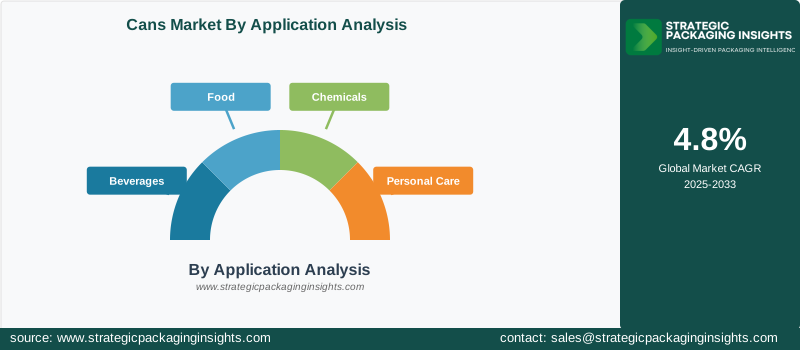
The demand for food cans is driven by the need for durable and protective packaging solutions that preserve the contents and extend shelf life. The chemicals and personal care segments are also significant application segments, with cans being used for packaging various products, including aerosols and household products. The choice of application is influenced by factors such as cost, convenience, and environmental impact, with companies focusing on innovation and sustainability to meet consumer and regulatory demands.
By End Use Analysis
The Cans market is segmented by end use into food & beverage, FMCG, industrial, and healthcare. The food & beverage segment is the largest end-use segment, driven by the increasing consumption of packaged goods and the need for sustainable packaging solutions. Companies like Ardagh Group and Silgan Holdings are focusing on innovation and sustainability to meet the growing demand for eco-friendly packaging solutions in the food & beverage industry.
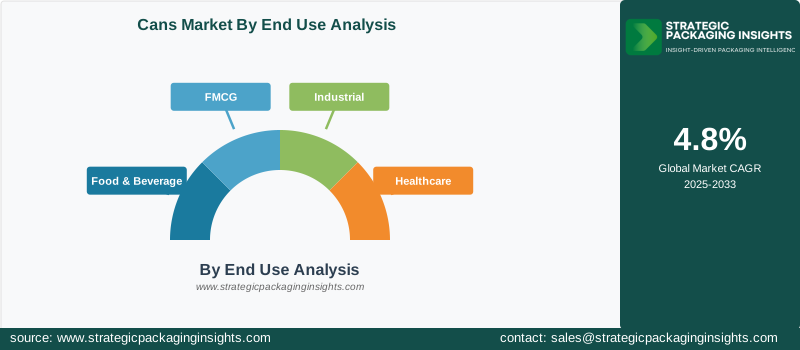
The FMCG segment is also a significant end-use segment, with cans being used for packaging various consumer goods, including personal care and household products. The industrial and healthcare segments are also important end-use segments, with cans being used for packaging various products, including chemicals and pharmaceuticals. The choice of end use is influenced by factors such as cost, convenience, and environmental impact, with companies focusing on innovation and sustainability to meet consumer and regulatory demands.
Cans Market Segments
The Cans market has been segmented on the basis ofBy Material Type
- Aluminum
- Steel
- Tinplate
By Can Type
- 2-Piece Cans
- 3-Piece Cans
- Aerosol Cans
- Food Cans
By Application
- Beverages
- Food
- Chemicals
- Personal Care
By End Use
- Food & Beverage
- FMCG
- Industrial
- Healthcare
Region
- Asia Pacific
- North America
- Latin America
- Europe
- Middle East & Africa




