


Oceania Digital Textile Printer Market Outlook
The Oceania Digital Textile Printer market was valued at $3.80 billion in 2025 and is projected to reach $9.25 billion by 2034, growing at a CAGR of 10.4% during the forecast period 2026-2034. This market is experiencing robust growth driven by the increasing demand for customized textile printing solutions across various industries. The shift towards sustainable and eco-friendly printing methods is also propelling the market forward, as digital textile printing offers significant reductions in water and energy consumption compared to traditional methods. The rise in disposable income and changing fashion trends are further fueling the demand for digital textile printers in the region.
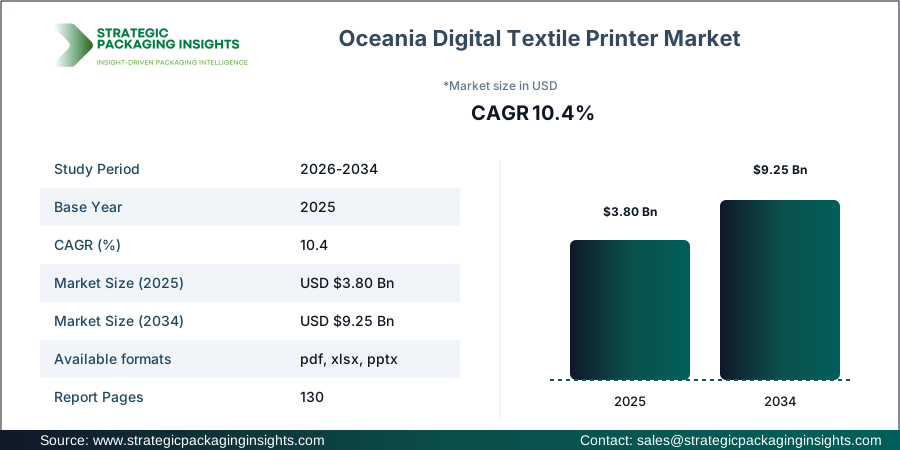
However, the market faces certain restraints, including the high initial investment costs associated with digital textile printers and the need for skilled operators to manage these advanced machines. Despite these challenges, the market holds significant growth potential due to technological advancements and the increasing adoption of digital textile printing in emerging economies. Regulatory support for sustainable practices and the growing trend of on-demand printing are expected to create new opportunities for market players in the coming years.
Report Scope
| Attributes | Details |
| Report Title | Oceania Digital Textile Printer Market Size, Future Growth and Forecast 2034 |
| By Printer Type | Direct-to-Fabric, Sublimation, Pigment Printers |
| By Ink Type | Reactive, Acid, Pigment, Sublimation |
| By Application | Apparel, Home Textiles, Signage |
| By End Use | Textile Mills, Fashion Brands, Print Service Providers |
| Region | Asia Pacific, North America, Latin America, Europe, Middle East & Africa |
| Base Year | 2025 |
| Historic Period | 2018-2024 |
| Forecast Period | 2026-2034 |
| Number of Pages | 130 |
| Customization Available | Yes* |
Opportunities & Threats
The Oceania Digital Textile Printer market presents numerous opportunities, particularly in the realm of technological advancements. The continuous innovation in printer technology, such as the development of high-speed and high-resolution printers, is expected to drive market growth. Additionally, the increasing demand for personalized and customized textile products offers a lucrative opportunity for market players to expand their offerings and cater to niche markets. The growing trend of e-commerce and online retailing is also expected to boost the demand for digital textile printers, as businesses seek to offer unique and customized products to their customers.
Another significant opportunity lies in the expansion of the application areas of digital textile printers. With the growing awareness of sustainable practices, industries such as fashion, home textiles, and signage are increasingly adopting digital textile printing methods. This shift is driven by the need to reduce environmental impact and meet consumer demand for eco-friendly products. The ability of digital textile printers to produce high-quality prints with minimal waste is a key factor driving their adoption across various industries.
Despite the promising opportunities, the market faces certain threats, including the high cost of digital textile printers and the availability of cheaper alternatives. The initial investment required for purchasing and setting up digital textile printers can be a significant barrier for small and medium-sized enterprises. Additionally, the market is highly competitive, with numerous players offering similar products, which can lead to price wars and reduced profit margins. The rapid pace of technological advancements also poses a threat, as companies need to continuously invest in research and development to stay competitive.
Drivers & Challenges
One of the primary drivers of the Oceania Digital Textile Printer market is the increasing demand for sustainable and eco-friendly printing solutions. As consumers become more environmentally conscious, there is a growing preference for products that are produced using sustainable methods. Digital textile printing offers significant environmental benefits, including reduced water and energy consumption, which is driving its adoption across various industries. Additionally, the ability to produce high-quality prints with vibrant colors and intricate designs is a key factor driving the demand for digital textile printers.
Another significant driver is the growing trend of customization and personalization in the textile industry. Consumers are increasingly seeking unique and personalized products, which has led to a surge in demand for digital textile printers. These printers offer the flexibility to produce customized designs quickly and efficiently, making them an ideal choice for businesses looking to cater to niche markets. The rise of e-commerce and online retailing has further fueled this trend, as businesses seek to differentiate themselves by offering personalized products to their customers.
However, the market faces several challenges, including the high cost of digital textile printers and the need for skilled operators. The initial investment required for purchasing and setting up these printers can be a significant barrier for small and medium-sized enterprises. Additionally, the complexity of operating and maintaining digital textile printers requires skilled personnel, which can be a challenge for businesses with limited resources. The rapid pace of technological advancements also poses a challenge, as companies need to continuously invest in research and development to stay competitive in the market.
Market Share Analysis
The competitive landscape of the Oceania Digital Textile Printer market is characterized by the presence of several key players, each vying for a significant share of the market. Companies such as Epson, Mimaki, Kornit Digital, Brother, Durst, EFI Reggiani, Roland DG, HP, MS Printing Solutions, and SPGPrints are some of the major players in this market. These companies are focusing on product innovation, strategic partnerships, and mergers and acquisitions to strengthen their market position and expand their product offerings.
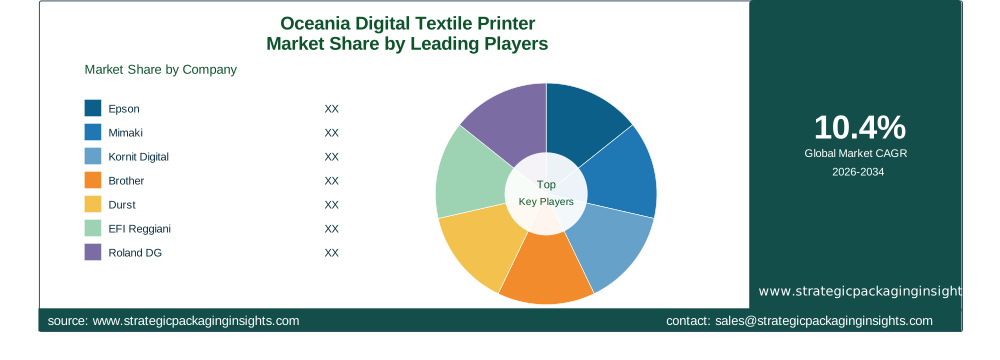
Epson is a leading player in the digital textile printer market, known for its high-quality printers and innovative technology. The company has a strong presence in the market and is continuously investing in research and development to enhance its product portfolio. Mimaki, another key player, is renowned for its wide range of digital textile printers that cater to various applications, including apparel, home textiles, and signage. The company's focus on sustainability and eco-friendly printing solutions has helped it gain a competitive edge in the market.
Kornit Digital is a prominent player in the market, offering a range of digital textile printers that are known for their high-speed and high-resolution printing capabilities. The company's focus on innovation and customer-centric solutions has helped it establish a strong foothold in the market. Brother, a well-known brand in the printing industry, offers a range of digital textile printers that are popular for their reliability and performance. The company's commitment to quality and customer satisfaction has helped it maintain a strong market presence.
Durst and EFI Reggiani are also significant players in the market, known for their advanced digital textile printing solutions. These companies are focusing on expanding their product offerings and enhancing their technological capabilities to cater to the growing demand for digital textile printers. Roland DG, HP, MS Printing Solutions, and SPGPrints are other notable players in the market, each offering a range of digital textile printers that cater to various applications and industries.
Key Highlights
- The Oceania Digital Textile Printer market is projected to grow at a CAGR of 10.4% from 2026 to 2034.
- Increasing demand for sustainable and eco-friendly printing solutions is driving market growth.
- Technological advancements in digital textile printers are creating new opportunities for market players.
- The rise of e-commerce and online retailing is boosting the demand for digital textile printers.
- High initial investment costs and the need for skilled operators are key challenges in the market.
- Key players in the market include Epson, Mimaki, Kornit Digital, Brother, and Durst.
- The market is characterized by intense competition and rapid technological advancements.
- Customization and personalization trends are driving the demand for digital textile printers.
- Regulatory support for sustainable practices is expected to create new opportunities for market growth.
Top Countries Insights
Australia is one of the leading countries in the Oceania Digital Textile Printer market, with a market size of approximately $1.2 billion and a CAGR of 11%. The country's strong focus on sustainability and eco-friendly practices is a key driver of market growth. The increasing demand for customized textile products and the presence of key market players are also contributing to the market's expansion. However, the high cost of digital textile printers and the need for skilled operators remain challenges for the market.
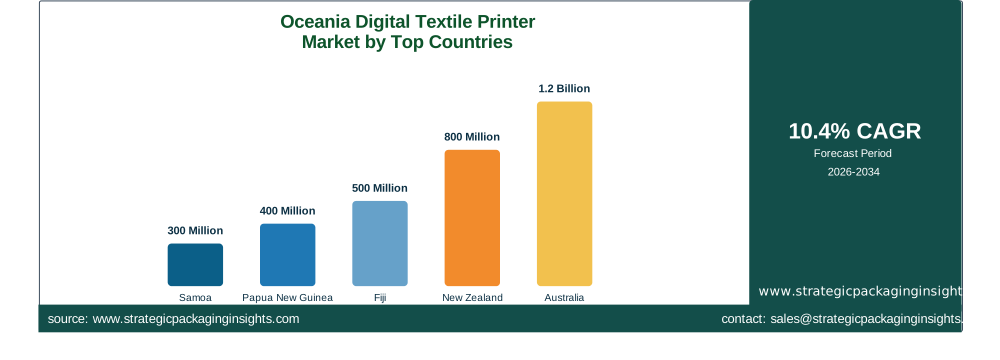
New Zealand is another significant market for digital textile printers in Oceania, with a market size of around $800 million and a CAGR of 10%. The country's growing textile industry and the increasing adoption of digital printing technologies are driving market growth. The demand for sustainable and eco-friendly printing solutions is also a key factor contributing to the market's expansion. However, the market faces challenges such as high initial investment costs and the availability of cheaper alternatives.
Fiji, with a market size of approximately $500 million and a CAGR of 9%, is emerging as a promising market for digital textile printers in Oceania. The country's growing tourism industry and the increasing demand for customized textile products are driving market growth. The government's support for sustainable practices and the presence of key market players are also contributing to the market's expansion. However, the market faces challenges such as the high cost of digital textile printers and the need for skilled operators.
Papua New Guinea, with a market size of around $400 million and a CAGR of 8%, is another emerging market for digital textile printers in Oceania. The country's growing textile industry and the increasing adoption of digital printing technologies are driving market growth. The demand for sustainable and eco-friendly printing solutions is also a key factor contributing to the market's expansion. However, the market faces challenges such as high initial investment costs and the availability of cheaper alternatives.
Samoa, with a market size of approximately $300 million and a CAGR of 7%, is also a significant market for digital textile printers in Oceania. The country's growing tourism industry and the increasing demand for customized textile products are driving market growth. The government's support for sustainable practices and the presence of key market players are also contributing to the market's expansion. However, the market faces challenges such as the high cost of digital textile printers and the need for skilled operators.
Oceania Digital Textile Printer Market Segments Insights

Printer Type Analysis
The printer type segment in the Oceania Digital Textile Printer market is categorized into direct-to-fabric, sublimation, and pigment printers. Direct-to-fabric printers are gaining popularity due to their ability to print directly onto textiles, offering vibrant colors and high-quality prints. This segment is driven by the increasing demand for customized and personalized textile products, as well as the growing trend of sustainable printing practices. Sublimation printers, known for their ability to produce high-resolution prints with vibrant colors, are also witnessing significant demand, particularly in the apparel and signage industries. Pigment printers, which offer excellent color fastness and durability, are gaining traction in the home textiles segment.
The competition in this segment is intense, with key players such as Epson, Mimaki, and Kornit Digital offering a wide range of digital textile printers to cater to various applications. These companies are focusing on product innovation and technological advancements to gain a competitive edge in the market. The growing demand for eco-friendly printing solutions is also driving the adoption of digital textile printers in this segment. However, the high cost of these printers and the need for skilled operators remain challenges for market players.
Ink Type Analysis
The ink type segment in the Oceania Digital Textile Printer market is divided into reactive, acid, pigment, and sublimation inks. Reactive inks are widely used in the textile industry due to their ability to produce vibrant colors and excellent wash fastness. This segment is driven by the increasing demand for high-quality prints in the apparel and home textiles industries. Acid inks, known for their ability to produce bright colors on silk and nylon fabrics, are also witnessing significant demand, particularly in the fashion industry. Pigment inks, which offer excellent color fastness and durability, are gaining traction in the home textiles segment.
Sublimation inks, known for their ability to produce high-resolution prints with vibrant colors, are also witnessing significant demand, particularly in the apparel and signage industries. The competition in this segment is intense, with key players such as Epson, Mimaki, and Kornit Digital offering a wide range of digital textile printers to cater to various applications. These companies are focusing on product innovation and technological advancements to gain a competitive edge in the market. The growing demand for eco-friendly printing solutions is also driving the adoption of digital textile printers in this segment.
Application Analysis
The application segment in the Oceania Digital Textile Printer market is categorized into apparel, home textiles, and signage. The apparel segment is the largest application area for digital textile printers, driven by the increasing demand for customized and personalized clothing. The growing trend of fast fashion and the rise of e-commerce are also contributing to the growth of this segment. Home textiles, including bed linens, curtains, and upholstery, are witnessing significant demand for digital textile printing due to the increasing preference for customized and eco-friendly products.
The signage segment is also experiencing robust growth, driven by the increasing demand for high-quality and durable prints for advertising and promotional purposes. The competition in this segment is intense, with key players such as Epson, Mimaki, and Kornit Digital offering a wide range of digital textile printers to cater to various applications. These companies are focusing on product innovation and technological advancements to gain a competitive edge in the market. The growing demand for eco-friendly printing solutions is also driving the adoption of digital textile printers in this segment.
End Use Analysis
The end-use segment in the Oceania Digital Textile Printer market is divided into textile mills, fashion brands, and print service providers. Textile mills are the largest end-users of digital textile printers, driven by the increasing demand for high-quality and customized textile products. The growing trend of sustainable and eco-friendly printing practices is also contributing to the growth of this segment. Fashion brands are increasingly adopting digital textile printing to cater to the growing demand for personalized and customized clothing.
Print service providers are also witnessing significant demand for digital textile printers, driven by the increasing demand for high-quality and durable prints for advertising and promotional purposes. The competition in this segment is intense, with key players such as Epson, Mimaki, and Kornit Digital offering a wide range of digital textile printers to cater to various applications. These companies are focusing on product innovation and technological advancements to gain a competitive edge in the market. The growing demand for eco-friendly printing solutions is also driving the adoption of digital textile printers in this segment.
Oceania Digital Textile Printer Market Segments
The Oceania Digital Textile Printer market has been segmented on the basis ofBy Printer Type
- Direct-to-Fabric
- Sublimation
- Pigment Printers
By Ink Type
- Reactive
- Acid
- Pigment
- Sublimation
By Application
- Apparel
- Home Textiles
- Signage
By End Use
- Textile Mills
- Fashion Brands
- Print Service Providers
Region
- Asia Pacific
- North America
- Latin America
- Europe
- Middle East & Africa




