


Digital Textile Printing Market Outlook
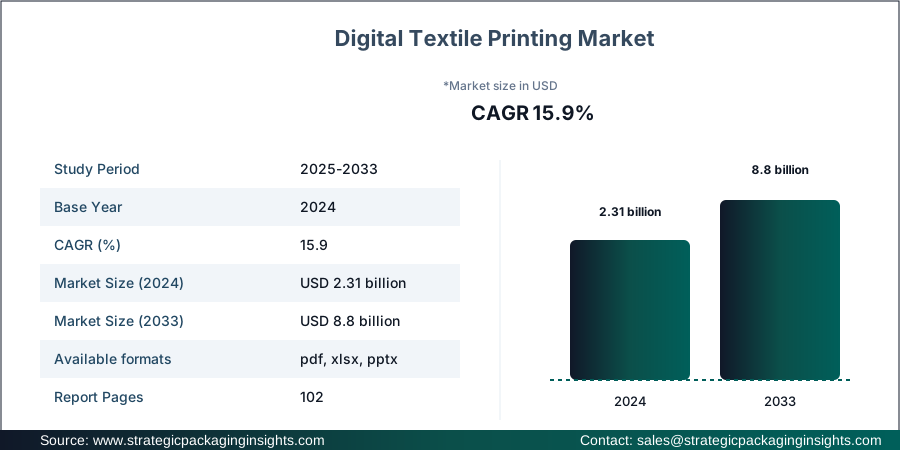
The digital textile printing market was valued at $2.31 billion in 2024 and is projected to reach $8.8 billion by 2033, growing at a CAGR of 15.9% during the forecast period 2025-2033. This market is experiencing significant growth due to the increasing demand for sustainable and efficient printing solutions. The shift from traditional textile printing methods to digital printing is driven by the need for high-quality, customizable, and cost-effective printing solutions. The fashion industry, in particular, is a major contributor to this growth, as digital textile printing allows for rapid prototyping and short-run production, which are essential in the fast-paced fashion world. Additionally, advancements in ink technologies and printing machinery are further propelling the market forward, making digital textile printing more accessible and versatile across various applications.
Report Scope
| Attributes | Details |
| Report Title | Digital Textile Printing Market Size, Future Growth and Forecast 2033 |
| Ink Type | Sublimation, Pigment |
| Application | Fashion, Home Textiles |
| Printing Process | Direct-to-Fabric, Direct-to-Garment |
| Region | Asia Pacific, North America |
| Base Year | 2024 |
| Historic Period | 2017-2023 |
| Forecast Period | 2025-2033 |
| Number of Pages | 102 |
| Customization Available | Yes* |
Opportunities & Threats
One of the most promising opportunities in the digital textile printing market is the growing demand for eco-friendly printing solutions. As consumers become more environmentally conscious, there is a significant push towards sustainable practices in the textile industry. Digital textile printing offers a more sustainable alternative to traditional methods by reducing water and energy consumption and minimizing waste. This shift towards sustainability is not only driven by consumer demand but also by stringent environmental regulations imposed by governments worldwide. Companies that can offer eco-friendly digital printing solutions are likely to gain a competitive edge in the market.
Another opportunity lies in the increasing adoption of digital textile printing in emerging markets. Countries in Asia Pacific, such as China and India, are witnessing rapid industrialization and urbanization, leading to a surge in demand for textiles. The growing middle-class population in these regions is driving the demand for personalized and high-quality textile products, which digital textile printing can efficiently provide. As a result, companies that can establish a strong presence in these emerging markets are poised to benefit from the expanding customer base and increased market share.
However, the digital textile printing market also faces certain threats, primarily related to the high initial investment costs associated with digital printing equipment. Small and medium-sized enterprises (SMEs) may find it challenging to adopt digital textile printing due to the significant capital required for purchasing advanced machinery and technology. Additionally, the market is highly competitive, with numerous players vying for market share, which can lead to price wars and reduced profit margins. Companies need to continuously innovate and differentiate their offerings to stay ahead in this competitive landscape.
Drivers & Challenges
One of the primary drivers of the digital textile printing market is the increasing demand for customization and personalization in textile products. Consumers today are seeking unique and personalized designs, which digital textile printing can efficiently deliver. This trend is particularly prominent in the fashion industry, where brands are leveraging digital printing to offer customized apparel and accessories. The ability to quickly produce small batches of customized products without incurring high costs is a significant advantage of digital textile printing, driving its adoption across various sectors.
Technological advancements in digital textile printing are also driving market growth. Innovations in ink formulations, print head technology, and software solutions have significantly improved the quality and efficiency of digital textile printing. These advancements have expanded the range of materials that can be printed on, including natural and synthetic fabrics, thereby broadening the application scope of digital textile printing. As technology continues to evolve, the capabilities of digital textile printing are expected to expand further, opening up new opportunities for market growth.
Despite the numerous drivers, the digital textile printing market faces challenges, particularly in terms of competition from traditional printing methods. While digital printing offers several advantages, such as reduced waste and faster production times, traditional methods like screen printing still dominate the market due to their cost-effectiveness for large-scale production. Additionally, the lack of skilled professionals in digital textile printing can hinder market growth, as companies may struggle to find qualified personnel to operate and maintain advanced printing equipment. Addressing these challenges will be crucial for the sustained growth of the digital textile printing market.
Digital Textile Printing Strategic Outlook
| Trend | Market Driver | Technological/Material Shift | Business Impact |
|---|---|---|---|
| Sustainability | Eco-friendly demand | Waterless printing | Increased market share |
| Smart Tech | Customization | AI-driven design | Enhanced customer engagement |
| Consumer Behavior | Personalization | Advanced ink technology | Higher profit margins |
| Logistics | Rapid prototyping | On-demand production | Reduced inventory costs |
The digital textile printing market is poised for significant growth, with a projected CAGR of 15.9% from 2025 to 2033. As of 2026, the market is valued at approximately $3.5 billion, driven by the increasing demand for sustainable and customizable textile solutions. A key disruptor in this niche is the regulatory push towards eco-friendly practices, which is compelling companies to adopt digital printing technologies that minimize environmental impact. To maintain market share by 2033, brands should focus on integrating AI-driven design capabilities and transitioning to mono-material textiles to enhance sustainability. Embracing these strategic shifts will enable companies to meet evolving consumer demands and regulatory requirements, ensuring long-term success in the digital textile printing market.
Market Share Analysis
The digital textile printing market is characterized by a competitive landscape with several key players vying for market share. The market is dominated by a mix of established companies and emerging players, each offering unique solutions to cater to the diverse needs of the textile industry. The competitive environment is driven by continuous innovation, with companies investing heavily in research and development to enhance their product offerings and maintain a competitive edge. The market is also witnessing strategic collaborations and partnerships, as companies seek to expand their geographical presence and tap into new customer segments.
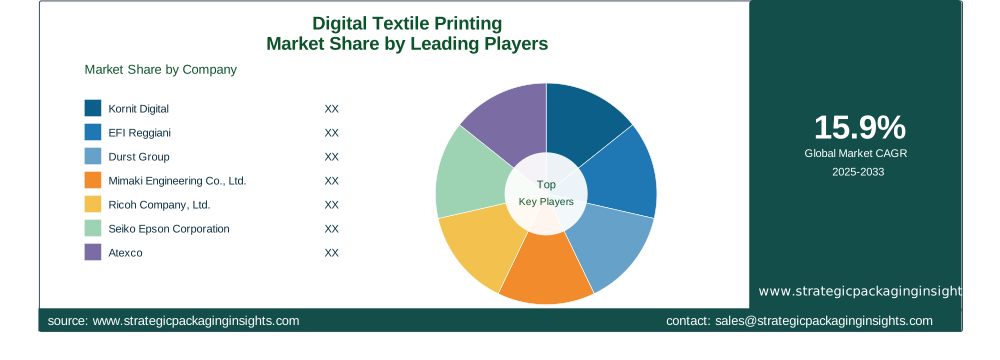
Among the major players in the digital textile printing market, Kornit Digital holds a significant share, known for its advanced direct-to-garment printing solutions. The company's focus on sustainability and eco-friendly practices has positioned it as a leader in the market. Similarly, EFI Reggiani is a prominent player, offering a wide range of digital textile printing solutions that cater to various applications, including fashion and home textiles. The company's emphasis on innovation and technology has enabled it to capture a substantial market share.
Durst Group is another key player in the digital textile printing market, renowned for its high-quality printing solutions and commitment to sustainability. The company's state-of-the-art printing technology and focus on reducing environmental impact have made it a preferred choice among customers. Additionally, Mimaki Engineering Co., Ltd. is a notable player, offering a diverse portfolio of digital textile printers that cater to different market segments. The company's strong distribution network and customer-centric approach have contributed to its success in the market.
Other significant players in the market include Ricoh Company, Ltd., known for its innovative printing solutions and strong global presence, and Seiko Epson Corporation, which offers a wide range of digital textile printers with advanced features. These companies, along with others such as Atexco, Mutoh Holdings Co., Ltd., and DGI, are actively contributing to the growth and development of the digital textile printing market through continuous innovation and strategic initiatives.
Key Highlights
- The digital textile printing market is projected to grow at a CAGR of 15.9% from 2025 to 2033.
- Eco-friendly printing solutions are gaining traction due to increasing environmental concerns.
- Technological advancements in ink formulations and print head technology are driving market growth.
- The fashion industry is a major contributor to the demand for digital textile printing.
- Emerging markets in Asia Pacific are witnessing rapid adoption of digital textile printing.
- High initial investment costs pose a challenge for small and medium-sized enterprises.
- Strategic collaborations and partnerships are key strategies for market expansion.
Top Countries Insights
In the digital textile printing market, the United States stands out as a key player, with a market size of approximately $1.2 billion and a CAGR of 12%. The country's strong focus on innovation and technology, coupled with a robust fashion industry, drives the demand for digital textile printing solutions. Government initiatives promoting sustainable practices further bolster market growth, making the U.S. a significant contributor to the global market.
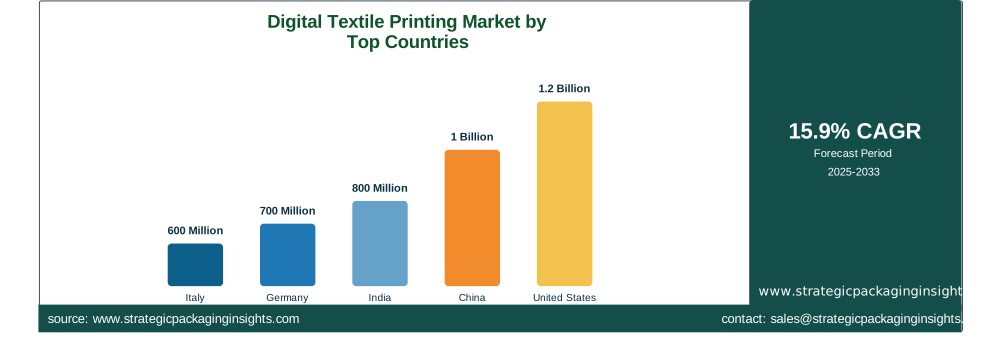
China is another major market for digital textile printing, with a market size of $1 billion and a CAGR of 15%. The country's rapid industrialization and urbanization have led to increased demand for textiles, driving the adoption of digital printing technologies. The Chinese government's support for technological advancements and sustainable practices is a key growth driver, positioning China as a leader in the digital textile printing market.
India, with a market size of $800 million and a CAGR of 14%, is witnessing significant growth in the digital textile printing market. The country's burgeoning middle class and increasing disposable income are driving demand for personalized and high-quality textile products. Government initiatives promoting the textile industry and technological advancements are further propelling market growth in India.
Germany, with a market size of $700 million and a CAGR of 9%, is a prominent player in the European digital textile printing market. The country's strong focus on sustainability and innovation, along with a well-established textile industry, drives the demand for digital printing solutions. Government regulations promoting eco-friendly practices further support market growth in Germany.
Italy, with a market size of $600 million and a CAGR of 8%, is known for its rich textile heritage and strong fashion industry. The country's emphasis on high-quality and customized textile products drives the demand for digital textile printing. Technological advancements and government support for sustainable practices are key growth drivers in the Italian market.
Digital Textile Printing Market Segments Insights

Ink Type Analysis
The ink type segment in the digital textile printing market is crucial, as it determines the quality and application of the printed textiles. Sublimation inks are widely used due to their ability to produce vibrant colors and high-quality prints on polyester fabrics. This ink type is particularly popular in the fashion and sportswear industries, where color vibrancy and durability are essential. The growing demand for polyester-based textiles is driving the adoption of sublimation inks, making it a dominant segment in the market.
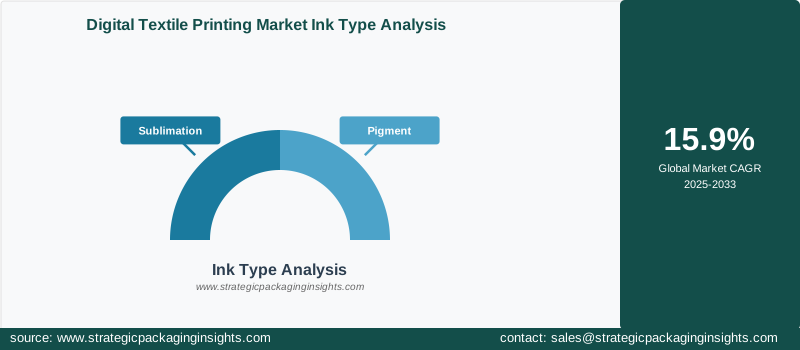
Pigment inks are gaining traction due to their eco-friendly properties and versatility. These inks can be used on a variety of fabrics, including cotton and blends, making them suitable for a wide range of applications. The increasing focus on sustainability and the demand for natural fiber textiles are driving the growth of pigment inks in the digital textile printing market. Additionally, advancements in pigment ink formulations are enhancing their performance, further boosting their adoption.
Application Analysis
The application segment of the digital textile printing market is diverse, encompassing fashion, home textiles, industrial textiles, and soft signage. The fashion industry is a major driver of the market, as digital textile printing allows for rapid prototyping and customization, which are essential in the fast-paced fashion world. The ability to produce small batches of customized apparel quickly and cost-effectively is a significant advantage, driving the adoption of digital textile printing in the fashion sector.
Home textiles, including bed linens, curtains, and upholstery, are also witnessing increased adoption of digital textile printing. The demand for personalized and high-quality home decor products is driving this trend, as consumers seek unique designs that reflect their personal style. The versatility of digital textile printing in producing intricate patterns and vibrant colors is a key factor contributing to its growth in the home textiles segment.
Printing Process Analysis
The printing process segment in the digital textile printing market includes direct-to-fabric and direct-to-garment printing. Direct-to-fabric printing is widely used for large-scale production of textiles, as it allows for continuous printing on rolls of fabric. This process is ideal for applications such as home textiles and industrial textiles, where large quantities of printed fabric are required. The efficiency and cost-effectiveness of direct-to-fabric printing make it a popular choice in the market.
Direct-to-garment printing, on the other hand, is favored for its ability to produce high-quality prints on finished garments. This process is particularly popular in the fashion industry, where customization and personalization are key trends. The ability to print directly on garments without the need for pre-treatment or post-processing is a significant advantage, driving the adoption of direct-to-garment printing in the digital textile printing market.
Region Analysis
The regional analysis of the digital textile printing market highlights the significant growth potential in Asia Pacific, North America, Europe, Latin America, and the Middle East & Africa. Asia Pacific is the largest market, driven by the rapid industrialization and urbanization in countries like China and India. The increasing demand for textiles and the adoption of digital printing technologies are key growth drivers in this region.
North America is also a significant market for digital textile printing, with a strong focus on innovation and technology. The presence of a robust fashion industry and government initiatives promoting sustainable practices are driving market growth in this region. Europe, with its rich textile heritage and emphasis on sustainability, is witnessing steady growth in the digital textile printing market. The demand for high-quality and customized textile products is a key driver in the European market.
Digital Textile Printing Market Segments
The Digital Textile Printing market has been segmented on the basis ofInk Type
- Sublimation
- Pigment
Application
- Fashion
- Home Textiles
Printing Process
- Direct-to-Fabric
- Direct-to-Garment
Region
- Asia Pacific
- North America




