


Non-woven Foldable Container Market Outlook
The Non-woven Foldable Container market was valued at $3.88 billion in 2025 and is projected to reach $8.18 billion by 2034, growing at a CAGR of 8.6% during the forecast period 2026-2034. This market is witnessing significant growth due to the increasing demand for sustainable and reusable packaging solutions. The shift towards eco-friendly materials and the rising awareness about environmental conservation are driving the adoption of non-woven foldable containers across various sectors. The versatility and durability of these containers make them ideal for a wide range of applications, from retail storage to logistics, further fueling their market growth.
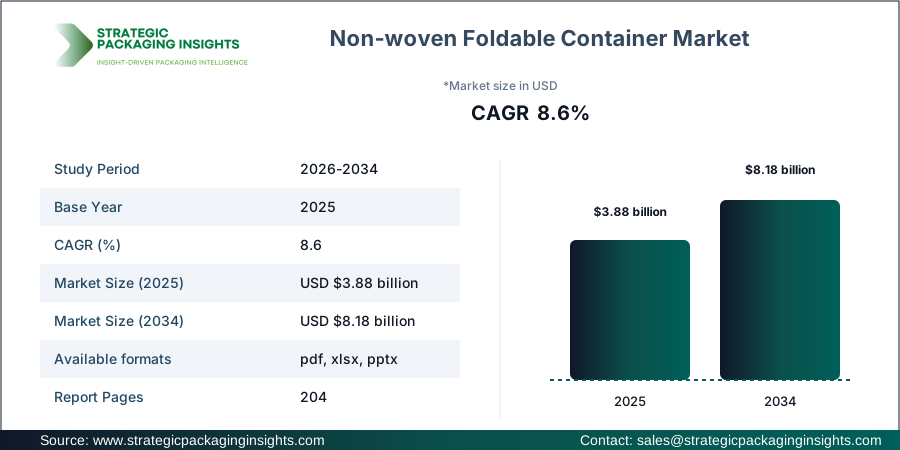
Despite the promising growth prospects, the market faces certain challenges, including regulatory constraints and the high cost of raw materials. However, the potential for innovation in material technology and the increasing trend of online shopping present lucrative opportunities for market expansion. The growing e-commerce sector, in particular, is expected to drive the demand for non-woven foldable containers, as they offer a practical and sustainable solution for packaging and transporting goods. As companies continue to invest in research and development to enhance product quality and reduce costs, the market is poised for substantial growth in the coming years.
Report Scope
| Attributes | Details |
| Report Title | Non-woven Foldable Container Market Size, Future Growth and Forecast 2034 |
| By Product Type | Foldable Storage Boxes, Tote Containers, Retail Bins, Reusable Organizer Containers |
| By Material Type | PP Nonwoven, PET Nonwoven, Laminated Nonwoven |
| By Application | Retail Storage, Home Organization, Logistics, Promotional Packaging |
| By End Use | Retailers, Households, E-commerce, Logistics Providers |
| Region | Asia Pacific, North America, Latin America, Europe, Middle East & Africa |
| Base Year | 2025 |
| Historic Period | 2018-2024 |
| Forecast Period | 2026-2034 |
| Number of Pages | 204 |
| Customization Available | Yes* |
Opportunities & Threats
The Non-woven Foldable Container market presents numerous opportunities, primarily driven by the increasing demand for sustainable packaging solutions. As consumers become more environmentally conscious, there is a growing preference for products that minimize environmental impact. Non-woven foldable containers, being reusable and recyclable, align perfectly with this trend. Additionally, the rise of e-commerce has created a significant demand for efficient and durable packaging solutions, further boosting the market. Companies are increasingly focusing on developing innovative products that cater to the specific needs of online retailers, such as lightweight and collapsible containers that reduce shipping costs and storage space.
Another opportunity lies in the expanding applications of non-woven foldable containers across various industries. From retail storage to logistics and promotional packaging, these containers offer versatility and convenience, making them an attractive choice for businesses. The growing trend of home organization and decluttering has also contributed to the increased demand for foldable storage solutions. As consumers seek practical and aesthetically pleasing storage options, manufacturers have the opportunity to tap into this market by offering a wide range of designs and sizes to suit different preferences and needs.
However, the market is not without its challenges. One of the primary restrainers is the high cost of raw materials, which can impact the overall pricing of non-woven foldable containers. Additionally, stringent regulations regarding the use of certain materials and manufacturing processes can pose challenges for manufacturers. Companies need to navigate these regulatory hurdles while ensuring compliance with environmental standards. Furthermore, the market faces competition from alternative packaging solutions, such as plastic and cardboard containers, which are often cheaper and more readily available. To overcome these challenges, companies must focus on innovation and cost-effective production methods to maintain a competitive edge.
Drivers & Challenges
The Non-woven Foldable Container market is primarily driven by the increasing demand for sustainable and eco-friendly packaging solutions. As environmental concerns continue to rise, consumers and businesses alike are seeking alternatives to traditional packaging materials. Non-woven foldable containers, made from recyclable and biodegradable materials, offer a viable solution to this demand. The growing awareness about the environmental impact of single-use plastics has further accelerated the adoption of these containers, as they provide a reusable and durable option for various applications. Additionally, the versatility of non-woven foldable containers makes them suitable for a wide range of industries, from retail and logistics to home organization and promotional packaging.
Another significant driver of the market is the rapid growth of the e-commerce sector. With the increasing popularity of online shopping, there is a heightened demand for efficient and cost-effective packaging solutions. Non-woven foldable containers offer several advantages in this regard, including lightweight construction, collapsibility, and durability. These features make them ideal for shipping and storing goods, as they help reduce transportation costs and optimize storage space. As e-commerce continues to expand globally, the demand for non-woven foldable containers is expected to rise, providing ample growth opportunities for market players.
Despite the positive growth drivers, the market faces several challenges that could hinder its expansion. One of the primary challenges is the high cost of raw materials, which can impact the overall pricing of non-woven foldable containers. Manufacturers need to find ways to reduce production costs without compromising on quality to remain competitive in the market. Additionally, the market is subject to stringent regulations regarding the use of certain materials and manufacturing processes. Companies must navigate these regulatory hurdles while ensuring compliance with environmental standards. Furthermore, the market faces competition from alternative packaging solutions, such as plastic and cardboard containers, which are often cheaper and more readily available. To overcome these challenges, companies must focus on innovation and cost-effective production methods to maintain a competitive edge.
Market Share Analysis
The competitive landscape of the Non-woven Foldable Container market is characterized by the presence of several key players who are actively engaged in product innovation and strategic partnerships to enhance their market position. Companies such as Berry Global, Freudenberg Performance Materials, and Ahlstrom are leading the market with their extensive product portfolios and strong distribution networks. These companies are focusing on expanding their product offerings to cater to the diverse needs of consumers and businesses across various industries. By investing in research and development, they are able to introduce innovative products that meet the evolving demands of the market.
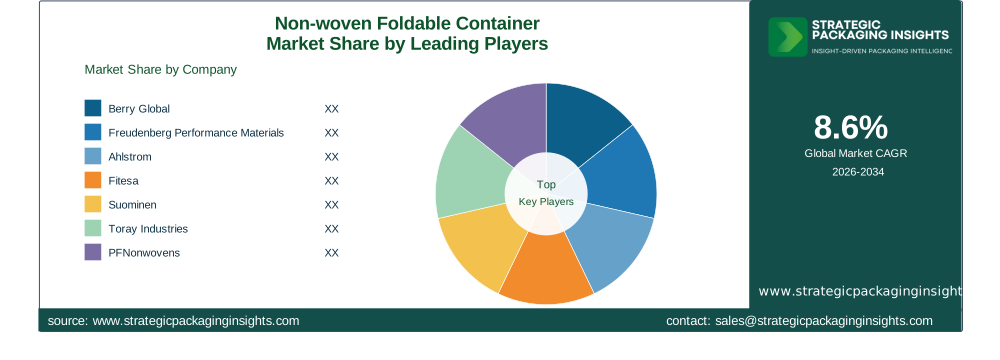
Berry Global, a prominent player in the market, holds a significant share due to its comprehensive range of non-woven foldable containers and its commitment to sustainability. The company has been actively involved in developing eco-friendly packaging solutions that align with the growing demand for sustainable products. Freudenberg Performance Materials, another key player, is known for its high-quality non-woven materials and its focus on innovation. The company's strong emphasis on research and development has enabled it to introduce advanced products that cater to the specific needs of various industries.
Ahlstrom, a leading manufacturer of non-woven materials, has established a strong presence in the market through its extensive product portfolio and strategic partnerships. The company is committed to providing sustainable and innovative solutions that meet the demands of its customers. Fitesa, Suominen, and Toray Industries are also notable players in the market, each contributing to the growth and development of the non-woven foldable container industry. These companies are focused on expanding their market reach through strategic collaborations and investments in new technologies.
Other significant players in the market include PFNonwovens, Avgol, Fibertex Nonwovens, and Glatfelter. These companies are actively engaged in enhancing their product offerings and expanding their distribution networks to capture a larger share of the market. By leveraging their expertise in non-woven materials and their commitment to sustainability, these companies are well-positioned to capitalize on the growing demand for non-woven foldable containers. As the market continues to evolve, the competitive landscape is expected to witness further consolidation, with key players focusing on mergers and acquisitions to strengthen their market position.
Key Highlights
- The Non-woven Foldable Container market is projected to grow at a CAGR of 8.6% from 2026 to 2034.
- Increasing demand for sustainable and eco-friendly packaging solutions is driving market growth.
- The e-commerce sector is a significant driver of demand for non-woven foldable containers.
- High cost of raw materials poses a challenge to market expansion.
- Key players are focusing on product innovation and strategic partnerships to enhance their market position.
- Regulatory constraints and competition from alternative packaging solutions are notable challenges.
- Asia Pacific is expected to witness the highest growth rate during the forecast period.
- Companies are investing in research and development to introduce advanced and cost-effective products.
- The market is characterized by the presence of several key players with extensive product portfolios.
Top Countries Insights
In the Non-woven Foldable Container market, the United States holds a significant share due to its well-established e-commerce sector and the increasing demand for sustainable packaging solutions. The market in the U.S. is valued at approximately $1.2 billion, with a CAGR of 7%. The country's focus on environmental conservation and the adoption of eco-friendly materials are key growth drivers. However, the market faces challenges such as regulatory constraints and competition from alternative packaging solutions.

China is another major player in the market, with a market size of around $1 billion and a CAGR of 10%. The country's booming e-commerce industry and the increasing awareness about environmental issues are driving the demand for non-woven foldable containers. The government's initiatives to promote sustainable practices and reduce plastic waste further support market growth. However, the market faces challenges such as the high cost of raw materials and the need for compliance with stringent regulations.
Germany, with a market size of $800 million and a CAGR of 6%, is a key market for non-woven foldable containers in Europe. The country's strong focus on sustainability and the growing demand for eco-friendly packaging solutions are driving market growth. The presence of leading manufacturers and the increasing adoption of non-woven materials in various industries further contribute to the market's expansion. However, the market faces challenges such as competition from alternative packaging solutions and regulatory constraints.
India, with a market size of $600 million and a CAGR of 12%, is experiencing rapid growth in the non-woven foldable container market. The country's expanding e-commerce sector and the increasing demand for sustainable packaging solutions are key growth drivers. The government's initiatives to promote environmental conservation and reduce plastic waste further support market growth. However, the market faces challenges such as the high cost of raw materials and the need for compliance with stringent regulations.
Brazil, with a market size of $500 million and a CAGR of 8%, is a significant market for non-woven foldable containers in Latin America. The country's growing e-commerce industry and the increasing awareness about environmental issues are driving the demand for sustainable packaging solutions. The government's initiatives to promote eco-friendly practices and reduce plastic waste further support market growth. However, the market faces challenges such as competition from alternative packaging solutions and regulatory constraints.
Non-woven Foldable Container Market Segments Insights

Product Type Analysis
The Non-woven Foldable Container market is segmented by product type into foldable storage boxes, tote containers, retail bins, and reusable organizer containers. Foldable storage boxes are gaining popularity due to their versatility and convenience, making them ideal for both retail and home organization applications. These boxes offer a practical solution for storing and transporting goods, as they can be easily collapsed when not in use, saving space and reducing shipping costs. Tote containers, on the other hand, are favored for their durability and ease of handling, making them suitable for logistics and promotional packaging applications. Retail bins and reusable organizer containers are also witnessing increased demand, driven by the growing trend of home organization and decluttering.
Manufacturers are focusing on developing innovative designs and materials to enhance the functionality and aesthetic appeal of these products. The use of eco-friendly materials, such as PP nonwoven and PET nonwoven, is becoming increasingly popular, as consumers seek sustainable alternatives to traditional packaging solutions. Additionally, the growing demand for customized and branded packaging solutions is driving manufacturers to offer a wide range of designs and sizes to cater to the diverse needs of consumers and businesses. As the market continues to evolve, companies are expected to invest in research and development to introduce advanced products that meet the changing demands of the market.
Material Type Analysis
The Non-woven Foldable Container market is segmented by material type into PP nonwoven, PET nonwoven, and laminated nonwoven. PP nonwoven is the most widely used material, owing to its durability, lightweight, and cost-effectiveness. This material is favored for its versatility and ability to withstand various environmental conditions, making it suitable for a wide range of applications, from retail storage to logistics. PET nonwoven, on the other hand, is gaining popularity due to its eco-friendly properties and high strength, making it an attractive choice for consumers seeking sustainable packaging solutions. Laminated nonwoven materials are also witnessing increased demand, driven by their enhanced durability and resistance to moisture and abrasion.
Manufacturers are focusing on developing innovative materials that offer improved performance and sustainability. The use of recycled and biodegradable materials is becoming increasingly popular, as companies seek to reduce their environmental impact and meet the growing demand for eco-friendly products. Additionally, the development of advanced manufacturing processes and technologies is enabling companies to produce high-quality non-woven materials at a lower cost, further driving market growth. As the market continues to evolve, companies are expected to invest in research and development to introduce new materials that meet the changing demands of consumers and businesses.
Application Analysis
The Non-woven Foldable Container market is segmented by application into retail storage, home organization, logistics, and promotional packaging. Retail storage is the largest application segment, driven by the increasing demand for efficient and durable packaging solutions in the retail sector. Non-woven foldable containers offer several advantages in this regard, including lightweight construction, collapsibility, and durability, making them ideal for storing and transporting goods. Home organization is another significant application segment, driven by the growing trend of decluttering and the demand for practical and aesthetically pleasing storage solutions.
Logistics is also a key application segment, as non-woven foldable containers offer a cost-effective and efficient solution for shipping and storing goods. The growing e-commerce sector is a significant driver of demand for these containers, as they help reduce transportation costs and optimize storage space. Promotional packaging is another emerging application segment, driven by the increasing demand for customized and branded packaging solutions. As companies seek to differentiate their products and enhance brand visibility, the demand for innovative and eye-catching packaging solutions is expected to rise, further driving market growth.
End Use Analysis
The Non-woven Foldable Container market is segmented by end use into retailers, households, e-commerce, and logistics providers. Retailers are the largest end-use segment, driven by the increasing demand for efficient and durable packaging solutions in the retail sector. Non-woven foldable containers offer several advantages in this regard, including lightweight construction, collapsibility, and durability, making them ideal for storing and transporting goods. Households are another significant end-use segment, driven by the growing trend of home organization and the demand for practical and aesthetically pleasing storage solutions.
E-commerce is a key end-use segment, as non-woven foldable containers offer a cost-effective and efficient solution for shipping and storing goods. The growing e-commerce sector is a significant driver of demand for these containers, as they help reduce transportation costs and optimize storage space. Logistics providers are also a significant end-use segment, driven by the increasing demand for efficient and durable packaging solutions in the logistics sector. As companies seek to optimize their supply chains and reduce costs, the demand for innovative and cost-effective packaging solutions is expected to rise, further driving market growth.
Non-woven Foldable Container Market Segments
The Non-woven Foldable Container market has been segmented on the basis ofBy Product Type
- Foldable Storage Boxes
- Tote Containers
- Retail Bins
- Reusable Organizer Containers
By Material Type
- PP Nonwoven
- PET Nonwoven
- Laminated Nonwoven
By Application
- Retail Storage
- Home Organization
- Logistics
- Promotional Packaging
By End Use
- Retailers
- Households
- E-commerce
- Logistics Providers
Region
- Asia Pacific
- North America
- Latin America
- Europe
- Middle East & Africa




