


Non-Adhesive Tags Market Outlook
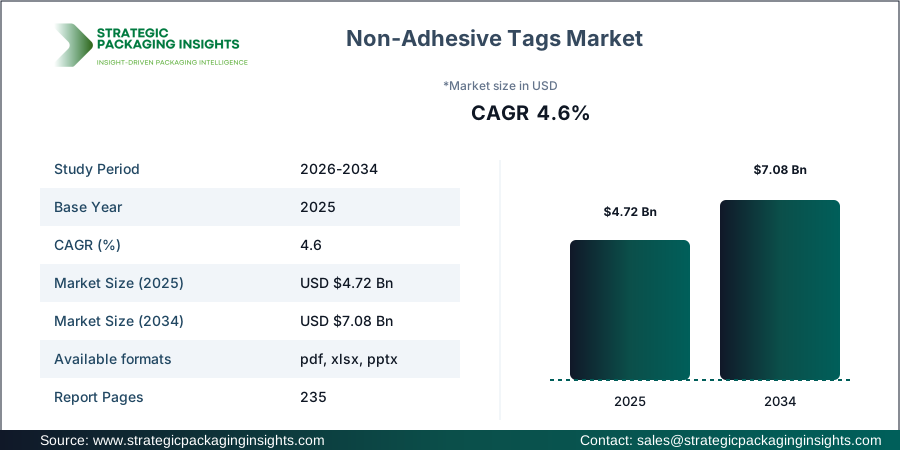
The Non-Adhesive Tags market size was valued at USD 4.72 billion in 2025 and is anticipated to reach USD 7.08 billion by 2034, growing at a CAGR of 4.6% during the forecast period according to Strategic Packaging Insights. Avery Dennison, a leading player in this market, has been instrumental in driving growth through innovative product offerings and strategic partnerships. The demand for non-adhesive tags is primarily driven by the increasing need for efficient inventory management and product identification across various industries, including retail and logistics. The rise in e-commerce and the need for accurate tracking and identification of goods have further fueled the demand for these tags, making them an essential component in modern supply chains.
One of the most impactful drivers of the Non-Adhesive Tags market is the growing emphasis on sustainability and eco-friendly packaging solutions. Governments and regulatory bodies worldwide are implementing stringent regulations to reduce environmental impact, which has led to increased adoption of recyclable and biodegradable materials in tag production. Companies like CCL Industries are focusing on developing sustainable tag solutions to meet these regulatory requirements and cater to the growing consumer preference for environmentally friendly products. This shift towards sustainability is not only driving innovation in the market but also opening up new growth opportunities for companies that can offer eco-friendly and compliant tag solutions.
Report Scope
| Attributes | Details |
| Report Title | Non-Adhesive Tags Market Size, Future Growth and Forecast 2034 |
| By Material Type | Paper, Plastic, Textile, Metal |
| By Product Type | Hang Tags, Loop Tags, Tie-On Tags, RFID Tags |
| By Application | Apparel, Retail, Logistics, Industrial Identification |
| By End Use | Fashion, Retail, Manufacturing, Warehousing |
| Region | Asia Pacific, North America, Latin America, Europe, Middle East & Africa |
| Base Year | 2025 |
| Historic Period | 2018-2024 |
| Forecast Period | 2026-2034 |
| Number of Pages | 235 |
| Customization Available | Yes* |
Sustainability & Circular Economy Analysis
Sustainability initiatives and circular economy practices are significantly influencing the packaging market, including the non-adhesive tags segment. The increasing demand for recyclable materials and reusable packaging solutions is driving manufacturers to innovate and develop eco-friendly tag options. Companies are investing in lightweight packaging and eco-friendly material innovations to reduce their carbon footprint and align with consumer sustainability preferences. This trend is not only shaping packaging design but also influencing manufacturing processes and investment decisions, as companies strive to meet regulatory compliance and enhance their long-term market competitiveness.
Extended Producer Responsibility (EPR) and packaging regulations are pushing companies to adopt waste reduction strategies and improve their environmental, social, and governance (ESG) initiatives. These regulations are encouraging the use of sustainable materials and practices, which are becoming critical factors in packaging design and supply chain strategies. As a result, companies like Trimco Group are focusing on reducing waste and enhancing their sustainability credentials to meet these evolving regulatory requirements and consumer expectations.
The shift towards sustainability is also impacting the supply chain, as companies seek to optimize their logistics and distribution channels to minimize environmental impact. This includes adopting more efficient transportation methods and improving inventory management to reduce waste and enhance supply chain resilience. By aligning their operations with sustainability goals, companies can not only comply with regulations but also gain a competitive edge in the market by appealing to environmentally conscious consumers and investors.
Packaging Value Chain & Supply Chain Analysis
The packaging value chain for non-adhesive tags involves several key components, including raw material sourcing, packaging converters, manufacturers, and logistics providers. Efficient raw material sourcing is crucial for maintaining cost-effectiveness and ensuring the availability of high-quality materials for tag production. Companies like Brady Corporation are focusing on strategic partnerships with suppliers to secure a steady supply of sustainable materials, which is essential for meeting the growing demand for eco-friendly packaging solutions.
Packaging converters and manufacturers play a vital role in transforming raw materials into finished products. The availability of advanced packaging machinery and production capabilities is critical for maintaining high-quality standards and meeting the diverse needs of end-users. Companies are investing in state-of-the-art machinery and technology to enhance their production efficiency and reduce lead times, which is essential for staying competitive in the fast-paced packaging market.
Logistics and distribution channels are integral to the packaging supply chain, ensuring that products reach their intended destinations efficiently and cost-effectively. Companies are adopting innovative procurement strategies and inventory management practices to enhance supply chain resilience and minimize disruptions. Localization and global sourcing are becoming increasingly important as companies seek to optimize their supply chains and reduce transportation costs. By focusing on supply chain efficiency and strategic partnerships, companies can improve their overall market performance and business competitiveness.
Opportunities & Threats
The Non-Adhesive Tags market presents several opportunities for growth, driven by the increasing demand for efficient inventory management and product identification solutions. The rise of e-commerce and the need for accurate tracking and identification of goods have created a significant demand for non-adhesive tags, particularly in the retail and logistics sectors. Companies that can offer innovative and cost-effective tag solutions are well-positioned to capitalize on this growing demand and expand their market presence.
Another opportunity lies in the growing emphasis on sustainability and eco-friendly packaging solutions. As consumers and regulatory bodies push for more environmentally friendly products, companies that can offer sustainable tag solutions are likely to gain a competitive edge in the market. This includes developing recyclable and biodegradable materials, as well as implementing waste reduction strategies and ESG initiatives. By aligning their products and operations with sustainability goals, companies can not only meet regulatory requirements but also appeal to environmentally conscious consumers and investors.
However, the market also faces several threats, including the potential for regulatory changes and increased competition. Stringent regulations on packaging materials and environmental impact could pose challenges for companies that are unable to adapt quickly to these changes. Additionally, the market is becoming increasingly competitive, with new entrants and existing players vying for market share. Companies must continuously innovate and differentiate their products to maintain their competitive position and avoid being overshadowed by competitors.
Drivers & Challenges
One of the primary drivers of the Non-Adhesive Tags market is the increasing demand for efficient inventory management and product identification solutions. As businesses seek to streamline their operations and improve supply chain efficiency, the need for accurate and reliable tagging solutions has become more critical than ever. Non-adhesive tags offer a versatile and cost-effective solution for tracking and identifying products, making them an essential component in modern supply chains.
Another significant driver is the growing emphasis on sustainability and eco-friendly packaging solutions. As consumers and regulatory bodies push for more environmentally friendly products, companies are investing in sustainable tag solutions to meet these demands. This includes developing recyclable and biodegradable materials, as well as implementing waste reduction strategies and ESG initiatives. By aligning their products and operations with sustainability goals, companies can not only meet regulatory requirements but also appeal to environmentally conscious consumers and investors.
Despite these drivers, the market faces several challenges, including the potential for regulatory changes and increased competition. Stringent regulations on packaging materials and environmental impact could pose challenges for companies that are unable to adapt quickly to these changes. Additionally, the market is becoming increasingly competitive, with new entrants and existing players vying for market share. Companies must continuously innovate and differentiate their products to maintain their competitive position and avoid being overshadowed by competitors.
Market Share Analysis
The Non-Adhesive Tags market is characterized by a competitive landscape with several key players vying for market share. Companies like Avery Dennison, CCL Industries, and SML Group are leading the market with their innovative product offerings and strategic partnerships. These companies have established themselves as leaders in the industry by focusing on product innovation, sustainability, and customer-centric solutions.
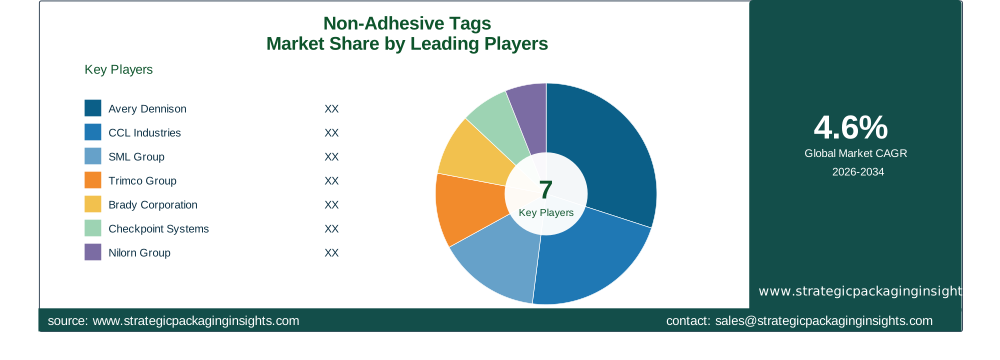
Avery Dennison is a prominent player in the market, known for its extensive range of non-adhesive tags and commitment to sustainability. The company has been at the forefront of developing eco-friendly tag solutions, which has helped it maintain a strong market position. CCL Industries, another key player, has focused on expanding its product portfolio and enhancing its production capabilities to meet the growing demand for non-adhesive tags.
SML Group is recognized for its innovative RFID tag solutions, which have gained significant traction in the retail and logistics sectors. The company's focus on technology-driven solutions has enabled it to capture a substantial share of the market. Trimco Group, Brady Corporation, and Checkpoint Systems are also notable players, each bringing unique strengths and capabilities to the market.
Nilorn Group, r-pac International, ITL Group, and Finotex are other important players in the market, each contributing to the competitive landscape with their diverse product offerings and strategic initiatives. These companies are continuously investing in research and development to enhance their product offerings and maintain their competitive edge in the market.
Key Highlights
- Market Size: The Non-Adhesive Tags market was valued at USD 4.72 billion in 2025 and is projected to reach USD 7.08 billion by 2034.
- Growth Rate: The market is expected to grow at a CAGR of 4.6% during the forecast period.
- Leading Companies: Key players include Avery Dennison, CCL Industries, SML Group, and Trimco Group.
- Sustainability Focus: Increasing demand for eco-friendly and recyclable tag solutions.
- Technological Advancements: RFID tags gaining traction in retail and logistics sectors.
- Regional Growth: Asia Pacific is expected to witness significant growth due to rising e-commerce activities.
- Competitive Landscape: The market is characterized by intense competition and continuous innovation.
Non-Adhesive Tags Market Segments Insights

By Material Type Analysis
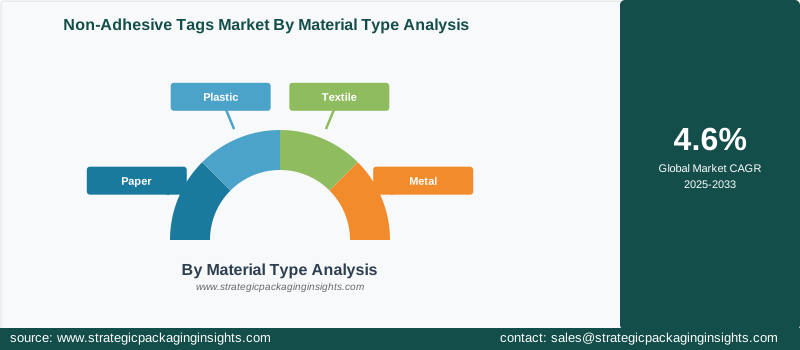
The Non-Adhesive Tags market is segmented by material type into paper, plastic, textile, and metal. Paper tags are widely used due to their cost-effectiveness and ease of customization, making them a popular choice for retail and apparel applications. Plastic tags, on the other hand, offer durability and resistance to environmental factors, making them suitable for logistics and industrial identification. Textile tags are gaining popularity in the fashion industry for their aesthetic appeal and ability to convey brand identity. Metal tags, though less common, are used in applications requiring high durability and resistance to harsh conditions.
Companies like Avery Dennison and CCL Industries are focusing on developing innovative material solutions to meet the diverse needs of end-users. The growing emphasis on sustainability is driving the demand for recyclable and biodegradable materials, prompting manufacturers to explore eco-friendly alternatives. This trend is expected to continue, with companies investing in research and development to enhance their material offerings and meet evolving consumer preferences.
By Product Type Analysis
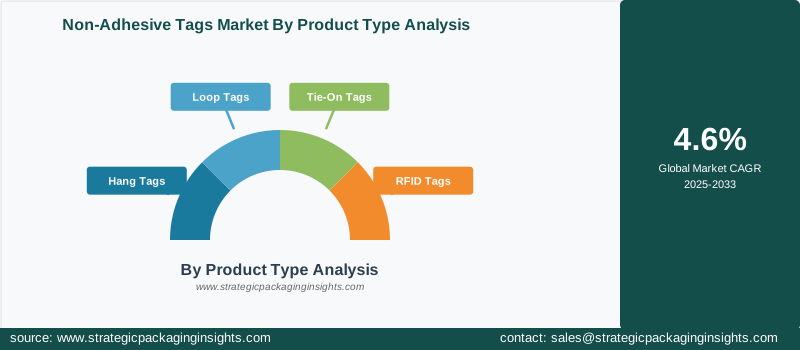
The market is further segmented by product type into hang tags, loop tags, tie-on tags, and RFID tags. Hang tags are widely used in the apparel and retail sectors for branding and product information purposes. Loop tags and tie-on tags are commonly used in logistics and industrial applications for easy attachment and identification. RFID tags are gaining traction due to their ability to provide real-time tracking and inventory management, making them an essential component in modern supply chains.
Companies like SML Group and Checkpoint Systems are leading the way in RFID tag innovation, offering advanced solutions that enhance supply chain efficiency and accuracy. The increasing adoption of RFID technology is driving market growth, with companies investing in research and development to improve tag performance and reduce costs. As the demand for efficient inventory management solutions continues to rise, the market for RFID tags is expected to expand significantly.
By Application Analysis
The Non-Adhesive Tags market is segmented by application into apparel, retail, logistics, and industrial identification. The apparel sector is a major driver of market growth, with non-adhesive tags being used for branding, product information, and inventory management. The retail sector is also a significant contributor, with tags being used for pricing, promotions, and product identification. In the logistics sector, non-adhesive tags are essential for tracking and managing inventory, ensuring efficient supply chain operations.
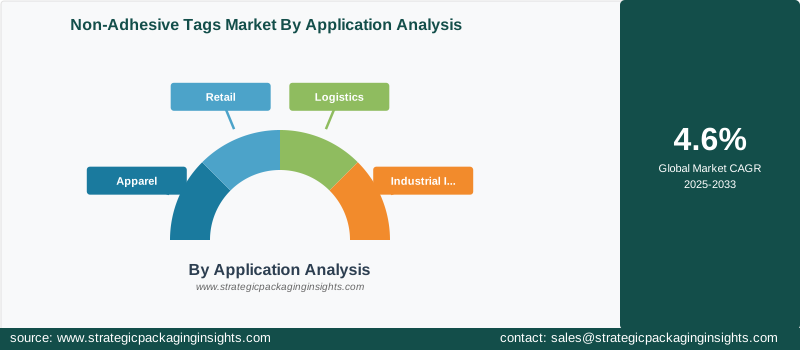
Industrial identification is another key application area, with tags being used for asset tracking and management in manufacturing and warehousing environments. Companies are focusing on developing application-specific solutions to meet the unique needs of each sector, driving innovation and market growth. The increasing demand for efficient and reliable tagging solutions across these applications is expected to continue, providing significant growth opportunities for market players.
By End Use Analysis
The market is segmented by end use into fashion, retail, manufacturing, and warehousing. The fashion industry is a major end-user of non-adhesive tags, using them for branding, product information, and inventory management. The retail sector is also a significant end-user, with tags being used for pricing, promotions, and product identification. In the manufacturing sector, non-adhesive tags are used for asset tracking and management, ensuring efficient production processes.
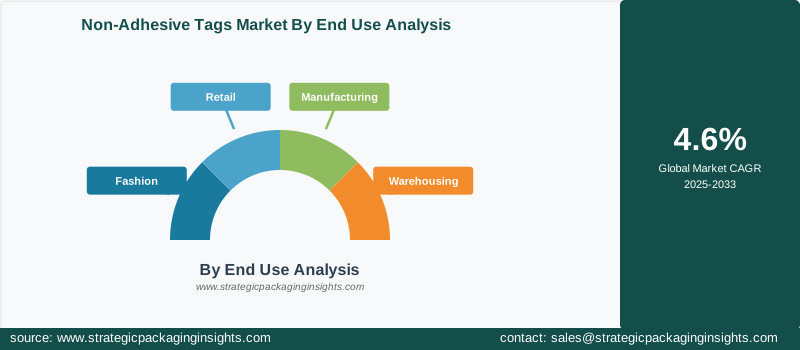
Warehousing is another key end-use area, with tags being used for inventory management and tracking. Companies are focusing on developing end-use-specific solutions to meet the unique needs of each sector, driving innovation and market growth. The increasing demand for efficient and reliable tagging solutions across these end-use areas is expected to continue, providing significant growth opportunities for market players.
Non-Adhesive Tags Market Segments
The Non-Adhesive Tags market has been segmented on the basis ofBy Material Type
- Paper
- Plastic
- Textile
- Metal
By Product Type
- Hang Tags
- Loop Tags
- Tie-On Tags
- RFID Tags
By Application
- Apparel
- Retail
- Logistics
- Industrial Identification
By End Use
- Fashion
- Retail
- Manufacturing
- Warehousing
Region
- Asia Pacific
- North America
- Latin America
- Europe
- Middle East & Africa




