


Nanographic Printing Market Outlook
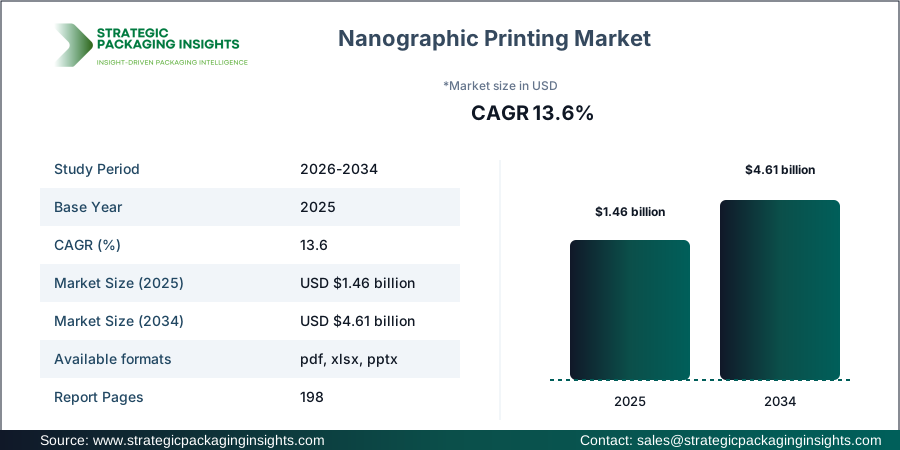
The Nanographic Printing market was valued at $1.46 billion in 2025 and is projected to reach $4.61 billion by 2034, growing at a CAGR of 13.6% during the forecast period 2026-2034. This market is witnessing significant growth due to the increasing demand for high-quality, cost-effective printing solutions across various industries. The technology's ability to print on a wide range of substrates, including those that are traditionally challenging for conventional printing methods, is a key driver of its adoption. Additionally, the growing trend towards digitalization and the need for short-run printing jobs are further propelling the market forward. The versatility and efficiency of nanographic printing make it an attractive option for businesses looking to enhance their printing capabilities while reducing costs.
Despite the promising growth prospects, the Nanographic Printing market faces certain challenges that could hinder its expansion. High initial investment costs and the need for specialized equipment and training are significant barriers for small and medium-sized enterprises. Moreover, the market is subject to stringent environmental regulations, which could impact the production and disposal of printing materials. However, advancements in technology and the development of eco-friendly inks and substrates present opportunities for overcoming these challenges. As the market continues to evolve, companies are focusing on innovation and strategic partnerships to enhance their product offerings and expand their market presence.
Report Scope
| Attributes | Details |
| Report Title | Nanographic Printing Market Size, Future Growth and Forecast 2034 |
| Technology | Nanopigment Printing, Digital Offset Printing, High-Speed Inkjet Hybrid Systems |
| Application | Labels, Folding Cartons, Flexible Packaging, Commercial Print |
| End Use | Packaging Converters, Commercial Printers, Brand Owners |
| Component | Press Systems, Inks, Printheads, Software |
| Region | Asia Pacific, North America, Latin America, Europe, Middle East & Africa |
| Base Year | 2025 |
| Historic Period | 2018-2024 |
| Forecast Period | 2026-2034 |
| Number of Pages | 198 |
| Customization Available | Yes* |
Opportunities & Threats
The Nanographic Printing market presents numerous opportunities for growth, driven by the increasing demand for sustainable and efficient printing solutions. One of the key opportunities lies in the packaging industry, where there is a growing need for high-quality, customizable packaging solutions. Nanographic printing offers the ability to produce vibrant, detailed prints on a variety of substrates, making it an ideal choice for packaging converters and brand owners looking to differentiate their products. Additionally, the rise of e-commerce and the need for personalized packaging solutions are further driving the demand for nanographic printing technologies.
Another significant opportunity in the Nanographic Printing market is the expansion into emerging markets, particularly in the Asia Pacific region. With the rapid industrialization and urbanization in countries like China and India, there is a growing demand for advanced printing technologies that can meet the needs of a diverse range of industries. Companies that can establish a strong presence in these markets and offer innovative, cost-effective solutions are likely to gain a competitive edge. Furthermore, the increasing focus on sustainability and the development of eco-friendly printing materials present additional opportunities for growth in this market.
However, the Nanographic Printing market also faces certain threats that could impact its growth. One of the primary threats is the intense competition from other digital printing technologies, such as inkjet and electrophotography, which are also evolving rapidly and offering similar benefits. Additionally, the high cost of nanographic printing equipment and the need for specialized training and maintenance could deter potential adopters, particularly small and medium-sized enterprises. To mitigate these threats, companies need to focus on continuous innovation and cost reduction strategies to make nanographic printing more accessible and appealing to a broader range of customers.
Drivers & Challenges
The Nanographic Printing market is driven by several key factors that are contributing to its rapid growth. One of the primary drivers is the increasing demand for high-quality, cost-effective printing solutions across various industries. Nanographic printing offers superior print quality and versatility, allowing businesses to produce vibrant, detailed prints on a wide range of substrates. This capability is particularly valuable in the packaging industry, where there is a growing need for customizable and sustainable packaging solutions. Additionally, the rise of digitalization and the need for short-run printing jobs are further propelling the market forward, as businesses seek efficient and flexible printing technologies.
Another significant driver of the Nanographic Printing market is the ongoing advancements in technology and the development of eco-friendly printing materials. As environmental concerns continue to rise, there is a growing demand for sustainable printing solutions that minimize waste and reduce the environmental impact. Nanographic printing technologies are well-positioned to meet this demand, as they offer reduced ink consumption and the ability to print on recycled and biodegradable substrates. Furthermore, the increasing focus on innovation and strategic partnerships among key players in the market is driving the development of new and improved nanographic printing solutions, further enhancing their appeal to a wide range of industries.
Despite the promising growth prospects, the Nanographic Printing market faces several challenges that could hinder its expansion. One of the primary challenges is the high initial investment costs associated with nanographic printing equipment and the need for specialized training and maintenance. These costs can be prohibitive for small and medium-sized enterprises, limiting their ability to adopt this technology. Additionally, the market is subject to stringent environmental regulations, which could impact the production and disposal of printing materials. To overcome these challenges, companies need to focus on cost reduction strategies and the development of eco-friendly inks and substrates, as well as invest in training and support services to make nanographic printing more accessible to a broader range of customers.
Market Share Analysis
The competitive landscape of the Nanographic Printing market is characterized by the presence of several key players who are driving innovation and growth in the industry. Companies such as Landa Digital Printing, HP Indigo, Canon, Fujifilm, Heidelberg, Koenig & Bauer, Komori, Screen Holdings, Durst Group, and Xeikon are at the forefront of this market, offering a wide range of nanographic printing solutions to meet the diverse needs of their customers. These companies are focusing on continuous innovation and strategic partnerships to enhance their product offerings and expand their market presence.
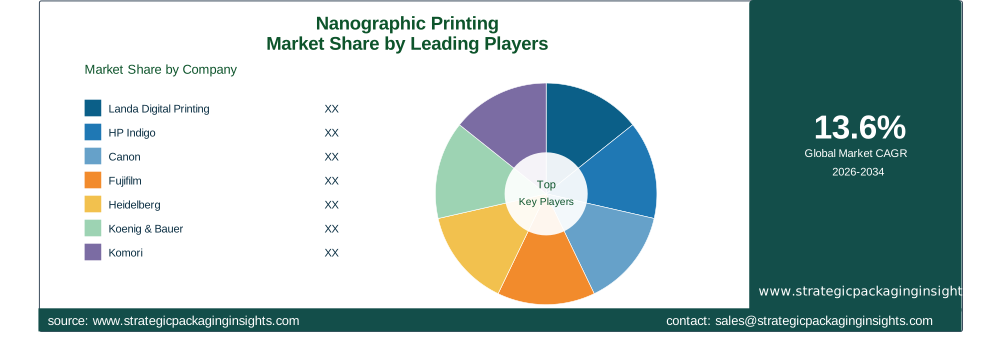
Landa Digital Printing is a leading player in the Nanographic Printing market, known for its innovative nanographic printing technology that offers superior print quality and versatility. The company has a strong focus on research and development, continuously working to improve its technology and expand its product portfolio. HP Indigo is another major player in the market, offering a range of digital printing solutions that cater to various industries, including packaging, commercial print, and labels. The company's commitment to sustainability and innovation has helped it maintain a strong position in the market.
Canon and Fujifilm are also key players in the Nanographic Printing market, known for their advanced printing technologies and strong focus on customer satisfaction. Both companies have a wide range of products and services that cater to the diverse needs of their customers, and they are continuously working to enhance their offerings through innovation and strategic partnerships. Heidelberg and Koenig & Bauer are well-established players in the printing industry, with a strong focus on quality and reliability. These companies have a long history of providing high-quality printing solutions and are continuously working to expand their product offerings and market presence.
Komori, Screen Holdings, Durst Group, and Xeikon are also significant players in the Nanographic Printing market, known for their innovative printing solutions and strong focus on customer satisfaction. These companies are continuously working to enhance their product offerings and expand their market presence through strategic partnerships and collaborations. Overall, the competitive landscape of the Nanographic Printing market is characterized by a strong focus on innovation and customer satisfaction, with key players continuously working to enhance their offerings and expand their market presence.
Key Highlights
- The Nanographic Printing market is projected to grow at a CAGR of 13.6% from 2026 to 2034.
- Key players in the market include Landa Digital Printing, HP Indigo, Canon, Fujifilm, and Heidelberg.
- The market is driven by the increasing demand for high-quality, cost-effective printing solutions.
- Advancements in technology and the development of eco-friendly printing materials are key drivers of market growth.
- The packaging industry is a major application area for nanographic printing technologies.
- High initial investment costs and the need for specialized training are significant challenges for the market.
- The Asia Pacific region presents significant growth opportunities for the Nanographic Printing market.
- Companies are focusing on innovation and strategic partnerships to enhance their product offerings.
- The market is subject to stringent environmental regulations, impacting the production and disposal of printing materials.
- Emerging markets, particularly in Asia Pacific, offer significant growth opportunities for the market.
Top Countries Insights
In the Nanographic Printing market, the United States is a leading player, with a market size of approximately $1.2 billion and a CAGR of 12%. The country's strong focus on innovation and technology, coupled with a well-established printing industry, drives the demand for advanced printing solutions. The presence of key players such as HP Indigo and Canon further strengthens the market, as these companies continuously work to enhance their product offerings and expand their market presence. Additionally, the growing demand for sustainable and customizable packaging solutions is a significant driver of market growth in the United States.
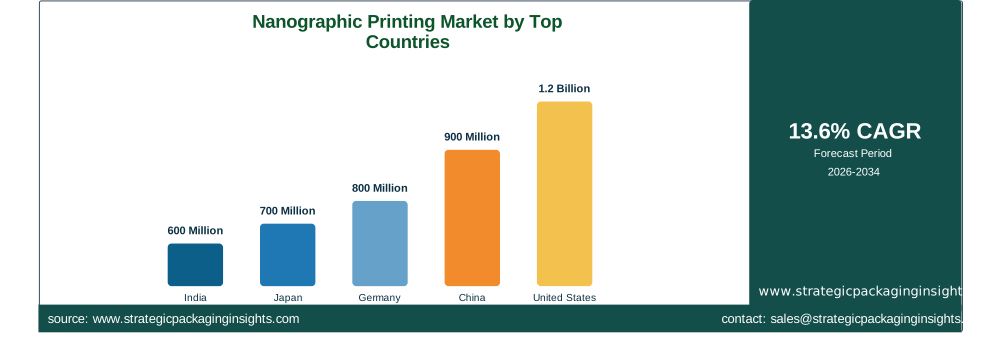
China is another major player in the Nanographic Printing market, with a market size of around $900 million and a CAGR of 15%. The country's rapid industrialization and urbanization, coupled with a growing focus on sustainability, drive the demand for advanced printing technologies. The presence of a large number of packaging converters and brand owners further fuels the market, as these companies seek high-quality, cost-effective printing solutions to meet the needs of their customers. Additionally, the government's focus on promoting digitalization and innovation presents significant growth opportunities for the market in China.
Germany is a key player in the European Nanographic Printing market, with a market size of approximately $800 million and a CAGR of 9%. The country's strong focus on quality and reliability, coupled with a well-established printing industry, drives the demand for advanced printing solutions. The presence of key players such as Heidelberg and Koenig & Bauer further strengthens the market, as these companies continuously work to enhance their product offerings and expand their market presence. Additionally, the growing demand for sustainable and customizable packaging solutions is a significant driver of market growth in Germany.
Japan is another significant player in the Nanographic Printing market, with a market size of around $700 million and a CAGR of 10%. The country's strong focus on innovation and technology, coupled with a well-established printing industry, drives the demand for advanced printing solutions. The presence of key players such as Fujifilm and Screen Holdings further strengthens the market, as these companies continuously work to enhance their product offerings and expand their market presence. Additionally, the growing demand for sustainable and customizable packaging solutions is a significant driver of market growth in Japan.
India is an emerging player in the Nanographic Printing market, with a market size of approximately $600 million and a CAGR of 14%. The country's rapid industrialization and urbanization, coupled with a growing focus on sustainability, drive the demand for advanced printing technologies. The presence of a large number of packaging converters and brand owners further fuels the market, as these companies seek high-quality, cost-effective printing solutions to meet the needs of their customers. Additionally, the government's focus on promoting digitalization and innovation presents significant growth opportunities for the market in India.
Nanographic Printing Market Segments Insights

Technology Analysis
The technology segment of the Nanographic Printing market is a critical area of focus, with several key technologies driving growth and innovation. Nanopigment printing is one of the most advanced technologies in this segment, offering superior print quality and versatility. This technology allows for the production of vibrant, detailed prints on a wide range of substrates, making it an ideal choice for industries such as packaging and commercial print. The growing demand for high-quality, cost-effective printing solutions is a significant driver of growth in this segment, as businesses seek to enhance their printing capabilities while reducing costs.
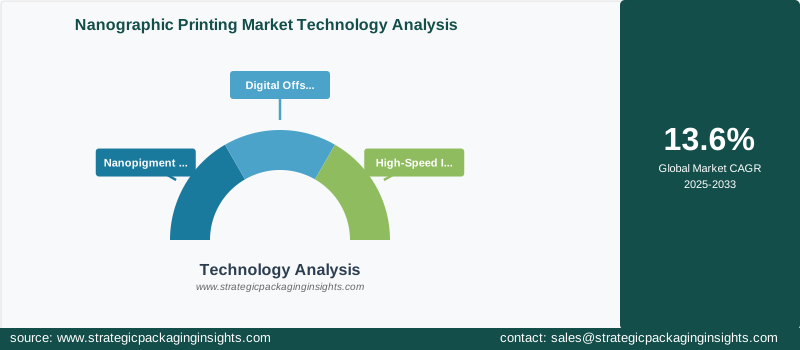
Digital offset printing is another key technology in the Nanographic Printing market, offering a range of benefits, including high-speed printing and the ability to produce short-run jobs efficiently. This technology is particularly valuable in the packaging industry, where there is a growing need for customizable and sustainable packaging solutions. The rise of digitalization and the increasing focus on sustainability are key drivers of growth in this segment, as businesses seek advanced printing technologies that can meet their evolving needs. Additionally, the development of eco-friendly inks and substrates is further enhancing the appeal of digital offset printing technologies.
High-speed inkjet hybrid systems are also gaining traction in the Nanographic Printing market, offering a combination of speed, quality, and versatility. These systems are particularly valuable in industries such as commercial print and labels, where there is a growing demand for high-quality, cost-effective printing solutions. The ongoing advancements in technology and the development of new and improved printing materials are key drivers of growth in this segment, as businesses seek to enhance their printing capabilities and expand their market presence. Overall, the technology segment of the Nanographic Printing market is characterized by a strong focus on innovation and customer satisfaction, with key players continuously working to enhance their offerings and expand their market presence.
Application Analysis
The application segment of the Nanographic Printing market is diverse, with several key areas driving growth and innovation. Labels are one of the most significant application areas, with a growing demand for high-quality, customizable labels across various industries. Nanographic printing technologies offer the ability to produce vibrant, detailed prints on a wide range of substrates, making them an ideal choice for label manufacturers looking to differentiate their products. The rise of e-commerce and the need for personalized packaging solutions are key drivers of growth in this segment, as businesses seek advanced printing technologies that can meet their evolving needs.
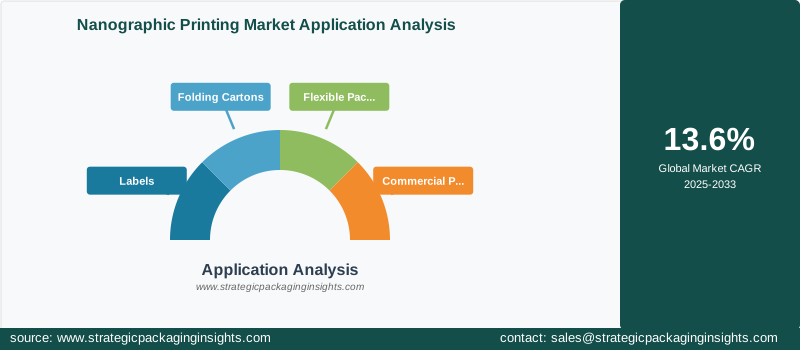
Folding cartons are another key application area in the Nanographic Printing market, with a growing demand for high-quality, sustainable packaging solutions. Nanographic printing technologies offer the ability to produce vibrant, detailed prints on a wide range of substrates, making them an ideal choice for packaging converters and brand owners looking to enhance their product offerings. The increasing focus on sustainability and the development of eco-friendly printing materials are key drivers of growth in this segment, as businesses seek to reduce their environmental impact while enhancing their printing capabilities.
Flexible packaging and commercial print are also significant application areas in the Nanographic Printing market, with a growing demand for high-quality, cost-effective printing solutions. Nanographic printing technologies offer the ability to produce vibrant, detailed prints on a wide range of substrates, making them an ideal choice for businesses looking to enhance their printing capabilities while reducing costs. The ongoing advancements in technology and the development of new and improved printing materials are key drivers of growth in these segments, as businesses seek to enhance their printing capabilities and expand their market presence. Overall, the application segment of the Nanographic Printing market is characterized by a strong focus on innovation and customer satisfaction, with key players continuously working to enhance their offerings and expand their market presence.
End Use Analysis
The end-use segment of the Nanographic Printing market is diverse, with several key areas driving growth and innovation. Packaging converters are one of the most significant end-use areas, with a growing demand for high-quality, customizable packaging solutions. Nanographic printing technologies offer the ability to produce vibrant, detailed prints on a wide range of substrates, making them an ideal choice for packaging converters looking to enhance their product offerings. The rise of e-commerce and the need for personalized packaging solutions are key drivers of growth in this segment, as businesses seek advanced printing technologies that can meet their evolving needs.
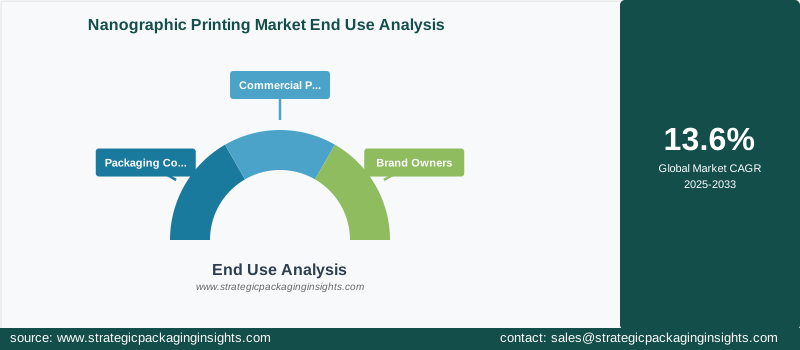
Commercial printers are another key end-use area in the Nanographic Printing market, with a growing demand for high-quality, cost-effective printing solutions. Nanographic printing technologies offer the ability to produce vibrant, detailed prints on a wide range of substrates, making them an ideal choice for commercial printers looking to enhance their printing capabilities while reducing costs. The ongoing advancements in technology and the development of new and improved printing materials are key drivers of growth in this segment, as businesses seek to enhance their printing capabilities and expand their market presence.
Brand owners are also significant end-users in the Nanographic Printing market, with a growing demand for high-quality, customizable packaging solutions. Nanographic printing technologies offer the ability to produce vibrant, detailed prints on a wide range of substrates, making them an ideal choice for brand owners looking to differentiate their products. The increasing focus on sustainability and the development of eco-friendly printing materials are key drivers of growth in this segment, as businesses seek to reduce their environmental impact while enhancing their printing capabilities. Overall, the end-use segment of the Nanographic Printing market is characterized by a strong focus on innovation and customer satisfaction, with key players continuously working to enhance their offerings and expand their market presence.
Component Analysis
The component segment of the Nanographic Printing market is a critical area of focus, with several key components driving growth and innovation. Press systems are one of the most significant components, offering the ability to produce high-quality, cost-effective prints on a wide range of substrates. The growing demand for advanced printing technologies and the need for short-run printing jobs are key drivers of growth in this segment, as businesses seek to enhance their printing capabilities while reducing costs. Additionally, the development of new and improved press systems is further enhancing the appeal of nanographic printing technologies.
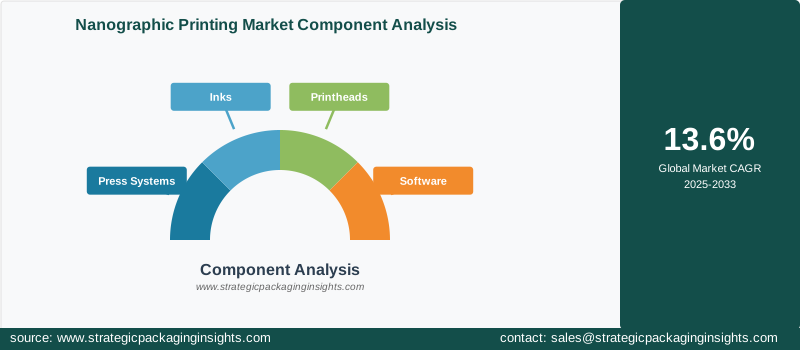
Inks are another key component in the Nanographic Printing market, with a growing demand for eco-friendly and sustainable printing materials. Nanographic printing technologies offer the ability to produce vibrant, detailed prints using a wide range of inks, making them an ideal choice for businesses looking to enhance their printing capabilities while reducing their environmental impact. The ongoing advancements in technology and the development of new and improved inks are key drivers of growth in this segment, as businesses seek to enhance their printing capabilities and expand their market presence.
Printheads and software are also significant components in the Nanographic Printing market, with a growing demand for advanced printing technologies that can meet the needs of a diverse range of industries. Nanographic printing technologies offer the ability to produce high-quality, cost-effective prints using a wide range of printheads and software, making them an ideal choice for businesses looking to enhance their printing capabilities while reducing costs. The ongoing advancements in technology and the development of new and improved printheads and software are key drivers of growth in this segment, as businesses seek to enhance their printing capabilities and expand their market presence. Overall, the component segment of the Nanographic Printing market is characterized by a strong focus on innovation and customer satisfaction, with key players continuously working to enhance their offerings and expand their market presence.
Nanographic Printing Market Segments
The Nanographic Printing market has been segmented on the basis ofTechnology
- Nanopigment Printing
- Digital Offset Printing
- High-Speed Inkjet Hybrid Systems
Application
- Labels
- Folding Cartons
- Flexible Packaging
- Commercial Print
End Use
- Packaging Converters
- Commercial Printers
- Brand Owners
Component
- Press Systems
- Inks
- Printheads
- Software
Region
- Asia Pacific
- North America
- Latin America
- Europe
- Middle East & Africa




