


Nanocellulose Coating Market Outlook
The Nanocellulose Coating market was valued at $650.45 million in 2025 and is projected to reach $1.24 billion by 2034, growing at a CAGR of 7.5% during the forecast period 2026-2034. This growth trajectory is driven by the increasing demand for sustainable and eco-friendly materials across various industries. The unique properties of nanocellulose, such as its biodegradability, high strength, and lightweight nature, make it an attractive alternative to traditional coatings. The market is witnessing significant investments in research and development to enhance the performance and application range of nanocellulose coatings, further propelling market growth.
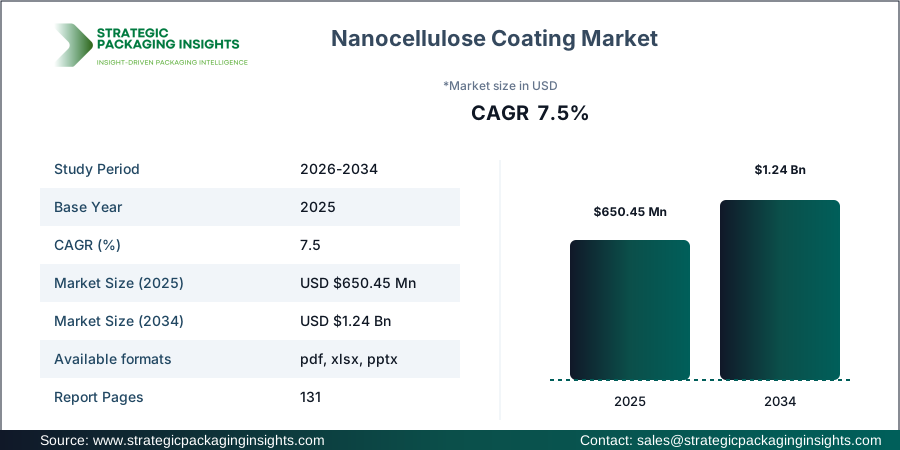
Despite the promising growth prospects, the Nanocellulose Coating market faces certain challenges. Regulatory constraints related to the production and application of nanocellulose coatings can pose hurdles to market expansion. Additionally, the high production costs associated with nanocellulose extraction and processing may limit its widespread adoption. However, advancements in production technologies and increasing awareness about the environmental benefits of nanocellulose coatings are expected to mitigate these challenges, offering substantial growth potential in the coming years.
Report Scope
| Attributes | Details |
| Report Title | Nanocellulose Coating Market Size, Future Growth and Forecast 2034 |
| By Source | Wood Pulp, Cotton, Agricultural Residues |
| By Application | Food & Beverage, Packaging, Cosmetics |
| By End Use | Bio-based Coatings, Food Coatings |
| Region | Asia Pacific, North America, Latin America, Europe, Middle East & Africa |
| Base Year | 2025 |
| Historic Period | 2018-2024 |
| Forecast Period | 2026-2034 |
| Number of Pages | 131 |
| Customization Available | Yes* |
Opportunities & Threats
The Nanocellulose Coating market presents numerous opportunities, particularly in the realm of sustainable packaging solutions. As consumers and industries alike shift towards eco-friendly alternatives, nanocellulose coatings offer a viable solution due to their biodegradable nature and minimal environmental impact. This trend is particularly pronounced in the food and beverage industry, where there is a growing demand for sustainable packaging materials that can extend shelf life while maintaining product integrity. Furthermore, the cosmetics industry is exploring the use of nanocellulose coatings to enhance product stability and performance, opening new avenues for market expansion.
Another significant opportunity lies in the development of advanced nanocellulose coatings for bio-based applications. As industries strive to reduce their carbon footprint, the demand for bio-based coatings is on the rise. Nanocellulose coatings, with their renewable origin and superior properties, are well-positioned to capture a significant share of this emerging market. Additionally, ongoing research and innovation in nanocellulose technology are expected to unlock new applications and enhance the performance of existing products, further driving market growth.
However, the market is not without its threats. One of the primary restrainers is the high cost of production associated with nanocellulose coatings. The extraction and processing of nanocellulose require sophisticated technology and infrastructure, which can drive up costs and limit market penetration. Moreover, the lack of standardized regulations and guidelines for the use of nanocellulose coatings can create uncertainty and hinder market growth. Addressing these challenges through technological advancements and regulatory harmonization will be crucial for the sustained growth of the Nanocellulose Coating market.
Drivers & Challenges
The primary drivers of the Nanocellulose Coating market include the increasing demand for sustainable and eco-friendly materials across various industries. As environmental concerns continue to rise, industries are seeking alternatives to traditional coatings that are not only effective but also environmentally benign. Nanocellulose coatings, with their biodegradable nature and minimal environmental impact, are gaining traction as a preferred choice. Additionally, the superior properties of nanocellulose, such as high strength, lightweight, and excellent barrier properties, make it an ideal material for a wide range of applications, further driving market growth.
Another significant driver is the growing investment in research and development to enhance the performance and application range of nanocellulose coatings. Companies are increasingly focusing on developing innovative products that can cater to the evolving needs of various industries. This includes the development of advanced nanocellulose coatings for bio-based applications, which are gaining popularity due to their renewable origin and superior properties. The increasing collaboration between industry players and research institutions is also expected to accelerate the development of new and improved nanocellulose coatings, further propelling market growth.
Despite the promising growth prospects, the Nanocellulose Coating market faces several challenges. One of the primary challenges is the high cost of production associated with nanocellulose coatings. The extraction and processing of nanocellulose require sophisticated technology and infrastructure, which can drive up costs and limit market penetration. Additionally, the lack of standardized regulations and guidelines for the use of nanocellulose coatings can create uncertainty and hinder market growth. Addressing these challenges through technological advancements and regulatory harmonization will be crucial for the sustained growth of the Nanocellulose Coating market.
Market Share Analysis
The competitive landscape of the Nanocellulose Coating market is characterized by the presence of several key players who are actively engaged in research and development to enhance their product offerings. Companies such as Stora Enso, UPM, Borregaard, Sappi, and Valmet are at the forefront of the market, leveraging their extensive experience and expertise to develop innovative nanocellulose coatings. These companies are focusing on expanding their product portfolios and strengthening their market presence through strategic partnerships and collaborations.
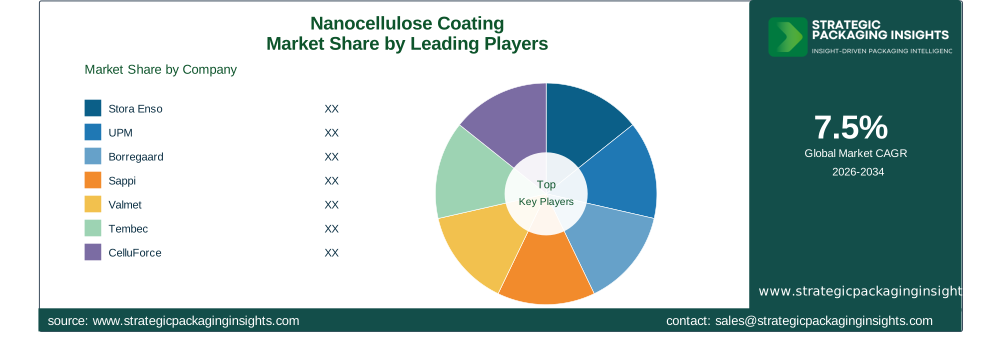
Stora Enso, a leading player in the market, is known for its commitment to sustainability and innovation. The company has been investing heavily in research and development to enhance the performance and application range of its nanocellulose coatings. UPM, another major player, is focusing on developing advanced nanocellulose coatings for bio-based applications, leveraging its extensive experience in the field of renewable materials. Borregaard, with its strong focus on sustainability, is actively engaged in the development of eco-friendly nanocellulose coatings that cater to the evolving needs of various industries.
Sappi, a global leader in the paper and pulp industry, is leveraging its expertise to develop high-performance nanocellulose coatings that offer superior barrier properties and enhanced durability. Valmet, known for its innovative solutions in the field of process technology, is focusing on developing advanced production technologies to enhance the efficiency and cost-effectiveness of nanocellulose coatings. Tembec, CelluForce, PaperCon, American Process, and Norske Skog are also key players in the market, each contributing to the growth and development of the Nanocellulose Coating market through their unique offerings and strategic initiatives.
Key Highlights
- The Nanocellulose Coating market is projected to grow at a CAGR of 7.5% from 2026 to 2034.
- Key players in the market include Stora Enso, UPM, Borregaard, Sappi, and Valmet.
- Increasing demand for sustainable and eco-friendly materials is driving market growth.
- High production costs and regulatory constraints are key challenges for the market.
- Advancements in production technologies are expected to enhance market growth.
- The food and beverage industry is a major application area for nanocellulose coatings.
- Ongoing research and innovation are unlocking new applications for nanocellulose coatings.
Top Countries Insights
In the Nanocellulose Coating market, the United States stands out as a key player, with a market size of approximately $200 million and a CAGR of 8%. The country's strong focus on sustainability and innovation, coupled with significant investments in research and development, are driving market growth. The demand for eco-friendly packaging solutions in the food and beverage industry is a major growth driver, while regulatory challenges related to nanomaterials pose a potential hurdle.
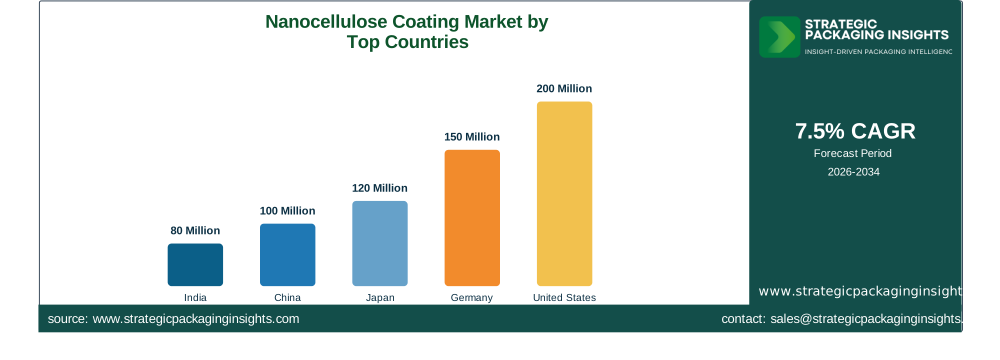
Germany, with a market size of $150 million and a CAGR of 7%, is another significant player in the Nanocellulose Coating market. The country's strong manufacturing base and emphasis on sustainable materials are driving demand for nanocellulose coatings. The automotive and packaging industries are key growth drivers, while high production costs remain a challenge.
Japan, with a market size of $120 million and a CAGR of 6%, is witnessing growing demand for nanocellulose coatings in the electronics and packaging industries. The country's focus on innovation and technology development is driving market growth, while regulatory constraints related to nanomaterials pose a potential challenge.
China, with a market size of $100 million and a CAGR of 9%, is experiencing rapid growth in the Nanocellulose Coating market. The country's strong focus on sustainability and increasing investments in research and development are driving demand for nanocellulose coatings. The packaging and construction industries are key growth drivers, while regulatory challenges related to nanomaterials remain a concern.
India, with a market size of $80 million and a CAGR of 10%, is emerging as a key player in the Nanocellulose Coating market. The country's growing focus on sustainable materials and increasing investments in research and development are driving market growth. The packaging and food industries are key growth drivers, while high production costs remain a challenge.
Nanocellulose Coating Market Segments Insights

Source Analysis
The source segment of the Nanocellulose Coating market is primarily divided into wood pulp, cotton, and agricultural residues. Wood pulp is the most widely used source due to its abundant availability and cost-effectiveness. The demand for wood pulp-based nanocellulose coatings is driven by their superior mechanical properties and biodegradability, making them an ideal choice for sustainable packaging solutions. Cotton-based nanocellulose coatings are gaining traction due to their high purity and excellent barrier properties, which are particularly beneficial in the food and beverage industry. Agricultural residues, although less commonly used, offer a sustainable alternative by utilizing waste materials, thereby reducing environmental impact.
The competition within the source segment is primarily driven by the availability of raw materials and the cost-effectiveness of production processes. Companies are focusing on optimizing their production processes to enhance the efficiency and cost-effectiveness of nanocellulose extraction. The increasing emphasis on sustainability and the circular economy is expected to drive demand for agricultural residue-based nanocellulose coatings, as they offer a viable solution for waste management and resource optimization. The ongoing research and development efforts to enhance the performance and application range of nanocellulose coatings are expected to further drive growth in this segment.
Application Analysis
The application segment of the Nanocellulose Coating market is categorized into food & beverage, packaging, and cosmetics. The food & beverage industry is a major application area for nanocellulose coatings, driven by the increasing demand for sustainable packaging solutions that can extend shelf life and maintain product integrity. Nanocellulose coatings offer excellent barrier properties, making them an ideal choice for food packaging applications. The packaging industry, in general, is witnessing a growing demand for eco-friendly materials, further driving the adoption of nanocellulose coatings.
In the cosmetics industry, nanocellulose coatings are gaining popularity due to their ability to enhance product stability and performance. The demand for natural and sustainable ingredients in cosmetics is driving the adoption of nanocellulose coatings, which offer a renewable and biodegradable alternative to traditional coatings. The competition within the application segment is primarily driven by the evolving needs of end-users and the ability of companies to develop innovative solutions that cater to these needs. The ongoing research and development efforts to enhance the performance and application range of nanocellulose coatings are expected to further drive growth in this segment.
End Use Analysis
The end-use segment of the Nanocellulose Coating market is divided into bio-based coatings and food coatings. Bio-based coatings are gaining popularity due to their renewable origin and superior properties, making them an ideal choice for industries seeking to reduce their carbon footprint. The demand for bio-based coatings is driven by the increasing emphasis on sustainability and the circular economy, as well as the growing awareness about the environmental benefits of nanocellulose coatings.
Food coatings, on the other hand, are witnessing growing demand due to their ability to enhance the shelf life and quality of food products. Nanocellulose coatings offer excellent barrier properties, making them an ideal choice for food coating applications. The competition within the end-use segment is primarily driven by the evolving needs of end-users and the ability of companies to develop innovative solutions that cater to these needs. The ongoing research and development efforts to enhance the performance and application range of nanocellulose coatings are expected to further drive growth in this segment.
Nanocellulose Coating Market Segments
The Nanocellulose Coating market has been segmented on the basis ofBy Source
- Wood Pulp
- Cotton
- Agricultural Residues
By Application
- Food & Beverage
- Packaging
- Cosmetics
By End Use
- Bio-based Coatings
- Food Coatings
Region
- Asia Pacific
- North America
- Latin America
- Europe
- Middle East & Africa




