


Nanocellulose Barrier Coating Market Outlook
The Nanocellulose Barrier Coating market was valued at $1.24 billion in 2025 and is projected to reach $2.34 billion by 2034, growing at a CAGR of 7.3% during the forecast period 2026-2034. This market is witnessing significant growth due to the increasing demand for sustainable and eco-friendly packaging solutions. The rising awareness about environmental issues and the need for biodegradable materials are driving the adoption of nanocellulose barrier coatings. These coatings offer excellent barrier properties, making them ideal for various applications, including food packaging, pharmaceuticals, and cosmetics. The market is also benefiting from advancements in nanotechnology and the development of innovative production techniques that enhance the performance and cost-effectiveness of nanocellulose coatings.
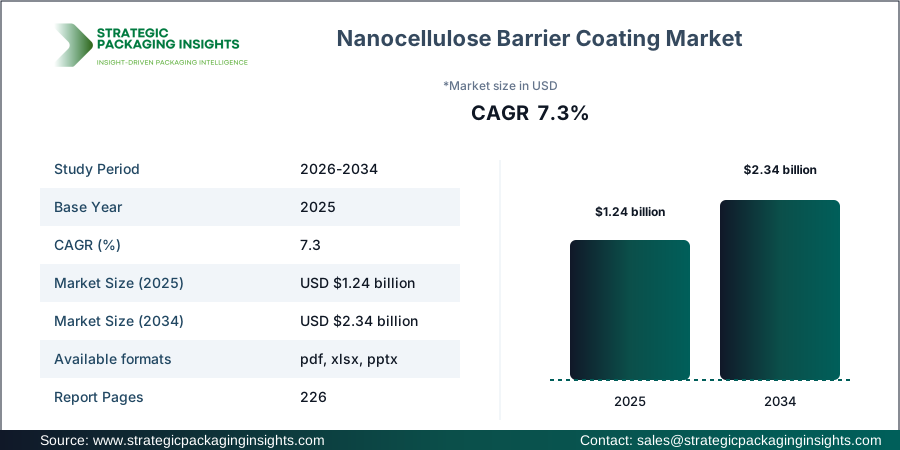
Despite the promising growth prospects, the Nanocellulose Barrier Coating market faces certain challenges. Regulatory constraints and the high cost of production are some of the key restraining factors. The market is also affected by the limited availability of raw materials and the complexity of the production process. However, ongoing research and development activities are expected to address these issues and open up new growth opportunities. The increasing focus on sustainability and the growing demand for bio-based products are likely to drive the market in the coming years. Additionally, the expansion of the packaging industry and the rising demand for high-performance materials are expected to fuel the growth of the Nanocellulose Barrier Coating market.
Report Scope
| Attributes | Details |
| Report Title | Nanocellulose Barrier Coating Market Size, Future Growth and Forecast 2034 |
| Source | Wood, Cotton, Agricultural Residues |
| Application | Food Packaging, Pharma, Cosmetics |
| End Use | Bio-based, Eco-friendly |
| Region | Asia Pacific, North America, Latin America, Europe, Middle East & Africa |
| Base Year | 2025 |
| Historic Period | 2018-2024 |
| Forecast Period | 2026-2034 |
| Number of Pages | 226 |
| Customization Available | Yes* |
Opportunities & Threats
The Nanocellulose Barrier Coating market presents numerous opportunities for growth, primarily driven by the increasing demand for sustainable packaging solutions. As consumers become more environmentally conscious, there is a growing preference for biodegradable and eco-friendly materials. This trend is creating a significant demand for nanocellulose barrier coatings, which offer excellent barrier properties and are derived from renewable sources. Additionally, the expansion of the food packaging industry is providing lucrative opportunities for market players. The need for effective barrier coatings to extend the shelf life of food products is driving the adoption of nanocellulose coatings. Furthermore, the development of innovative production techniques and the increasing investment in research and development are expected to enhance the performance and cost-effectiveness of these coatings, further boosting market growth.
Another opportunity lies in the pharmaceutical and cosmetics industries, where the demand for high-performance barrier coatings is on the rise. Nanocellulose coatings offer excellent moisture and oxygen barrier properties, making them ideal for protecting sensitive products. The growing focus on sustainability and the increasing demand for bio-based products in these industries are expected to drive the adoption of nanocellulose barrier coatings. Moreover, the development of new applications and the expansion of the end-use industries are likely to create additional growth opportunities for market players. The increasing collaboration between manufacturers and research institutions is also expected to accelerate the development of innovative products and expand the market reach.
However, the market also faces certain threats that could hinder its growth. One of the major challenges is the high cost of production, which can limit the adoption of nanocellulose barrier coatings. The complexity of the production process and the limited availability of raw materials are also significant barriers. Additionally, regulatory constraints and the need for compliance with stringent environmental standards can pose challenges for market players. The competitive landscape is also becoming increasingly intense, with the entry of new players and the development of alternative materials. These factors could impact the market dynamics and affect the growth prospects of the Nanocellulose Barrier Coating market.
Drivers & Challenges
The primary driver of the Nanocellulose Barrier Coating market is the increasing demand for sustainable and eco-friendly packaging solutions. As environmental concerns continue to rise, there is a growing need for biodegradable materials that can reduce the environmental impact of packaging waste. Nanocellulose barrier coatings, derived from renewable sources, offer excellent barrier properties and are gaining popularity as a sustainable alternative to traditional packaging materials. The expansion of the food packaging industry is also driving the demand for nanocellulose coatings, as they provide effective protection against moisture and oxygen, extending the shelf life of food products. Additionally, advancements in nanotechnology and the development of innovative production techniques are enhancing the performance and cost-effectiveness of these coatings, further boosting market growth.
Another significant driver is the increasing focus on sustainability and the growing demand for bio-based products in various industries. The pharmaceutical and cosmetics industries, in particular, are witnessing a rising demand for high-performance barrier coatings that can protect sensitive products. Nanocellulose coatings offer excellent moisture and oxygen barrier properties, making them ideal for these applications. The development of new applications and the expansion of the end-use industries are also contributing to the growth of the Nanocellulose Barrier Coating market. Furthermore, the increasing collaboration between manufacturers and research institutions is expected to accelerate the development of innovative products and expand the market reach.
Despite the promising growth prospects, the Nanocellulose Barrier Coating market faces several challenges. One of the major challenges is the high cost of production, which can limit the adoption of these coatings. The complexity of the production process and the limited availability of raw materials are also significant barriers. Additionally, regulatory constraints and the need for compliance with stringent environmental standards can pose challenges for market players. The competitive landscape is becoming increasingly intense, with the entry of new players and the development of alternative materials. These factors could impact the market dynamics and affect the growth prospects of the Nanocellulose Barrier Coating market.
Market Share Analysis
The competitive landscape of the Nanocellulose Barrier Coating market is characterized by the presence of several key players, each striving to enhance their market position through strategic initiatives such as mergers, acquisitions, partnerships, and product innovations. Stora Enso, UPM, Borregaard, Sappi, Valmet, Tembec, CelluForce, PaperCon, American Process, and Norske Skog are some of the prominent companies operating in this market. These companies are focusing on expanding their product portfolios and strengthening their distribution networks to cater to the growing demand for nanocellulose barrier coatings. The market is also witnessing increased investment in research and development activities to develop innovative products and improve the performance and cost-effectiveness of nanocellulose coatings.
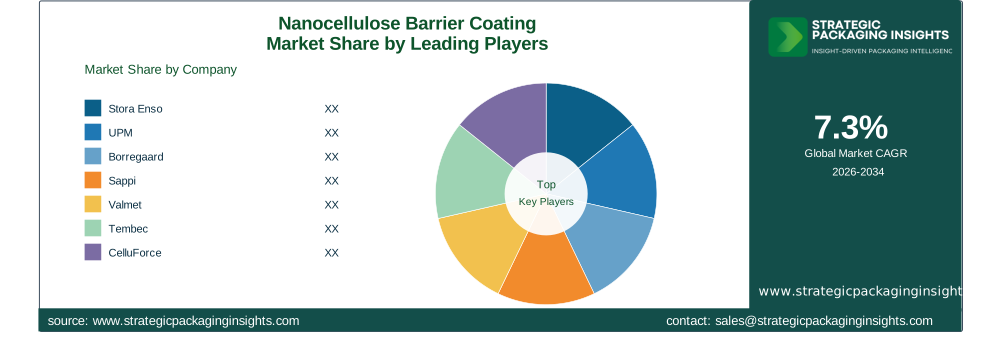
Stora Enso is a leading player in the Nanocellulose Barrier Coating market, known for its extensive product portfolio and strong focus on sustainability. The company is actively involved in research and development activities to enhance the performance of its nanocellulose coatings and expand its market reach. UPM is another major player, with a strong presence in the global market. The company is focusing on strategic partnerships and collaborations to strengthen its position in the market and develop innovative solutions for various applications. Borregaard is also a key player, known for its advanced production techniques and commitment to sustainability. The company is investing in research and development to improve the performance of its nanocellulose coatings and expand its product offerings.
Sappi is a prominent player in the Nanocellulose Barrier Coating market, with a strong focus on innovation and sustainability. The company is actively involved in developing new applications for nanocellulose coatings and expanding its product portfolio to cater to the growing demand for sustainable packaging solutions. Valmet is another key player, known for its advanced production technologies and strong focus on research and development. The company is investing in innovative production techniques to enhance the performance and cost-effectiveness of its nanocellulose coatings. Tembec is also a significant player, with a strong presence in the global market. The company is focusing on expanding its distribution network and strengthening its market position through strategic partnerships and collaborations.
CelluForce, PaperCon, American Process, and Norske Skog are other notable players in the Nanocellulose Barrier Coating market. These companies are focusing on developing innovative products and expanding their market reach through strategic initiatives such as mergers, acquisitions, and partnerships. The competitive landscape is becoming increasingly intense, with the entry of new players and the development of alternative materials. However, the increasing demand for sustainable and eco-friendly packaging solutions is expected to drive the growth of the Nanocellulose Barrier Coating market and create new opportunities for market players.
Key Highlights
- The Nanocellulose Barrier Coating market is projected to grow at a CAGR of 7.3% from 2026 to 2034.
- The market is driven by the increasing demand for sustainable and eco-friendly packaging solutions.
- Advancements in nanotechnology and innovative production techniques are enhancing the performance of nanocellulose coatings.
- The food packaging industry is a major application area for nanocellulose barrier coatings.
- Regulatory constraints and high production costs are significant challenges for market players.
- Key players in the market include Stora Enso, UPM, Borregaard, Sappi, and Valmet.
- The market is witnessing increased investment in research and development activities.
- The pharmaceutical and cosmetics industries are emerging as significant application areas for nanocellulose coatings.
- The competitive landscape is characterized by strategic initiatives such as mergers, acquisitions, and partnerships.
Top Countries Insights
In the Nanocellulose Barrier Coating market, the United States is a leading country, with a market size of approximately $0.45 billion and a CAGR of 6%. The country's strong focus on sustainability and the increasing demand for eco-friendly packaging solutions are driving the market growth. The presence of key players and the expansion of the food packaging industry are also contributing to the market's growth. However, regulatory constraints and high production costs remain significant challenges for market players.
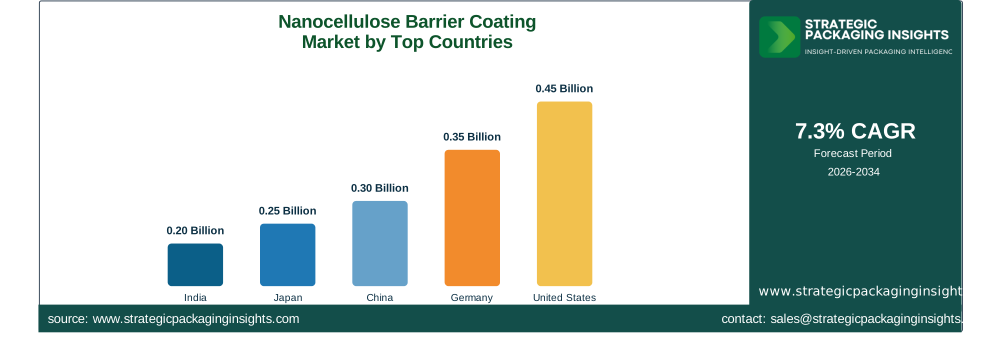
Germany is another significant market for nanocellulose barrier coatings, with a market size of around $0.35 billion and a CAGR of 7%. The country's strong focus on innovation and sustainability, along with the presence of key players, is driving the market growth. The expansion of the pharmaceutical and cosmetics industries is also contributing to the increasing demand for nanocellulose coatings. However, the high cost of production and regulatory constraints are significant challenges for market players.
China is emerging as a key market for nanocellulose barrier coatings, with a market size of approximately $0.30 billion and a CAGR of 8%. The country's growing focus on sustainability and the increasing demand for eco-friendly packaging solutions are driving the market growth. The expansion of the food packaging industry and the presence of key players are also contributing to the market's growth. However, regulatory constraints and high production costs remain significant challenges for market players.
Japan is another important market for nanocellulose barrier coatings, with a market size of around $0.25 billion and a CAGR of 5%. The country's strong focus on innovation and sustainability, along with the presence of key players, is driving the market growth. The expansion of the pharmaceutical and cosmetics industries is also contributing to the increasing demand for nanocellulose coatings. However, the high cost of production and regulatory constraints are significant challenges for market players.
India is also emerging as a key market for nanocellulose barrier coatings, with a market size of approximately $0.20 billion and a CAGR of 9%. The country's growing focus on sustainability and the increasing demand for eco-friendly packaging solutions are driving the market growth. The expansion of the food packaging industry and the presence of key players are also contributing to the market's growth. However, regulatory constraints and high production costs remain significant challenges for market players.
Nanocellulose Barrier Coating Market Segments Insights

Source Analysis
The source segment of the Nanocellulose Barrier Coating market is categorized into wood, cotton, and agricultural residues. Wood-based nanocellulose is the most widely used source due to its abundant availability and excellent mechanical properties. The demand for wood-based nanocellulose is driven by its superior barrier properties, making it ideal for various applications, including food packaging and pharmaceuticals. The increasing focus on sustainability and the growing demand for bio-based products are also contributing to the growth of this segment. However, the high cost of production and the complexity of the extraction process are significant challenges for market players.
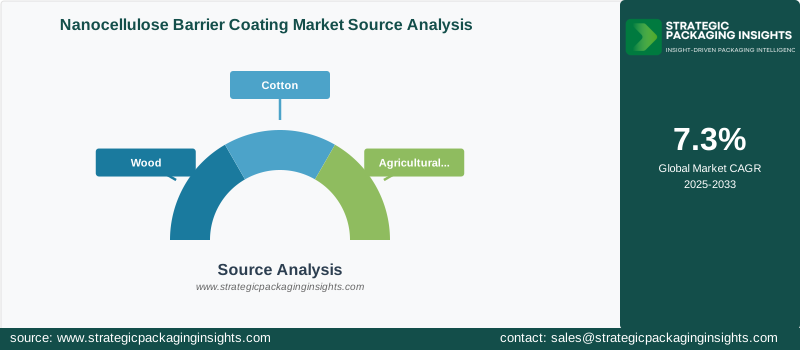
Cotton-based nanocellulose is another important source, known for its excellent barrier properties and biodegradability. The demand for cotton-based nanocellulose is driven by the increasing focus on sustainability and the growing demand for eco-friendly packaging solutions. The expansion of the cosmetics industry is also contributing to the growth of this segment, as cotton-based nanocellulose is used in various cosmetic applications. However, the limited availability of raw materials and the high cost of production are significant challenges for market players. Agricultural residues are emerging as a promising source of nanocellulose, offering a sustainable and cost-effective alternative to traditional sources. The increasing focus on waste management and the growing demand for bio-based products are driving the growth of this segment.
Application Analysis
The application segment of the Nanocellulose Barrier Coating market is categorized into food packaging, pharmaceuticals, and cosmetics. Food packaging is the largest application segment, driven by the increasing demand for sustainable and eco-friendly packaging solutions. Nanocellulose barrier coatings offer excellent barrier properties, making them ideal for extending the shelf life of food products. The expansion of the food packaging industry and the growing focus on sustainability are contributing to the growth of this segment. However, regulatory constraints and high production costs are significant challenges for market players.
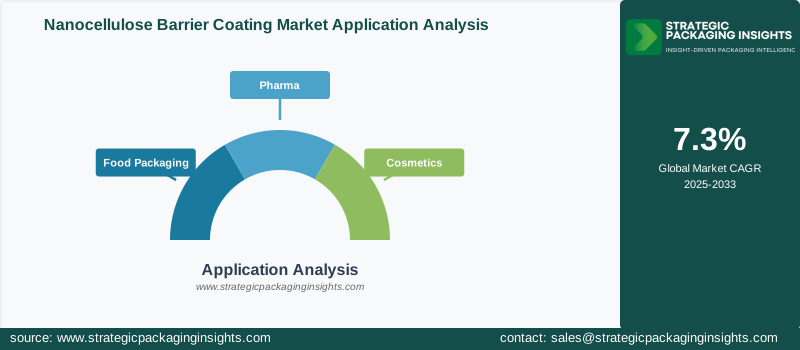
The pharmaceutical industry is another significant application area for nanocellulose barrier coatings, driven by the increasing demand for high-performance barrier coatings that can protect sensitive products. Nanocellulose coatings offer excellent moisture and oxygen barrier properties, making them ideal for pharmaceutical applications. The growing focus on sustainability and the increasing demand for bio-based products are also contributing to the growth of this segment. The cosmetics industry is also witnessing a rising demand for nanocellulose barrier coatings, driven by the increasing focus on sustainability and the growing demand for eco-friendly packaging solutions. However, the high cost of production and regulatory constraints are significant challenges for market players.
End Use Analysis
The end-use segment of the Nanocellulose Barrier Coating market is categorized into bio-based and eco-friendly applications. Bio-based applications are the largest end-use segment, driven by the increasing demand for sustainable and eco-friendly packaging solutions. Nanocellulose barrier coatings offer excellent barrier properties and are derived from renewable sources, making them ideal for bio-based applications. The growing focus on sustainability and the increasing demand for biodegradable materials are contributing to the growth of this segment. However, the high cost of production and the complexity of the production process are significant challenges for market players.
Eco-friendly applications are another significant end-use segment, driven by the increasing focus on sustainability and the growing demand for eco-friendly packaging solutions. Nanocellulose barrier coatings offer excellent barrier properties and are derived from renewable sources, making them ideal for eco-friendly applications. The expansion of the food packaging industry and the growing focus on sustainability are contributing to the growth of this segment. However, regulatory constraints and high production costs are significant challenges for market players. The development of new applications and the expansion of the end-use industries are expected to create additional growth opportunities for market players.
Nanocellulose Barrier Coating Market Segments
The Nanocellulose Barrier Coating market has been segmented on the basis ofSource
- Wood
- Cotton
- Agricultural Residues
Application
- Food Packaging
- Pharma
- Cosmetics
End Use
- Bio-based
- Eco-friendly
Region
- Asia Pacific
- North America
- Latin America
- Europe
- Middle East & Africa




