


Mycelium Packaging Market Outlook
The Mycelium Packaging market was valued at $94.56 million in 2025 and is projected to reach $219.35 million by 2034, growing at a CAGR of 9.8% during the forecast period 2026-2034. This growth is driven by increasing consumer demand for sustainable and eco-friendly packaging solutions. Mycelium, a natural and biodegradable material, is gaining traction as an alternative to traditional packaging materials like plastics and polystyrene. The market is witnessing significant interest from industries such as electronics and cosmetics, where sustainable packaging is becoming a key differentiator. The rising awareness about environmental issues and stringent regulations against non-biodegradable materials are further propelling the market growth.
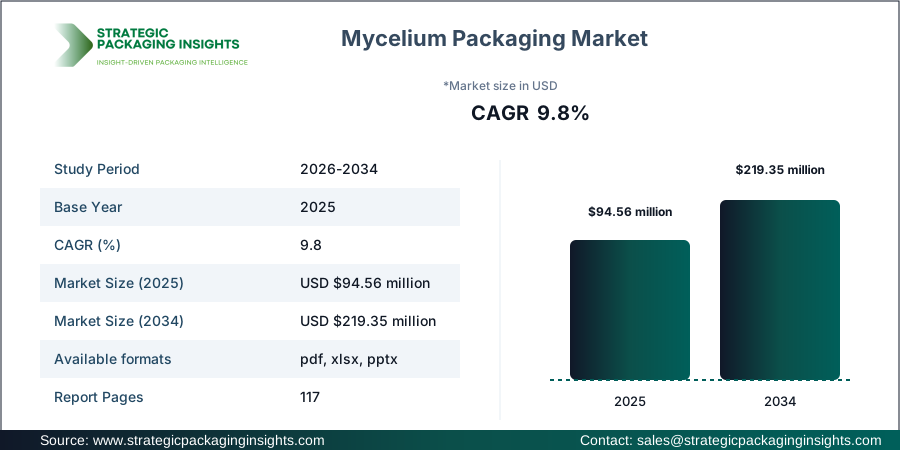
Despite the promising growth prospects, the Mycelium Packaging market faces certain challenges. The high cost of production compared to conventional packaging materials is a significant restraint. Additionally, the lack of awareness and understanding of mycelium-based products among consumers and businesses poses a challenge to market penetration. However, ongoing research and development activities aimed at reducing production costs and enhancing the properties of mycelium packaging are expected to mitigate these challenges. The market also holds immense potential for growth, driven by technological advancements and increasing investments in sustainable packaging solutions.
Report Scope
| Attributes | Details |
| Report Title | Mycelium Packaging Market Size, Future Growth and Forecast 2034 |
| Substrate | Agricultural Waste |
| Density | Low, High |
| Application | Electronics, Cosmetics |
| Form | Custom Molds, Sheets |
| Region | Asia Pacific, North America, Latin America, Europe, Middle East & Africa |
| Base Year | 2025 |
| Historic Period | 2018-2024 |
| Forecast Period | 2026-2034 |
| Number of Pages | 117 |
| Customization Available | Yes* |
Opportunities & Threats
The Mycelium Packaging market presents numerous opportunities, particularly in the realm of sustainability. As global awareness about environmental conservation grows, businesses are increasingly seeking eco-friendly packaging solutions. Mycelium packaging, being biodegradable and compostable, aligns perfectly with this trend. The electronics and cosmetics industries, in particular, are poised to benefit from this shift, as consumers in these sectors are becoming more environmentally conscious. Furthermore, the agricultural waste used as a substrate for mycelium packaging not only reduces waste but also provides a cost-effective raw material source, enhancing the market's appeal.
Another significant opportunity lies in the customization potential of mycelium packaging. The ability to create custom molds and sheets allows businesses to tailor packaging solutions to specific product needs, offering a competitive edge. This flexibility is particularly advantageous in industries like electronics, where product protection and presentation are crucial. Additionally, the growing trend of circular economy practices is expected to drive demand for mycelium packaging, as it supports waste reduction and resource efficiency.
However, the market is not without its threats. One of the primary challenges is the competition from established packaging materials, which are often cheaper and more widely available. The initial investment required for transitioning to mycelium packaging can be a deterrent for some businesses. Moreover, the scalability of production processes remains a concern, as large-scale adoption requires significant infrastructure and technological advancements. Addressing these threats will be crucial for the sustained growth of the mycelium packaging market.
Drivers & Challenges
The primary driver of the Mycelium Packaging market is the increasing demand for sustainable and eco-friendly packaging solutions. As consumers become more environmentally conscious, there is a growing preference for biodegradable and compostable materials. Mycelium packaging, derived from natural sources, fits this demand perfectly. Additionally, regulatory pressures to reduce plastic waste and promote sustainable practices are encouraging businesses to explore alternative packaging options. The electronics and cosmetics industries, in particular, are witnessing a surge in demand for mycelium packaging, driven by consumer preferences and industry standards.
Technological advancements in mycelium cultivation and processing are also driving market growth. Innovations in production techniques are enhancing the properties of mycelium packaging, making it more competitive with traditional materials. The ability to produce custom molds and sheets offers businesses the flexibility to create tailored packaging solutions, further boosting market adoption. Moreover, the use of agricultural waste as a substrate not only reduces production costs but also aligns with circular economy principles, adding to the market's appeal.
Despite these drivers, the Mycelium Packaging market faces several challenges. The high cost of production compared to conventional packaging materials is a significant barrier to widespread adoption. Additionally, the lack of awareness and understanding of mycelium-based products among consumers and businesses poses a challenge to market penetration. The scalability of production processes is another concern, as large-scale adoption requires significant infrastructure and technological advancements. Addressing these challenges will be crucial for the sustained growth of the mycelium packaging market.
Market Share Analysis
The Mycelium Packaging market is characterized by a competitive landscape with several key players driving innovation and growth. Companies like Ecovative, MycoWorks, and Mushroom Packaging are at the forefront of the market, leveraging their expertise in mycelium technology to offer sustainable packaging solutions. Ecovative, for instance, is renowned for its innovative approach to mycelium cultivation, producing a range of packaging products that are both biodegradable and customizable. MycoWorks, on the other hand, focuses on developing high-performance mycelium materials that cater to diverse industry needs.
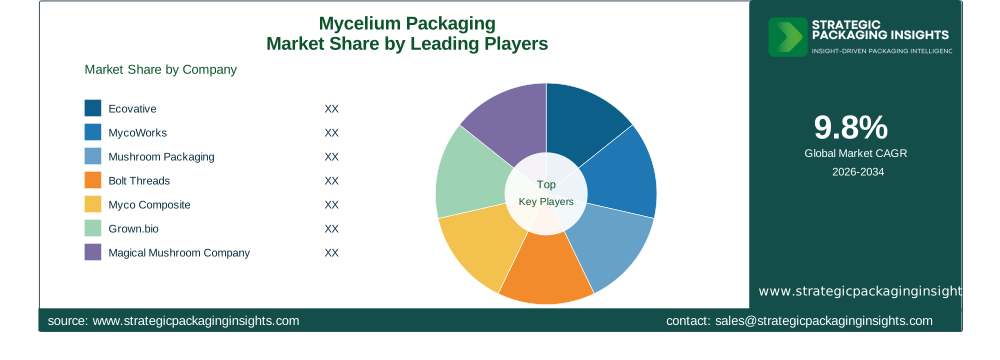
Other notable players in the market include Bolt Threads, Myco Composite, and Grown.bio, each contributing to the market's growth through unique product offerings and strategic partnerships. Bolt Threads is known for its focus on sustainable materials, utilizing mycelium to create eco-friendly packaging solutions. Myco Composite and Grown.bio are also making significant strides in the market, with a strong emphasis on research and development to enhance the properties of mycelium packaging.
The competitive landscape is further enriched by companies like Magical Mushroom Company, Libre Foods, and Restraw, which are exploring new applications and markets for mycelium packaging. Magical Mushroom Company, for example, is expanding its product portfolio to include a variety of packaging solutions, while Libre Foods is focusing on integrating mycelium technology into food packaging. Restraw, with its innovative approach to sustainable packaging, is gaining traction in the market, offering products that cater to environmentally conscious consumers.
Fungi Perfecti is another key player in the market, known for its commitment to sustainability and innovation. The company is actively involved in research and development, exploring new ways to utilize mycelium for packaging applications. With a strong focus on quality and environmental responsibility, Fungi Perfecti is well-positioned to capitalize on the growing demand for sustainable packaging solutions. Overall, the Mycelium Packaging market is poised for significant growth, driven by the efforts of these key players and the increasing demand for eco-friendly packaging options.
Key Highlights
- The Mycelium Packaging market is projected to grow at a CAGR of 9.8% from 2026 to 2034.
- Key drivers include increasing demand for sustainable packaging and regulatory pressures to reduce plastic waste.
- Challenges include high production costs and scalability of production processes.
- Customization potential of mycelium packaging offers a competitive edge in the market.
- Technological advancements in mycelium cultivation are enhancing product properties.
- Key players include Ecovative, MycoWorks, and Mushroom Packaging.
- The market is witnessing significant interest from the electronics and cosmetics industries.
Top Countries Insights
In the Mycelium Packaging market, the United States stands out as a leading country, with a market size of approximately $45 million and a CAGR of 10%. The country's strong focus on sustainability and innovation, coupled with supportive government policies, drives the demand for eco-friendly packaging solutions. The presence of key players like Ecovative and MycoWorks further strengthens the market, as these companies continue to innovate and expand their product offerings.
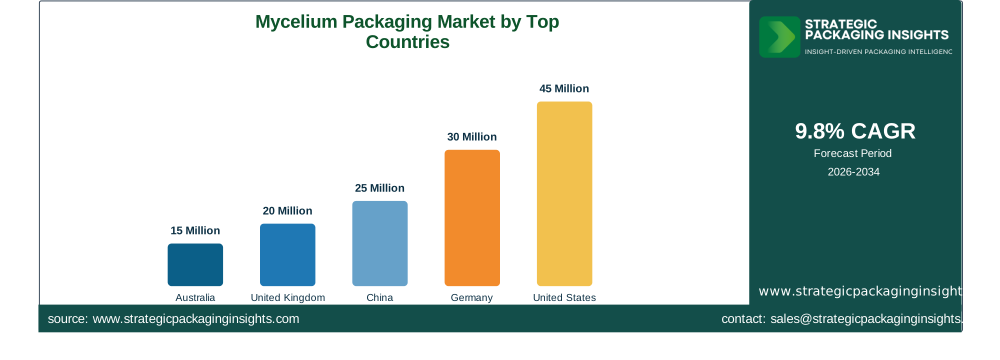
Germany is another significant player in the Mycelium Packaging market, with a market size of around $30 million and a CAGR of 9%. The country's robust manufacturing sector and emphasis on environmental sustainability create a favorable environment for mycelium packaging. German companies are increasingly adopting sustainable practices, and the government's commitment to reducing plastic waste further propels market growth.
China, with its rapidly growing economy and increasing environmental awareness, is emerging as a key market for mycelium packaging. The market size in China is estimated at $25 million, with a CAGR of 12%. The country's large consumer base and government initiatives to promote sustainable practices drive demand for eco-friendly packaging solutions. Chinese companies are investing in research and development to enhance the properties of mycelium packaging and expand its applications.
The United Kingdom, with a market size of approximately $20 million and a CAGR of 8%, is also a notable player in the Mycelium Packaging market. The country's strong focus on sustainability and innovation, along with supportive government policies, drives demand for eco-friendly packaging solutions. The presence of key players like Magical Mushroom Company further strengthens the market, as these companies continue to innovate and expand their product offerings.
In Australia, the Mycelium Packaging market is gaining traction, with a market size of around $15 million and a CAGR of 7%. The country's commitment to environmental sustainability and increasing consumer awareness about eco-friendly products drive demand for mycelium packaging. Australian companies are exploring new applications and markets for mycelium packaging, contributing to the market's growth.
Mycelium Packaging Market Segments Insights

Substrate Analysis
The substrate segment of the Mycelium Packaging market is primarily driven by the use of agricultural waste. This not only provides a cost-effective raw material source but also aligns with the growing trend of sustainable and circular economy practices. Agricultural waste, being abundant and renewable, offers a viable alternative to traditional packaging materials. The use of agricultural waste as a substrate not only reduces production costs but also contributes to waste reduction, enhancing the market's appeal. The electronics and cosmetics industries, in particular, are poised to benefit from this shift, as consumers in these sectors are becoming more environmentally conscious.
Moreover, the use of agricultural waste as a substrate for mycelium packaging supports the circular economy by utilizing waste materials that would otherwise be discarded. This not only reduces the environmental impact of packaging production but also provides a sustainable solution for waste management. The ability to produce custom molds and sheets from agricultural waste further enhances the market's appeal, offering businesses the flexibility to create tailored packaging solutions. As the demand for sustainable packaging continues to grow, the substrate segment is expected to witness significant growth, driven by the increasing adoption of mycelium packaging across various industries.
Density Analysis
The density segment of the Mycelium Packaging market is categorized into low and high-density products. Low-density mycelium packaging is gaining popularity due to its lightweight nature and cost-effectiveness. This type of packaging is particularly suitable for applications where weight reduction is crucial, such as in the electronics and cosmetics industries. The ability to produce lightweight packaging solutions without compromising on strength and durability is a key driver for the low-density segment.
High-density mycelium packaging, on the other hand, offers enhanced protection and durability, making it ideal for applications that require robust packaging solutions. The high-density segment is witnessing significant demand from industries such as electronics, where product protection is paramount. The ability to customize high-density mycelium packaging to meet specific product requirements further enhances its appeal. As technological advancements continue to improve the properties of mycelium packaging, the density segment is expected to witness significant growth, driven by the increasing demand for sustainable and customizable packaging solutions.
Application Analysis
The application segment of the Mycelium Packaging market is primarily driven by the electronics and cosmetics industries. In the electronics industry, mycelium packaging is gaining traction due to its lightweight nature and ability to provide effective protection for delicate components. The growing demand for sustainable packaging solutions in the electronics industry is a key driver for the application segment, as companies seek to reduce their environmental impact and align with consumer preferences.
In the cosmetics industry, mycelium packaging is becoming increasingly popular due to its eco-friendly properties and ability to enhance product presentation. The cosmetics industry is witnessing a surge in demand for sustainable packaging solutions, driven by consumer preferences and industry standards. The ability to produce custom molds and sheets for cosmetics packaging further enhances the market's appeal, offering businesses the flexibility to create tailored packaging solutions. As the demand for sustainable packaging continues to grow, the application segment is expected to witness significant growth, driven by the increasing adoption of mycelium packaging across various industries.
Form Analysis
The form segment of the Mycelium Packaging market is categorized into custom molds and sheets. Custom molds are gaining popularity due to their ability to provide tailored packaging solutions for specific product needs. This flexibility is particularly advantageous in industries like electronics and cosmetics, where product protection and presentation are crucial. The ability to create custom molds from mycelium packaging offers businesses a competitive edge, as it allows them to differentiate their products and enhance their brand image.
Sheets, on the other hand, offer a versatile and cost-effective packaging solution for a wide range of applications. The ability to produce sheets from mycelium packaging provides businesses with the flexibility to create packaging solutions that meet specific product requirements. The growing demand for sustainable packaging solutions is a key driver for the form segment, as companies seek to reduce their environmental impact and align with consumer preferences. As technological advancements continue to improve the properties of mycelium packaging, the form segment is expected to witness significant growth, driven by the increasing demand for sustainable and customizable packaging solutions.
Mycelium Packaging Market Segments
The Mycelium Packaging market has been segmented on the basis ofSubstrate
- Agricultural Waste
Density
- Low
- High
Application
- Electronics
- Cosmetics
Form
- Custom Molds
- Sheets
Region
- Asia Pacific
- North America
- Latin America
- Europe
- Middle East & Africa




