


Multi-Layer PCR Film Deinking System Market Outlook
The Multi-Layer PCR Film Deinking System market was valued at $512.40 million in 2025 and is projected to reach $1.50 billion by 2034, growing at a CAGR of 12.6% during the forecast period 2026-2034. This market is witnessing significant growth due to the increasing demand for sustainable packaging solutions and the rising awareness about environmental conservation. The adoption of advanced deinking technologies is driven by the need to enhance the quality of recycled films, which is crucial for meeting stringent regulatory standards and consumer expectations. The market is also benefiting from technological advancements that improve the efficiency and effectiveness of deinking processes, thereby reducing operational costs and enhancing profitability for recyclers and converters.
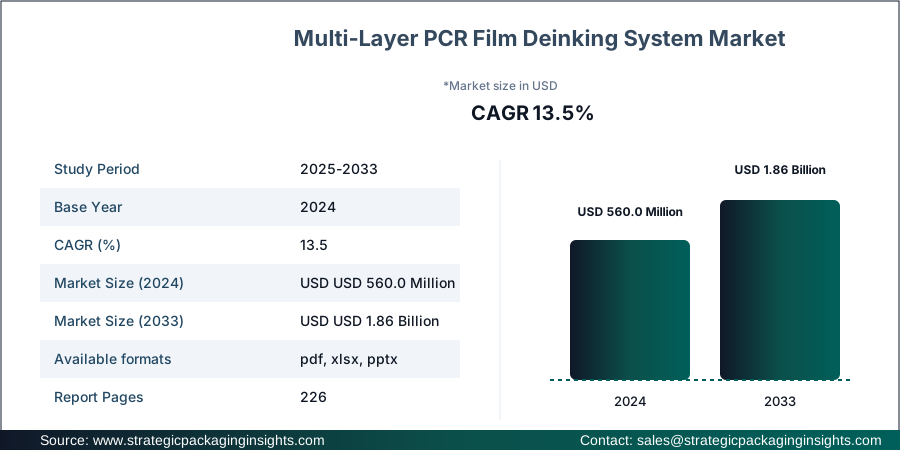
Despite the promising growth prospects, the market faces challenges such as high initial investment costs and the complexity of multi-layer film structures, which can complicate the deinking process. Regulatory frameworks across different regions also pose challenges, as they require compliance with varying standards and guidelines. However, the potential for growth remains substantial, particularly in emerging markets where the demand for recycled materials is on the rise. The increasing focus on circular economy initiatives and the development of innovative deinking solutions are expected to create new opportunities for market players, enabling them to expand their product offerings and capture a larger share of the market.
Report Scope
| Attributes | Details |
| Report Title | Multi-Layer PCR Film Deinking System Market Size, Future Growth and Forecast 2034 |
| System Type | Washing Systems, Chemical Deinking Systems, Optical Sorting-Integrated Systems |
| Film Type | PE Films, PP Films, Multilayer Films |
| Application | Flexible Packaging Recycling, Label Removal, Ink Separation |
| End Use | Recyclers, Converters, PCR Resin Producers |
| Region | Asia Pacific, North America, Latin America, Europe, Middle East & Africa |
| Base Year | 2025 |
| Historic Period | 2018-2024 |
| Forecast Period | 2026-2034 |
| Number of Pages | 123 |
| Customization Available | Yes* |
Opportunities & Threats
The Multi-Layer PCR Film Deinking System market presents numerous opportunities, particularly in the realm of technological advancements. Innovations in deinking technologies are enabling more efficient and effective removal of inks from multi-layer films, thereby improving the quality of recycled materials. This is particularly important as industries across the globe are increasingly adopting sustainable practices and seeking high-quality recycled materials to meet consumer demand and regulatory requirements. Additionally, the growing emphasis on circular economy initiatives is driving demand for advanced deinking systems, as they play a crucial role in the recycling process by ensuring that materials can be reused effectively.
Another significant opportunity lies in the expansion of the market in emerging economies. As these regions continue to industrialize and urbanize, the demand for packaging materials is increasing, leading to a corresponding rise in the need for recycling solutions. Companies that can offer cost-effective and efficient deinking systems are well-positioned to capitalize on this growing demand. Furthermore, partnerships and collaborations with local players can provide a strategic advantage, enabling companies to navigate regulatory landscapes and cultural nuances more effectively.
However, the market is not without its threats. One of the primary challenges is the high cost associated with the installation and maintenance of advanced deinking systems. This can be a significant barrier for smaller companies or those operating in regions with limited financial resources. Additionally, the complexity of multi-layer film structures can pose technical challenges, as different layers may require different deinking approaches. This necessitates continuous research and development efforts to ensure that deinking systems can handle a wide variety of film types effectively. Moreover, regulatory changes and environmental policies can impact market dynamics, requiring companies to stay agile and adaptable to maintain compliance and competitiveness.
Drivers & Challenges
The primary drivers of the Multi-Layer PCR Film Deinking System market include the increasing demand for sustainable packaging solutions and the growing awareness of environmental issues. As consumers and businesses alike become more environmentally conscious, there is a heightened demand for recycled materials that meet high-quality standards. This has led to a surge in the adoption of advanced deinking systems that can effectively remove inks and contaminants from multi-layer films, thereby enhancing the quality of recycled products. Additionally, technological advancements in deinking processes are enabling more efficient and cost-effective operations, further driving market growth.
Another significant driver is the regulatory landscape, which is increasingly favoring sustainable practices and the use of recycled materials. Governments and regulatory bodies across the globe are implementing policies and guidelines that encourage recycling and the use of eco-friendly materials. This is creating a favorable environment for the adoption of advanced deinking systems, as they are essential for meeting these regulatory requirements. Furthermore, the growing emphasis on circular economy initiatives is driving demand for deinking systems, as they play a crucial role in ensuring that materials can be reused effectively.
Despite these drivers, the market faces several challenges. One of the primary challenges is the high cost associated with the installation and maintenance of advanced deinking systems. This can be a significant barrier for smaller companies or those operating in regions with limited financial resources. Additionally, the complexity of multi-layer film structures can pose technical challenges, as different layers may require different deinking approaches. This necessitates continuous research and development efforts to ensure that deinking systems can handle a wide variety of film types effectively. Moreover, regulatory changes and environmental policies can impact market dynamics, requiring companies to stay agile and adaptable to maintain compliance and competitiveness.
Market Share Analysis
The competitive landscape of the Multi-Layer PCR Film Deinking System market is characterized by the presence of several key players who are actively engaged in research and development to enhance their product offerings and expand their market share. Companies such as EREMA, Starlinger, and Coperion are leading the market with their innovative deinking solutions that cater to the diverse needs of recyclers, converters, and PCR resin producers. These companies are focusing on developing advanced technologies that improve the efficiency and effectiveness of deinking processes, thereby enhancing the quality of recycled materials.
EREMA, a prominent player in the market, is known for its cutting-edge recycling technologies that are widely used in the deinking of multi-layer films. The company's focus on innovation and sustainability has enabled it to capture a significant share of the market. Similarly, Starlinger is renowned for its comprehensive range of recycling solutions that cater to various applications, including flexible packaging recycling and ink separation. The company's commitment to quality and customer satisfaction has helped it establish a strong presence in the market.
Coperion, another key player, offers a range of deinking systems that are designed to meet the specific needs of the recycling industry. The company's focus on technological advancements and customer-centric solutions has enabled it to maintain a competitive edge in the market. Lindner Recyclingtech and Sorema are also notable players in the market, known for their innovative deinking solutions that enhance the quality of recycled materials and improve operational efficiency.
Other significant players in the market include Amut, Herbold Meckesheim, Tomra, Bühler, and Pellenc ST. These companies are actively engaged in research and development to enhance their product offerings and expand their market presence. Their focus on innovation and sustainability is driving the development of advanced deinking systems that cater to the evolving needs of the recycling industry. As the market continues to grow, these companies are well-positioned to capitalize on emerging opportunities and strengthen their competitive position.
Key Highlights
- The Multi-Layer PCR Film Deinking System market is projected to grow at a CAGR of 12.6% from 2026 to 2034.
- Technological advancements in deinking processes are driving market growth by improving efficiency and reducing operational costs.
- Regulatory frameworks favoring sustainable practices are creating a favorable environment for the adoption of advanced deinking systems.
- The market is witnessing significant growth in emerging economies due to increasing demand for recycled materials.
- High initial investment costs and the complexity of multi-layer film structures pose challenges to market growth.
- Key players in the market include EREMA, Starlinger, Coperion, Lindner Recyclingtech, and Sorema.
- The growing emphasis on circular economy initiatives is driving demand for deinking systems that ensure effective material reuse.
- Partnerships and collaborations with local players provide strategic advantages in navigating regulatory landscapes.
- Continuous research and development efforts are essential for addressing technical challenges and enhancing product offerings.
- The market is characterized by intense competition, with companies focusing on innovation and sustainability to maintain a competitive edge.
Top Countries Insights
In the Multi-Layer PCR Film Deinking System market, the United States stands out as a key player, with a market size of approximately $300 million and a CAGR of 10%. The country's strong regulatory framework supporting recycling initiatives and the presence of major industry players drive market growth. The demand for high-quality recycled materials is increasing, fueled by consumer awareness and environmental policies. However, challenges such as high operational costs and the complexity of multi-layer films require continuous innovation and investment in advanced deinking technologies.
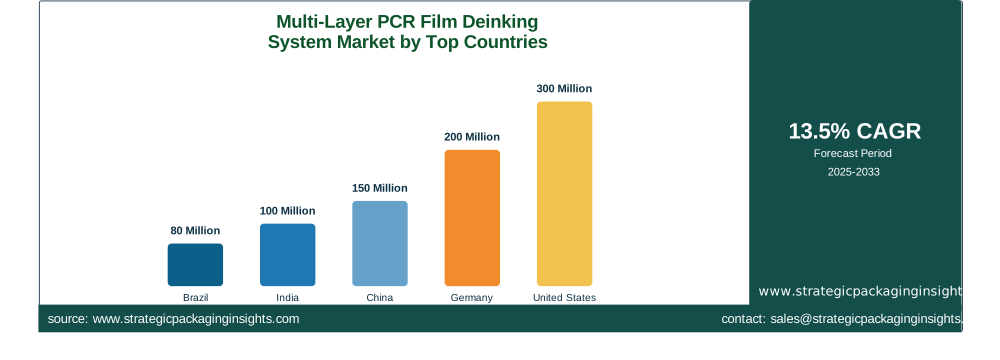
Germany is another significant market, with a market size of around $200 million and a CAGR of 9%. The country's robust recycling infrastructure and stringent environmental regulations create a conducive environment for the adoption of advanced deinking systems. The focus on sustainability and circular economy initiatives further drives demand for high-quality recycled materials. However, the market faces challenges related to the high cost of deinking systems and the need for continuous technological advancements to address the complexity of multi-layer films.
China, with a market size of approximately $250 million and a CAGR of 15%, is experiencing rapid growth in the Multi-Layer PCR Film Deinking System market. The country's increasing industrialization and urbanization drive demand for packaging materials, leading to a corresponding rise in the need for recycling solutions. Government initiatives promoting sustainable practices and the use of recycled materials further support market growth. However, challenges such as regulatory compliance and the need for cost-effective solutions remain significant.
India, with a market size of around $150 million and a CAGR of 12%, is emerging as a key market for Multi-Layer PCR Film Deinking Systems. The country's growing population and increasing consumer awareness about environmental issues drive demand for recycled materials. Government policies promoting recycling and sustainable practices further support market growth. However, challenges such as limited financial resources and the complexity of multi-layer films require innovative solutions and strategic partnerships to overcome.
Brazil, with a market size of approximately $100 million and a CAGR of 8%, is also a notable market for Multi-Layer PCR Film Deinking Systems. The country's focus on sustainability and environmental conservation drives demand for high-quality recycled materials. However, challenges such as high operational costs and the need for continuous technological advancements to address the complexity of multi-layer films remain significant. Strategic partnerships and collaborations with local players can provide a competitive advantage in navigating regulatory landscapes and cultural nuances.
Multi-Layer PCR Film Deinking System Market Segments Insights

System Type Analysis
The Multi-Layer PCR Film Deinking System market is segmented by system type into washing systems, chemical deinking systems, and optical sorting-integrated systems. Washing systems are widely used due to their effectiveness in removing contaminants and inks from multi-layer films. These systems are favored for their ability to handle a wide variety of film types and their relatively low operational costs. However, the complexity of multi-layer films can pose challenges, requiring continuous innovation and technological advancements to ensure effective deinking.
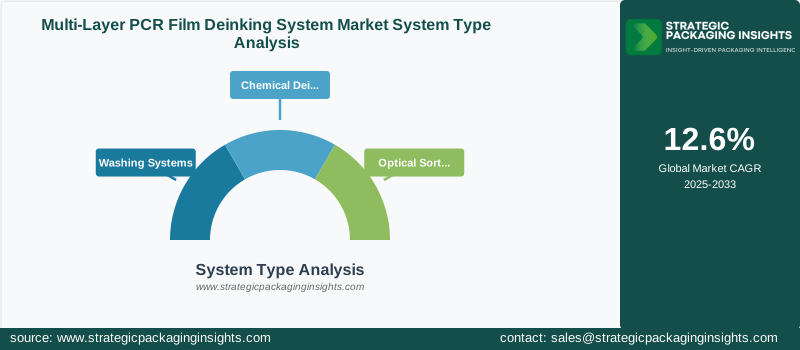
Chemical deinking systems are gaining traction due to their ability to effectively remove inks and contaminants from multi-layer films. These systems use chemical agents to break down inks and other impurities, resulting in high-quality recycled materials. The demand for chemical deinking systems is driven by the need for high-quality recycled materials that meet stringent regulatory standards and consumer expectations. However, the use of chemicals can pose environmental challenges, requiring companies to invest in sustainable and eco-friendly solutions.
Optical sorting-integrated systems are also gaining popularity due to their ability to accurately sort and separate different types of films. These systems use advanced optical technologies to identify and separate films based on their composition and color, resulting in high-quality recycled materials. The demand for optical sorting-integrated systems is driven by the need for efficient and cost-effective recycling solutions that can handle a wide variety of film types. However, the high cost of these systems can pose a barrier to adoption, particularly for smaller companies or those operating in regions with limited financial resources.
Film Type Analysis
The Multi-Layer PCR Film Deinking System market is segmented by film type into PE films, PP films, and multilayer films. PE films are widely used in the packaging industry due to their versatility and cost-effectiveness. The demand for deinking systems that can effectively handle PE films is driven by the need for high-quality recycled materials that meet regulatory standards and consumer expectations. However, the complexity of multi-layer films can pose challenges, requiring continuous innovation and technological advancements to ensure effective deinking.
PP films are also widely used in the packaging industry due to their durability and resistance to moisture and chemicals. The demand for deinking systems that can effectively handle PP films is driven by the need for high-quality recycled materials that meet regulatory standards and consumer expectations. However, the complexity of multi-layer films can pose challenges, requiring continuous innovation and technological advancements to ensure effective deinking.
Multilayer films are gaining popularity due to their ability to provide enhanced barrier properties and protection for packaged goods. The demand for deinking systems that can effectively handle multilayer films is driven by the need for high-quality recycled materials that meet regulatory standards and consumer expectations. However, the complexity of multilayer films can pose challenges, requiring continuous innovation and technological advancements to ensure effective deinking. Companies that can offer advanced deinking solutions that address these challenges are well-positioned to capture a larger share of the market.
Application Analysis
The Multi-Layer PCR Film Deinking System market is segmented by application into flexible packaging recycling, label removal, and ink separation. Flexible packaging recycling is a major application area, driven by the increasing demand for sustainable packaging solutions and the need to reduce environmental impact. Deinking systems play a crucial role in this process by effectively removing inks and contaminants from multi-layer films, resulting in high-quality recycled materials that can be reused in various applications.
Label removal is another important application area, as labels can pose significant challenges in the recycling process. Deinking systems that can effectively remove labels from multi-layer films are in high demand, as they enhance the quality of recycled materials and improve operational efficiency. The demand for label removal solutions is driven by the need for high-quality recycled materials that meet regulatory standards and consumer expectations.
Ink separation is also a critical application area, as inks can significantly impact the quality of recycled materials. Deinking systems that can effectively separate inks from multi-layer films are essential for producing high-quality recycled materials that meet regulatory standards and consumer expectations. The demand for ink separation solutions is driven by the need for high-quality recycled materials that can be reused in various applications, as well as the growing emphasis on sustainability and circular economy initiatives.
End Use Analysis
The Multi-Layer PCR Film Deinking System market is segmented by end use into recyclers, converters, and PCR resin producers. Recyclers are a major end-use segment, as they play a crucial role in the recycling process by collecting and processing multi-layer films. The demand for deinking systems among recyclers is driven by the need for high-quality recycled materials that meet regulatory standards and consumer expectations. Recyclers that can offer advanced deinking solutions are well-positioned to capture a larger share of the market.
Converters are another important end-use segment, as they transform recycled materials into new products. The demand for deinking systems among converters is driven by the need for high-quality recycled materials that can be used in various applications. Converters that can offer advanced deinking solutions are well-positioned to capture a larger share of the market, as they can provide high-quality recycled materials that meet regulatory standards and consumer expectations.
PCR resin producers are also a significant end-use segment, as they produce resins from recycled materials that can be used in various applications. The demand for deinking systems among PCR resin producers is driven by the need for high-quality recycled materials that meet regulatory standards and consumer expectations. PCR resin producers that can offer advanced deinking solutions are well-positioned to capture a larger share of the market, as they can provide high-quality recycled materials that meet regulatory standards and consumer expectations.
Multi-Layer PCR Film Deinking System Market Segments
The Multi-Layer PCR Film Deinking System market has been segmented on the basis ofSystem Type
- Washing Systems
- Chemical Deinking Systems
- Optical Sorting-Integrated Systems
Film Type
- PE Films
- PP Films
- Multilayer Films
Application
- Flexible Packaging Recycling
- Label Removal
- Ink Separation
End Use
- Recyclers
- Converters
- PCR Resin Producers
Region
- Asia Pacific
- North America
- Latin America
- Europe
- Middle East & Africa




