


Multi-layer Film Recycling Market Outlook
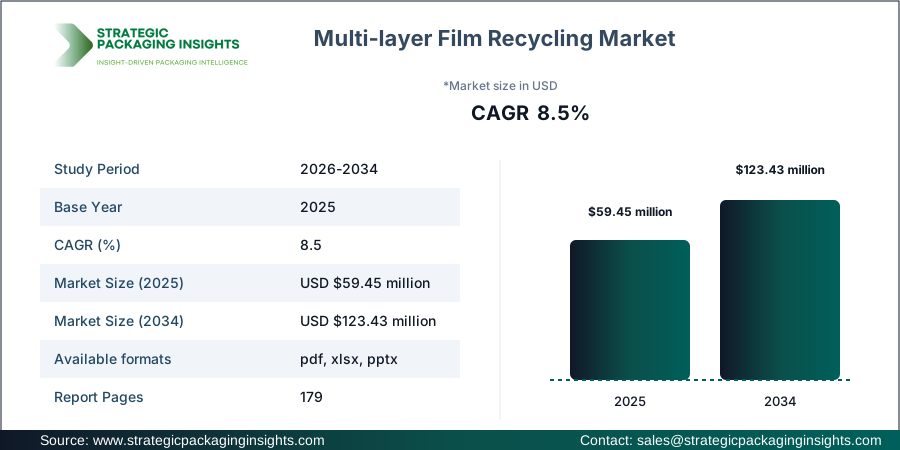
The Multi-layer Film Recycling market was valued at $59.45 million in 2025 and is projected to reach $123.43 million by 2034, growing at a CAGR of 8.5% during the forecast period 2026-2034. This market is witnessing significant growth due to increasing environmental concerns and stringent regulations regarding plastic waste management. The demand for sustainable packaging solutions is driving the adoption of multi-layer film recycling processes. The market is also benefiting from technological advancements in recycling methods, which enhance the efficiency and quality of recycled materials. As industries strive to meet sustainability goals, the recycling of multi-layer films is becoming a critical component of the circular economy.
Despite the promising growth prospects, the market faces challenges such as the complexity of recycling multi-layer films due to their diverse material composition. Regulatory hurdles and the high cost of advanced recycling technologies can also impede market growth. However, the potential for innovation and the development of cost-effective recycling solutions present significant opportunities for market players. The increasing collaboration between stakeholders, including recyclers, converters, and FMCG brands, is expected to drive market expansion. As awareness about the environmental impact of plastic waste grows, the multi-layer film recycling market is poised for substantial growth.
Report Scope
| Attributes | Details |
| Report Title | Multi-layer Film Recycling Market Size, Future Growth and Forecast 2034 |
| Process Type | Mechanical Recycling, Solvent-based Recycling, Chemical Recycling |
| Material Type | PE-based Films, PP-based Films, PET Laminates |
| Application | Food Packaging, Flexible Packaging, Industrial Films |
| End Use | Recyclers, Converters, FMCG Brands, Waste-Management Firms |
| Region | Asia Pacific, North America, Latin America, Europe, Middle East & Africa |
| Base Year | 2025 |
| Historic Period | 2018-2024 |
| Forecast Period | 2026-2034 |
| Number of Pages | 179 |
| Customization Available | Yes* |
Opportunities & Threats
The multi-layer film recycling market presents numerous opportunities, particularly with the growing emphasis on sustainability and environmental responsibility. Companies are increasingly investing in research and development to create more efficient recycling technologies that can handle the complex structures of multi-layer films. This innovation is crucial as it can significantly reduce the cost and increase the yield of recycled materials, making recycling more economically viable. Additionally, the rising consumer demand for eco-friendly products is pushing brands to adopt recycled materials, thereby expanding the market for recycled multi-layer films. Government incentives and subsidies for recycling initiatives also provide a favorable environment for market growth.
Another opportunity lies in the expansion of recycling infrastructure, particularly in developing regions where waste management systems are still evolving. By establishing advanced recycling facilities, companies can tap into new markets and increase their recycling capacity. Partnerships between private companies and government bodies can facilitate the development of such infrastructure, ensuring a steady supply of recyclable materials. Furthermore, the integration of digital technologies, such as AI and IoT, in recycling processes can enhance operational efficiency and traceability, offering a competitive edge to market players.
However, the market is not without its threats. One of the primary challenges is the technical difficulty associated with recycling multi-layer films, which often consist of different types of plastics bonded together. This complexity can lead to higher processing costs and lower quality of recycled materials. Additionally, fluctuations in the prices of virgin plastics can affect the competitiveness of recycled materials. If virgin plastic prices drop significantly, it may discourage companies from investing in recycling. Moreover, stringent regulations and compliance requirements can pose barriers to entry for new players, limiting market growth.
Drivers & Challenges
The multi-layer film recycling market is driven by several key factors, including the increasing awareness of environmental issues and the need for sustainable waste management solutions. Governments worldwide are implementing stringent regulations to reduce plastic waste, which is encouraging industries to adopt recycling practices. The growing consumer preference for eco-friendly products is also driving demand for recycled materials, as brands seek to enhance their sustainability credentials. Technological advancements in recycling processes, such as chemical recycling and solvent-based recycling, are further propelling market growth by improving the efficiency and quality of recycled films.
Another significant driver is the circular economy model, which emphasizes the reuse and recycling of materials to minimize waste. This model is gaining traction across various industries, leading to increased investment in recycling infrastructure and technologies. Companies are recognizing the economic benefits of recycling, such as cost savings from reduced raw material usage and the potential for new revenue streams from recycled products. The collaboration between stakeholders, including recyclers, converters, and FMCG brands, is fostering innovation and driving market expansion.
Despite these drivers, the market faces several challenges. One of the primary challenges is the technical complexity of recycling multi-layer films, which often consist of multiple layers of different plastics. This complexity can lead to higher processing costs and lower quality of recycled materials. Additionally, the lack of standardized recycling processes and infrastructure can hinder market growth. The high cost of advanced recycling technologies can also be a barrier for small and medium-sized enterprises. Furthermore, fluctuations in the prices of virgin plastics can affect the competitiveness of recycled materials, as lower prices for virgin plastics may discourage companies from investing in recycling.
Market Share Analysis
The competitive landscape of the multi-layer film recycling market is characterized by the presence of several key players who are actively investing in research and development to enhance their recycling technologies. Companies such as APK, Saperatec, and PureCycle Technologies are leading the market with their innovative approaches to recycling multi-layer films. These companies are focusing on developing cost-effective and efficient recycling processes that can handle the complex structures of multi-layer films. The market is also witnessing strategic collaborations and partnerships between companies to expand their recycling capabilities and reach new markets.
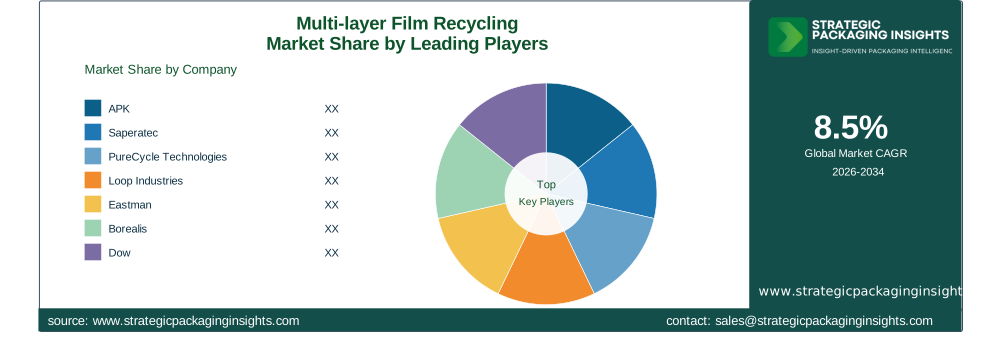
APK is a prominent player in the market, known for its advanced recycling technologies that enable the separation and recovery of high-quality polymers from multi-layer films. Saperatec, another key player, specializes in solvent-based recycling processes that can efficiently separate different layers of multi-layer films. PureCycle Technologies is making significant strides in the market with its proprietary recycling process that produces ultra-pure recycled polypropylene. Loop Industries is also a major player, focusing on chemical recycling technologies that convert waste plastics into high-quality recycled materials.
Eastman and Borealis are other notable companies in the market, leveraging their extensive experience in the chemical industry to develop innovative recycling solutions. Eastman is investing in chemical recycling technologies that can break down complex plastic structures into their basic building blocks, while Borealis is focusing on mechanical recycling processes that enhance the quality and performance of recycled materials. Dow and ExxonMobil are also key players, utilizing their expertise in polymer science to develop advanced recycling technologies that improve the efficiency and sustainability of recycling processes.
LyondellBasell and Berry Global are significant contributors to the market, with a strong focus on developing sustainable packaging solutions that incorporate recycled materials. These companies are investing in research and development to create high-performance recycled materials that meet the stringent quality standards of the packaging industry. The competitive landscape of the multi-layer film recycling market is dynamic, with companies continuously innovating and expanding their capabilities to meet the growing demand for sustainable packaging solutions.
Key Highlights
- The multi-layer film recycling market is projected to grow at a CAGR of 8.5% from 2026 to 2034.
- Technological advancements in recycling processes are enhancing the efficiency and quality of recycled materials.
- Government regulations and consumer demand for sustainable products are driving market growth.
- Partnerships between recyclers, converters, and FMCG brands are fostering innovation in the market.
- The market is witnessing significant investment in recycling infrastructure, particularly in developing regions.
- Companies are focusing on developing cost-effective recycling technologies to improve economic viability.
- The integration of digital technologies in recycling processes is enhancing operational efficiency.
Top Countries Insights
In the multi-layer film recycling market, the United States is a leading country, with a market size of approximately $15 billion and a CAGR of 7%. The country's strong regulatory framework and consumer demand for sustainable products are key growth drivers. The presence of major recycling companies and advanced recycling technologies further bolster the market. However, challenges such as high processing costs and the complexity of recycling multi-layer films remain.
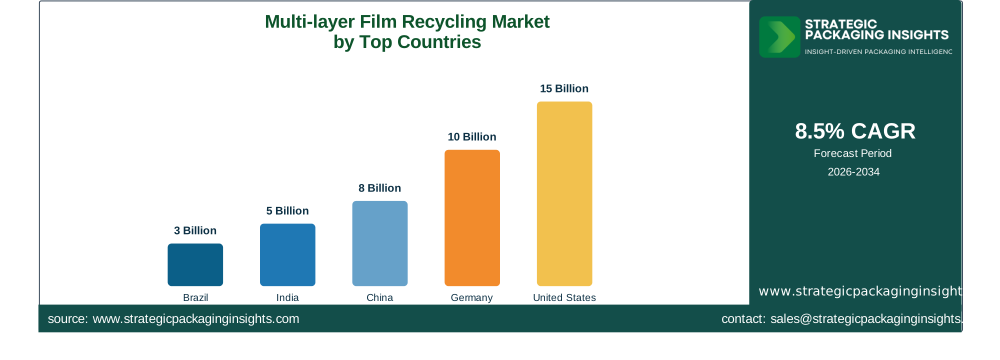
Germany is another significant player in the market, with a market size of around $10 billion and a CAGR of 6%. The country's robust recycling infrastructure and government incentives for recycling initiatives are driving market growth. Germany's focus on innovation and technological advancements in recycling processes is also contributing to the market's expansion. However, the high cost of advanced recycling technologies can be a barrier for smaller companies.
China is experiencing rapid growth in the multi-layer film recycling market, with a market size of approximately $8 billion and a CAGR of 9%. The country's large population and increasing consumer awareness of environmental issues are driving demand for recycled materials. Government policies promoting recycling and waste management are also supporting market growth. However, the lack of standardized recycling processes and infrastructure can hinder market expansion.
India is emerging as a key market for multi-layer film recycling, with a market size of around $5 billion and a CAGR of 10%. The country's growing middle class and increasing demand for sustainable packaging solutions are driving market growth. Government initiatives to promote recycling and reduce plastic waste are also contributing to the market's expansion. However, challenges such as inadequate recycling infrastructure and the complexity of recycling multi-layer films remain.
Brazil is another important market, with a market size of approximately $3 billion and a CAGR of 8%. The country's focus on sustainability and environmental responsibility is driving demand for recycled materials. Government incentives for recycling initiatives and the presence of major recycling companies are supporting market growth. However, the high cost of recycling technologies and the complexity of recycling multi-layer films can be barriers to market expansion.
Multi-layer Film Recycling Market Segments Insights

Process Type Analysis
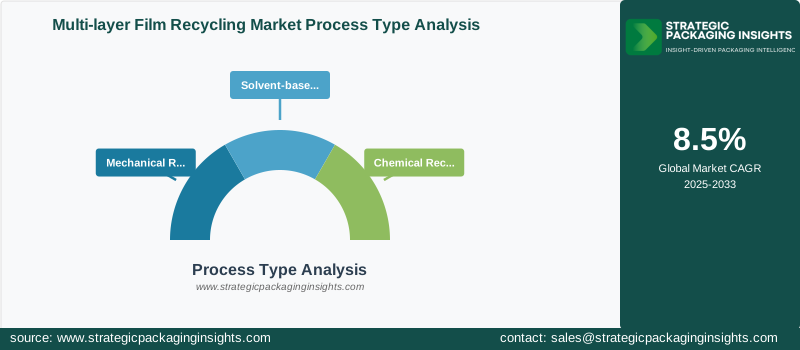
The process type segment in the multi-layer film recycling market is categorized into mechanical recycling, solvent-based recycling, and chemical recycling. Mechanical recycling is the most widely used process due to its cost-effectiveness and simplicity. It involves the physical processing of waste films to produce recycled materials. However, it is limited by the quality of the input materials and the complexity of multi-layer films. Solvent-based recycling offers a more advanced solution by using solvents to dissolve and separate different layers of films. This process can produce high-quality recycled materials but is more expensive and requires specialized equipment. Chemical recycling is the most advanced process, breaking down polymers into their basic building blocks. It offers the highest quality recycled materials but is also the most costly and complex process.
The choice of recycling process depends on several factors, including the type of films being recycled, the desired quality of the recycled materials, and the available infrastructure. Companies are investing in research and development to improve the efficiency and cost-effectiveness of these processes. The integration of digital technologies, such as AI and IoT, is also enhancing the operational efficiency of recycling processes. As the demand for high-quality recycled materials increases, the market is expected to see a shift towards more advanced recycling processes.
Material Type Analysis
The material type segment in the multi-layer film recycling market includes PE-based films, PP-based films, and PET laminates. PE-based films are the most commonly recycled materials due to their widespread use in packaging applications. They are relatively easy to recycle and can be processed using mechanical recycling methods. PP-based films are also widely used in packaging but are more challenging to recycle due to their higher melting point and chemical resistance. PET laminates are the most complex materials to recycle due to their multi-layer structure and the presence of different types of plastics.
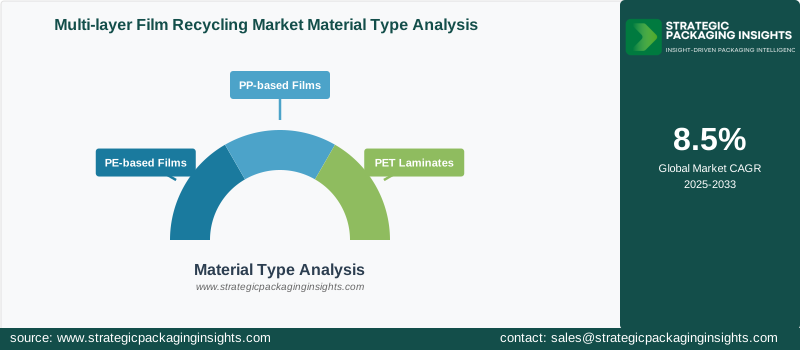
The demand for recycled materials is driving innovation in recycling technologies, with companies focusing on developing processes that can handle the complexity of these materials. The use of advanced recycling technologies, such as solvent-based and chemical recycling, is increasing as companies seek to produce high-quality recycled materials. The market is also seeing a growing trend towards the use of recycled materials in high-value applications, such as food packaging and flexible packaging. As the demand for sustainable packaging solutions increases, the market for recycled materials is expected to grow significantly.
Application Analysis
The application segment in the multi-layer film recycling market includes food packaging, flexible packaging, and industrial films. Food packaging is the largest application segment, driven by the increasing demand for sustainable packaging solutions in the food industry. The use of recycled materials in food packaging is gaining traction as companies seek to reduce their environmental impact and meet consumer demand for eco-friendly products. Flexible packaging is another significant application segment, with the use of recycled materials increasing in applications such as pouches, bags, and wraps.
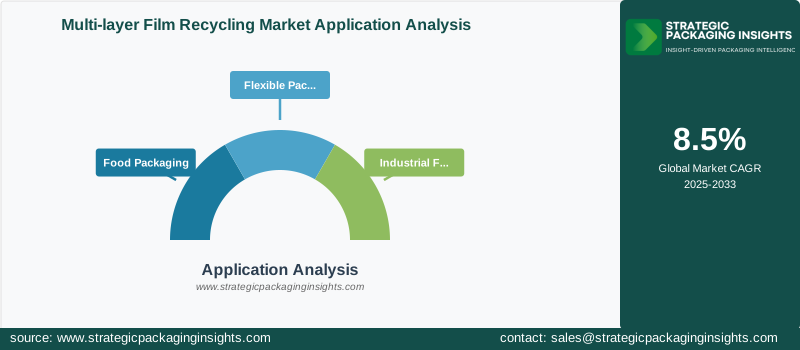
Industrial films are also a growing application segment, with the use of recycled materials increasing in applications such as construction, agriculture, and automotive. The demand for high-quality recycled materials is driving innovation in recycling technologies, with companies focusing on developing processes that can produce materials that meet the stringent quality standards of these applications. The market is also seeing a growing trend towards the use of recycled materials in high-value applications, such as food packaging and flexible packaging. As the demand for sustainable packaging solutions increases, the market for recycled materials is expected to grow significantly.
End Use Analysis
The end use segment in the multi-layer film recycling market includes recyclers, converters, FMCG brands, and waste-management firms. Recyclers are the primary end users of recycled materials, with companies focusing on developing processes that can produce high-quality recycled materials. Converters are also significant end users, with the use of recycled materials increasing in applications such as packaging and industrial films. FMCG brands are increasingly using recycled materials in their products to meet consumer demand for sustainable products and enhance their sustainability credentials.
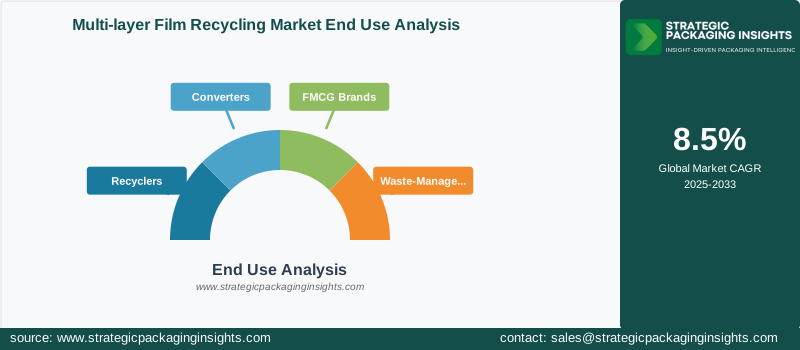
Waste-management firms are also significant end users, with the use of recycled materials increasing in applications such as waste management and recycling. The demand for high-quality recycled materials is driving innovation in recycling technologies, with companies focusing on developing processes that can produce materials that meet the stringent quality standards of these applications. The market is also seeing a growing trend towards the use of recycled materials in high-value applications, such as food packaging and flexible packaging. As the demand for sustainable packaging solutions increases, the market for recycled materials is expected to grow significantly.
Multi-layer Film Recycling Market Segments
The Multi-layer Film Recycling market has been segmented on the basis ofProcess Type
- Mechanical Recycling
- Solvent-based Recycling
- Chemical Recycling
Material Type
- PE-based Films
- PP-based Films
- PET Laminates
Application
- Food Packaging
- Flexible Packaging
- Industrial Films
End Use
- Recyclers
- Converters
- FMCG Brands
- Waste-Management Firms
Region
- Asia Pacific
- North America
- Latin America
- Europe
- Middle East & Africa




