


Moulded Fibre Pulp Packaging Market Outlook
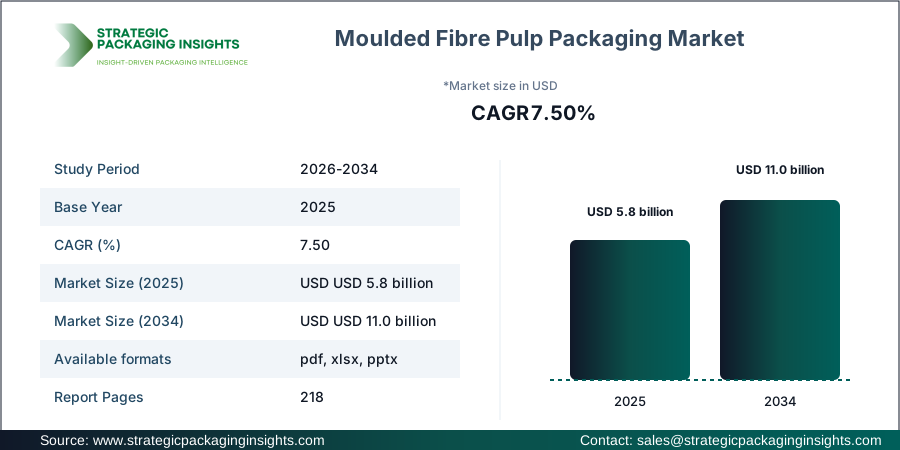
The Moulded Fibre Pulp Packaging market size was valued at USD 5.8 billion in 2025 and is anticipated to reach USD 11.0 billion by 2034, growing at a CAGR of 7.50% during the forecast period according to Strategic Packaging Insights. This growth is driven by increasing consumer demand for sustainable and eco-friendly packaging solutions, as well as the rising awareness of environmental issues. Companies like Huhtamaki Oyj and Brodrene Hartmann A/S are leading the charge in developing innovative packaging solutions that meet these demands. The market is also benefiting from advancements in technology that allow for more efficient production processes, reducing costs and increasing the scalability of moulded fibre pulp packaging solutions.
One of the most impactful drivers of the Moulded Fibre Pulp Packaging market is the growing regulatory pressure to reduce plastic waste and promote sustainable packaging alternatives. Governments worldwide are implementing stricter regulations and policies to curb plastic usage, which is propelling the demand for biodegradable and recyclable packaging materials. For instance, the European Union's directive on single-use plastics is pushing companies to adopt more sustainable packaging solutions, thereby boosting the market for moulded fibre pulp packaging. This regulatory environment is creating significant growth opportunities for companies like UFP Technologies and Sabert Corporation, which are investing heavily in research and development to create innovative, eco-friendly packaging solutions.
Report Scope
| Attributes | Details |
| Report Title | Moulded Fibre Pulp Packaging Market Size, Future Growth and Forecast 2034 |
| By Source Material | Recycled Paper/Wood Pulp, Virgin Wood Pulp, Non-Wood Pulp (Bagasse, Bamboo, Wheat Straw, Agricultural Residues), Blended Fiber |
| By Molded Type | Thick Wall, Transfer Molded, Thermoformed (Thin Wall), Processed / Dry Molded Fiber |
| By Product Type | Trays, End Caps, Corner & Edge Protectors, Protective Inserts, Clamshells, Cups & Bowls, Egg Cartons, Plates, Others |
| By End Use | Food & Beverage, Foodservice, Electronics, Healthcare & Medical Devices, Personal Care & Cosmetics, Industrial, E-commerce & Logistics, Automotive |
| By Region | North America (U.S., Canada, Mexico), Europe (Germany, UK, France, Italy, Spain, Rest of Europe), Asia Pacific (China, India, Japan, South Korea, Australia, Rest of Asia Pacific), Latin America (Brazil, Argentina, Rest of Latin America), Middle East & Africa (GCC Countries, South Africa, Rest of MEA) |
| Base Year | 2025 |
| Historic Period | 2018-2024 |
| Forecast Period | 2026-2034 |
| Number of Pages | 218 |
| Customization Available | Yes* |
Sustainability & Circular Economy Analysis
Sustainability initiatives and circular economy practices are significantly influencing the Moulded Fibre Pulp Packaging market. The shift towards recyclable materials and reusable packaging is becoming a cornerstone of the industry, driven by consumer demand for environmentally friendly products. Companies are increasingly focusing on lightweight packaging solutions that reduce material usage and transportation costs, while also minimizing the carbon footprint. This trend is encouraging innovation in eco-friendly material development, with companies like Genpak LLC and CKF Inc. leading the way in creating sustainable packaging solutions.
Waste reduction strategies and ESG initiatives are also playing a crucial role in shaping the market dynamics. Companies are adopting extended producer responsibility (EPR) frameworks to ensure that their packaging solutions are not only sustainable but also compliant with regulatory standards. This is influencing packaging design and manufacturing processes, as companies strive to create products that are both functional and environmentally responsible. The focus on reducing carbon emissions and enhancing supply chain sustainability is driving investment decisions and shaping long-term market competitiveness.
Consumer preferences for sustainable packaging are further accelerating the adoption of circular economy practices. As consumers become more environmentally conscious, they are increasingly opting for products that align with their values. This shift is prompting companies to prioritize sustainability in their product offerings, leading to increased investment in research and development of eco-friendly packaging solutions. The regulatory landscape is also evolving, with governments implementing stricter packaging regulations to promote sustainability. This is creating a favorable environment for companies that are committed to sustainable practices, enhancing their market position and competitiveness.
Packaging Value Chain & Supply Chain Analysis
The packaging value chain and supply chain ecosystem for moulded fibre pulp packaging is complex and multifaceted, involving various stakeholders from raw material sourcing to end-user delivery. Raw material availability, particularly recycled paper and wood pulp, plays a critical role in determining the efficiency and cost-effectiveness of the supply chain. Companies like EnviroPAK Corporation and Pactiv Evergreen are focusing on securing reliable sources of raw materials to ensure uninterrupted production and maintain competitive pricing.
Packaging converters and manufacturers are key players in the value chain, responsible for transforming raw materials into finished products. The efficiency of packaging machinery and production capabilities significantly influences overall market performance. Companies are investing in advanced machinery and technology to enhance production efficiency and reduce waste. Strategic partnerships and collaborations with logistics providers and distribution channels are also crucial for ensuring timely delivery and meeting customer demands.
Supply chain resilience and localization are becoming increasingly important in the face of global disruptions. Companies are adopting procurement strategies that prioritize local sourcing and inventory management to mitigate risks and enhance supply chain stability. This approach not only reduces transportation costs but also aligns with sustainability goals by minimizing carbon emissions. The integration of recycling networks into the supply chain is further enhancing the sustainability of moulded fibre pulp packaging solutions, providing companies with a competitive edge in the market.
Opportunities & Threats
The Moulded Fibre Pulp Packaging market presents numerous opportunities for growth and innovation. One of the key opportunities lies in the increasing demand for sustainable packaging solutions across various industries, including food and beverage, electronics, and healthcare. Companies that can develop innovative, eco-friendly packaging solutions that meet the evolving needs of these industries are well-positioned to capture significant market share. Additionally, the growing trend towards e-commerce and online shopping is driving demand for protective packaging solutions, creating new opportunities for companies to expand their product offerings and reach new customer segments.
Another opportunity for growth in the Moulded Fibre Pulp Packaging market is the increasing focus on reducing plastic waste and promoting circular economy practices. Companies that can develop packaging solutions that are not only sustainable but also cost-effective and scalable are likely to gain a competitive advantage in the market. The adoption of advanced manufacturing technologies and automation is also creating opportunities for companies to enhance production efficiency and reduce costs, further driving market growth.
However, the market also faces several threats that could impact growth and profitability. One of the primary threats is the volatility in raw material prices, particularly for recycled paper and wood pulp. Fluctuations in raw material prices can significantly impact production costs and profit margins, posing a challenge for companies in the market. Additionally, the increasing competition from alternative packaging materials, such as bioplastics and compostable plastics, could pose a threat to the growth of the Moulded Fibre Pulp Packaging market. Companies must continuously innovate and differentiate their products to remain competitive in this dynamic market environment.
Drivers & Challenges
The Moulded Fibre Pulp Packaging market is driven by several key factors, including the growing demand for sustainable packaging solutions and the increasing regulatory pressure to reduce plastic waste. As consumers become more environmentally conscious, they are seeking packaging solutions that align with their values, driving demand for eco-friendly packaging options. Companies like Huhtamaki Oyj and Brodrene Hartmann A/S are capitalizing on this trend by developing innovative packaging solutions that meet the evolving needs of consumers and regulatory requirements.
Another significant driver of the market is the advancements in manufacturing technologies and automation. Companies are investing in advanced machinery and technology to enhance production efficiency and reduce costs, enabling them to meet the growing demand for moulded fibre pulp packaging solutions. The increasing focus on reducing carbon emissions and enhancing supply chain sustainability is also driving investment decisions and shaping long-term market competitiveness. Companies that can effectively leverage these drivers are likely to gain a competitive advantage in the market.
Despite the positive drivers, the Moulded Fibre Pulp Packaging market faces several challenges that could impact growth and profitability. One of the primary challenges is the volatility in raw material prices, particularly for recycled paper and wood pulp. Fluctuations in raw material prices can significantly impact production costs and profit margins, posing a challenge for companies in the market. Additionally, the increasing competition from alternative packaging materials, such as bioplastics and compostable plastics, could pose a threat to the growth of the Moulded Fibre Pulp Packaging market. Companies must continuously innovate and differentiate their products to remain competitive in this dynamic market environment.
Market Share Analysis
The competitive landscape of the Moulded Fibre Pulp Packaging market is characterized by the presence of several key players, each striving to capture a significant share of the market. Companies like Huhtamaki Oyj and Brodrene Hartmann A/S are leading the market with their innovative packaging solutions and strong focus on sustainability. These companies have established a strong presence in the market through strategic partnerships, acquisitions, and investments in research and development.
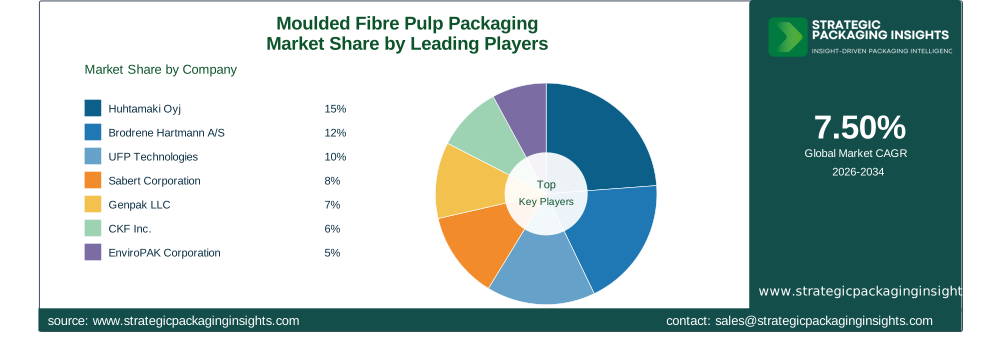
Huhtamaki Oyj, for instance, is a global leader in sustainable packaging solutions, offering a wide range of products that cater to various industries, including food and beverage, electronics, and healthcare. The company's commitment to sustainability and innovation has enabled it to maintain a competitive edge in the market. Similarly, Brodrene Hartmann A/S is known for its high-quality moulded fibre packaging solutions, which are designed to meet the evolving needs of consumers and regulatory requirements.
Other notable players in the market include UFP Technologies, Sabert Corporation, and Genpak LLC, each of which has carved out a niche in the market through their unique product offerings and strong focus on customer satisfaction. These companies are investing heavily in research and development to create innovative packaging solutions that meet the growing demand for sustainable and eco-friendly products. Additionally, companies like CKF Inc. and EnviroPAK Corporation are focusing on expanding their product portfolios and enhancing their production capabilities to capture a larger share of the market.
The competitive landscape is further shaped by the presence of smaller players and new entrants, who are leveraging advanced technologies and innovative business models to disrupt the market. These companies are focusing on niche segments and offering customized solutions to meet the specific needs of their customers. As the market continues to evolve, companies that can effectively differentiate their products and capitalize on emerging trends are likely to gain a competitive advantage and capture a larger share of the market.
Key Highlights
- Market Size: The Moulded Fibre Pulp Packaging market was valued at USD 5.8 billion in 2025 and is projected to reach USD 11.0 billion by 2034.
- Growth Rate: The market is expected to grow at a CAGR of 7.50% during the forecast period.
- Leading Companies: Key players include Huhtamaki Oyj, Brodrene Hartmann A/S, and UFP Technologies.
- Regional Insights: Asia Pacific is expected to witness the highest growth rate, driven by increasing demand for sustainable packaging solutions.
- Product Innovation: Companies are focusing on developing eco-friendly and recyclable packaging solutions to meet consumer demand.
- Regulatory Environment: Stricter regulations on plastic usage are driving the demand for sustainable packaging alternatives.
- Technological Advancements: Investments in advanced manufacturing technologies are enhancing production efficiency and reducing costs.
Moulded Fibre Pulp Packaging Market Segments Insights

By Source Material Analysis
The Moulded Fibre Pulp Packaging market is segmented by source material, including recycled paper/wood pulp, virgin wood pulp, non-wood pulp, and blended fiber. Recycled paper/wood pulp is the most widely used material, driven by its cost-effectiveness and environmental benefits. Companies like Huhtamaki Oyj and Brodrene Hartmann A/S are leveraging recycled materials to create sustainable packaging solutions that meet consumer demand for eco-friendly products. The use of virgin wood pulp is also significant, particularly in applications where high-quality packaging is required. Non-wood pulp, such as bagasse and bamboo, is gaining traction due to its renewable nature and lower environmental impact.
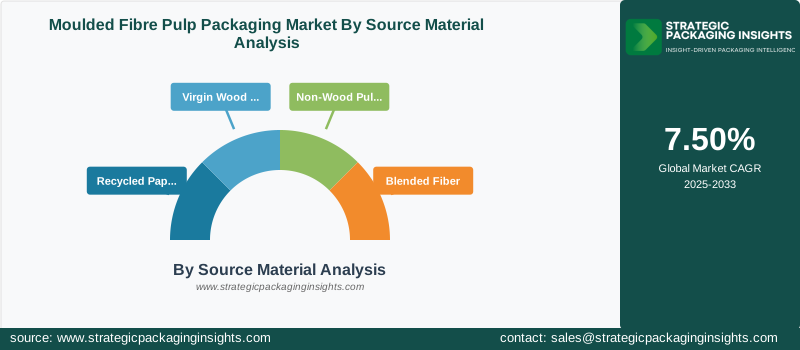
Blended fiber, which combines different types of pulp, is emerging as a popular choice for companies looking to enhance the performance and sustainability of their packaging solutions. This segment is expected to witness significant growth, driven by advancements in material science and increasing consumer awareness of environmental issues. Companies are investing in research and development to create innovative blended fiber solutions that offer superior performance and sustainability. The growing focus on reducing carbon emissions and enhancing supply chain sustainability is further driving demand for eco-friendly source materials.
By Molded Type Analysis
The market is also segmented by molded type, including thick wall, transfer molded, thermoformed, and processed/dry molded fiber. Thick wall molded fiber is commonly used in applications requiring robust and durable packaging, such as industrial and automotive sectors. Transfer molded fiber is popular in the food and beverage industry, where it is used for packaging products like trays and clamshells. Thermoformed molded fiber, known for its lightweight and thin-walled structure, is gaining popularity in the electronics and healthcare sectors, where precision and protection are critical.
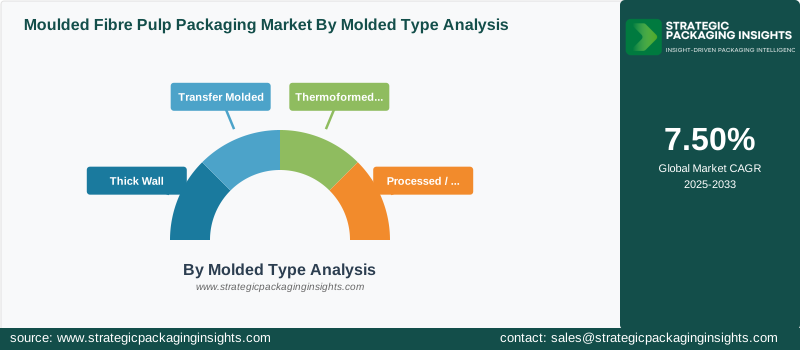
Processed or dry molded fiber is an emerging segment, offering enhanced performance and sustainability. This type of molded fiber is used in applications where high-quality and eco-friendly packaging is required. Companies are investing in advanced manufacturing technologies to enhance the performance and sustainability of their molded fiber solutions. The growing demand for lightweight and recyclable packaging solutions is driving innovation in this segment, with companies focusing on developing products that meet the evolving needs of consumers and regulatory requirements.
By Product Type Analysis
The Moulded Fibre Pulp Packaging market is segmented by product type, including trays, end caps, corner & edge protectors, protective inserts, clamshells, cups & bowls, egg cartons, plates, and others. Trays are the most widely used product type, driven by their versatility and cost-effectiveness. Companies like Genpak LLC and CKF Inc. are focusing on developing innovative tray solutions that meet the evolving needs of consumers and regulatory requirements. End caps and corner & edge protectors are commonly used in the electronics and industrial sectors, where protection and durability are critical.
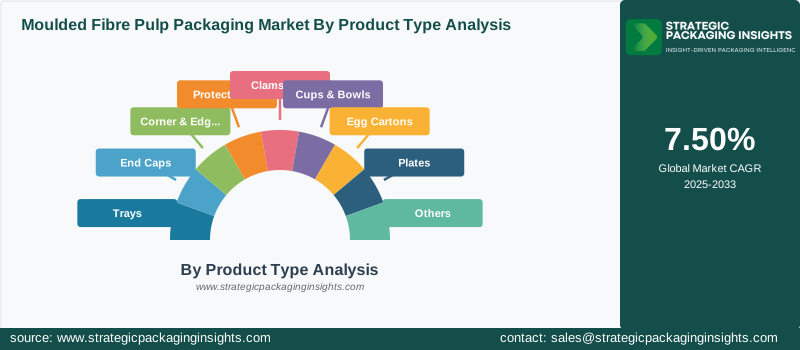
Protective inserts and clamshells are popular in the food and beverage industry, where they are used for packaging products like cups, bowls, and plates. Egg cartons are a staple in the food industry, offering a sustainable and cost-effective packaging solution for eggs. Companies are investing in research and development to create innovative product solutions that meet the growing demand for sustainable and eco-friendly packaging. The increasing focus on reducing plastic waste and promoting circular economy practices is driving demand for recyclable and biodegradable product solutions.
By End Use Analysis
The market is segmented by end use, including food & beverage, foodservice, electronics, healthcare & medical devices, personal care & cosmetics, industrial, e-commerce & logistics, and automotive. The food & beverage industry is the largest end-use segment, driven by the growing demand for sustainable and eco-friendly packaging solutions. Companies like Huhtamaki Oyj and Brodrene Hartmann A/S are focusing on developing innovative packaging solutions that meet the evolving needs of the food & beverage industry.
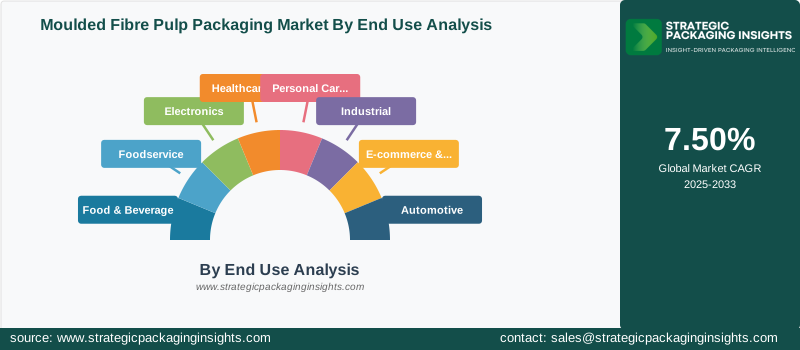
The electronics and healthcare sectors are also significant end-use segments, where precision and protection are critical. Companies are investing in advanced manufacturing technologies to create high-quality packaging solutions that meet the specific needs of these industries. The growing trend towards e-commerce and online shopping is driving demand for protective packaging solutions, creating new opportunities for companies to expand their product offerings and reach new customer segments. The increasing focus on reducing plastic waste and promoting circular economy practices is driving demand for sustainable and eco-friendly packaging solutions across all end-use segments.
Moulded Fibre Pulp Packaging Market Segments
The Moulded Fibre Pulp Packaging market has been segmented on the basis ofBy Source Material
- Recycled Paper/Wood Pulp
- Virgin Wood Pulp
- Non-Wood Pulp (Bagasse, Bamboo, Wheat Straw, Agricultural Residues)
- Blended Fiber
By Molded Type
- Thick Wall
- Transfer Molded
- Thermoformed (Thin Wall)
- Processed / Dry Molded Fiber
By Product Type
- Trays
- End Caps
- Corner & Edge Protectors
- Protective Inserts
- Clamshells
- Cups & Bowls
- Egg Cartons
- Plates
- Others
By End Use
- Food & Beverage
- Foodservice
- Electronics
- Healthcare & Medical Devices
- Personal Care & Cosmetics
- Industrial
- E-commerce & Logistics
- Automotive
By Region
- North America (U.S., Canada, Mexico)
- Europe (Germany, UK, France, Italy, Spain, Rest of Europe)
- Asia Pacific (China, India, Japan, South Korea, Australia, Rest of Asia Pacific)
- Latin America (Brazil, Argentina, Rest of Latin America)
- Middle East & Africa (GCC Countries, South Africa, Rest of MEA)




